Untitled article

8%

The Beginning of the Inquisition in Portugal No. 3
[The following article in four parts is not from some ancient tome written by some prejudiced Protestant; it is from the Illustracao Portugueza of June 18, 1906, a popular magazine of Lisbon, Portugal. We do not print it because we have aught of enmity or ill-feeling against one single Roman Catholic in this world. We have warm friends among them; we pray for them all. Many of them are Christians, far better than their creed. We publish the article to show a logical outworking and legitimate fruitage of the union of church and state. The members of the Roman Catholic Church are like other men and women by nature—neither better nor worse. If that church had not assumed to legislate and execute for God and demand that the state should submit to her creed, she would not have authorized the Inquisition. The Inquisition was but the logic of the church's claim and demand for power to punish heresy. Let all men take heed. Let those "Protestants" who are seeking religious legislation in behalf of Sunday learn the lesson. The translation of the article is not finished English; it has too much of the idiom of the Portuguese, but it does not misrepresent the original.]
ONCE imprisoned, the penitent followed the various ways of the process. It was a long, tiresome and dolorous ceremonial. At times it lasted months and even years. The unfortunate one either died or killed himself without learning for what crime he was accused. Other times things passed summarily; after the denunciation came the information, after the information, the theological note of the qualifiers of the Holy Office.
Three sumptuous Dominicans examined the facts or faults of which the poor being was accused, and qualified them, in an increasing order of gravity, as suspects of heresy, by light suspect, vehement, most vehement, violent, or formal. On this subtle qualification of these theologians depended, in great part, the destiny of the one imprisoned,—fogeira, or as a culprit, who, confessing his faults, marches in the procession of the auto de fe to be gibbeted, confiscation of goods, perpetual imprisonment, or infamy. In great part, we say, that which truly decided the fate of a new Christian suspected of heresy was the confession or non-confession of his crime in the three audiences of judgment to which they subjected him. In these audiences of a gloomy, offensive ceremonial, in which presided either the inquisitor or his vicar, held in an oblong room with arched ceiling, where the words reechoed mournfully, and in whose inner wall an enormous crucifix opened its arms, the judges, qualifiers, and relators commenced by interrogating the culprit upon his genealogy, his personal antecedents, and at last about the note of unlawful suspicion that weighed upon him.
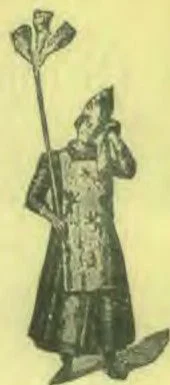
A Heretia Non in dress of penitent, reconciled.
The summary of the accusation was read to him, the inquisitor, according to the practise of the tribunal, mixing with the crimes of which the poor being was really accused various others more or less grave, or more or less scandalous, of plain fantasy of the ignorant and wordy relators of the Holy Office. It had this system for the end, not only to establish the confession of the penitent, already depressed in spirit, but to make clear the difference between the mode by which he denied the crimes that he did commit, and those he did not. If the denial of the crime of which they accused him was not so energetic or so quick as some other more shameful or revolting, which by artifice they mixed in the summary of the accusation, the holy inquisitors concluded that the culprit was negative, or confessed diminutive, that he refused to confess faults manifestly evident to the eyes of the Dominican theologians; so they proposed that the poor being might descend to the "Torture Room" without loss of time.
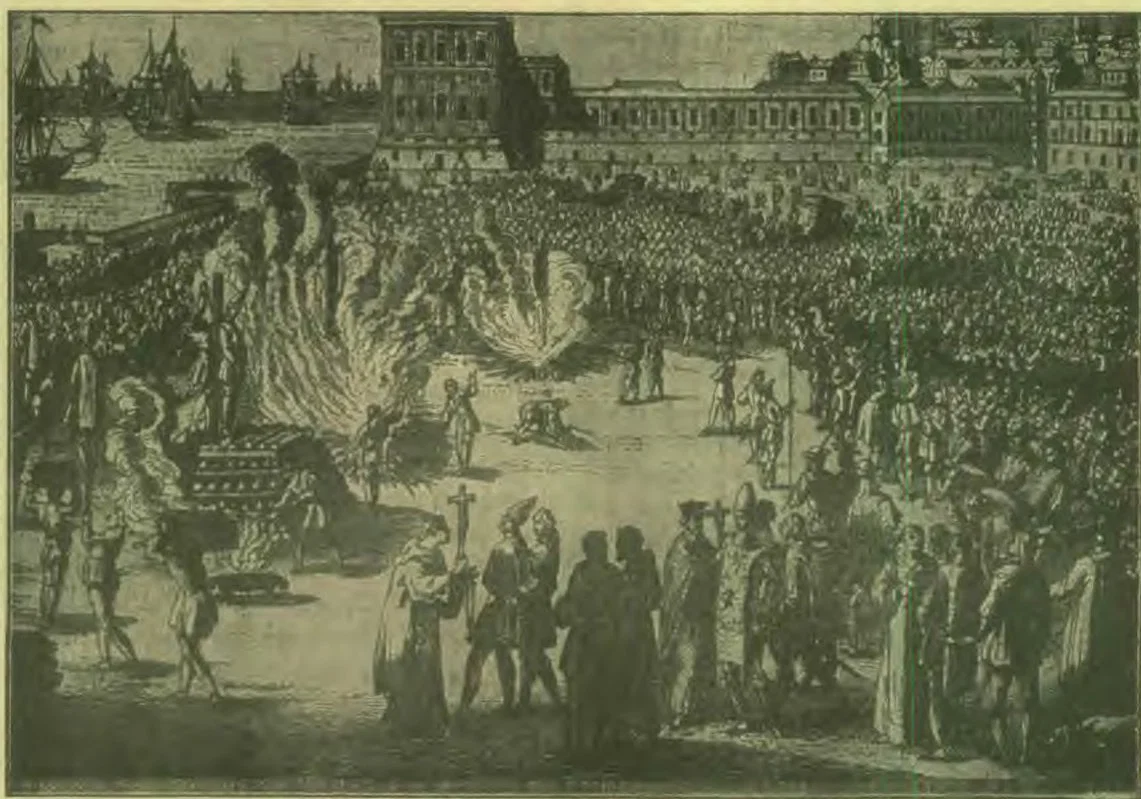
An 'Auto de fe' (burning at the stake) in the square of the Ribeira. From an engraving in copper of the time.
It was the second act of the inquisitorial tragedy. On recalling it, already two centuries distant, our brain seems to freeze, and an instinctive feeling of terror benumbs us.
In the palace of the Estaos, as in the Inquisition of Madrid, Burgos, Sevilla, and many others, the "Room of Torments" was situated in the deepest and most sultry part of the subterranean dungeon, in a point corresponding to the center of the building, surrounded by thick walls and low, massive, monastic ceiling,—everything wisely and carefully disposed, so that the cries of pain and cursing screams of the unfortunates in the torture might not be heard either in the palace or from without. The inquisitor here awaited them, mitered, upon a tapestried chair: the qualifiers, the consulters, the Dominican confessors, with cross upraised; two or three scriveners that reduced to writing, at times with how much falsity, the declarations of the accused; various personages with large mantles and hoods over the face; and, lastly, the physician of the Holy Office, destined to watch so that the violence of the torture might not be unto death.
Then followed the torments, gradually, solemnly, with all the placidness and method that the holy Dominicans put into all the inquisitorial acts. They began by extending the negative, or confessed diminutive, upon an X-shaped cross, and breaking methodically the fingers one by one. On the snapping of each bone and the cry of pain that broke from the lips of the sufferer, the pallid face of a monk showed itself to him from the dark, illuminated by a torch, surprising him into a confession, promising him life, suggesting the words that he must pronounce, and the imaginary crimes for which he ought to do penance. If this was not sufficient, if the sufferer persisted in denying with abhorrence and dignity the crimes that they attributed to him, they passed him to the suffering of the pole, or vertical rack. The hands of the culprit negative were violently tied behind the back by the end of a linen cord that passed thru a pulley attached to the ceiling; two attendants, garbed like monks, pulled at the other end, raising the prisoner to the top, then letting him fall halfway; the bones of the arms, wrenched with violence in the fall, snapped, unjointed and disarticulated themselves, and the poor being remained suspended in the air like a doll, writhing with pain, crying and screaming. When the person still resisted this torture with a courage sufficient to maintain himself in the first denial, they extended him anew upon the cross, subjecting him to the suffering of the water, breaking the spine, burning the feet slowly with red-hot pincers, carrying the torture to the highestdegree of severity; and if at the end of everything, the unfortunate persisted in that which the inquisition called the enchantment of taciturnity, they threw him like a rotten cloth into the darkness of the dungeon, bloody, crushed, writhing with pain, without force to scream, already without force to suffer, begging the death and the fogueira as the supreme relief and supreme mercy.
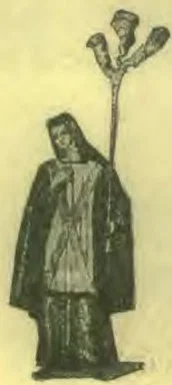
A Heretia going to die at the stake.
Then the holy inquisitor, mitered, solemn, indifferent, hardened in the continual intimacy of human suffering, dictated to the Dominican scrivener whose pen moved in the torchlight upon a large yellowed folio,
"FORMAL HERETIC. NEGATIVE. SILENT MALEFACTOR."