On the Way to China

5%

On the Way to China

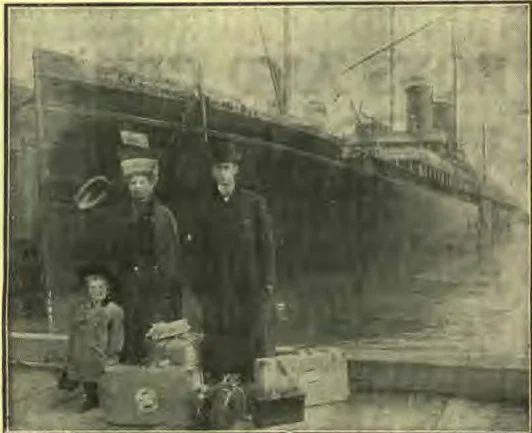
Leaveing San Francisco for a trip to the Orient, is not to be dreaded as it formerly was. In fact, it is to-day regarded as the popular vacation for the person of time and means to take a pleasure trip to Japan, China, and Manila. And it is indeed a pleasure long to be remembered to step aboard one of the magnificent Pacific liners and feel the pulsating of the great engines which carry one through the Golden Gate on the way to the Far East.
Such a pleasure was ours on November 16, 1909, when we bade all our friends good-by and went aboard the China. Her captain is D. E. Friele. “Commodore of the Pacific” he is styled, as he is the oldest commander in the Pacific Mail service.
The China is long and slim — 440 feet long, 48 feet beam, 33 feet depth — and is called the greyhound of the Pacific. This trip is her ninety-fifth, and she has never had a serious accident. I have seen the water so high it washed on the promenade deck and yet she did not pitch much, she is so well balanced. She is a magnificent floating hotel, very elegant in all her appointments; but especially noted for her excellent cuisine and spacious cabins, our stateroom being 7 x 10 feet and 10 feet high by actual measurement.
She carried 129 passengers; and after counting a hundred we found the extra twenty-nine were missionaries, representing nearly every denomination. A few were bound for India and Japan; but the majority were for China. To our great surprise and delight we found two sent by our own mission board, Brother and Sister C. Sparks, of Nebraska, on their way to Shanghai.
After a very pleasant voyage of seven days we found ourselves in the heat of the tropics, with Honolulu, the “Paradise of the Pacific,” spread out before us. Words can not describe the scene that we saw that morning as we were piloted in through the coral reefs that surround the island of Oahu.
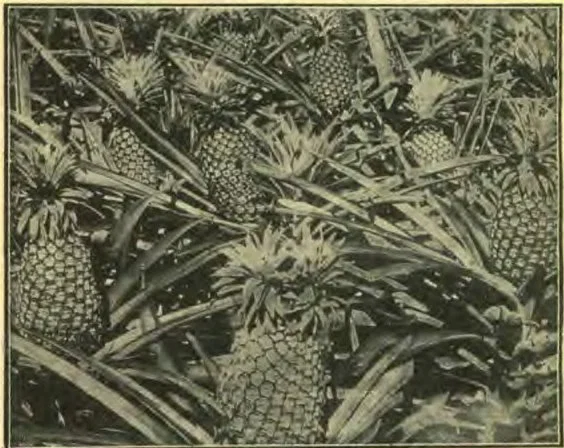
The early morning sunshine sparkled on the water and was reflected as a million diamonds from the harbor waves in front and housetops of the city. Everywhere were waving palm-trees and the vivid green of the tropical foliage. The hillsides were covered with banana and pineapple plantations, and back of these rose the volcanic peaks stretching up into the clouds. From sea-level to 14,000 feet is quite a rise for a distance of a few miles inland, yet here we see it, there being two peaks of that height.
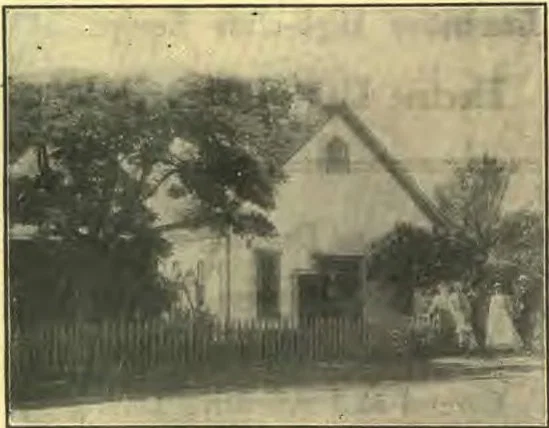
We were met at the dock by Brother and Sister Williams, who have had charge of our work in Honolulu for the last five years. They took us to their home and treated us to a delightful dinner, the delicious tropical fruits being much in evidence, most of which grew in their own yard.
We spent the afternoon seeing the city and surrounding country, and as the street-car service is very efficient, we covered considerable territory. The chief attraction to all tourists is the beautiful Waikiki Beach. This is the finest beach in the world, there being no undertow; and the water averages 78 degrees temperature all the year. Here one sees the natives in their various aquatic sports of surfing and surf-boat riding.
Near the beach is Kapiolani Park, where one sees every variety of palm-tree and tropical foliage. In this park is a fine aquarium where we observed hundreds of specimens of various colored fishes.
One interesting point is the great cliff of Nuuanu Pali, where one has a wonderful view of the valley. Up this valley, Kamehameka the Great, the Napoleon of the Pacific, drove the Oahu army of 3,000 men, forcing them over the cliff, where they fell 1,000 feet into the sea.
We learned from Brother Williams that our work in the islands is going steadily on,with a solidity which speaks well for its permanence. A chapel has been built which makes a home for the people. The tithe is quite regular and averages well with most companies of the same size. There is great need of more laborers, more literature in the Hawaiian language, more ship missionary work, treatment rooms, vegetarian cafe, and church school. It is simply impossible for one family to carry on the work on seven islands where the people speak eight different languages. While new fields may call loudly for help, we should not pass idly by the older ones which are in need.
We had a very pleasant visit with Brother and Sister Williams, and left them at five o'clock in the evening as our ship pulled out from the dock followed by a swarm of native boys swimming and diving for coins thrown by the passengers.
We are now midway between Honolulu and Yokohama, and our next letter will be a description of our visit to Japan.
F. E. STAFFORD.
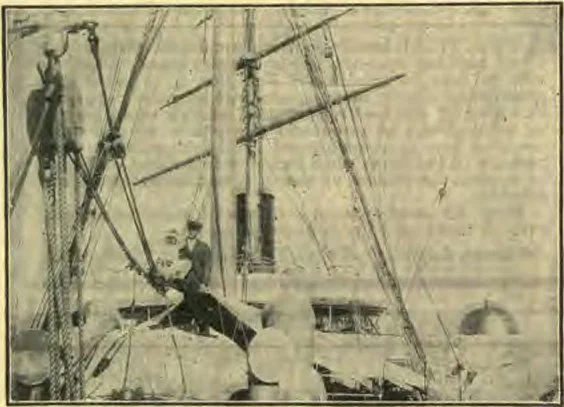
On the way to the Orient
Brother and Sister F. E. Stafford and the little one leaving San Francisco
Pineapples growing, large, juicy, and with a flavor superior to those in the markets in the States
The Seventh-day Adventist Church in Honolulu, with a glimpse through the trees of Brother William’s house on the left.
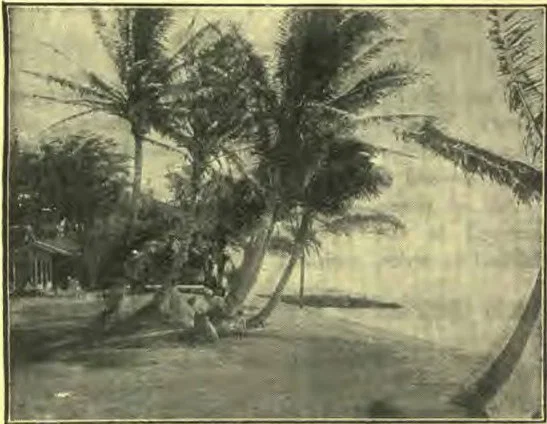
A glimpse of Kapiolane Park, Honolulu. Palms grow with wonderful invariance. Larger palms we could not photograph.
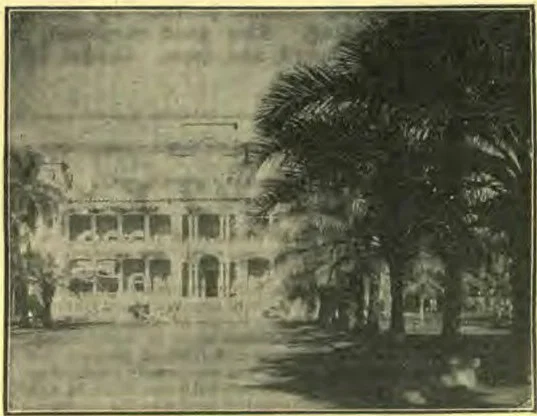
The capital, formerly the Royal Palace, at Honolulu. Note the brilliant sunlight in contrast with the deep green of the foliage.