The only possible basis for true Christian catholicity is a return to the Bible for faith and practice.
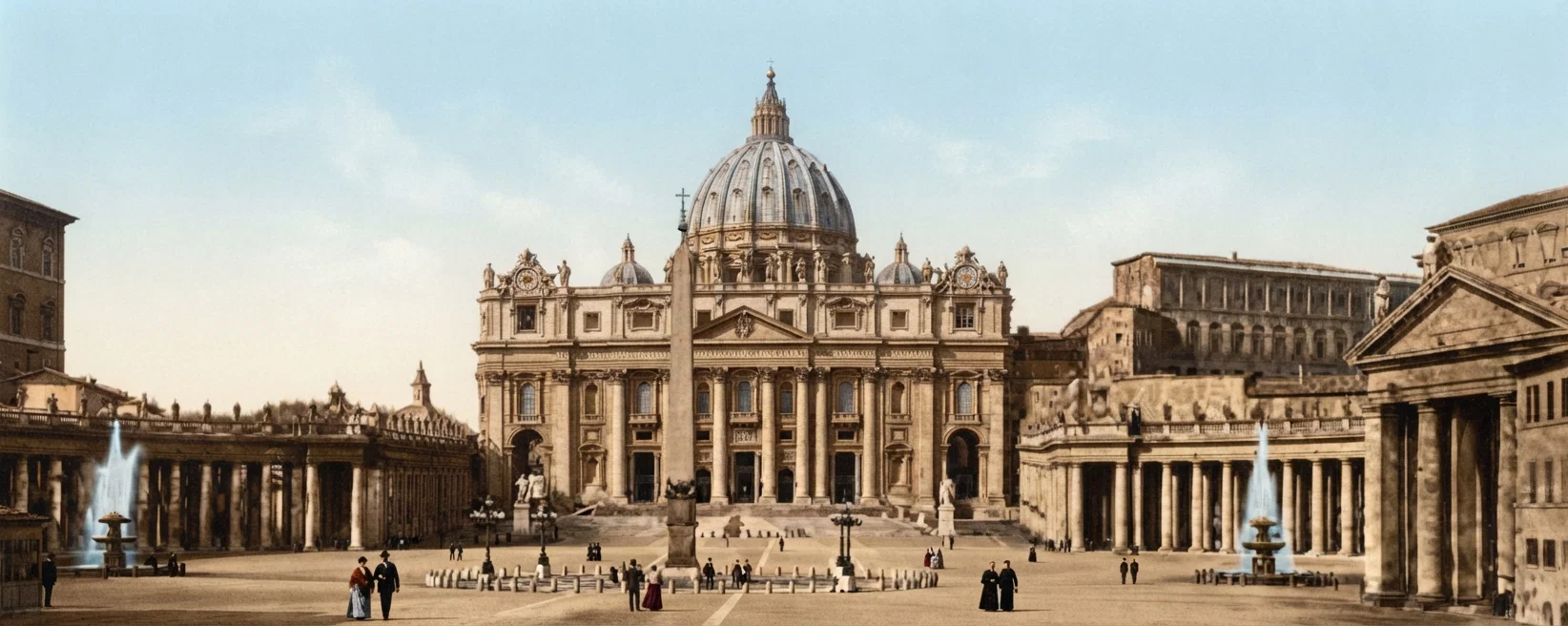
St. Peter's, Rome
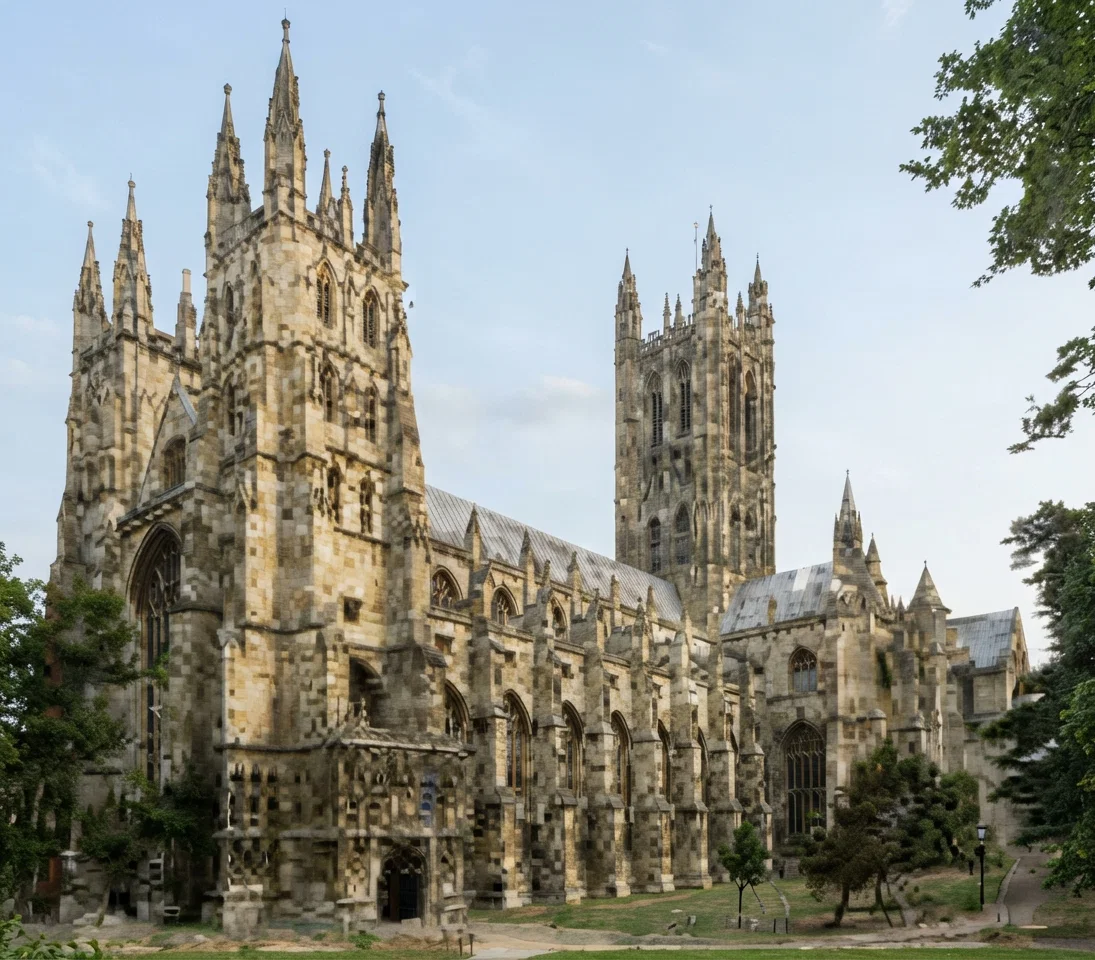
MANY plans have been suggested by which a catholicity of Christian belief and endeavor might be brought about. Some plans are devoted to theological harmony, while others propose unity of endeavor without reference to theological identity. Catholicity is at present assumed by the Roman Catholic hierarchy, while, on the other hand, the Protestant communions claim catholicity under the title of Holy Catholic Church, as stated in their creeds, "I believe in the Holy Ghost, the Holy Catholic Church," etc.
Perhaps the most recent utterance upon the subject is by the Rev. J. M. Lloyd Thomas, editor of the Free Catholic, in a sermon preached recently in Glasgow, Scotland, and quoted in the September Current Opinion, under the caption, "A Plea for a Free Catholic Church of International Fellowship." He fails to find in organized Protestantism and organized Roman Catholicism any prospect for free catholicity, concluding that "Romanism has collapsed for the modern mind." "But," says he, "is Protestantism in any better way? We cannot honestly affirm that it is." He points to the awful spectacle of present-day Europe as evidence of Protestantism's and Romanism's impotence.
The Basis of Catholicity
In his judgment, a free catholic church is possible without the necessity of identifying it with Canterbury or Rome, with Greece or Russia or Asia Minor. He maintains that inspiration for the movement is to be found in the union of two basic principles; namely: (1) the evangelical principle of Christ's abiding in the heart of the believer; (2) the Catholic principle of a historically given Jesus and of His visible church, "which safeguards Protestant subjectivism from running into anarchy or hardening into a secular Cæsarism." He then concludes:
"We can be Catholic by regarding the Christian heritage not as a system of ecclesiastical law or dogmatic formulations, but as a spirit and life that persists indivisibly through all its manifestations. . . . There is not a usage, not a liturgy, not a symbol, not a sacrament, not one precious thing in the past that has proved its enduring efficacy and value and fruitfulness, that we may not adopt.
"We have not to ask leave of any Vatican, or parliament, or convocation, any consistory, or presbytery, or conference, or association, or assembly. We have but to ask: Is this true? Is it helpful? Is it alive and stimulating and nourishing and consoling?"
There is no questioning the desirability of Christian unity, a catholicity of Christianity, if you please. The Redeemer desired it, praying, "That they all may be one;" and Paul and other apostles prayed, "Fulfill ye my
joy, that ye be like-minded, having the same love, being of one accord, of one mind." Phil. 2:2. Moreover, the catholicity of Christianity is and always has been possible of attainment; and the inspiration for it is to be found in Jude 3: "Beloved, when I gave all diligence to write unto you of the common salvation, it was needful for me to write unto you, and exhort you that ye should earnestly contend for the faith which was once delivered unto the saints."
Must We Go to Rome?
To whom shall we go to learn of "the faith which was once delivered unto the saints"? Shall it be to Canterbury, or Rome, or Greece, or Asia Minor? None of these can furnish us with that faith, except by traditional inference and assumption. Were these all that the wayfaring man had to depend upon for the faith which would make for Christian unity, he would indeed be in desperate straits; for they are not all one, "of one mind," "of one accord." But, thanks be to God, we may learn of "the faith which was once delivered unto the saints," from the Holy Scriptures.
The great Reformation was designed under God to return to that faith, and true Protestantism stands for just such a movement. If Protestantism had carried out the spirit of the Reformation, it would be prepared today to meet in satisfactory way Dr. Thomas's plea, by furnishing the only answer possible for Christian catholicity; that is, a return to the Bible for faith and practice.
Let us explain. The Saviour not only prayed for unity among His disciples, but indicated the means for perpetuating Christian unity. Listen to His prayer:
"I have given them Thy word; and the world hath hated them, because they are not of the world, even as I am not of the world. . . . Sanctify them through Thy truth: Thy word is truth. As Thou hast sent Me into the world, even so have I also sent them into the world. And for their sakes I sanctify Myself, that they also might be sanctified through the truth. Neither pray I for these alone, but for them also which shall believe on Me through their word; that they all may be one; as Thou, Father, art in Me, and I in Thee, that they also may be one in Us: that the world may believe that Thou hast sent Me. And the glory which Thou gavest Me I have given them; that they may be one, even as We are one: I in them, and Thou in Me, that they may be made perfect in one." John 17:14-23.
Unity Based on the Scriptures
All through the New Testament, we may discern the fact that the one thing preached was Christ "according to the Scriptures." In Paul's missionary work, he met some who, while respecting Paul as a great preacher, "searched the Scriptures daily, whether those things were so." Acts 17:11. Paul cautioned the young minister Timothy to "preach the Word." 2 Tim. 4:2. He warned the elders of the church at Ephesus that they should "feed the church of God, which He hath purchased with His own blood," knowing "that after my departing shall grievous wolves enter in among you, not sparing the flock. Also of your own selves shall men arise, speaking perverse things, to draw away disciples after them." He finally commended them "to God and to the word of His grace, which is able to build you up, and to give you an inheritance among all them which are sanctified." Acts 20:28-32.
Timothy was also reminded "that from a child thou hast known the Holy Scriptures, which are able to make thee wise unto salvation through faith which is in Christ Jesus," because "all Scripture is given by inspiration of God, and is profitable for doctrine, for reproof, for correction, for instruction in righteousness: that the man of God may be perfect, thoroughly furnished unto all good works." 2 Tim. 3:15-17.
We cannot therefore separate the word of God from "the faith which was once delivered unto the saints." But in preaching the Word, are we not preaching Christ and Him crucified? And when this is done, will not Bible doctrine, such as the Sabbath, the perpetuity of the law of God, the correct mode of baptism, the system of supporting the gospel work known as tithes and offerings, and kindred Biblical subjects, of necessity be taught and practiced? And will not the teaching and practicing of these doctrinal subjects be in effect the acceptance of "the evangelical principle of Christ's abiding in the heart of the believer"?
Back to the Bible
Furthermore, in teaching the Bible Sabbath (the seventh day of the week) and the proper mode of baptism, etc., will we not be presenting to the world "the historically given Jesus," who was baptized by John in the Jordan River, and who observed the Sabbath of the fourth commandment? And thus we would have the union of the "two basic principles" which Dr. Thomas rightly believes will make for a catholicity that he would like to see manifested.
The truth is, the multiplicity of religious sects, the awfulness of man's inhumanity to man in present-day Europe, the anarchy and selfishness abounding in the world, arise from the fact that the Bible does not, as a rule, hold its rightful place in the home or the pulpit. The church to-day is largely controlled, theologically and ecclesiastically, by traditional teaching, which results in failure4to find the real Christ, very much as did the scribes and the Pharisees fail to teach the truth when they substituted the commandments of men for the doctrines of Holy Scripture.
There is but one way out of the whole dilemma; and that way is, to return to the Bible in faith and practice, thus coming into touch with the Christ of the Bible, speaking the same thing, becoming of one mind, and encouraging the creation of a catholic church that shall make for international fellowship. Freedom is to be found only in the Christ of Holy Scripture.
It was said of Moses that he chose “rather to suffer affliction with the people of God, than to enjoy the pleasures of sin for a season; esteeming the reproach of Christ greater riches than the treasures in Egypt: for he had respect unto the recompense of the reward.” Heb. 11:25, 26. Who would not say that his choice was a wise one? Would you have chosen as he did? Are you making that choice in the tests that come to you? What you are doing is the best evidence of what you would have done.
CLARENCE SANTEE.