*For a hundred years, the angel of mercy hovered over a rebellious church. Then the decree of the eternal sounded forth — "Forsake her."
PERCY T. MAGAN
THERE were many boy babies born into the world on July 6, 1369; but the name of none other of them has been so indelibly engraved upon the tablets of time as that of John Huss. He studied philosophy and theology at the University of Prague, which at that period enjoyed a reputation equal to that of Oxford or Paris.
In the same year that Huss began to lecture, a young knight of Bohemia, Jerome of Prague, returned from Oxford to his native land. He was a zealous follower of Wycliffe, and did his uttermost "to circulate his writings throughout the whole country and among all classes of people."
John Huss spoke out boldly against worldly dominion by the church. He said:
"It is neither permissible nor advantageous for a pope, or for any bishop or clerk whatsoever, to fight for worldly dominion or worldly wealth. This may be understood from the example of Christ, whose vicar the pope is; for Christ did not fight, nor did He command His disciples to fight, but forbade them. The pope ought not to contend for secular things. The safer way is to contend spiritually, not with the secular sword, but with prayer to Almighty God."
Purifying the Church
The year 1414 was the year of the Council of Constance. The work of John Huss had not been without effect, for the great object of the council was publicly declared to be "the reformation of the church in its head and members." The reformer had many friends as well as many enemies. "A great longing for the reformation of the church had already spread wide among the German people; and this inclined many to look with favor on a man who had distinguished himself by his zeal against the corruption of the spiritual orders, and for the purification of the church."
But in the end, the Council of Constance found John Huss guilty of heresy. He was called upon to recant, which, in a most touching defense, he refused to do.
He was condemned to death. When the fire was kindled, Huss began to sing in a strong, clear voice, "Jesus, Son of the living God, have mercy upon me." And with these precious words upon his lips, his life went out in a death dear to the Lord of heaven.
In 1416, his faithful friend Jerome met a similar death on the same spot. He went readily and willingly to the stake, fearing not the fire nor its tortures.
Rejected the Call
The "space" which had been given "that woman Jezebel" "to repent" was now drawing near to a close, and the word of Holy Writ was about fulfilled — "and she repented not." The next great scene was the great Reformation of the sixteenth century, when Luther and his colaborers sounded aloud the call, "Come out of her, My people."
Faithful indeed had God been to His word. By the learned Wycliffe and by Militz; by the pious Matthias of Janow and the noble Conrad of Waldhausen; by the godly Huss and the talented Jerome, God had called and called and called again upon that wandering church to forsake her devious ways and evil paths and come to Him. To the Church of Rome, even as to the great Jewish church of old, out of her own communion the Almighty had sent prophets and wise men and scribes; but of these, as before, some they had killed, and some they had stoned, and all they had persecuted from city to city.
The Fiat of Rejection
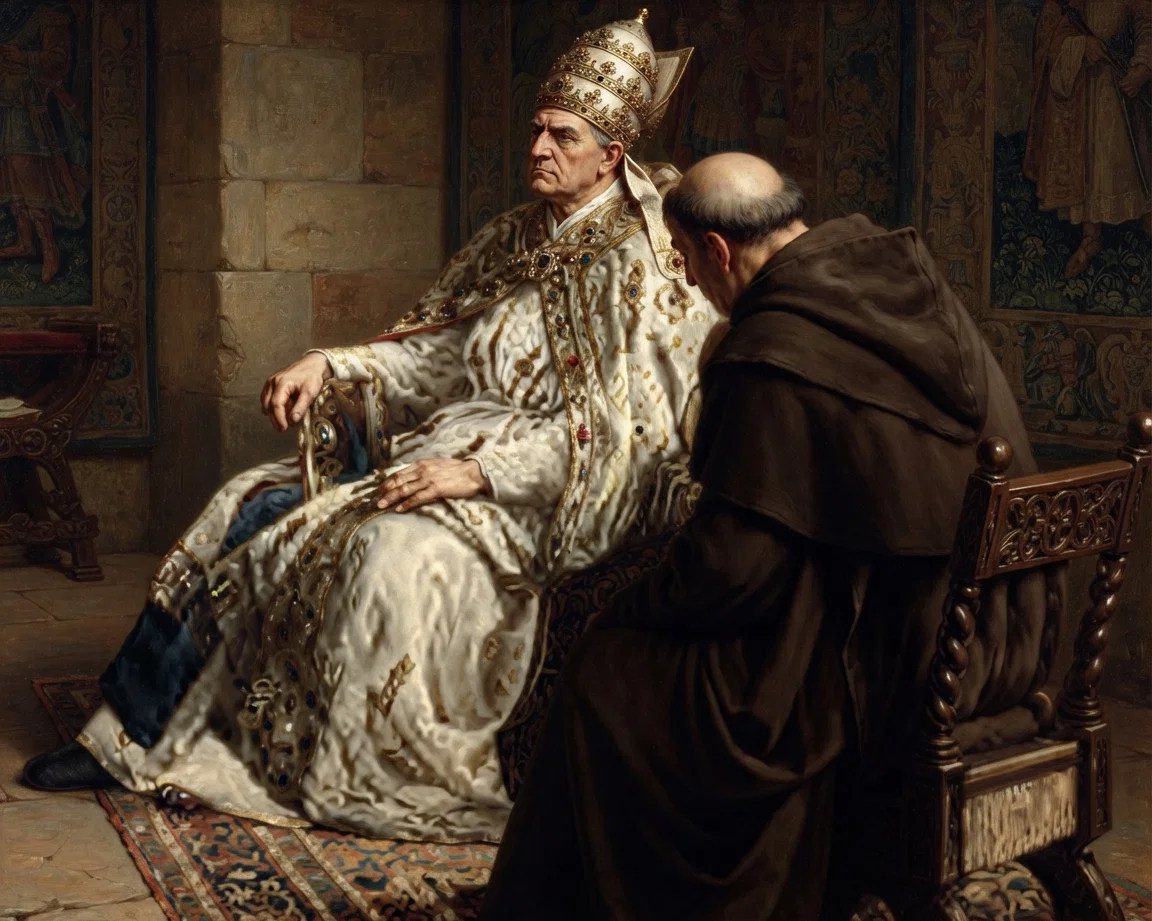
And it must ever be remembered that these great spirits were, to the day of their death, members of the communion of the Church of Rome. They were not men from outside her fold, seeking to come in to reform the abuses that had grown up there. For the most part, they were ordained ministers who regularly preached from her pulpits and cared for the sheep and lambs of her flock. It was by the lives and the lips of her own sons that God would have saved her. Yea, and for a hundred years after the martyrs Huss and Jerome had consecrated their lives in death to the church of whose communion they were, God still lingered. His angel of mercy still hovered over the rebellious people. But instead of repenting, the men who had charge of her affairs ran the church deeper and still deeper into evil ways.
The church would not reform. God would have healed Babylon, but she would not be healed; and now the word sounded forth from above, through all the world — "Forsake her."
His Message — "Forsake Her"
It was in the dawn of the sixteenth century. John Wycliffe had prophesied, long years before, that the time would come when from among the monks — whom he termed the "taproot of the papacy" — there would come forth "some brothers whom God may vouchsafe to teach, who will be devoutly converted to the primitive religion of Christ, and, abandoning their false interpretations of genuine Christianity, after having demanded or acquired of themselves permission from antichrist, will freely return to the original religion of Christ, and they will build up the church like Paul." (Neander, "History of the Christian Religion and Church," volume 5, under "Wycliffe," last paragraph but one.)
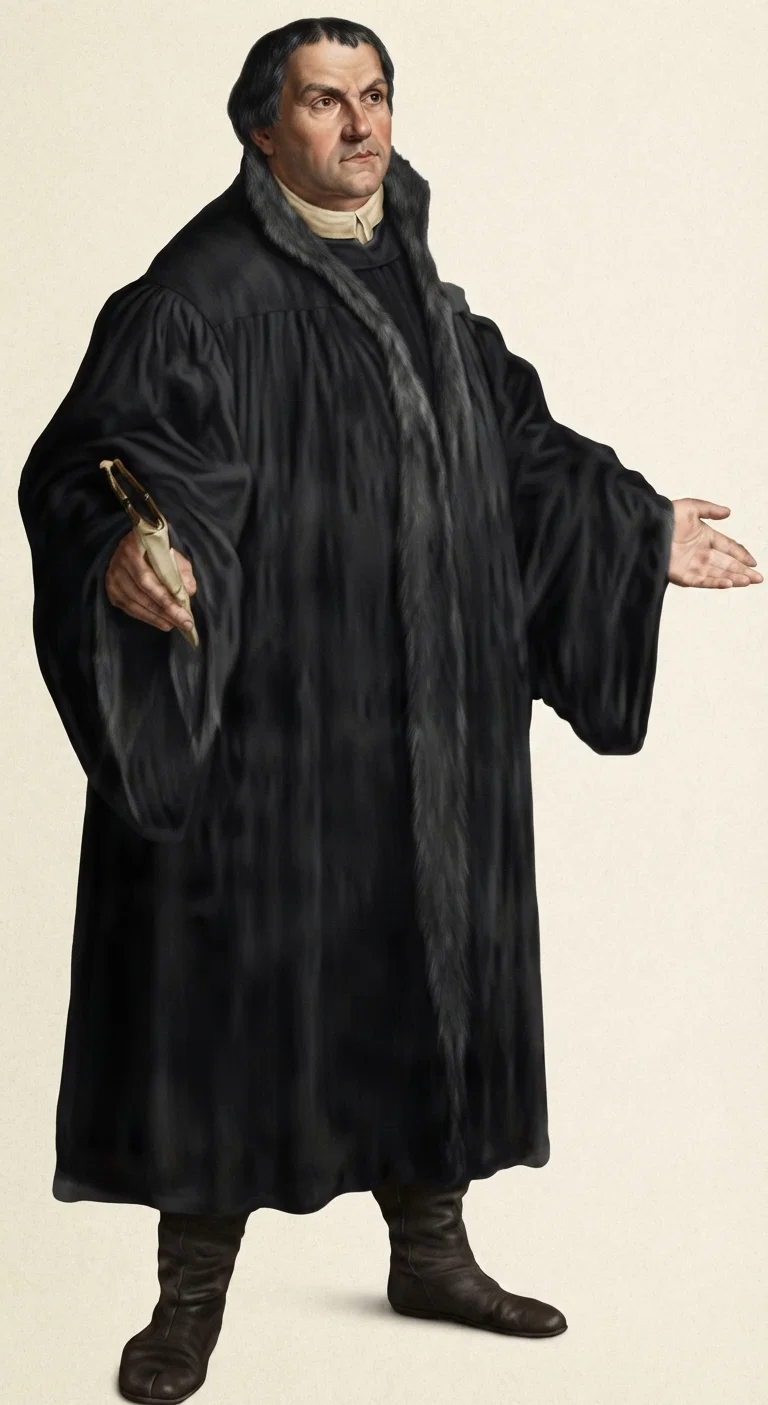
Martin Luther was that monk. From out the Augustine order he came. His work was not to call the church to repentance. Never in the forceful manner of his predecessors did he do this. On the contrary, his message was — "Forsake her." He called upon men to reform, and preach the everlasting gospel of justification by faith. He directed his preaching to individuals as such. He preached to them, and called upon them to leave the communion of Rome and receive justification through faith.
In 1520, Luther published his famous "Babylonish Captivity of the Church," in which he said:
"Whether I will or not, I daily become more learned, spurred on as I am by so many celebrated masters. Two years ago, I attacked indulgences; but with so much fear and indecision, that I am now ashamed of it. But, after all, the mode of the attack is not to be wondered at, for I had nobody who would help me to roll a stone. . . . I denied that the papacy is of God, but I granted that it had the authority of man. Now, after reading all the subtleties by which these sparks prop up their idol, I know that the papacy is only the kingdom of Babylon and the tyranny of the great hunter Nimrod. I therefore beg all my friends and all booksellers to burn the books which I wrote on this subject, and to substitute for them the single proposition: 'The papacy is a general chase, by command of the Roman pontiff, for the purpose of running down and destroying souls.'" — D'Aubigné, "History of the Reformation of the Sixteenth Century," volume 2, book 6, chapter 6, paragraph 5.
This is perhaps the most scathing denunciation Luther ever made of the papacy; and the words, "I know that the papacy is only the kingdom of Babylon and the tyranny of the great hunter Nimrod," speak volumes. Differently stated, Luther saw in the papacy a satanic scheme for the setting up of one universal church in the place of one universal empire, and for the sole purpose of annihilating the truth of God in the earth. And that hellish idea, born of the devil, Luther, by the grace of God, was determined to bring to naught.
Unsparingly Condemned Her
During the Diet of Augsburg, Luther wrote to Melanchthon: "There can be no concord between Christ and Belial. As far as concerns me, I will not yield a hair's breadth."
Thus did Luther take a position of "no compromise" with the papacy. He, after a brief period when the light of the gospel first came to him, did not try to heal her. He condemned her openly and unsparingly. He called men to come out of her. Everywhere he preached to the people to forsake her. Her space for repentance had come and gone. She had not repented, and now the hour of her judgment was commencing.
A man had arisen who clearly saw that the one universal church idea was only the scheme of Nimrod at Babel over again. The power of the universal Church of Rome was now to be broken; and in the place of the universal Church of Rome, there were to be the churches of the Reformation.
(Continued on page 8)
Reforming the Irreformable678(Continued from page 5)
And when, in later years, Rome's temporal power was taken away — when kings and princes, by this means, forced upon her a period of sackcloth and ashes — she once more, in a way, had a chance to repent; but instead of doing this, she has steadily sought, by every means at her command, to regain her old-time prestige and power. She is to-day laboring untiringly and unceasingly to win back for herself that place of dominion and power which was once hers. Times of great strife and commotion have often proved favorable to the designs and aspirations of the Church of Rome. This she thoroughly understands; and that is why the supreme pontiff and the Curia Romana are working so zealously during the days of the present war; — the greatest "Pentecost of calamity" that has befallen the world since the days of the Flood.
That she will succeed in her designs, the Scriptures clearly indicate. But her success will spell her ruin; therefore the decree goes forth to all her sons and daughters, "Come out of her, My people, that ye be not partakers of her sins, and that ye receive not of her plagues."