NINETEEN hundred years ago, the Master of life taught His disciples, saying: "It must needs be that offenses come; but woe to that man by whom the offense cometh!" "Whoso shall offend one of these little ones which believe in Me, it were better for him that a millstone were hanged about his neck, and that he were drowned in the depth of the sea." Matt. 18: 7, 6.
Vance Thompson, in his wonderful book called "Drink and Be Sober," shows us that the first offense from the use of alcoholic liquor is its effect in dulling the highest powers of the brain. The different cells of the brain have their different duties; and it is the function of the highest powers of the brain to decide what is right and what is wrong, and to make the decisions as to right conduct. "Alcohol first attacks — first, mark you, and not last — the highest power of man, his moral nature. Always the moral paralysis is the first physiological effect of alcohol on the brain."
Blunts Sense of Propriety
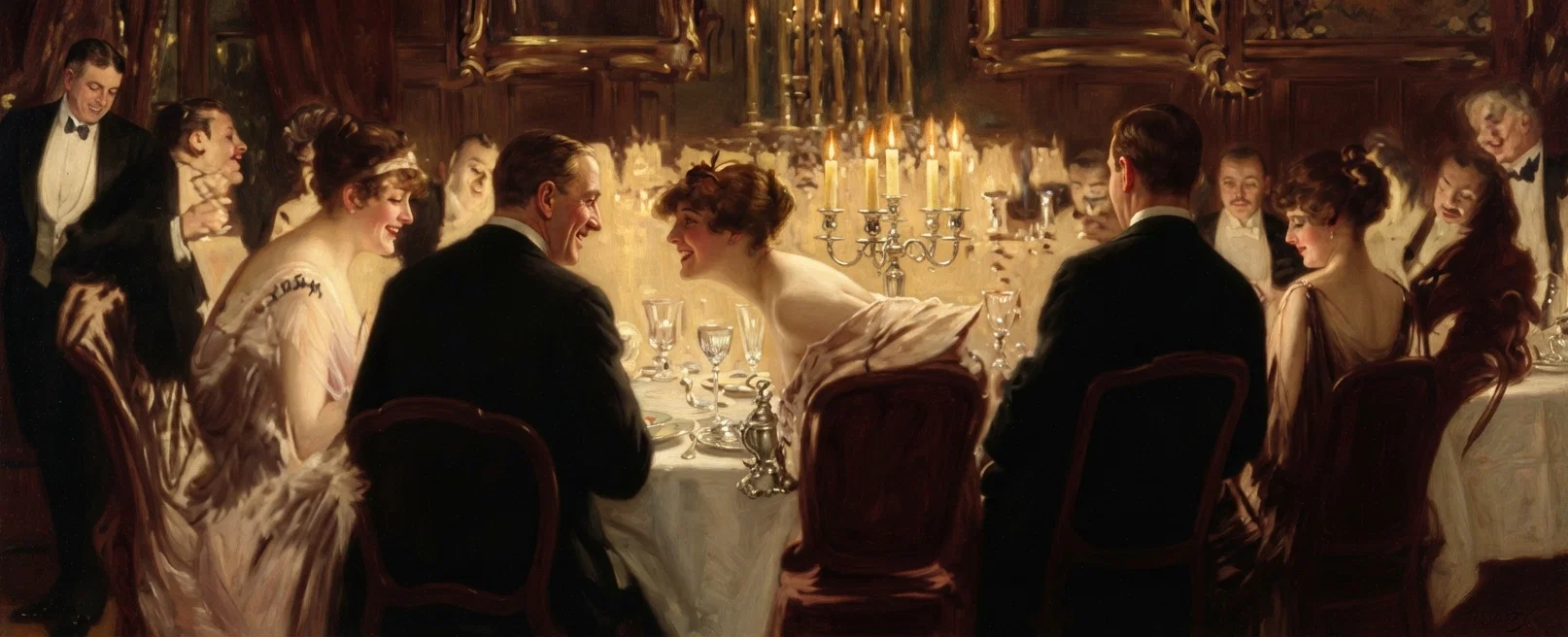
Illustrations of this technical fact are well known: the refined, scholarly gentleman losing his sense of propriety at the dinner table, and telling coarse stories, under the influence of wine; the kind-hearted father striking his little child, while under the influence of drink; the young girl losing her modesty, after her first drink of wine.
We know, too, that this first offense of alcohol on the highest powers of the brain is caused not only by the stronger drinks, but that even one glass of wine loosens a man's tongue and takes away the girl's modesty. Wine or beer in small quantities may not cause a man to stumble physically, or to lose his self-control; but his moral nature is weakened, and his highest power of control partly paralyzed, through their use.
Unsteadies the Sharpshooter's Hand
The second offense of alcohol is against that word which the business world of to-day is spelling in large capitals — EFFICIENCY. Everywhere, to-day, big business is striving for efficiency. Everywhere, the inefficient man is losing his job. Everywhere, the boys and the girls are taught the power of efficiency.
In Europe, the scientists, through their laboratories, have discovered the offenses of the use of alcohol against efficiency. They have sent out their sharpshooters, who, when they have had only a few drinks of wine or beer, have hit the bull's-eye three times out of thirty; when they were not allowed to drink wine or beer, twenty-three times out of thirty. The scientists have given sixty-two mile walking tests where the first four winners were total abstainers. In every sort of work, the average increase of efficiency when the workmen were not allowed a drink, was found to be about thirteen per cent.
We in America have our experiments in the practical laboratory of life. Our railroads have found, on investigating terrible accidents, that the engineer who missed catching the signal, though not drunk, had too frequently had one or two drinks. With the increased use of the automobile has come an increased knowledge of the danger of the driver who is not a total abstainer.
Forty Titanics a Year
The offense of the use of alcohol against life itself is almost unbelievable. When the Titanic went down, and 1,503 persons were lost, a wave of horror swept over the land; yet every nine days, an equal number of deaths are caused in the United States by alcoholic drinks.
Years ago, a Quaker applying for a life insurance in England was told that because he was a total abstainer, he must be charged ten per cent more than the ordinary moderate drinker, the life insurance company feeling sure that any one who did not take a drink of liquor once in a while could not live as long as those who enjoyed "God's good gifts." This Quaker lived to be eighty-two years old; and since his day, the life insurance companies have kept accurate statistics of their beneficiaries. Now this strange policy has been completely reversed.
These statistics show that the average drinker loses about thirteen years of his life by his devotion to alcoholic drinks, and that the man who does not drink stands three times the chance of living, from thirty-five to forty-four, that the man does who drinks even a little.
Strikes Hardest at the Cradle
Far worse, perhaps, than the offense of alcohol in its effect upon the maturer mind, is the fact that it cuts life off at its very source, and strikes hardest at the children in the cradle. An investigation made in Sweden of 3,000 families, in which there were 17,000 children, shows the following facts: In the families where the parents were total abstainers, thirteen per cent of the children died in infancy; in the families where the parents were moderate drinkers, twenty-three per cent; and in the families of hard drinkers, thirty-three per cent died — practically one child in every three sacrificed to drink.
But the offense against the child's life is not the worst offense of alcohol against children. A physician in Berne, Switzerland, made a study of ten temperate families and ten intemperate families during a period covering fifteen years. During the fifteen years, in the temperate families, there were born sixty-one children; in the intemperate families, fifty-seven children.
At the end of fifteen years, of the sixty-one children born in the temperate families, there were fifty normal children; in the intemperate families, at the end of fifteen years, there were only ten normal children. Worse than death, in the intemperate families, there were six idiots and five epileptics. In the temperate families, there was neither an idiot nor an epileptic.
'Something the Matter'
When I was working with the Associated Charities in Washington, D. C., an incident occurred that shows the practical working out of these scientific investigations made in Europe. One morning, my telephone rang, and I was asked by a friend who was working with the Public Hospital, if I could provide clothing for a young girl who had been taken to the hospital with such a loathsome disease that her clothing had been burned. A sister of this poor young girl was sent to me for the clothing. We went upstairs to the attic where was stored clothing that had been sent to us for use among the poor.
I did not ask the pathetic looking little sister who had come to take the girl home to the country, any questions as to why her sister was in this condition, or why she could not afford to buy the clothes. But after a while, as we were picking out the different articles — a pair of shoes the right size, the underclothing, a suit, and all that was needed — she burst into tears, and cried aloud, saying: "Oh, I can't bear it! I can't stand it!"
"What is the matter, dear? What is it?" I asked.
"Oh, my sister isn't in her right mind," she replied, "or she wouldn't do this way. She has never been right. My father is a drunkard; my oldest brother has tuberculosis; my sister is feeble-minded. There is something the matter with us all."
I shall never forget her pitiful cries, and they ring in my ears still — the cries of all these children who are denied the right to be strong and well born, with whom there is "something the matter," because the saloons must make money, and their fathers are drunkards.
The offense of alcohol against the brain in breaking it completely is well known. Dr. Kirby, an expert from Bellevue Hospital, studying the condition of our insane asylums,10has been quoted as saying that alcoholism and venereal disease are the greatest known causes of insanity.
We have, in the state of —, five insane asylums, and one more in process of erection. The head of one of these insane asylums estimates that eighty-five per cent of the people in his institution are there because of alcoholic drinks. A moderate estimate would put the cause of sixty per cent of our insanity down to the credit of alcoholism, combined with its kindred vices.
When we think of the offense of alcohol against the community, it is absolutely incredible that we should tolerate the use of alcoholic drinks at all. In Massachusetts, in 1913, an investigation showed that sixty-three per cent of all arrests in the state were caused by drunkenness.
In Ingleside jail, last year, there were one thousand men and one hundred fifty women sent from San Francisco for drunkenness. The sentences averaged seventy days in length. It seems impossible that any sane community would pay for officers of the law, for courts of justice, for jails, for food, and for care for one thousand men and one hundred fifty women, without any effort to cut off the cause of all this expense and crime.
An Inappropriate Celebration
During the celebration of Christmas, 1915, the use of alcoholic drinks resulted in 77 murders, including 3 small children; 18 suicides; 155 wounded; 31 dead by accident or exposure; 19 wounded by accident; 3 cases of rape, including 2 children; 18 child victims of drink; and 288 miscellaneous casualties.
Those of us who are citizens of the United States, and who can vote for or against the sale of alcoholic drinks, are responsible for these offenses. How are we to meet our responsibility? — By voting for prohibition ourselves, and by working with all our power to persuade others to do the same.