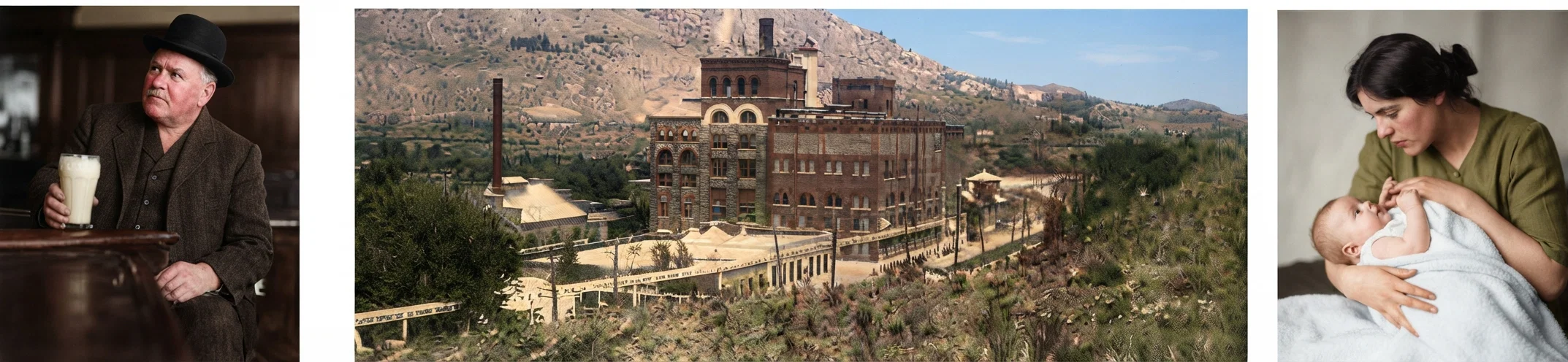
SEARCH through the history of this hateful thing, and find one page over which some mother can bow her grateful head and thank God for all the saloon did for her boy. There is no such reference. All its history is written in tears and blood, with smears of shame, and stains of crime, and dark blots of disgrace.—Bob Burdette.
"THERE is no man whose interest the liquor traffic does not imperil. There is no man who should not, for his own safeguard, set himself to destroy it."
Drinkers Have More Sickness
THAT drinkers have more sickness on the average than non-drinkers, is shown by the table of statistics of the sickness benefit societies of Leipzig, Germany, showing that between the years of twenty-five and forty-four, drinkers were sick on the average two and seven tenths times as often as insured men in general. The report also shows that drinkers' sickness lasted about two and a half times as long as that of the average.
CITY HEALTH COMMISSIONER EMERSON, of New York City, recently said, "Alcohol is never a medicine, is never a food, and is always a poison."
Treating the Boys
ONE of the speakers at the liquor men's convention held in Columbus, Ohio, uttered these significant words:
"The open field for creation of appetite is among the boys. After men have grown, and their habits are formed, they seldom change in this regard. I make the suggestion, gentlemen, that liquor expended in treats to the boys now, will return in dollars in your tills after the appetite has been formed."
SOME argue that the harsh method of law is not the remedy to use. Boys, they claim, need moral stamina; and if these temptations are not in their way, they will not be sufficiently developed. Why not license places to sell cocaine and morphine to your boys and girls, and then rely upon moral suasion to keep them from evil?
Steals Away His Brains
ALCOHOL robs the brain of its normal functioning capacity, impairing it in mental and psycho-motor and moral capabilities. Thus far has science tracked it, and proved its crime against the organism—its enmity against normal nature in blood and every viscus, including, most of all, the brain. Why, then, should clear-eyed science look with complacency upon the popular use of this destructive beverage? Why, as physicians, prescribe it for drink? Why omit admonitions against this enemy which man so often takes "in at his mouth to steal away his brains"?—C. H. Hughes, M. D.
A Vain Hope—In Arizona
MANY of the saloon bars in the state of Arizona were left undismantled when the state went dry January 1, 1915, because their owners hoped that "the good old days" would return. But with arrests fallen off fifty per cent, with an increase of $3,000,000 in savings deposits, with Y. M. C. A. buildings and grocery and other stores taking the place of many of the former saloons, and with the great increase of efficiency and decrease of accidents in the mines and the lumber camps, their hope is a vain one. No man or woman with a sane mind and a good conscience would be willing to see the former conditions restored.
One of the strongest evidences of the blessings brought by prohibition is seen in the fact that the high school attendance has increased by 2,000. This shows that many boys and girls previously obliged to work in order to help support the family are now receiving the benefits of educational instruction.
On the door of the "Senate" saloon in Flagstaff, crape is said to be hanging still, with the words, "Closed on account of death." As long as the voters of the state do their duty, there will be no resurrection of this or any other saloon in the state of Arizona.