Inca Indian Mission

4%

Inca Indian Mission

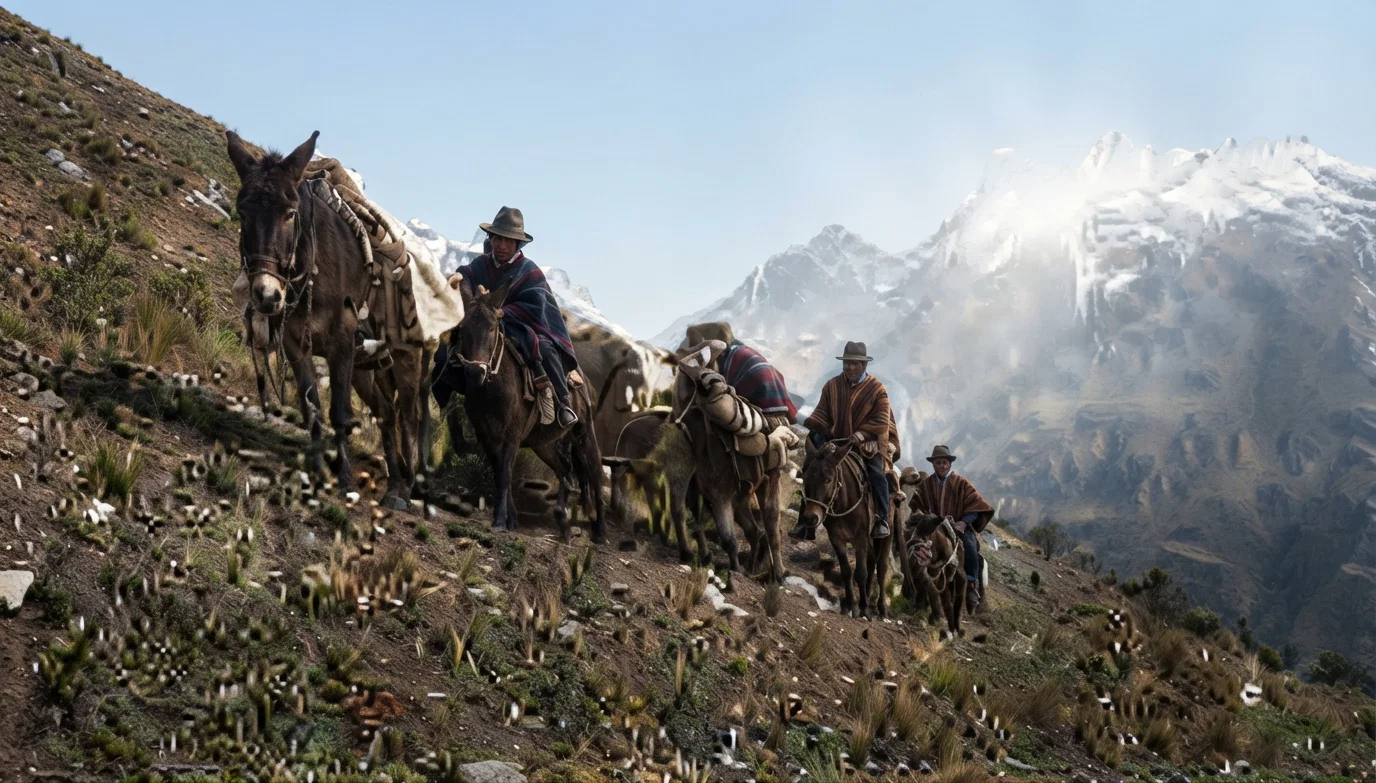
ALONG MOUNTAIN PATHS
THE PLATERIA MISSION BUILDINGS NEAR LAKE TITICACA

Indians of South America Are Pleading

Heart-Touching Calls for Light and Teachers—The Ripe Harvest

F. A. STAHL
FROM Esquinas, twenty miles north of us, we received an invitation to open a mission. This invitation was signed by more than fifty Indians. Many Indians can write their name, and that only. These people are interested. One family from there will be baptized soon. A mission station at this place would reach over five thousand Indians.

"Show Us the Right Way"

Five very tall Indians came to us from Juli three years ago. I was ill in bed at the time, and they came in through the open door, and knelt by my bed, and said, "Father, we have come to ask for help, for some one to show us the right way." I can never forget this.
Over a year ago, a lawyer from that place asked us to come and open work. He stayed with us overnight a few weeks ago, and again pleaded for us to come. Other Spanish men have since invited us to come. This place is situated thirty miles north, on the main road and on the lake shore. A station here would reach some ten thousand Indians.

Indian Voices Calling

Rio Ramos is the place of the interested chief of the "broken stone" pledge. It has been over three years now that these people have waited for help. This place is five days' journey from our mission among the Aymara and Quichua Indians. It was hard for me to estimate the Indians here, as they live among the jagged rocks; but we held large meetings.
Then there is Santa Rosa, ninety miles due north, situated high up in the Cordilleras, where the snow never melts; a place of mineral and hot springs, where the alpaca and the vicuña dwell. The Indians here are very independent, and well off in this world's goods. They are also very determined and fierce. Some of them have been to us for medical help, and know about our work. It was from this place that we met two men in Puno who asked us to come and open a mission among them, one of them being the justice of the peace.
Twenty-five miles west of this mission, up in the high mountains, is the village of Pechacani, surrounded by Indians. The governor invited me to visit him, and I went a year ago. He and the mayor received us very kindly. He told me that he wished we would teach the Indians of his province the way of truth. I have met him twice since; and each time, he has renewed his invitation.
At the peninsula, a place called Whatta, the Indians have waited four years for a missionary. From time to time, we have held meetings with these people, with the result that this month, we shall baptize ten from this place. Six thousand live here.
From the island of Amantana, situated out in Lake Titicaca, came two messengers inviting us to come at once to their people. They are Quichua Indians. These men bought books, and stayed with us a few days, in order to learn some of our hymns, so that on their return they could sing to their people.

President of Bolivia Will Help

Bolivia is ready for the work among the Indians. Last October, Mrs. Stahl was called to nurse the daughter-in-law of the president. Mrs. Stahl was in the palace of the president six weeks, and in that time had ample opportunity to present the needs of this work to the president and his family. They were very much interested, and asked many questions. They knew about our work for the Indians in La Plateria. The president assured Mrs. Stahl that he would do all he could to get the work started among the Indians in Bolivia. He even indicated the place for us to start work—a place with a very large community of Indians, and it is the very place where we have been impressed to open the work. We need to fill this opening at once.

Knew the White Man's Weakness

Sepita is up high in the mountains, where nothing grows but a very tough grass. Messengers came to us from there with fine specimens of metal, telling us they knew where great quantities of it could be had. This was their way of tempting us to come to them.
They know the white man's weakness. Three times they have come asking for a teacher. We visited them about a year ago, and found the people very interested. In one of the meetings, one man exclaimed, "Oh, how can we learn these things without a teacher!"
Time fails me to tell of the many other places where workers are needed, in Bolivia and Peru and Ecuador. We are living in the end of time, and God Himself has prepared the hearts of the people. In the valleys, on the plains, beside the flowing rivers, on the shores of the lakes, up the high, bleak mountains, and down in the tropics—everywhere, it is the same story,—the crying need for this complete gospel message which the God of heaven has given us to proclaim to all men.
Puno, Peru.