Destroying the Mother of Death — Preparing for Immortality
By GEORGE W. RINE
SIN is the intolerable outrage against God's nature, filling His universe with lawlessness and pain. On the other hand, man is the dear object of God's love, the supreme concern of His infinite solicitude, "the apple of His eye." "God so loved the world, that He gave His only-begotten Son, that whosoever believeth in Him should not perish, but have everlasting life."
The Mother of Death
This necessary repulsion of the divine holiness to sin is enunciated in this scripture: "The wrath of God is revealed from heaven against all ungodliness and unrighteousness of men." Rom. 1: 18. Note now the complementary scripture to the foregoing: "But God commendeth His own love toward us, in that, while we were yet sinners, Christ died for us. Much more then, being now justified by His blood, shall we be saved from the wrath of God through Him." Rom. 5: 8, 9.
We see, then, that sin is the one loathsome reality. God simply cannot brook it. Sin is enmity against God. "The whole creation groaneth and travaileth in pain" because sin, the mother of death, has come into the universe. Sin leads its victim to that inevitable finish where the grave yawns. Sin spells distortion, dissolution, death. It is the one and only curse known to God's illimitable creation. Hence God must and will destroy sin; for sin, if let alone, would subvert His government, undermine His all-inclusive kingdom. "The wrath of God . . . revealed from heaven against all ungodliness and unrighteousness of men," is simply the omnipotent power of God revealed from heaven for the destruction of sin.
In rapt vision, the exiled prophet of Patmos looked down through the vista of the centuries to the time when sin shall have been destroyed, and uttered the solemn and blessed pronouncement, "And there shall be no curse any more." Rev. 22: 3. At that time, the prophet Isaiah's inspired anticipation will meet its realization — "For the earth shall be full of the knowledge of Jehovah, as the waters cover the sea." Isa. 11: 9.
Prepared for Immortality
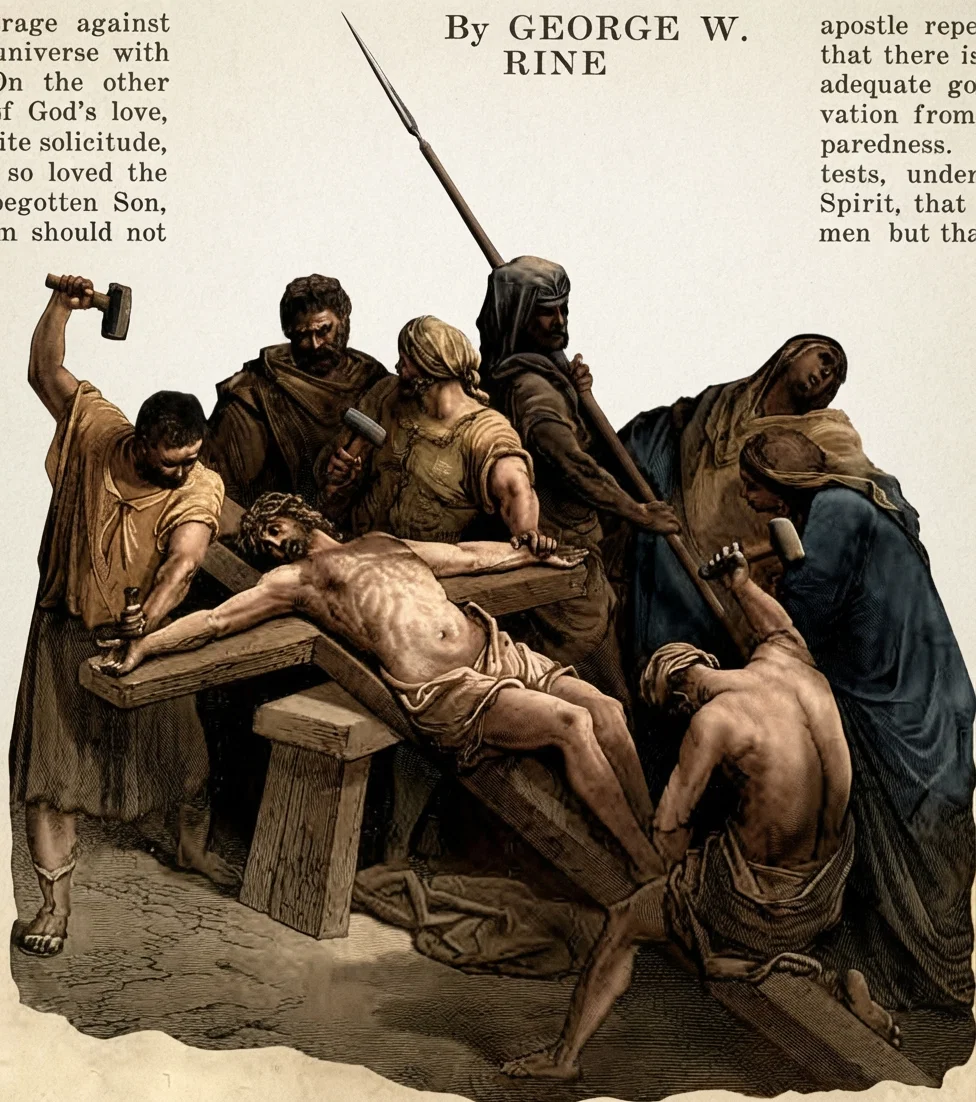
Though God must destroy sin, He so loves the sinner that He yearns to save him. Accordingly, He commends His own love toward us by imputing all sin to Jesus, the Lamb of God, laying "on Him the iniquity of us all," and causing Him to become sin's curse for us by paying sin's penalty in death on the cross. In His death, He bore the wrath of God against sin, in the sinner's stead, as the sinner's substitute. He who knew no sin was made to be sin for us. Hence the repentant sinner is "justified by His blood." Because God cannot save us in our sins, He gave Jesus to be our sin offering, that He might "save His people from their sins." In keeping with this glorious truth, Paul averred, "This is a faithful saying, and worthy of all acceptance, that Christ Jesus came into the world to save sinners."
Yes, Jesus died, "the Just for the unjust, that He might bring us to God;" that is, to prepare us to meet our God — to meet Him in judgment, to meet Him in peace, to meet Him in glory, and so dwell with Him, our eternal Father, forever. No other "preparedness" is comparable to this one. To be saved from sin is to be prepared for immortality, prepared for glory, prepared for endless life in a sinless, deathless world — in Paradise regained. Aye, if we believe, if we confess our sins, and so repent of them, then we have God's assurance that "the blood of Jesus His Son cleanseth us from all sin." Freedom from sin by virtue of my faith in the sin-atoning power of the cross, of the blood of Christ, is my preparedness for eternal life, for heaven, for a place "in my Father's house."
The Conditions of Preparedness
First, then, we must accept God's verdict that all have sinned and come short. "If we say that we have not sinned, we make Him a liar, and His word is not in us," is the strong, stern announcement of the inspired John. Such testimony should make us exceeding thoughtful. Hence by nature every one of us is in a condition of utter unpreparedness for death, or for the final assize of the "Judge of all." How imperative, then, how urgently necessary, that we should at once avail ourselves of whatever power exists which is fitted to prepare us for the final summons — for the world to come.
Now there is only one such power. It is the gospel of the cross, the gospel of the Lord Jesus. This is the verdict of the Holy Spirit, as spoken through Paul, moving him to declare, "I am not ashamed of the gospel: for it is the power of God unto salvation to every one that believeth." Of course it means "salvation" from sin, and accordingly, from death, which is "the wages of sin."
In the first chapter of Galatians, the apostle repeatedly and solemnly asseverates that there is only one gospel — one true, one adequate gospel, or plan of salvation — salvation from sin, and therefore from unpreparedness. Peter likewise, in Acts 4, protests, under the inspiration of the divine Spirit, that there is no other name given to men but that of Jesus through which we can be saved. Jesus Himself declares that He is "the way," "the door," and sternly asserts that if any man tries to attain eternal life — tries to get into the "fold," into heaven — by some other way, "the same is a thief and a robber."
Climbing Another Way
Men have thought out all sorts of cunningly devised ways of ridding themselves of sin by way of preparing for heaven. Some are trying to prepare to meet God by penance and good works; some by subscribing to certain doctrines or creeds; some by scrupulously observing all the rites and ceremonies of their church; some are even trying to convince themselves that sin is an illusion — that is, "a delusion of mortal mind." All such only hoodwink themselves, and give the falsehood to omniscient God. We have seen above that God's verdict as to the universality of human sin is rigorously categorical. Yes, "death passed upon all men," because all have sinned.
But we are divinely assured that Jesus died for the sins of the whole world. Aye, He tasted death "for every man." He "bare our sins in His own body on the tree." Jesus "condemned sin in the flesh" — our sin — "that the righteousness of the law might be fulfilled in us, who walk not after the flesh, but after the Spirit." Now here is the crowning promise: "If we confess our sins, He is faithful and righteous to forgive us our sins, and to cleanse us from all unrighteousness." 1 John 1: 9. To be forgiven our sins, and to have all unrighteousness purged from our lives by the blood of the cross, is to be prepared for eternity. This is God's "preparedness" for us, for sinners, and is the only preparedness which, in the final and supreme crisis, will count.
"SOLEMN will be the day of final decision. . . . Sad will be the retrospect in that day when men stand face to face with eternity. The whole life will present itself just as it has been. The world's pleasures, riches, and honors will not then seem so important. Men will then see that the righteousness they despised is alone of value. They will see that they have fashioned their characters under the deceptive allurements of Satan. . . . Then they will see the results of their choice. They will have a knowledge of what it means to transgress the commandments of God. There will be no future probation in which to prepare for eternity. It is in this life that we are to put on the robe of Christ's righteousness. This is our only opportunity to form characters for the home which Christ has made ready for those who obey His commandments. The days of our probation are fast closing. The end is near. . . . Beware lest it find you unready."