*"This was the calling, out of all the realm of vocations, that God the Father chose for His only-begotten Son."
By
Percival
T. M.
M. B.
By Percy T. Magan M.D.
CHRISTIANITY does not ignore any part of man's nature. From the most ancient times, it has been a gospel to the whole man—to his body as well as to his spirit.
Now medical missionary work may be defined as that phase of the activity of the church of Christ which endeavors to spread the knowledge of "the glorious gospel of the blessed God" through the healing of the sick.
Therefore medical missions are fundamentally agencies for the salvation of the souls of men, and consequently their purpose is intrinsically evangelistic. All else connected with their operations is tributary to this one great end. And it is of the highest importance that all who engage in the work should forever keep this goal in remembrance.
A Unique yet Unappreciated Blend
MEDICAL missionary work is no mere accompaniment to the proclamation of the gospel. It must never be considered as merely a useful appendage. It is rather the blending of a twofold work into one harmonious whole. Concerning this, one man has said that it is "no crude mechanical mixture, but rather a scientific compound of the alchemy of faith." This is a cardinal principle.
Once the medical phase of the work is permitted to drift into a side channel, and to be regarded as something that can be carried on separately and apart, and by different hands, from the distinctively evangelistic aspect, and medical missions have lost the vital fountain of their power, and their part and lot in the missionary campaign.
From the above, it will be easy to realize that medical missions call for the knowledge and qualities that are required in skilled physicians and surgeons, in combination with the gifts and training necessary to those whose passion in life is to win men and women to a faith in the world's Redeemer. This is a unique blend, which worldlings little appreciate. Viewed from this angle of vision, medical missions hold title to an important position in the vanguard of gospel work.
God's Only Son a Doctor
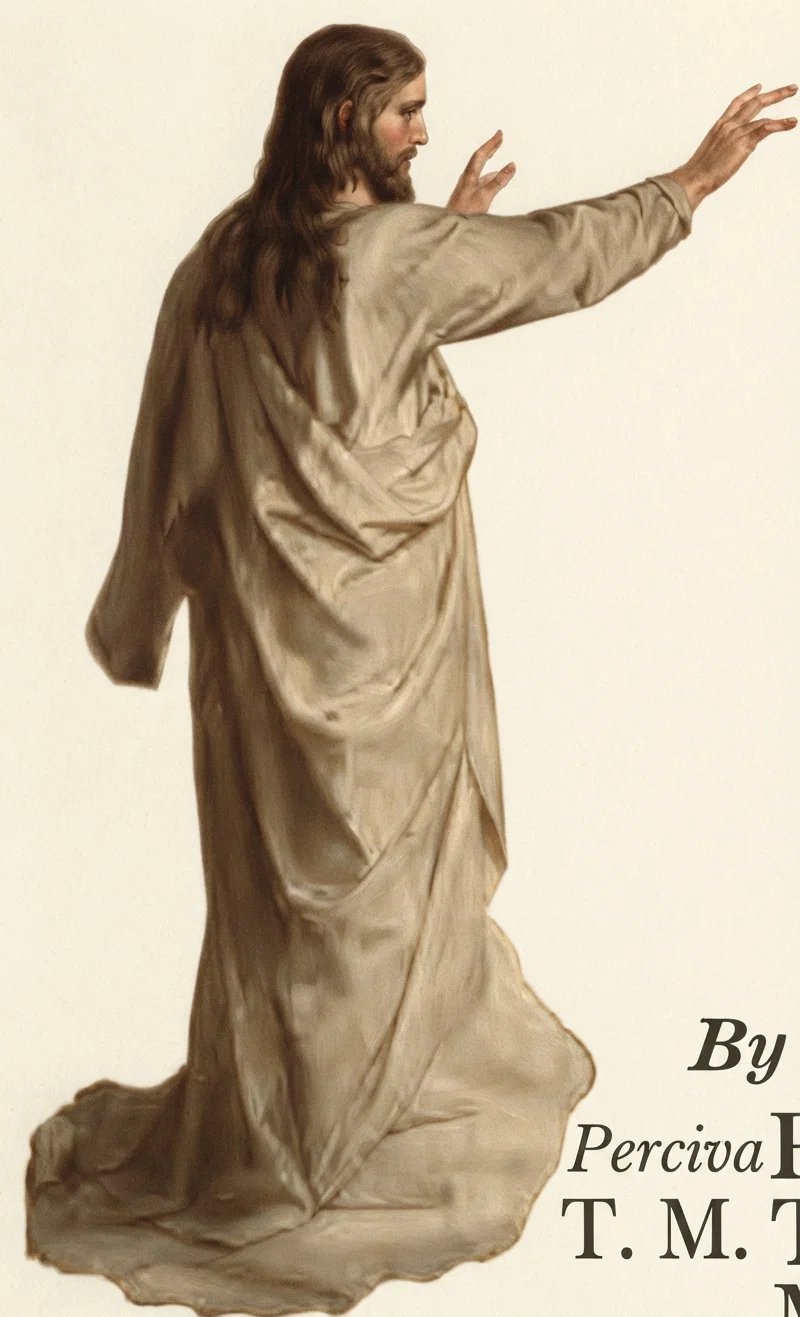
THE great Dr. David Livingstone once said, "God had an only Son, and He was a missionary and a physician." This was the calling, out of all the realm of vocations, that God the Father chose for His only-begotten Son. Consequently the inspiration which fires the hearts of men and women to sacrifice their lives upon this altar comes not from a creed or philosophic theory, but from a Person. Its dynamic force lies in the life and death of a divine Saviour, whose vocation and passion here below was that of a healing evangelist. In His life and ways of doing things, therefore, must be sought the type for all who would make His calling their own.
Twenty-six of Christ's miracles had for their direct object either the healing of disease or the raising of the dead, and a further three were solely for the purpose of ministering to the physical needs of mankind. At the very start of His public ministry (Luke 4:16-19), the Master quoted some Old Testament Scripture in which His work as a healer was divinely set forth. And it is worthy of note that when unbelief hindered Him from doing any other mighty work, His blessed acts of healing continued still. (Mark 6:5.)
So notable, indeed, was this aspect of the Master's life, that over and over again the audiences who thronged Him were largely made up of sick people and their attendant friends. In nine instances, it is recorded that He was "moved with compassion" because of the purely bodily needs of men and women. And it cannot be denied that it was the Master's healing work that attracted men and women to His glorious gospel. "His fame spread abroad" by virtue of the fact that He was a mighty healer. The crowds came to Him "bringing their sick," because He could heal. Once they were there, the great Physician presented not only physical health, but also the words of eternal life.
The "Miraculous" Cavil Answered
THE longer we study the life of the Son of God, the more strikingly does this interplay between His preaching and His healing ministry impress us as being not a coincidence, but a divine coördination. Well did He know that frail humanity was ever more ready to appreciate that which met its felt physical needs, than it was to welcome that which met its unfelt spiritual needs. He approached man along the line of least resistance. He used His power in the lower realm as a mighty lever for His operations in the higher sphere.
Oftentimes we are told, by the opponents of this work, that we cannot establish a parallelism between healing as practiced by the Master and His disciples, and that which is done to-day. They, men tell us, accomplished their work by virtue of a special endowment of miraculous power. We possess little or none of such a gift, and are obliged to rely on physiologic remedies and rational therapeutics. Hence, it is argued, there is no Biblical basis for the assumption that we are called to carry on the work of healing in missionary ministry.
In answer to this cavil, let it be declared that we do not have the miraculous gift of tongues as the early church possessed it, and by which the disciples accomplished such wonders in the promulgation of the gospel among the heathen. But it is never argued that because of this, Christ's church on earth to-day is not called to preach and teach in heathen lands. It is taken for granted that by the use of God-given faculties, the same end can be attained through the acquisition of languages.
The Practice of the Healing Art
AND so, in like manner, whilst to-day the blessed gift of miraculous healing is only sporadic in its cheering visitations, men may nevertheless acquire, and bring into the service of the gospel, the practice of the healing art—true medical science, by the utilization of which the command to heal the sick can still be carried out.
Let us, then, both laymen and workers, vow within our souls to have some practical part in medical missions. Not all can engage actively in this work, but there is room for all to help. The One from whose lips fell the commission, "Preach and heal," also enjoined us in the words, "Freely ye have received, freely give." Let us, if we cannot go ourselves, esteem it a sacred privilege to send forth others, as once He did, to "heal the sick."