The Key

3%

Pacific Press Publishing Association · Mountain View, California · Aug 15, 1916

FromSigns of the Times, Vol. 43, No. 32.

Read the full edition

The Key

That Unlocked the Time of the End

The Seed Sown by the Albury Prophetic Conferences

and Its Harvest
By C. C. CRISLER
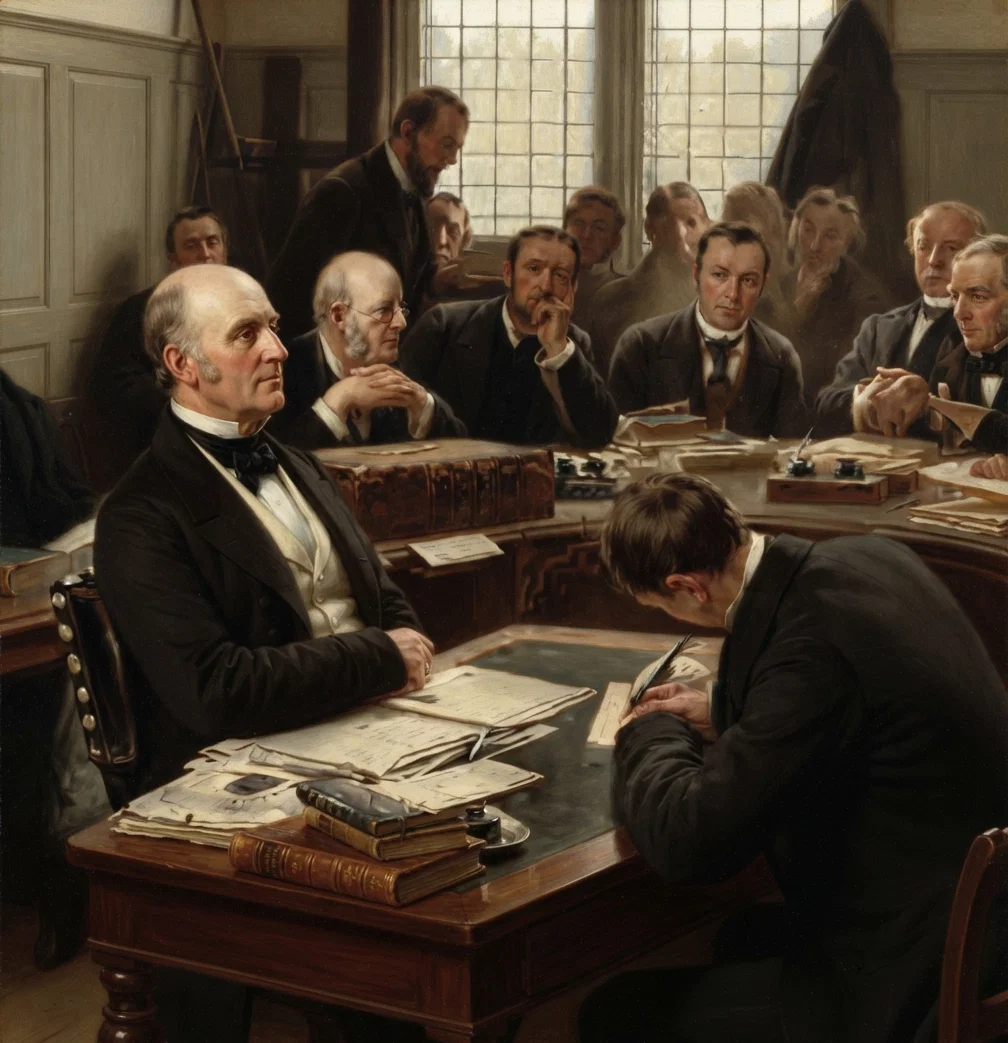
WHILE Edward Irving was proclaiming with power, in 1826, the near approach of the great day of Judgment, many other London pastors, and laymen not a few, were giving careful thought to the prophetic portions of Holy Writ. Among these students of Scripture were several men prominent for their piety and for their sound intellectual attainments. One of the number was the Rev. Daniel Wilson, of the Church of England, afterward bishop of Calcutta; another, the Rev. Lewis Way, who, while traveling alone some years before in the steppes of Russia and in Syria and Arabia, had discovered the intimate connection existing between the time periods of Daniel's prophetic visions — the key that unlocks to human understanding that which was sealed "to the time of the end." The results of these meditations, Mr. Way had given to the world in 1816, in a volume entitled "Letters to Basilicus."
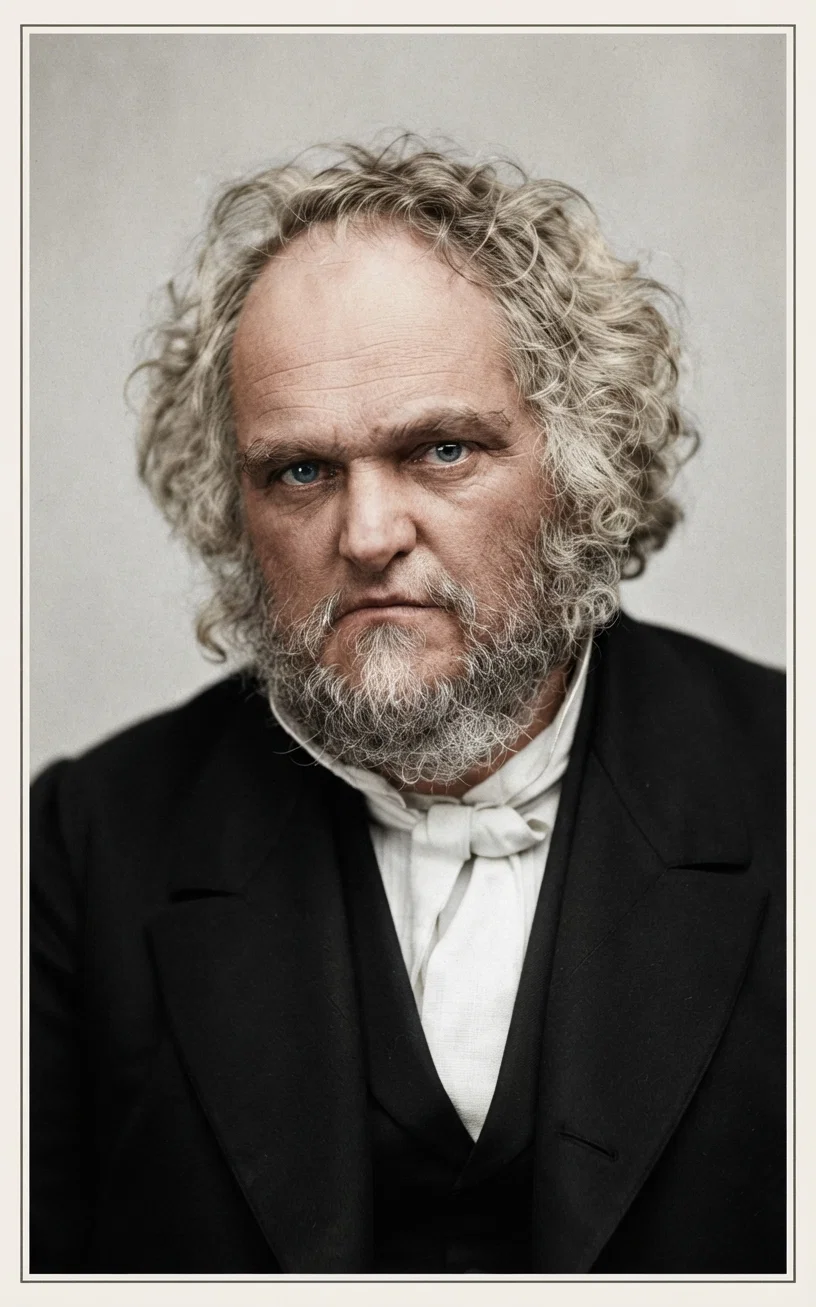
JOSEPH WOLFF
ONE of the members of the first Albury Prophetic Conference, famous in later years as a Christian missionary and Advent preacher among the Jews and Mohammedans in Asia Minor, Persia, Bokhara, Cashmir, etc.
JOSEPH WOLFF ONE of the members of the first Albury Prophetic Conference, famous in later years as a Christian missionary and Advent preacher among the Jews and Mohammedans in Asia Minor, Persia, Bokhara, Cashmir, etc.
More than a score of ministers were specially engaged in united study of prophecy. Dr. W. Dodsworth, Dr. Okely, the Rev. Robert Story, of Rosneath, and the Rev. E. Vaughan, were among the number. Lord Mandeville, afterward the duke of Manchester, was one of the laymen uniting with the pastors in diligent investigation. Another was Henry Drummond, Esq., a banker and a member of Parliament, and founder of the professorship of political economy in Oxford University. Among other laymen of note may be mentioned the Hon. J. J. Strutt (the late Lord Rayleigh); Mr. W. Cunningham; Mr. J. H. Frere; Mr. John Tudor, afterward editor of the Morning Watch; also Captain G. Gambier and Lieutenant Malden, of the army and navy.

Met to Interchange Views

DURING the spring and early summer of 1826, these men met occasionally in London, in order to compare views, and to arrive, if possible, at a correct understanding of the times in which they were living. These comings together for an interchange of views, brought to them increased light and blessing.
These informal gatherings led to the holding of the Albury prophetic conferences of 1826 to 1830. At the suggestion of Mr. Way, those who were investigating truth decided to set apart a season for continuous study; whereupon Mr. Drummond, the London banker, offered to place his beautiful country home near Albury, in the county of Surrey, at the disposal of his friends, for the holding of a formal conference. To this meeting all who were specially interested were invited, "both ministers and laymen, of any orthodox communion."
"In answer to this honorable summons," writes the Rev. Edward Irving, one of the members of the first conference held, "there assembled about twenty men of every rank and church and orthodox communion. And in honor of our meeting, God so ordered it that Joseph Wolff, the Jewish missionary, should also be of the number. And here for eight days, under the roof of Henry Drummond, Esq., the present high sheriff of the county, and under the moderation of the Rev. Hugh M'Neile, the rector of the parish of Albury, we spent six full days in close and laborious examination of the Scriptures."

Studies the Prophecies

OF the questions considered, those of chiefest importance were (1) "The system of the prophetic visions and numbers of Daniel and the Apocalypse;" (2) "The Scripture doctrine concerning the future advent of the Lord;" and (3) "The duties to the church and the world arising out of the same." "These," further writes Mr. Irving, "are points on which men are supposed to be wholly at sea, without chart, course, or polar star; and it is the common rebuke of the students of prophecy, that no two of them are agreed on any one matter: and therefore the thing which I am about to say, will appear the more wonderful — that . . . we were so overruled by the one Spirit of truth and love, as to have found our way to harmony and coincidence in the main points of all these questions."
As regards the spirit of the conference, Irving mentions especially "the fullness, freeness, and harmony which prevailed in the midst of partial and minor differences of opinion;" also "the spirit of prayer, and love, and zeal for God's glory and the church's good," as well as "the sweet temper and large charity which were spread abroad." "By the common consent" of all, he testifies, "God was in a very remarkable way present with us."
ALBURY PROPHETIC CONFERENCE "More than a score of ministers were specially engaged in the united study of prophecy."
A day was set apart for each subject. Early in the morning, those in attendance met "to seek the Lord for the light, wisdom, patience, devotion to His glory, communion of saints, and every other gift and grace of the Holy Spirit;" and before separating for breakfast, one of their number opened "the subject of the day in an orderly and regular way, taking all his grounds of argument, and substantiating all his conclusions, out of the Holy Scriptures."
Two hours daily were spent in quiet individual study and in earnest secret prayer, "in order that the brethren might each one try and prove himself before the Lord upon the great questions at issue," and that they might come together "with convictions, not with uncertain impressions." At eleven in the forenoon, they reassembled for their mid-day session, which (to quote from one of the participants) often lasted "four, and sometimes almost five hours, our aim being to gather the opinions of every one before we parted; and when we tired, we refreshed ourselves with prayer, which we also regarded as our main defense against Satan."

The Round-Table Discussion

THE third and last session was held in the evening, when the men taking part seated themselves "around the fire of the great library room, yet still looking to a moderator, and with the same diligent attention to order." Any difficulties in Scriptural exposition needing further consideration were brought up and resolved to the satisfaction of all present; "and so we proceeded," writes Mr. Irving, "till towards eleven o'clock, when the whole duties of the day were concluded by the singing of a hymn, and the offering up of an evening prayer."
"Such were the six days we spent under the holy and hospitable roof of Albury house, within the chime of the church bell, and surrounded by the most picturesque and beautiful forms of nature; but the sweetest spot was that council room where I met the servants of the Lord, the wise virgins waiting with oil in their lamps for the Bridegroom; and a sweeter still was that secret chamber where I met in the Spirit my Lord and Master, whom I hope soon to meet in the flesh."
"O Albury, most honored of the King And Potentate of heaven, whose presence here We daily look for! In thy silent halls His servants sought and found such harmony Of blessed expectation as did fill Their hearts with lively joy, as if they'd caught The glory of the cloud which bore their Lord, Or heard the silver-toned trump of jubilee Sound His arrival through the vaults of heaven. From thy retreat, as from the lonely watchtower, We had certain tidings of the coming night And of the coming day; the one to brace Our hearts with dauntless resolution All sufferings to endure on His behalf Who for our souls did bear the ascendant dire Of Satan's hour and power of darkness; The other to delight our souls with thoughts And dearest joys which are not known to those Contemptuous and unfaithful servants Who think not of the promise long delayed Of Thy most glorious coming, gracious Lord! For me, and for these brethren's sake, I pray That the sweet odor of these hallowed hours May never from our souls depart till Thou, Our glorious King, Thy standard in the heaven Unfurlest, and command'st the Archangel strong To make the silver-toned trump of jubilee Sound Thine arrival through the vault of heaven, And quicken life within the hollow tomb."
"These meetings at Albury were continued annually for five years, the last being held in 1830, generally about the season of Advent. Forty-four people in all attended one or more of them; but of these, nineteen were clergymen of the Church of England, one was an English Moravian, two were dissenting ministers, four were ministers of the Established Church of Scotland; and eleven English laymen, one Scotch Presbyterian layman, and six other Englishmen, whose adhesion is unknown, made up the number." (Dr. E. Miller, "Irvingism," volume 1, page 30.)The hope of the Lord's coming, for which these earnest investigators of the past century stood at first as almost solitary witnesses, is now held by tens of thousands in Great Britain and on the continent of Europe, in the Americas, in Asia, in Africa, and in the islands of the sea. During the years the Albury conferences were held, a quarterly journal of prophecy, the Morning Watch, was founded; and while this has long since been discontinued, other journals have undertaken to fulfill a similar mission, and these have prospered and multiplied, until to-day there are published regularly two score or more of weekly and monthly periodicals interpreting the meaning of the fast fulfilling signs betokening the coming of the Son of man.
Those truth-loving souls who, a century or more ago, were led by the Spirit of God to begin to prepare the way for the coming of Jesus in this our day, realized to some extent their imperfect knowledge of truth in its fullness. One of their number, Mr. J. Bicheno, in a volume published in 1793, under the title, "The Signs of the Times," modestly declared in his preface: "The author . . . hopes — whatever the imperfections — that his efforts to illustrate the word and providence of God, and to smooth the way to the study of the prophecies, may be of some use to the pious inquirer, who, amidst the darkness and tempest which surround him, is anxiously asking, Watchman, what of the night?"
By the year 1829, when the first number of the quarterly journal, the Morning Watch, was issued, the students of God's word had become so confident of their understanding of the times in which they were living, as to make bold to use as their motto and rallying cry the words: "Watchman, what of the night? watchman, what of the night? The watchman said, The morning cometh, and also the night: if ye will inquire, inquire ye: return, come."

Proclaimed with Power

DURING the advent movement of 1843-44, those who were preaching and publishing adopted as one of their rallying cries the thrilling words, "Behold, the Bridegroom cometh! Go ye out to meet Him!"
To-day, in every land, to every kindred, tongue, and people, the message of a soon-coming Saviour is proclaimed with power. The seed sowing of the century that has passed is yielding an abundant harvest. Thousands are preparing for that glad day when Jesus shall appear in person to gather home His loved ones, — thousands who long have been watching for His appearing, and who have been sustained and cheered all along the way as they have recognized the signs foreshadowing the dawn of that glorious day.
"The time is at hand." "He which testifieth these things saith, Surely I come quickly." "Even so, come, Lord Jesus."