Does Might Make Right?

4%

Pacific Press Publishing Association · Mountain View, California · Aug 15, 1916

FromSigns of the Times, Vol. 43, No. 32.

Read the full edition

Does Might Make Right?

A Discussion of the Principles Involved in the Mighty Struggle Between Capital and Labor
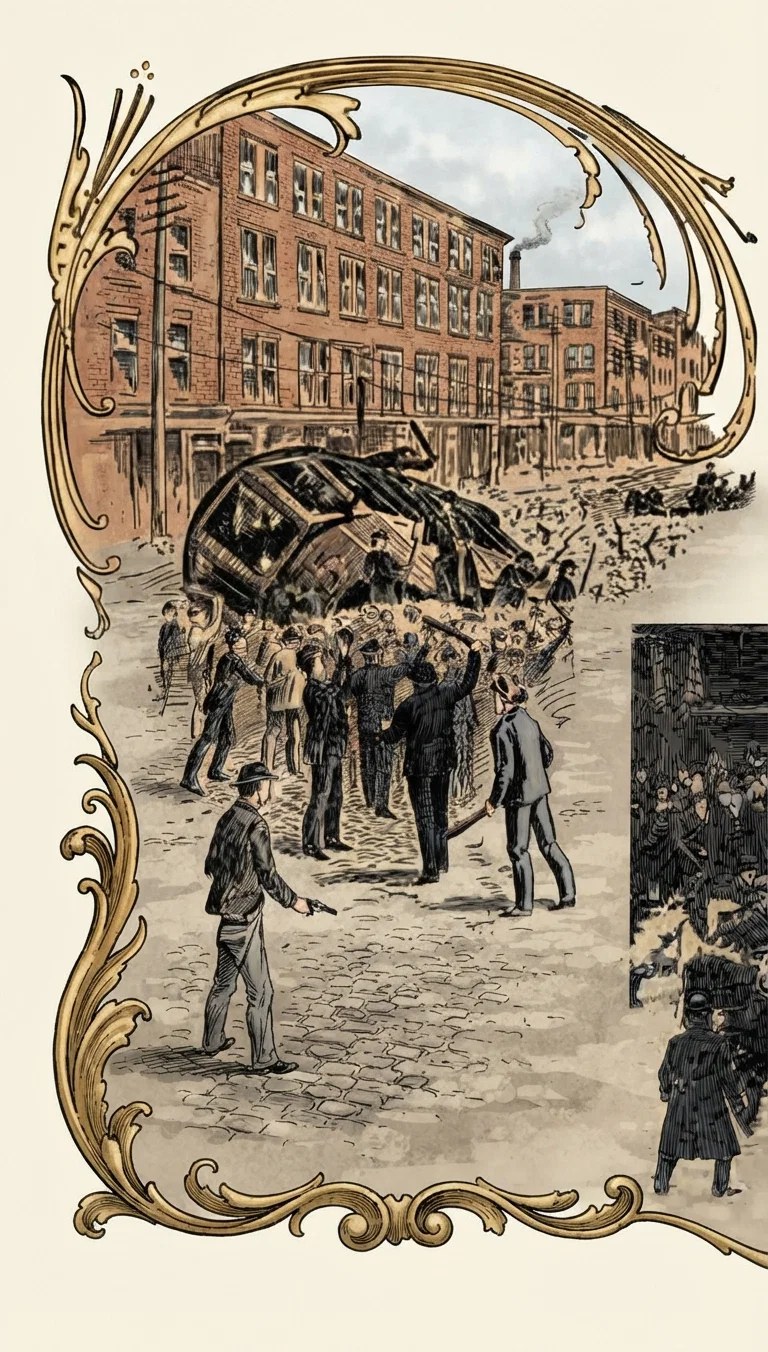
"A conflict ages old, it grows in scope and intensity."
By B. M. Grandy
THE Declaration of American Independence states a great truth, "All men are created equal,"—a truth which is but the reiteration of a statement from the Source of all truth, who declares in His word, "God . . . hath made of one blood all nations of men for to dwell on all the face of the earth." Acts 17: 24-26. Yet, like many other great truths, it is not universally recognized. Solomon might well have said with regard to man's attitude toward this truth also, "This only have I found, that God hath made man upright; but they have sought out many inventions." As in the case of Israel of old, these inventions bring a plague upon the head of the inventors. Ps. 106: 7-11.
Owing to the perverseness of the human heart, we find generally the experiences of mankind in strange contradiction of the right and proper. Brothers to-day are engaged in terrible battle and carnage, nations plunged into an abyss of slaughter. Deep-seated envy and hatred are uncovered in the hearts of kindred.

Passionate Fury Seizes the Scepter

NEUTRALITY, standing apart, looks upon the terrible slaughter, and is filled with horror and astonishment. Should we say "standing apart"? — Nay; rather, Neutrality plunges feverishly to the task of enriching herself at the cost of the lifeblood of war-mad nations, and herself hastily dons the armor, better to withstand the conflict that she feels, if she does not acknowledge, will soon demand her attention.
To-day we loudly decry the uselessness of war; to-morrow the man that fails to lend his support to the war program, and refuses to stain his hands with the blood of his fellow man, is a mollycoddle and a coward. Delicate women scorn him; children scoff at him; mankind despises him. To-day reason — or is it only circumstances? — holds in check the powers of darkness; to-morrow passionate fury seizes the scepter, and the powers of hell desolate the land.

Bitterness Grips the Heart

Two boys start in life, each ambitious to accumulate the wealth of this world. One, by his superior genius or more fortunate ventures, succeeds. His path through life leads amid opulence and splendor. True, his business ethics are often somewhat on a tangent to the straight line of right; but he is counted a success, for he has gained the coveted wealth. His associations and sympathies are for those of his own class, he himself being the first object of his concern.
The other man fails—miserably fails. Fate, destiny, seemingly the hand of man and God, is against him. The results of his toil and striving come to naught. His path through life leads through the haunts of poverty, vice, and crime. His hand is raised against the class that his early ambitions led him to aspire to reach. Bitterness fills his heart as he finds his condition and views of life regarded with disdain by his more successful boyhood companion.
From whatever angle we view the experiences of mankind and conditions in the world, we are forced to conclude that some things are radically wrong. True, this has ever been the case; but there has never been a time, in the history of the world, when so acute a condition was evident, and the spirit of intensity was so marked in every sphere of man's activity. The progress as well as the retrogression that it took centuries to accomplish in the past, is now crowded into decades, years, or even months.
Various and varied are the remedies advanced to cure the malady that affects mankind. Deceptive, delusive affliction, it baffles the knowledge of the wisest who would diagnose the symptoms and remedy the condition.

Only a Cog in the Wheel

HEROIC measures are proposed. Some advocate the entire reorganization of the governments of the earth; every incentive to gain and individual profit to be curbed or destroyed by the holding of all wealth in common and the removing of all competition; human individual selfishness to be exercised only in behalf of the betterment of all combined; every unit of society to occupy his place as a cog or a wheel in the great machine of human economy, and occupy the place for which nature and preparation best fit him. It is hoped, by political or revolutionary means, to bring all mankind to a common level, thereby eliminating class, and class struggle.
Such are a few of the remedies suggested, some of which have had a trial. Still conditions are not noticeably improved. In fact, the careful student of affairs, as well as of God's word, is forced to admit that conditions grow rapidly worse. In times of crisis, the most carefully laid schemes of man come to naught.
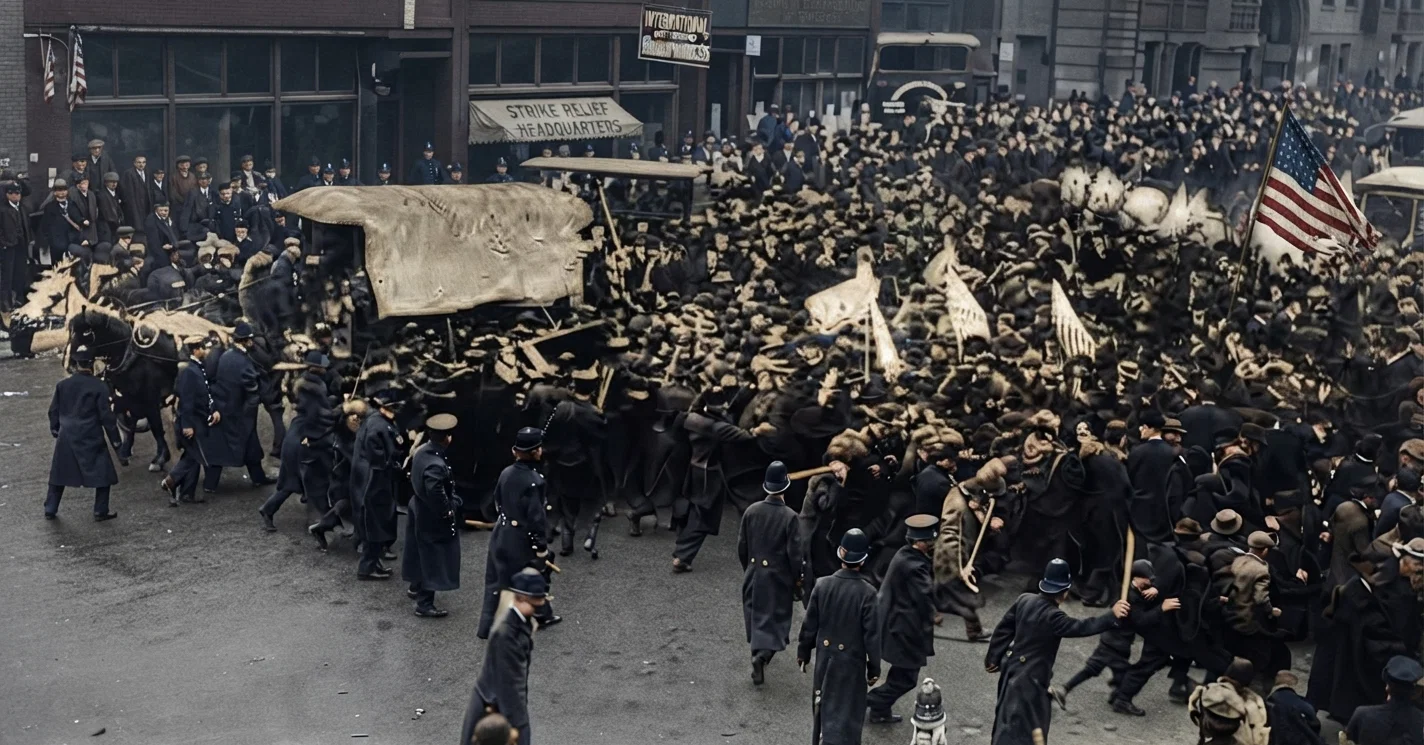
Among the social problems of the day, there is no other that concerns so large a portion of the population of the world as does the struggle between the forces of capital and labor. A conflict ages old, it grows in scope and intensity in these days, as never in the history of the past.

The Growing Army of the Discontented

THE unprecedented growth of wealth in the world, and its accumulation in the hands of the few, cannot but result in an ever increasing army of discontented poor. Poverty, at its best, breeds discontent in the human heart. Prodigious wealth flaunting its banner, in wanton extravagance, before the eyes of poorly paid labor, cannot but cause social unrest.
The doctrine that "might makes right," and "to the victor belong the spoils," results in a spirit of indifference in the hearts of the rich, and a spirit of smoldering resentment in the hearts of the poor. The tendency is for the capitalist, flushed with the power of wealth, to grow more exacting and arrogant, and the laborer to become more resentful.
Quick to discern the apparent advantages gained for capital by organization, labor adopts like measures, and federations and trade-unions spring up in every branch of industry. The field of individual responsibility narrows. The independent small tradesman must retire from the field; and the peace-loving artisan who chooses not to affiliate with the union, is either coerced, crushed, or compelled to carry on his work at a disadvantage.
Something as to the extent of this mighty struggle, to what lengths it is to go, and how and when it will end, are questions fraught with intense interest. They will be considered in a second article by Mr. Grandy, which will appear next week.