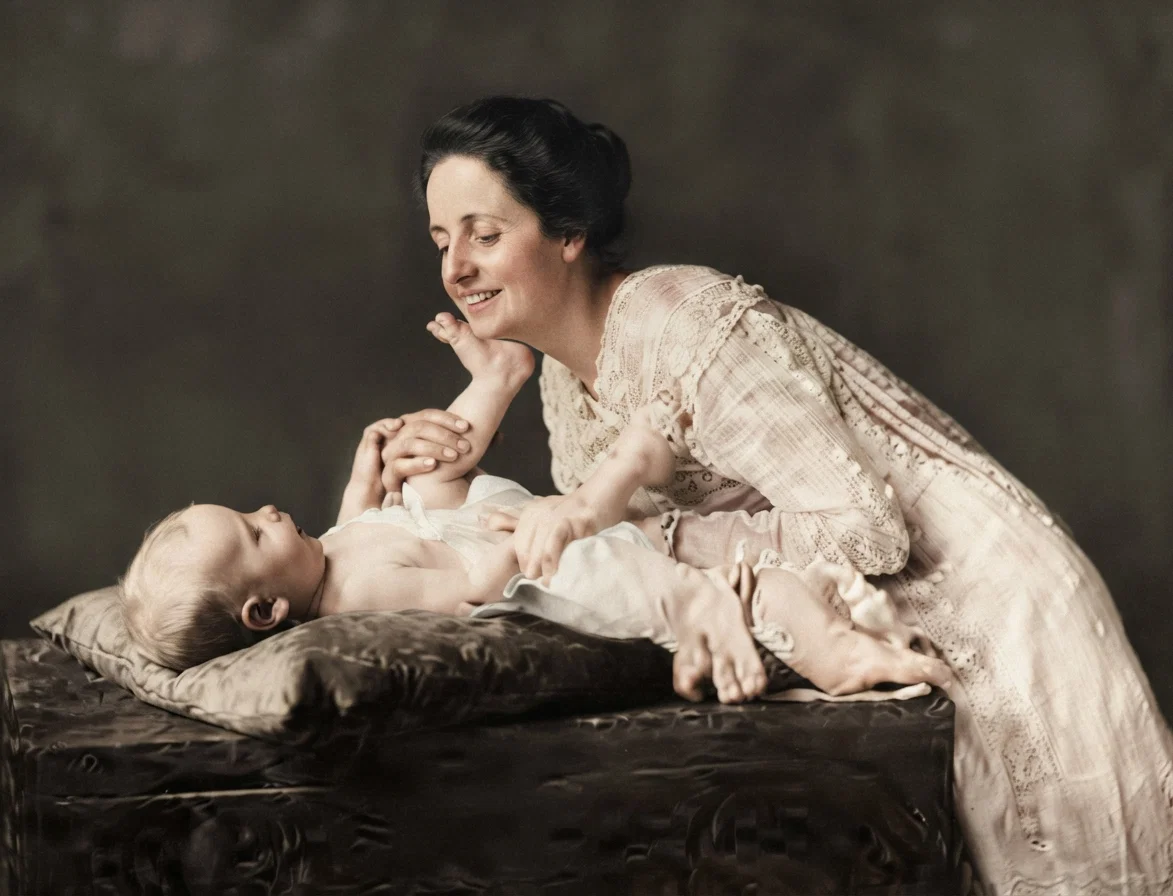
Helping the Baby Live

3%

Pacific Press Publishing Association · Mountain View, California · Aug 8, 1916

FromSigns of the Times, Vol. 43, No. 31.

Read the full edition

Helping the Baby Live

"Many a premature funeral that has been credited to 'Providence,' should have been attributed to drugging."

Helping the Baby Live

Timely Hints for Sultry Weather
By L. A. HANSEN Associate Editor Life and Health
JUST being a baby is about the most risky thing in the world. So many dangers confront the little ones, that living becomes a perilous undertaking. A great many give it up — three hundred thousand a year, and half of these before they are one month old.
This loss of precious life is largely a needless one, for these deaths are mostly from preventable causes. A large share of them are due to ignorance, so we are told by those who seem to know. Baby saving campaigns are now being waged, consisting principally of methods and means of instruction.
One fifth of the three hundred thousand annual deaths of babies occur in July. Summer is the time of greatest danger to baby, because of the effects of the excessive heat on baby's vitality, and on food, particularly cow's milk. A later article will deal especially with the safeguarding of baby against his foe, — summer diarrhea.

Do Not Let Visitors Interfere

REARING a baby cannot be a matter of indifference or carelessness. A care equal to the mother's love is required. Loving the helpless mite is not sufficient. Intelligent study and careful attention are needed. The difference between the right and the wrong way of caring for baby may very easily mean its life. Proper care will in all probability save it.
Regularity is an essential in sleeping, eating, and bathing. Arrange a daily program, and go by it. Do not consult your feelings or convenience. Look at the clock. If it is feeding time, feed. If it is time for his nap, let him sleep. If it is bath time, bathe him. Do not let visitors interfere with your baby's schedule.
The first two years form a critical period. What you do, when you do it, and how you do it, means a good deal to baby at this time, and has much to do with his comfort in after years. Regularity of habits may be started early.

No Good Milk from Poor Food

THE mother that can feed her baby at her own breast has a long start in winning the race against summer diseases. Bottle-fed babies are far more liable to bowel trouble at any time of the year, but especially in summer, when heat and flies make it more dangerous. Proper care on the mother's part before the baby is born will usually enable her to nurse him.
The breast-fed baby gets pure milk that is never sour, being made and used as needed, and that is of uniform temperature throughout the feeding. This milk is made especially for him and adapted to his needs.
The nursing mother must eat only wholesome food, and plenty of it, avoiding coarse vegetables, highly seasoned and greasy foods, tea, coffee, and stimulants. Poor food will not make good milk. Bad cooking will spoil even good food. Indigestion for mother means trouble for baby.
The baby should gain from four to six ounces a week. A marked lack in this should receive prompt attention, with a proper modification of the mother's diet. Do not experiment. Consult a good doctor.

Ideal Breeding Place for Germs

Cow's milk has been found the food that most nearly approaches mother's milk for feeding the baby. Not all babies are alike, however; and what agrees with one may not be suitable for another. If it is necessary to resort to manufactured infant foods, select only those of unquestioned reliability. Then carefully follow directions in preparing the food. Always use a fresh, clean vessel and a clean spoon. It is well to use utensils that are kept for this purpose only.
Where milk is used, take pains to get it from a reliable source, guaranteed for cleanliness. What is known as "certified" milk may be had in most cities. It is worth the small extra price. The country mother can easily satisfy herself as to the purity of her milk supply.
Remember that milk is an ideal breeding place for germs of tuberculosis, typhoid fever, diphtheria, scarlet fever, and diarrhea, and that proper sterilization will take care of these. Look for directions on sterilizing in our next article.
Weaning the baby should be done gradually, giving him time to get used to new foods. Any disturbances, such as belching of gas, spitting up of food, or marked changes in bowel movements, should be signs for stopping the new food and returning to breast feeding. Do not wean the baby in the heat of summer if you can possibly avoid it.
The Children's Bureau of the United States Department of Labor, Washington, D. C., has prepared a bulletin entitled "Infant Care," giving full information and simple directions for preparing baby's feeding, and showing the amounts suited to various ages. This may be had free of cost by sending a postal card request. Give name and address of applicant.

Let the Older Ones Splash

FOR the first month, the temperature of baby's bath should be 98 degrees. Use an accurate thermometer, and do not trust to the uncertain method of testing the bath by your bare arm. After the first month, the temperature may be reduced to 85 degrees, with a room temperature of 80 degrees in winter. Protect from direct drafts, even in summer. Have everything ready before beginning the bath. Bathe for three minutes, supporting the young baby's neck and head with your forearm. An older baby, that can sit alone, may be allowed to splash about in the water a few minutes.
A full tub bath should be given every morning. If the baby is restless, a sponge bath or two through the day will be good for him, and a tepid bath at bedtime will help him to sleep.
Use only the best of soap for the bath, and do not rub it directly on the skin. Do not allow it to dry on, but rinse it off. Otherwise skin affections may result. If eruptions develop on the skin, use no soap at all. Wash cloths of soft material should be used, one for the face and one for the body. These should be kept perfectly clean, being hung in the sun frequently.
When taking baby from the bath, pat him dry, with a soft towel. Rubbing may irritate the tender skin or aggravate nervousness. Be careful to dry in all the folds and creases. Powder in groin and under arms with pure talcum or cornstarch.

The Less Fuss, the Better

NOTHING should interfere with baby's bedtime. He can and should be trained to go to sleep in the dark. It is not necessary for a baby to be rocked to sleep, and he will not know about it unless he is taught it. The more fuss made about his sleeping, the more trouble you are likely to have. While quiet is in place, do not fear that every bit of noise will waken the baby. This is a rather noisy world, and he will need to get used to it. Then he will not be so easily disturbed by a little unusual noise.
The principal occupation of a young baby is sleeping. For the first two years, he should have a forenoon and an afternoon nap. If possible, let him have these out of doors, preferably at ten and two o'clock. Protect the eyes from the sun, and keep him warm with clothing. Fresh air is fine for him, whether in or out of doors. Night air is good, excepting for the impurities of an unventilated room. The outside air is cooled and cleansed of dust by the dew. Let it in.

Some Parting Hints

A BABY is warmer than an adult, so does not need as much clothing. Do not dress him so heavily as to cause perspiration. Have the clothing evenly distributed, protecting the extremities. Exposing baby's chubby arms and legs in cool and even in cold weather, when older people need to be fully dressed, is not consistent. It may look sweet, but it is not sensible. The extremities need free circulation of blood; but chilling them prevents this. It is a good thing to remember this as children grow older.
In summer, baby does not need much clothing. In hot weather, the diaper and a little slip are sufficient; and to remove even these occasionally, and let him have a good kicking spell, will be good. Watch for any dropof temperature in the weather, and clothe accordingly. Avoid starched clothes and all-wool garments, which irritate the skin. Even wet diapers should be washed before using again.
Have the shoes comfortable, and large enough for the feet to grow naturally. Tight shoes restrict the circulation, and cause cold feet. Have all the clothing so that full freedom for exercise is allowed. Bear in mind that baby must play, and clothe him for it.
Babies need the benefit of health and hygiene even more than do older people. Children's diseases are the result of improper care or undue exposure. They do not come because they must, and because children are supposed to have them whether or no. And children are not the better off for having measles, whooping cough, and other ailments. Count on having the youngsters stay well, and start the program early.
At teething time, see that the bowels are free and regular. A piece of ice wrapped in a bit of linen may be given the baby to suck and bite upon. This will relieve the inflammation, and help the tooth through. Avoid pacifiers and nipples, for they irritate the mouth, cause infection, force the teeth out of their natural positions, injure the tender tissues, and cause malformations. The same may be said of thumb-sucking.
By all means avoid patent medicines and "soothing sirups," which do not cure nor soothe, but poison. Incalculable harm has been done by such dosing; and many a premature funeral that has been credited to "Providence," should have been attributed to drugging.