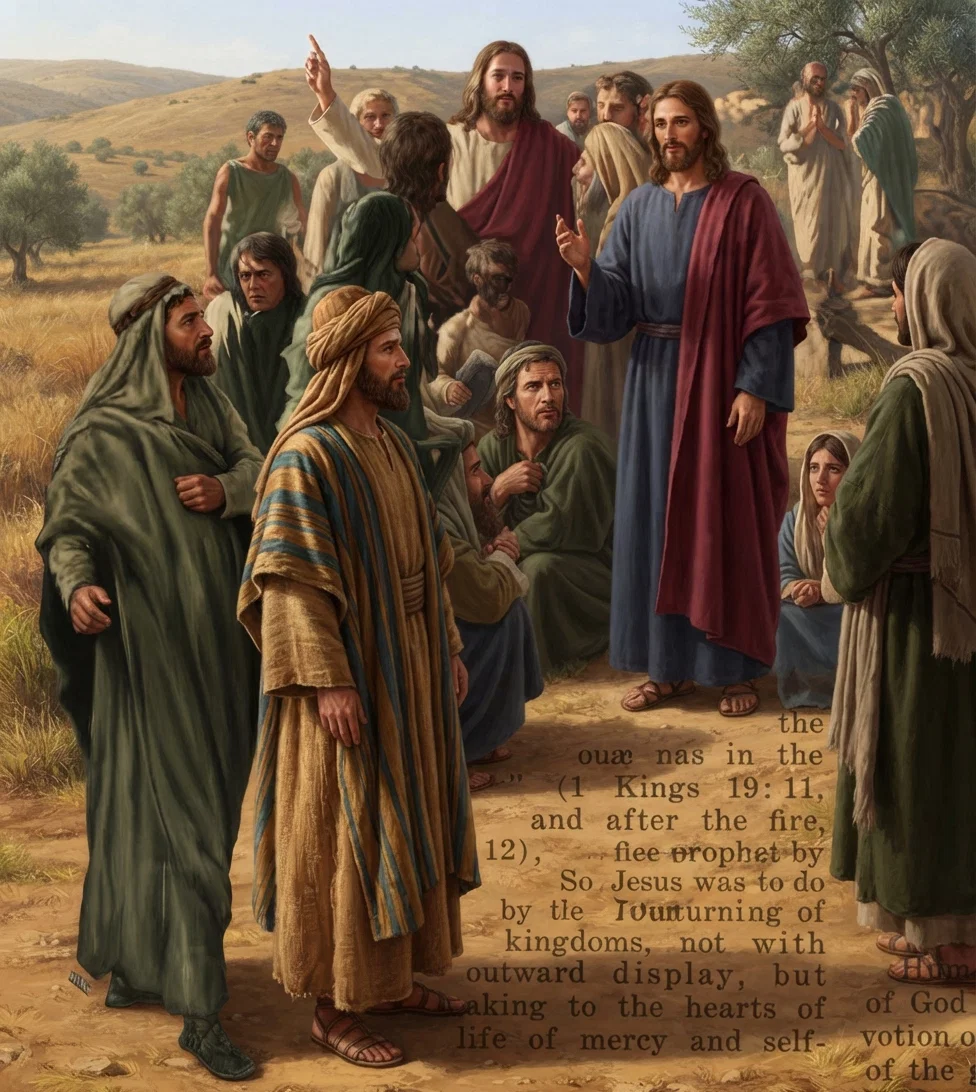
FROM Herod's dungeon, where, in disappointment and perplexity concerning the Saviour's work, John the Baptist watched and waited, he sent two of his disciples to Jesus with the message: "Art Thou He that should come, or do we look for another?" Matt. 11:3.
The Saviour did not at once answer the disciples' question. As they stood wondering at His silence, the afflicted were coming to Him. The voice of the mighty Healer penetrated the deaf ear. A word, a touch of His hand, opened the blind eyes to behold the light of day, the scenes of nature, the faces of friends, and the face of the Deliverer. His voice reached the ears of the dying, and they arose in health and vigor. Paralyzed demoniacs obeyed His word, their madness left them, and they worshiped Him. The poor peasants and laborers, who were shunned by the rabbis as unclean, gathered about Him, and He spoke to them the words of eternal life.
Liberating the Captives
THUS the day wore away, the disciples of John seeing and hearing all. At last Jesus called them to Him, and bade them go and tell John what they had seen and heard, adding, "Blessed is he, whosoever shall not be offended in Me." Verse 6. The disciples bore the message, and it was enough.
John recalled the prophecy concerning the Messiah: "Jehovah hath anointed Me to preach good tidings unto the meek; He hath sent Me to bind up the broken-hearted, to proclaim liberty to the captives, and the opening of the prison to them that are bound; to proclaim the year of Jehovah's favor, and . . . to comfort all that mourn." Isa. 61:1, 2, A. R. V. Jesus of Nazareth was the Promised One. The evidence of His divinity was seen in His ministry to the needs of suffering humanity. His glory was shown in His condescension to our low estate.
The works of Christ not only declared Him to be the Messiah, but showed in what manner His kingdom was to be established. To John was opened the same truth that had come to Elijah in the desert, when "a great and strong wind rent the mountains, and brake in pieces the rocks before the Lord; but the Lord was not in the wind; and after the wind an earthquake; but the Lord was not in the earthquake; and after the earthquake a fire; but the Lord was not in the fire" (1 Kings 19:11, 12); and after the fire, God spoke to the prophet by a still small voice. So Jesus was to do His work, not by the overturning of thrones, and kingdoms, not with pomp and outward display, but through speaking to the hearts of men by a life of mercy and self-sacrifice.
The kingdom of God comes not with outward show. It comes through the gentleness of the inspiration of His word, through the inward working of His Spirit, the fellowship of the soul with Him who is its life. The greatest manifestation of its power is seen in human nature brought to the perfection of the character of Christ.
The followers of Christ are to be the light of the world; but God does not bid them make an effort to shine. He does not approve of any self-satisfied endeavor to display superior goodness. He desires that their souls shall be imbued with the principles of heaven; then, as they come in contact with the world, they will reveal the light that is in them. Their steadfast fidelity in every act of life will be a means of illumination.
Wealth or high position, costly equipment, architecture or furnishings, are not essential to the advancement of the work of God; neither are achievements that win applause from men and administer to vanity. Worldly display, however imposing, is of no value in God's sight. Above the seen and temporal, He values the unseen and eternal. The former is of worth only as it expresses the latter. The choicest productions of art possess no beauty that can compare with the beauty of character, which is the fruit of the Holy Spirit's working in the soul.
The Treasures of Eternity
WHEN God gave His Son to our world, He endowed human beings with imperishable riches—riches compared with which the treasured wealth of men since the world began is nothingness. Christ came to the earth and stood before the children of men with the hoarded love of eternity; and this is the treasure that, through our connection with Him, we are to receive, to reveal, and to impart.
Human effort will be efficient in the work of God just according to the consecrated devotion of the worker,—by revealing the power of the grace of Christ to transform the life. We are to be distinguished from the world because God has placed His seal upon us, because He manifests in us His own character of love. Our Redeemer covers us with His righteousness.
In choosing men and women for His service, God does not ask whether they possess worldly wealth, learning, or eloquence. He asks: "Do they walk in such humility that I can teach them My way? Can I put My words into their lips? Will they represent Me?"
God can use every person just in proportion as He can put His Spirit into the soul temple. The work that He will accept is the work that reflects His image. His followers are to bear, as their credentials to the world, the ineffaceable characteristics of His immortal principles.