American Twin Evils

4%

Pacific Press Publishing Association · Mountain View, California · Jul 18, 1916

FromSigns of the Times, Vol. 43, No. 28.

Read the full edition

American Twin Evils

Beer and the Cigarette
By DANIEL H. KRESS, M. D.
THERE exists an intimate and inseparable connection between drink and tobacco. Where the one is, the other is almost sure to be. Horace Greeley once said, "Show me a drunkard who does not smoke, and I will show you a white blackbird." While there are some smokers who do not drink, a drunkard who does not smoke is seldom seen.
The smoke usually precedes and leads to drink. Seventy-five per cent of drunkenness is traceable to the smoke habit. Tobacco creates a thirst that water fails to quench. A smokeless saloon cannot long exist. The greatest asset of the saloon is tobacco. The boy who begins to smoke will usually end in the saloon.
An effort is being made to separate tobacco and drink. This will ultimately fail. To get rid of one evil, we must get rid of both. Drink is withheld from the men on the battle field as destructive to efficiency and success, while the cigarette has been furnished as a helpful adjunct. One is considered a curse, the other a blessing. The appeal comes from the battle field, not for more food or for better food, but for tobacco. The Belgian prime minister recently asked his men who were still holding on to the small portion that is left of their territory, which they preferred, better food, or tobacco with their rations. They unanimously replied, "Give us worse food if you like, but let us have tobacco."
An appeal has come to America for a weekly sum of $5,000, or $260,000 annually, to supply the demands of these 200,000 Belgian soldiers who are calling for tobacco. Millions of cigarettes have already been sent to the front from America, for the British and French soldiers. Manufactories are running night and day to meet this additional demand.

Battle Field Not the Place to Wean Them
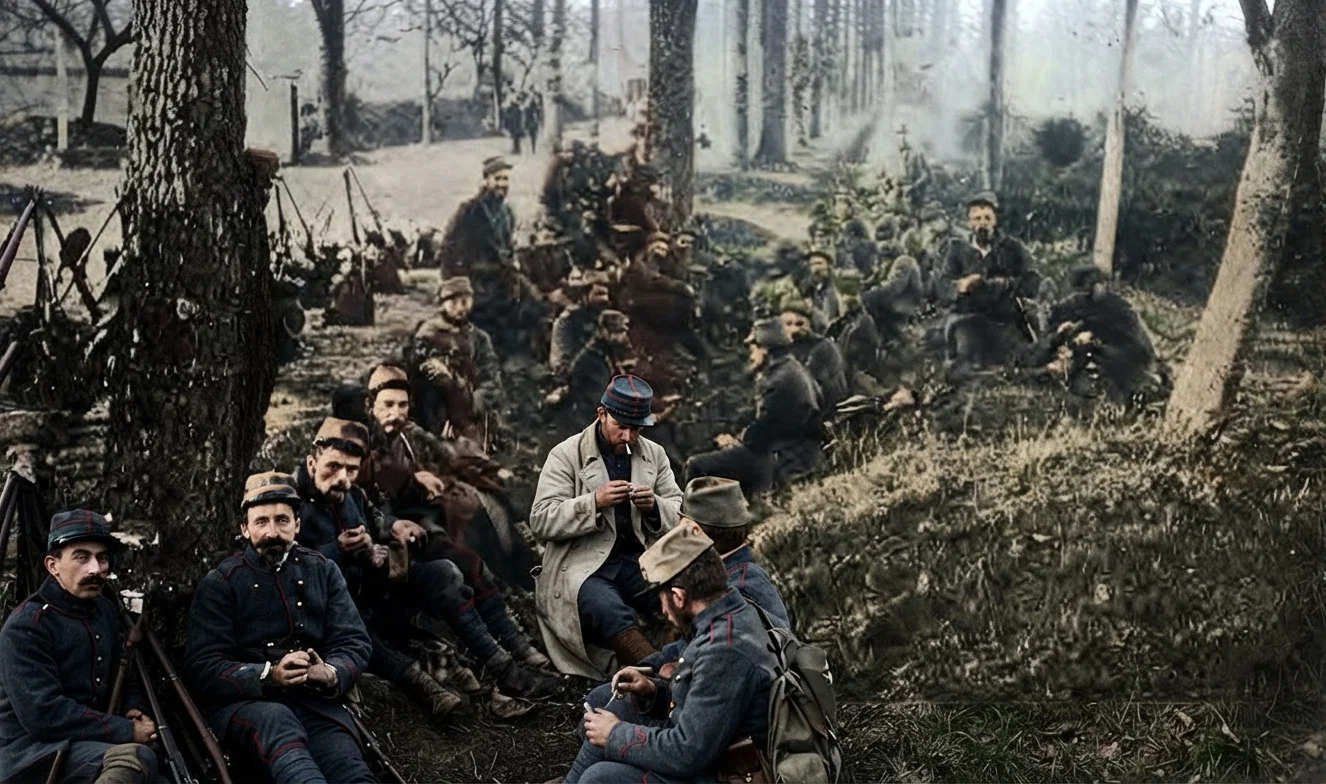
I DO NOT say that tobacco ought to be withheld from the men who have gone to the front and are calling for it. This is not the purpose of my appeal. I realize that one of the surest ways to defeat an army of men made up of smokers would be to deprive them of their accustomed smokes. I merely say that the battle field is not the best place to wean men from tobacco, or to treat drug fiends of any kind. This work should be done before addicts are sent to the front.
The tobacco habit is a drug addiction. The habit of inhaling the smoke, which is now the universal way of smoking, is a drug addiction similar to opium smoke inhalation, and is possibly almost as injurious. The injury resulting from the smoking of opium, should the smoke merely be drawn into the mouth, would be small compared with that caused by drawing the smoke into the lungs. It is the inhaling of opium smoke that is responsible for China's degradation. Opium smoke inhaling in China has never been as common as tobacco smoke inhaling now is in America. Opium smoke inhaling there has been confined almost exclusively to adults, while tobacco smoke inhaling is common among children as well as adults.
The appeal comes from the battle field, not for more food or for better food, but for tobacco.
Smoke inhaling is without doubt the best method to employ to obtain the immediate drug effect desired. Two or three deep inhalations of tobacco smoke will produce more intoxication than can be produced by one hour of ordinary smoking. It is the drug effect that is demanded. Why not inhale to obtain it?
But is a country that is defended by "drug fiends" safe? There are young men who are more interested in the cigarette than in the welfare of their country. They cannot endure hardships. James I, in referring to this practice, so prevalent among his men, as relating to the efficiency of his army, asked, "How can men who cannot go a day's journey without sending for hot coals to kindle the tobacco, be expected to endure the privations of war?" He understood that the nation could not rely upon an army made up of such men, for endurance or success.

1,200 New Recruits Daily

IN addressing his naval cadets, Emperor William several years ago made the prediction: "In the next great war, nerve power will decide the victory. Victory will be with the nation that uses the smallest amount of alcohol." Nerve power, we know, is undermined by the use of alcohol; but there is no agency that is to-day undermining nerve power more surely than is the general practice, among our boys and young men, of inhaling tobacco smoke or of smoking cigarettes. Each day, we are adding 1,200 young recruits to the great army of cigarette fiends we already have. We are a nation of smoke inhalers. The results are alarming.
Between July, 1914, and May, 1915, out of 159,800 young men who applied to enter the United States army, only 36,200 were able to pass the test. Over 123,000 were rejected as physically unfit to stand the strain of war. This is certainly a serious condition, regardless of what the causes of the degeneracy may be.
In referring to the cigarette habit among the youth of England, and its deteriorating influence, Sir Brampton Gordon said, "If, in ten or fifteen years hence, we should have the misfortune to engage in a great war, this habit among our youth to-day would tell against us." America consumes twice as much tobacco per capita as does Great Britain. Boys and young men who are addicted to this habit are not reliable before they are called to the front. They are not in demand where efficiency, accuracy, and nervous and mental concentration are required. If they are unreliable in business, are they reliable defenders of our country?

Forbids Smoking Among Minors

JAPAN is wiser. She began to build battleships and guns about twenty years ago; but at the same time, she gave attention to the building of men. Sixteen years ago, a bill was introduced in the house of representatives of Japan, forbidding the use of tobacco to young men under twenty years of age. This bill was passed unanimously, and became a law the same year. The argument used in urging the passage of this bill, it would be well for us in America to study.
The Hon. Neomota, in introducing the bill, said: "Tobacco, like opium, contains narcotic poisons, which benumb the nervous system, weaken the mental power of children addicted to smoking. And thus, to give point to our national policy, we must strictly prohibit the smoking of tobacco by children and young people. If we expect to make this country superior to the nations of Europe and America, we must not allow our youths, who are to become the fathers and mothers of our country in the near future, to smoke."
Smoke inhalation, as practiced to-day by the youths of America, is doing more to undermine the efficiency of our future men and nation than possibly any other one practice, not excepting alcohol.
We give tobacco to the men in the trenches. They all, practically, smoke. If they are supplied, they will smoke more on the battle field than while at home. We withhold beer and whisky from these same men. What does the future hold in store?

Produces the Drink Appetite

THE men who leave the battle field will be nervous wrecks, made so perhaps more by the smoking of cigarettes than by the exposure. They will all be drug addicts. Bysmoking, they will have cultivated a craving for strong drink. While prohibition may be enforced for a time, this universal craving will later demand drink and an open saloon. By encouraging the use of tobacco among the young men who have gone to the front, we are in danger of defeating our efforts to prevent the sale of alcoholic beverages in the future; for the two cannot be separated.
We are already spending twice as much for tobacco as we pay out for railroad travel, and about three times the amount we spend on our common school system. During the past two years, there has been an increase of over $150,000,000 in the consumption of tobacco in America.
Not less than $1,200,000,000 is now paid out annually for tobacco—a sum one half that of our drink bill. It is generally recognized that the smoker who gives up drink, almost invariably goes back to it unless he also gives up his smoke. Likewise the nation that gives up drink, will go back to it unless she discards the smoke. There is but one safe way, and that is to bury them both. The attempt to separate them has proved to be a failure in individual life. It will be a failure in our national life.