Modern Speed Mania

6%

Pacific Press Publishing Association · Mountain View, California · Jul 18, 1916

FromSigns of the Times, Vol. 43, No. 28.

Read the full edition
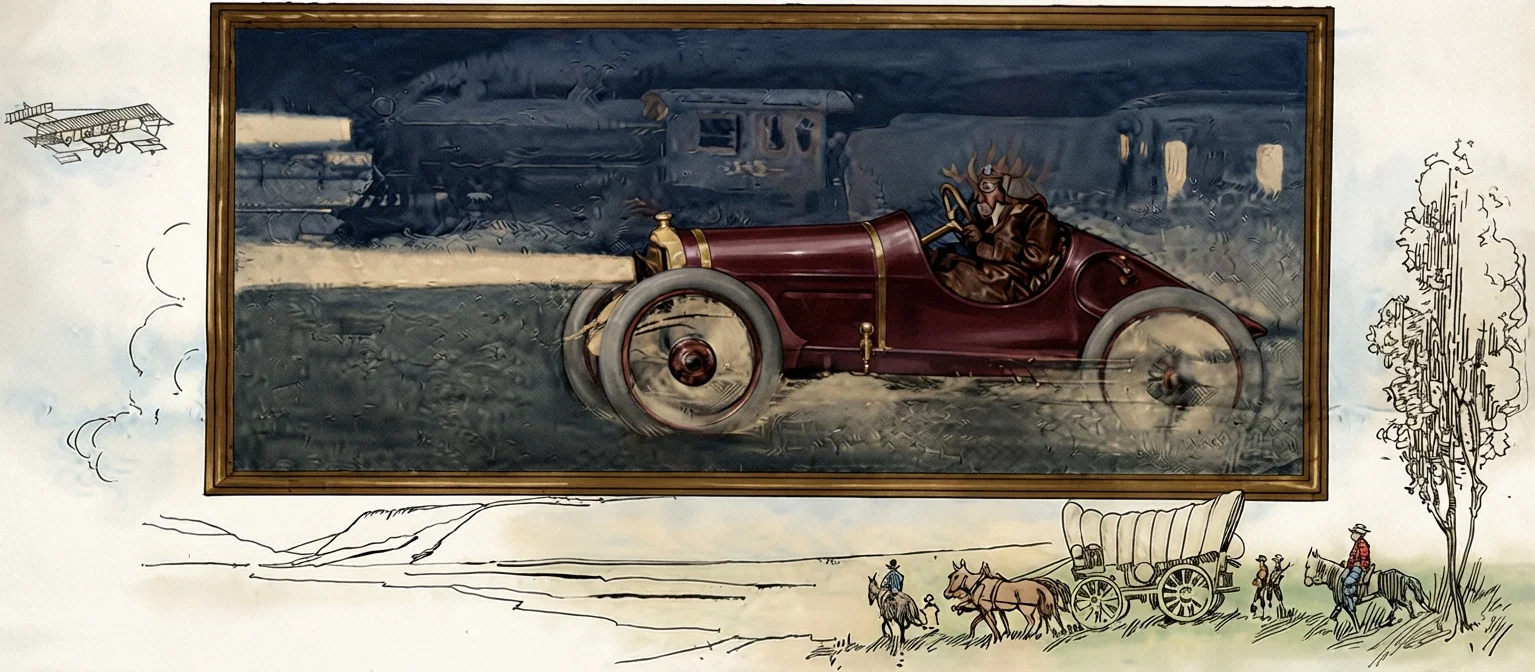
Modern Speed Mania

By Charles G. Bellah
IN this time of intense action and reaction, brevity is the universal slogan. We say there is no royal road to learning, yet we persuade ourselves that there is a stenographic one. Shorthand work is very popular now. Time is too precious to spend in climbing the winding stairway to success; so we make a bee line for the elevator. Vigorous endeavors are made to crowd days into hours, and hours into minutes; while the candle is burned at both ends, and in the middle too.
Holy Writ clearly indicates that in the last days, just such a spirit will be manifest. In "the time of the end," "many shall run to and fro." Dan. 12: 4. Both sinner and saint will be running. The sinner runs with the world for pleasure and profit; the saint runs through the world with power and pardon. The sinner runs for love of silver, and glitter of the coin; the saint runs for the love of souls, and the glitter of the crown. The sinner will run, and the saint must; and the intensity of both classes will increase as the days slip by.
Sixty years ago, our forefathers manifested no impatience while driving across the country in an old ox cart, at the rate of a few miles a day, and joyfully arrived at their destination in ample time. Now as men are whirled over ribbons of shining steel at the rate of sixty miles an hour, when the throbbing engine stops but a moment to coal and take water, one may observe a dozen heads thrust out of half as many windows, and hear anxious voices asking why they are losing so much time. And at the station, if the train is five minutes late, watches are inspected at least every minute.
The multiplicity of modern inventions for quickly doing things has almost annihilated time and space. More of this world's history is lived in six months now, than in a hundred years a few centuries back. Men used to be satisfied with keeping a diary; but now, when so much is crowded in so little, a "horary" is the only requisite. We literally throw the flimsy rein on the neck of the panting steed, apply the spurs, and away we go. Old Phil Sheridan wouldn't keep in sight now. In life's brief record, we flip two — yes, a half dozen — pages at once. Truly life is but a fleeting noise between two long silences. Scarcely do we begin to live till we begin to die.
A modern globe-trotter enters an up-to-date barber shop, gets a hair-cut, has his suit pressed, and his shoes polished, and reads the news, all at the same time. On his way, he pauses a moment in a circulating library, secures a book of quick reference, up-to-date, revised, addenda, and with loose-leaf attachment for later revisions. Then he cuts across lots, past transient houses, quick-lunch counters, mended-while-you-wait shops; rushes into the station, purchases a ticket over an air-line limited through train from "St. Joe" to "Frisco," gets aboard, sits down, and nervously reads the five o'clock Meteor at four-thirty.
Perhaps it is nobler to wear out than to rust out; but when either is done, we are dead, and dead for a long time. People are prone to forget that fast living is slow dying, and that to burn the candle at both ends is an expensive way to "make ends meet." If we would unstring the old harp occasionally, it would last much longer, and make sweeter melodies. Hurrying around after wealth the first half of life, often necessitates worrying around after health the remainder.
Modern mottoes are, "Strike till the iron gets hot," and, "All things come to him who hustles while he waits." The average business man acts as if he had been born about fifteen minutes late, and was doing his utmost to catch up. He retires with the owl, and gets up with the rooster, and is never considered late until he is dead; then people speak of him as "the late Mr. —."
We have no condemnation or criticism for this spirit of intensity. The sad thing is not that it gets a firm hold upon God's people, for this very spirit is for the express purpose of assisting in quickly giving to all the world, in this last generation, the gospel of Jesus Christ. God will have no fault to find with the majority of His people for not running; but because in their haste, obedience is often left out. Paul says, "Ye did run well; who did hinder you that ye should not obey the truth?" Gal. 5: 7. Commended for running, but condemned for disobedience!
A little boy and girl, on their way to school one morning, saw they were going to be late. Having no written excuse, the boy feared the teacher. A bright idea seemed to have come to him, as he said, "Mary, let's stop and pray that the teacher may not be angry with us." His sister, wiser than he, replied, "No; let's keep hiking while we pray." That is what God wants all His children to do in these last, perilous times.
Every one must run. He who runs now with a message will not have the sad experience of running later for a message and not finding it. The prophet Amos sternly says: "Behold, the days come, saith the Lord God, that I will send a famine in the land, not a famine of bread, nor a thirst for water, but of hearing the words of the Lord: and they shall wander from sea to sea, and from the north even to the east, they shall run to and fro to seek the word of the Lord, and shall not find it." Amos 8: 11, 12. Reader, which will you do, run willingly now, or woefully then? God help each to make the right decision!
Yet through it all, and above all, every true, blood-bought child of the King must —
"Take time to be holy. The world rushes on. Spend much time in secret, With Jesus alone."
While the Master says, "Go out quickly into the streets and lanes of the city, . . . and compel them to come in, that My house may be filled" (Luke 14: 21, 23), He also says, "Tarry ye . . . until ye be endued with power from on high" (Luke 24: 49). No use to run in the world, unless we have first tarried with its Maker. Get down in humility with the old Book, and we get up in power with the Author. Always talk to God for the people, before talking to the people for God.
"The race is not [always] to the swift, nor the battle to the strong." Eccl. 9: 11. Ahimaaz greatly outran Cushi; but having only heard a great tumult, he did not know what it meant, and was told by the king to stand aside. Cushi received his tidings, bowed, and then ran with a message that mightily stirred the mourning father. When we "run with patience," as the Father desires we should, then we will be able not only to sing with mighty inspiration, "I'll go where You want me to go," but to sing with grim determination, "I'll stay where You want me to stay." May God help us to start right, and start right away.