ON THE CANAL ZONE

3%

Pacific Press Publishing Association · Mountain View, California · Jul 18, 1916

FromSigns of the Times, Vol. 43, No. 28.

Read the full edition

ON THE CANAL ZONE

Encouraging Words from the Regions Around the Caribbean
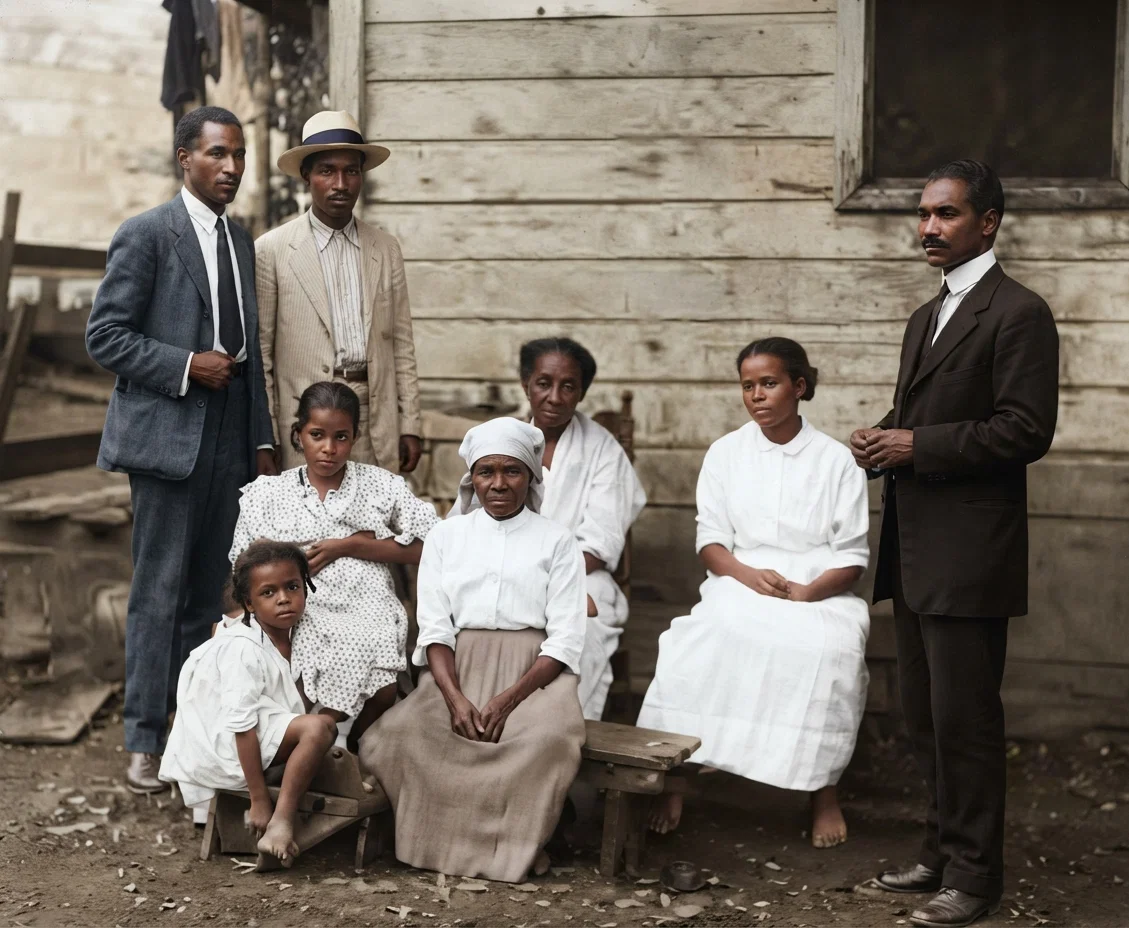
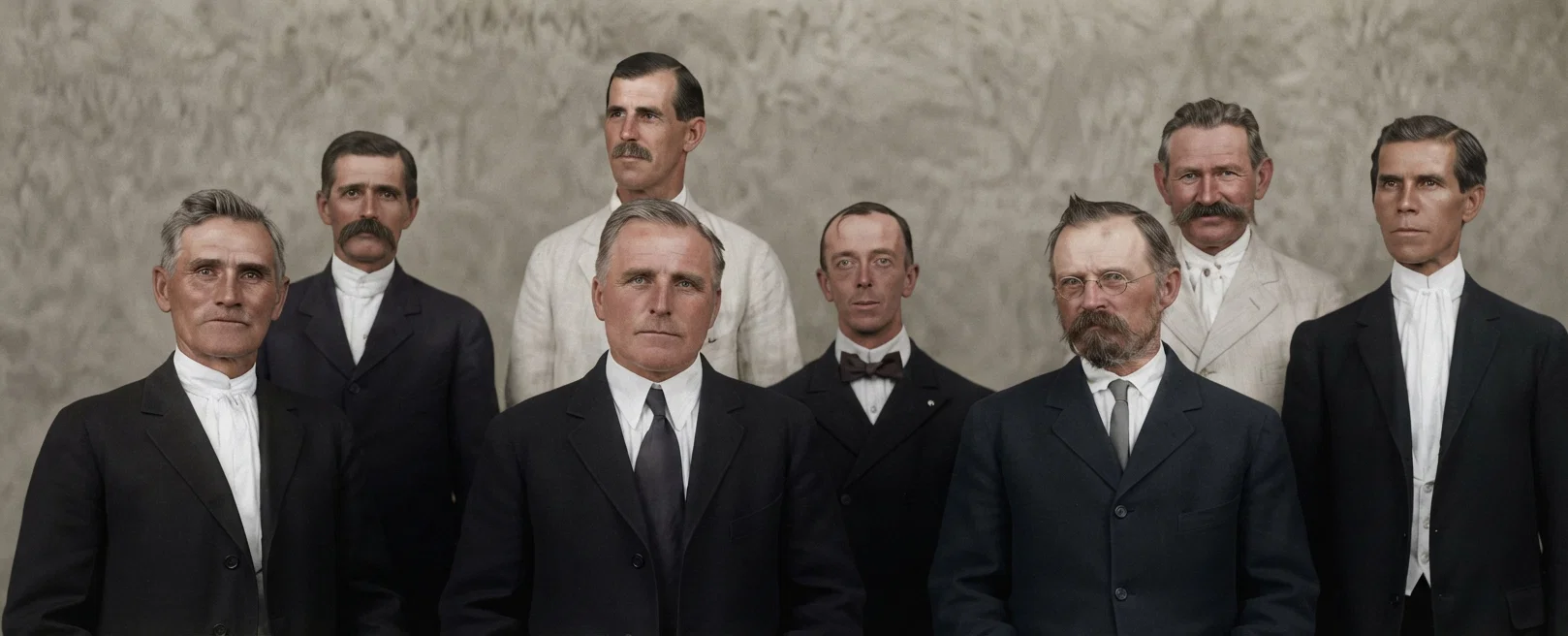
OUR West Indian Union Conference Committee who gathered in council on the Canal Zone represented 4,000 members of every country and about every island around the Caribbean Sea.
A Spanish Bible Class at Panama
Small though our numbers are, comparatively, it is really remarkable how these Sabbath reform and advent truths find their way into every corner of the earth where men dwell. The message that we bear is marked in the prophecy, “To every nation, and kindred, and tongue, and people,” and surely it is hastening on toward the goal.
The place of our missionary council was the Seventh-day Adventist church in Cristobal, on the Canal Zone. The roar and rumble of the rushing traffic of the Panama railway was in our ears as we discussed mission problems; but alongside the great canal seemed a fitting place for a missionary council. Every highway of world travel and traffic is a missionary highway, in this generation of world evangelization. It was so in the apostolic days. The book of Acts and the earliest ecclesiastical histories show how the gospel message followed the paths of commerce and colonization in the Roman Empire.
So in the Panama Canal we see not only one of the greatest works of human skill, but we recognize the hand of Providence as well, which in our day has been shortening distances, and providing new ways and means for the enlightening of the world. As the great pathway opens at last, from sea to sea, we may well recall Mackaye’s hymn of thanks:
“Lord of the sundering land and deep, For whom of old, to surge Thy wrath, The floods stood upright as a heap, To shape Thy host a dry- shod path, “Lo, now, from tide to sundered tide, Thy hand, outstretched in glad release, Hath torn the eternal hills aside, To blaze a liquid path for peace.”
S. D. A. representatives at Latin American Missionary Congress
It is the day of the yet wider opening of the Latin countries north and south of the isthmus. Already, notwithstanding the confusion the great war makes in shipping, the awakening and stir of a new time is to be seen and felt in these regions.

A New Impetus to Protestant Effort

SHORTLY before our own missionary council gathered on the Colon side, the great Latin American Missionary Congress had been meeting in Panama City, on the Pacific side. It was an enthusiastic and seriously businesslike congress, planning ways and means for the missionary enterprise in Central and South America. A number of representatives of our own mission
fields were present in the meeting. As the New York Christian Herald report put it:
“Representatives of more than fifty denominational organizations were present. The Protestant Episcopal bishop sat down beside the Seventh-day Adventist.”
Whatever makes for the spreading of the word of God and the giving of the gospel invitation to sinners, rejoices our hearts; and we who watched the proceedings, felt that a new impetus was to be given to Protestant effort in the Latin countries. The authorities of the Catholic Church recognized it also. The
archbishop of Panama formally warned all Roman Catholics to keep away from the congress, and denounced it as a new peril to the people of Latin America.
Because of the pronounced aversion of the great societies to the Bible Sabbath, we Seventh-day Adventists have a message for the Roman Catholic which others have not. And everywhere our workers rejoice to see how the power of God attends the delivery of that message among truth-seeking Roman Catholics.
Every year, in normal times, in Europe and the Americas, hundreds of Roman Catholics become Seventh-day Adventists, and join us in proclaiming this message of preparation for the coming of the Lord.

A Back-to-the-Land Movement

IN our Cristobal committee council, it was planned to establish work in Colombia, the only Central or South American country that had not been put permanently on our missionary map. Now workers are in the field — Elder B. E. Connerly and his active family, with headquarters a week’s journey in the interior.
Our work on the Canal Zone has been largely among the West Indians working or living within the Zone while the construction work was in progress. Now all this community is moved away, and members have spread everywhere. Several companies have taken land on the isth-mus, outside the Zone. I visited one of these churches. I saw a back-to-the-land movement working out very satisfactorily. Most of these happy members had seen their funds disappearing after canal construction stopped, and they were left to pick up work as they might in Panama City. Then the idea took root, 'Why not take up 'cultivations' beyond the Zone?' Allotments were secured in the savannas, or the unbroken country; and as a little money was earned, houses began to go up in the wilds; first the merest shelters, then boarded-up cottages. On my visit, I saw a cheerful company, meeting for worship in a neatly built church, with every sign of an industrious community of home makers.
We have a good church building in Cristobal, and a mission hall in Panama City.
Elder W. G. Kneeland, president of the West Caribbean Conference, whose headquarters are on the Zone, leads a field stretching a thousand miles, from Nicaragua to the bounds of Colombia. He reports an interesting work started among the Mosquito Indians of the Nicaragua coast.
The South Caribbean Conference was represented by Elders N. H. Pool and E. C. Widgery, headquarters in Trinidad, off the Venezuelan coast. This field reported 378 baptisms during the year.
The Jamaica Conference, E. C. Boger, president, reported 221 baptisms.
All together, as the representatives of our work around the Caribbean made up their lists, the baptism of adult converts totaled 711.

Watching for Some One to Come

THUS in regions to the southward, where the laborers are few and the needs great, the blessing of God is attending the preaching of the Word. It is a difficult field to cover. When the council had planned for Elder A. J. Haysmer, president of the West Indian Union, to visit a portion only of the field, it was found he would require seven months to make the visits.
Up both the Berbice and the Essequibo River, in the Guianas, Indian settlements continue to call for Seventh-day Adventist missionaries to come to them. A small work has already begun on the lower reaches of these rivers, but the conference has been unable to provide funds for the opening of the far interior. In the days of 1844, the Indians of these regions were stirred up somehow to think of Christ's second coming. Into their tribal traditions has grown the idea that some day teachers will bring them news of the coming of the Messiah. Having heard of our work and message, they have sent word that they are waiting for us. 'We are watching for some one to come,' they say.
Truly the harvest is great, and the laborers are few. We felt it anew meeting with the West Indian committee on the Canal Zone, and seeing these brethren trying to stretch their resources to answer new calls. W. A. S.