The Message of Beauty

3%

Pacific Press Publishing Association · Mountain View, California · May 9, 1916

FromSigns of the Times, Vol. 43, No. 19.

Read the full edition

The Message of Beauty

ON the canvas of a physical world, the Master Painter has touched into a radiant vision of beauteous glory the revelation of His holiness, His forbearance, and His care. By the dusty roadside, beauty smiles up at us from the face of the humble weeds, whose flowerets, closely viewed, ravish us with wonderment and awe. Over the arid desert arch skies of unwonted purity, where gorgeous sunsets and star-spangled heavens vie with each other in entrancing the reverent soul. A mere mite of diatomaceous earth peeps up at us through the microscope, revealing a world of beauty, startling our imagination, and baffling our wisdom.

THE PLEDGE OF GLORIOUS PERFECTION

The sunlight of the arctic flames in the icy caverns of the mighty glacier, to shame the magnificence of kingly palaces; and the turquoise blue of their cold crystals warms the heart with their deep appeal.
The sunshine of the tropics irradiates in wondrous splendor from the iridescent plumage of brilliant birds; and huge flowers, orange and scarlet, flash in contrast with the vivid greens of their luxuriant foliage.
The rolling, plumy clouds have for us uncounted thoughts of beauty as we look up through the airy aisles of angelic chapels into "the shekinah of the blue."
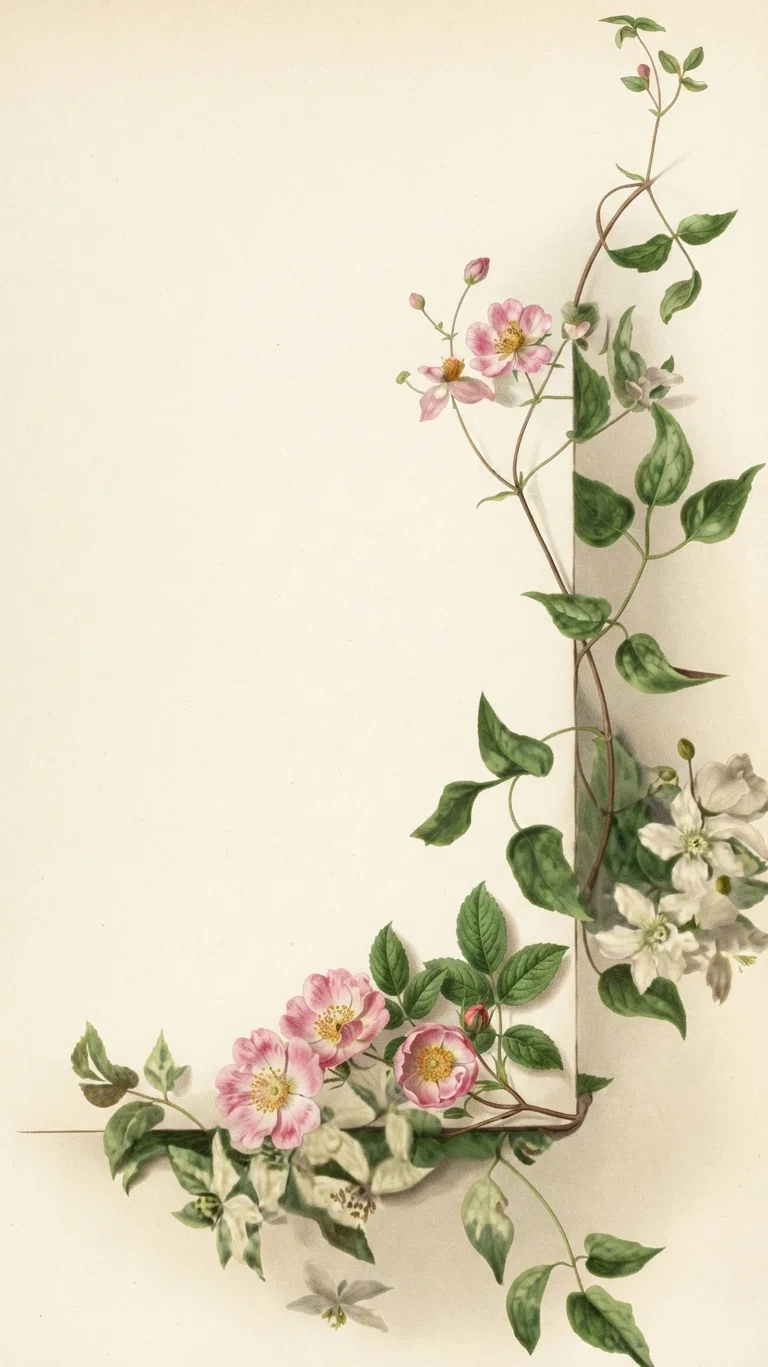
Even that which has been cursed and degraded by sin, still manifests some token of beauty, some hope of the attainment of perfection. On the thorn bush blooms a profusion of beautiful blossoms, and in the sweetbrier's perfume we breathe ourselves into an unconsciousness of briars that disturb and annoy.
Beauty in the world is but the shining there of the brooding love of God. It is God's pledge that where beauty now rests shall some day be seen the full reflection of the Creator's glorious perfection. Beauty is an earnest of the glories yet to be. It is a promissory note from God that on some glad to-morrow the world shall be all beautiful and glorious forevermore. We receive here a portion of beauty to prepare us for the effulgent glories of the coming kingdom of the eternal world.
God gives us beauty as we toil at our tasks, to illuminate life with thoughts of His love and care, that we may not be so bound down with a sense of duty as to lose the sense of beauty.

SWEETNESS OUT OF TRIAL AND TOIL

The earth is cursed with sin — we doubt it not. In dust and grime, in sweat and blood, in pain and sorrow, in sickness and death, in darkness and gloom, in cold and storm, in calamity and crime, in ruin and degradation, we read the unchanging mandate, "Cursed is the ground for thy sake."
"Cursed!" A hard word that, disheartening and abhorrent; but even so, it is for our sakes that the earth is cursed — not to dishearten and degrade, but to discourage sin, and educate to righteousness. All the sad, unpleasing things of life are ordained for our betterment, if we will but have it so. Even the thorns and the thistles, the difficulties and trials of life, are appointed for our good. All work for us "a far more exceeding and eternal weight of glory" when we accept in resignation these appointments of His love.
There are thorns upon the roses, but the roses are not thereby hindered from being most beautiful. In spite of thorns, they bud and bloom to full perfection, and throw their fragrance without stint upon the summer air. They teach us that the sweetest things of life come out of the greatest trials and difficulties. They teach us that the rarest, sweetest characters are the products and triumphs of the life of trial and toil.
They are but living samples of that ever mysterious working by which Golgotha, the place of death, became Calvary, the place of life; by means of which the rock-hewn sepulcher was but the gate to immortality. They speak to us ever — these roses from amidst the thorns — of that love which has ordained for us "beauty for ashes, the oil of joy for mourning, the garment of praise for the spirit of heaviness," that God may ever be glorified through a power by means of which "He is able even to subdue all things unto Himself."

CAME NOT BY CHANCE

And if perchance we should miss this message of the beauty of God's holiness mirrored for us in the world about us — if we miss the message in the clouds and in the rain, in the springing grass and the radiant flowers, in the care-free song of the birds and the soft sighing of the summer breeze — we may not mistake the message revealed for us in the life of the Son of God, a message brought to us from the far-away land — the message of the nearness after all, and the goodness beyond all, of a yearning Father, and His tender love and care for the children of men.
As borne to us by the radiant angels over the glory-lighted hills of Judea, we know that the message of heaven to earth is one of "peace" and "good will."
God is the fountain from which all beauty and glory and love and tenderness flow. The beauty of the wayside weeds did not originate in themselves. The matchless splendor of the skies did not come into being of itself. The throbbing of love in the breast of a bird, and the thankful warblings of its joyous heart, did not spring spontaneously out of its little life.
The beautiful painting, breathing, in color and form, the nobility of its art, is not a work of chance; it is the wonderful product of a marvelous genius, brought to its excellence only after years of painstaking labor and purposeful toil. And as truly, the beauty of the world is the direct result of God's purpose and thought for us.

GARNISHED THE UNINHABITED PLACES WITH BEAUTY
Men have come upon beauty in strange and unexpected places. They have for the first time looked through the microscope, and been startled by the vision that through all the ages had been hidden from the eye of man. They have sounded the fathoms of the ocean, and come upon splendors and glories that for all the centuries had not been seen or imagined. Men have paced the trackless wilderness, where human foot had before not touched, to find there beauties beyond the appreciation of human heart.
Thinking then truly, man sees that beauty is not merely a message to man, but the manifestation of the Creator's life and character. As a painter delights to picture his conceptions of beauty and nobility, so God delights to make the works of His hands transcendently glorious.
As He loves beauty, He has sown the uninhabited places of earth with a rich profusion of plants and flowers. In the Alpine valley of the Andes He has lavishly strewn the gorgeous blossoms of rare and varied orchids, and even along theridges of almost inaccessible mountains; and in the deep caverns of earth and sea He has dropped, with rich bounty, rare and priceless gems. He has shown His matchless grace by perfect forms and ravishing colors in soundless deeps of the ocean, by splendid sunsets over unvisited seas, by enthralling landscapes in savage wilds, and brilliant auroras of unearthly radiance around the untrodden pole.

APPROACHING THE WORLD OF SPIRIT

God is the same. Whether known or understood or appreciated, He is nevertheless the same. He is a lover of the intrinsically beautiful. Whether other eye ever shall see or other heart appreciate, He has made all things beautiful in their times.
And so the beauty of the unseen places of earth lights up the beauty of the unseen God of heaven, bearing witness to the constancy of His character, and the tender faithfulness of His love toward all that He has created.
For manifestly this beauty is as intentional, as directly purposed, as the beauty of the artist's creation. The beauty of the world is not accidental. Beauty is merely the material world approaching, through the will of God, as nearly as is possible, the world of mind and spirit; and the purpose of this approach is for the feeding of the souls of men. How varied, too, is this approach!
Before we could have lumber and wood, we had beautiful forests, giant trees, witcheries of festoon, dancings of light and shade. Before the linen was woven into the cloth, there were the perfect blue flowers of the flax, and its charming linear leaves. The corn grows in the field with the poppies and the wild verbenas, the ivy-leaved morning-glory climbs its stalks, and the mint perfumes its roots. In the grass bloom the daisies and the clover, the buttercups and the violets. And before the fruit of summer and autumn, there came in the springtime the clouds of blossoms and their swinging censers of perfume.
All these things teach us that labor and use are not ends, but means. The peas and the beans may feed our bodies, but their butterfly blossoms feed our souls.
Shall we fail to grasp the logic of this array of beauty? Does it not say that since God has provided the seemingly unnecessary and superfluous things, He will also provide the necessary and the soulful things?

THE BEAUTY OF HOLINESS

The blossom is the promise. It says to us, "If God provides me, a seemingly unnecessary thing, will He not provide after me the food seed, the necessary thing?"
When we see a home set around with beautiful flowers, trees, and all elements of beauty, we know that the owners are not so poor but that they can spend enough time to make home beautiful. Thus in the lavish beauty in the world displayed, we read the infinite wealth of God. We receive the message, "If God can do all this which merely gives pleasure and delight, will He not do all that we really need and long for?"
Man is not to live by bread alone, but by every thought of God. If man's life does not partake of the higher things, it will be but a partial and impoverished life.
But the beauty which God displays is not merely an outward shining. It is the manifestation of a beautiful character. In the Bible, it is called "the beauty of holiness." Beauty, glory, is but the visible outflow of God's character, which first of all and most important of all is "all glorious within."
It is this beauty, the beauty of holiness, that we should love and live. It is this beauty, the beauty of holiness, that shines as a partial manifestation from the physical world. And it is this beauty, the beauty of character, that we should seek to put upon and within mankind.
In the life of Christ, the beauty of God's holiness shines forth undimmed, though veiled in sinful flesh.
It is well for us to read the message of beauty in the clouds and in the rain, in the bursting forth of vegetation, and the vocal melody of the birds. All, however, are but whispers of a harmony that, full rounded, swells into the chorus anthem of the Christ life, declaring that God is love.