The Influence of Physical Habits on Health and Mental Development — What May Result from Proper Breathing, Eating, and Voice Training
By the late MRS. E. G. WHITE
SINCE the mind and the soul find expression through the body, both mental and spiritual vigor are in great degree dependent upon physical strength and activity. Whatever promotes physical health, promotes the development of a strong mind and a well balanced character. Without health, no one can as distinctly understand or as completely fulfill his obligations to himself, to his fellow beings, or to his Creator. Therefore the health should be as faithfully guarded as the character. A knowledge of physiology and hygiene should be the basis of all educational effort.
INDIFFERENCE TO HEALTH
Though the facts of physiology are now so generally understood, there is an alarming indifference in regard to the principles of health. Even of those who have a knowledge of these principles, there are few who put them in practice. Inclination or impulse is followed as blindly as if life were controlled by mere chance rather than by definite and unvarying laws.
The youth, in the freshness and vigor of life, little realize the value of their abounding energy. A treasure more precious than gold, more essential to advancement than learning or rank or riches, how lightly it is held! how rashly squandered!
PHYSICAL ENERGY AND EDUCATION
In the study of physiology, pupils should be led to see the value of physical energy, and how it can be so preserved and developed as to contribute in the highest degree to success in life's great struggle.
Children should be early taught, in simple, easy lessons, the rudiments of physiology and hygiene. The work should be begun by the mother in the home, and should be faithfully carried forward in the school. As the pupils advance in years, instruction in this line should be continued, until they are qualified to care for the house they live in. They should understand the importance of guarding against disease by preserving the vigor of every organ, and should also be taught how to deal with common diseases and accidents. Every school should give instruction in both physiology and hygiene, and, so far as possible, should be provided with facilities for illustrating the structure, use, and care of the body.
There are matters not usually included in the study of physiology that should be considered,—matters of far greater value to the student than are many of the technicalities commonly taught under this head.
As the foundation principle of all education in these lines, the youth should be taught that the laws of nature are the laws of God — as truly divine as are the precepts of the Decalogue. The laws that govern our physical organism, God has written upon every nerve, muscle, and fiber of the body. Every careless or willful violation of these laws is a sin against our Creator.
The influence of the mind on the body, as well as of the body on the mind, should be emphasized. The power of the will, and the importance of self-control, both in the preservation and in the recovery of health, the depressing and even ruinous effect of anger, discontent, selfishness, or impurity, and, on the other hand, the marvelous life-giving power to be found in cheerfulness, unselfishness, gratitude, should also be shown. There is a physiological truth — truth that we need to consider — in the scripture, "A merry [rejoicing] heart doeth good like a medicine."
INFLUENCE OF PHYSICAL CULTURE
As the mechanism of the body is studied, attention should be directed to its wonderful adaptation of means to ends, the harmonious action and dependence of the various organs. As the interest of the student is thus awakened, and he is led to see the importance of physical culture, much can be done by the teacher to secure proper development and right habits.
Among the first things to be aimed at should be a correct position, both in sitting and in standing. God made man upright, and He desires him to possess not only the physical but the mental and moral benefit, the grace and dignity and self-possession, the courage and self-reliance, which an erect bearing so greatly tends to promote.
DEEP BREATHING AND VOCAL CULTURE BENEFICIAL TO HEALTH
Next in importance are respiration and vocal culture. Let exercises be given that will promote deep breathing, and see that the habit becomes established. The training of the voice has an important place in physical culture, since it tends to expand and strengthen the lungs, and thus to ward off disease. See that the abdominal muscles have full play in breathing, and that the respiratory organs are unrestricted. Careful attention should be given to securing distinct articulation, smooth, well modulated tones, and a not too rapid delivery.
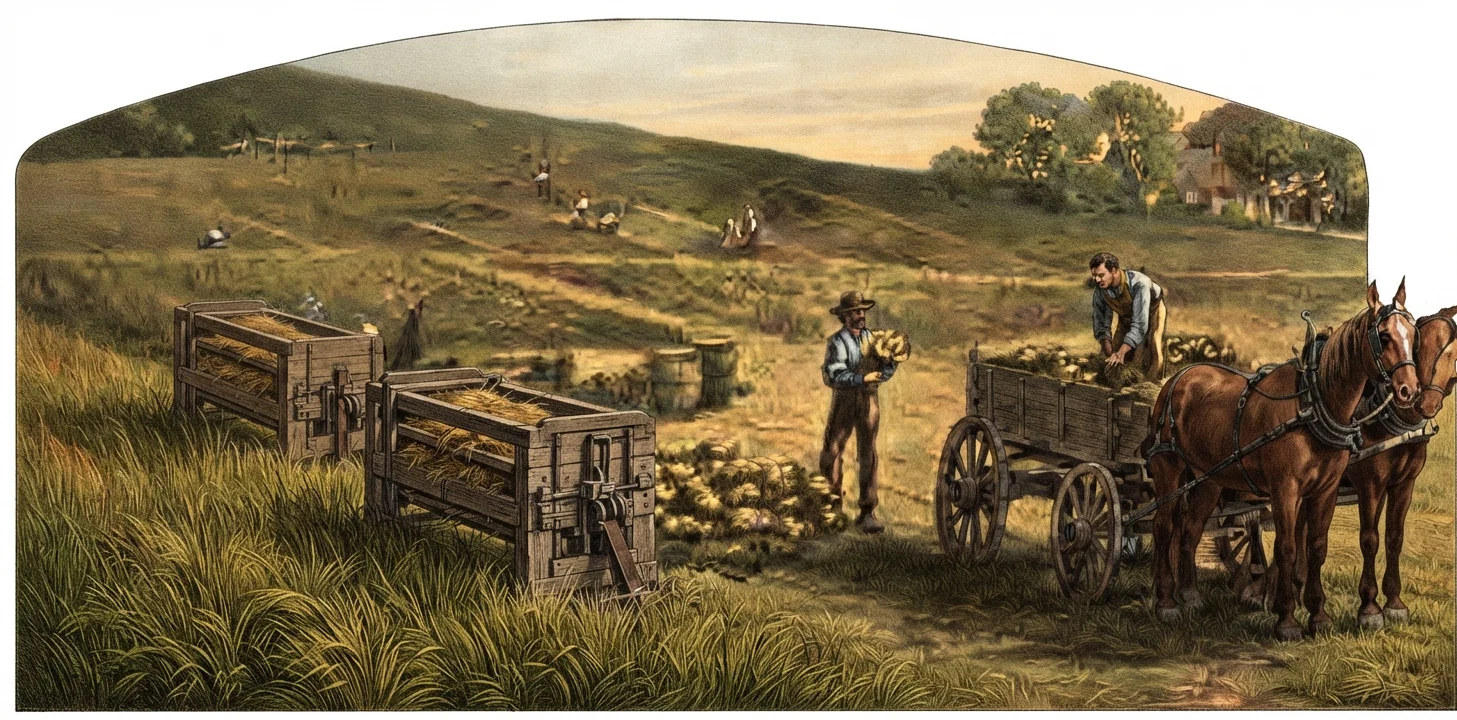
THE TREASURES OF THE FIELD
CLEANLINESS, SUNLIGHT, AND AIR
The earnest teacher will improve every opportunity to show the necessity of perfect cleanliness both in personal habits and in all one's surroundings. The value of the daily bath in promoting health and in stimulating mental action, should be emphasized. Attention should be given also to sunlight and ventilation, the hygiene of the sleeping room and the kitchen. That "the life is more than meat, and the body than raiment," is a lesson no less needed now than when given by the divine Teacher eighteen hundred years ago.
The great requisite in teaching these principles is to impress the pupil with their importance, so that he will conscientiously put them in practice.
ALCOHOL, TOBACCO, AND LIKE POISONS
Intemperance is a foe against which all need to be guarded. The rapid increase of this terrible evil should arouse every lover of his race to warfare against it. The practice of giving instruction on temperance topics in the schools is a move in the right direction. Instruction in this line should be given in every school and in every home. The youth and children should understand the effect of alcohol, tobacco, and other like poisons, in breaking down the body, beclouding the mind, and sensualizing the soul. It should be made plain that no one who uses these things can long possess the full strength of his physical, mental, or moral faculties.
But in order to reach the root of intemperance, we must go deeper than the use of alcohol or tobacco. Idleness, lack of aim, or evil associations, may be the predisposing cause. Often it is found at the home table, in families that account themselves strictly temperate. Anything that disorders digestion, that creates undue mental excitement, or in any way enfeebles the system, disturbing the balance of the mental and the physical powers, weakens the control of the mind over the body, and thus tends toward intemperance. The downfall of many a promising youth might be traced to unnatural appetites created by an unwholesome diet.
DIET AND INTELLECTUAL DEVELOPMENT
The relation of diet to intellectual development should be given far more attention than it has received. Mental confusion and dullness are often the result of errors in diet.
Students should be taught the nutrient value of different foods. The effect of a concentrated and stimulating diet, also of foods deficient in the elements of nutrition, should be made plain. Grains, fruits, nuts, and vegetables, in proper combination, contain all the elements of nutrition; and when properly prepared, they constitute the diet that best promotes both physical and mental strength. By brain workers and others of sedentary pursuits, but few kinds should be taken at a meal.
And overeating, even of the most wholesome food, is to be guarded against. Nature can use no more than is required for building up the various organs of the body, and excess clogs the system. Many a student is supposed to have broken down from overstudy, when the real cause was overeating.
The importance of regularity in the time for eating and sleeping should not be overlooked.
So far as possible, we should avoid hurried eating. The shorter the time for a meal, the less should be eaten. It is better to omit a meal than to eat without proper mastication.
TIME FOR CHEERFUL CONVERSATION
Mealtime should be a season for social intercourse and refreshment. Everything that can burden or irritate should be banished. Let trust and kindness and gratitude to the Giver of all good be cherished, and the conversation will be cheerful, a pleasant flow of thought that will uplift without wearying.
THE TEMPLE OF THE BODY
Let pupils be impressed with the thought that the body is a temple in which God desires to dwell; that it must be kept pure, the8abiding place of high and noble thoughts. As in the study of physiology they see that they are indeed “fearfully and wonderfully made,” they will be inspired with reverence. Instead of marring God’s handiwork, they will have an ambition to make all that is possible of themselves, in order to fulfill the Creator’s glorious plan. Thus they will come to regard obedience to the laws of health, not as a matter of sacrifice or self-denial, but as it really is, an inestimable privilege and blessing.