It will be somewhat indicative of what Federation hopes to accomplish to give complete a story that was very generally circulated at the Buffalo Convention:
"Sometimes Catholics give as an excuse for not joining the Federation, that they do not want to offend their non-Catholic friends by becoming affiliated with an organization of this kind. An incident associated with the Chicago convention is here related to show how unfounded are the fears that Federation will excite the antagonism of non-Catholic denominations: After the convention, while several of the delegates were sitting in one of the hotels, a stranger, excusing himself for intruding, introduced himself. He said he resided in Kansas City; that by the merest chance he happened in, out of the drenching rain, to the convention. 'I am a Methodist,' said he, 'but if what I heard at this meeting correctly represents the Federation of Catholic Societies, you can’t let your fellow-citizens of other denominations know of it quickly enough. Educated Americans of all creeds are rapidly reaching the only logical and sensible conclusion, that in matters of religion, as everything else here, it is bound, sooner or later, to be the "survival of the fittest."' The Protestant gentleman’s thought not only contradicted the fear of bitterness, but it emphasizes the opportunities all about us for an apostolate of the laity to assist in winning America to the religion most consistent with the naturally broad and logical trend of the American mind."
Federation is, then, a power that must assist in winning America to the religion "most consistent with the naturally broad and logical trend of the American mind." And that trend, according to the Catholic view, is Catholicward! The struggle will terminate at last in "the survival of the fittest!"
A striking editorial appeared in the Buffalo Morning Courier of August 2. After referring to the declarations of the Federation as notable, arraigning Socialism as a menace to society, and quoting a portion of Mr. Gonner’s speech upon the subject, it said:
"It is a great work, a greatly needed work. The beneficent influence of the American Federation of Catholic Societies will be beyond measure. It is an organized, universal force acting in harmony with the spirit and principles of American social and political institutions. Arrayed with it will be other effective forces, religious, social, and political forces, all standing as a solid wall against which will beat in vain the intermittent waves of disorder, lawlessness, and anarchism."
Again, in its issue of July 31, the Courier said: "One of the most powerful organized bodies in this country is now in session in Buffalo. The American Federation of Catholic Societies represents a membership of a million and a half, united chiefly to oppose Socialism, anarchy, perversion of marriage, divorce, dishonesty in business, and corruption in politics. Next to the Catholic Church itself this Federation of Catholic Societies is the greatest organized conservative force in the United States, actively at work in opposition to movements and influences antagonistic to the principles of American institutions. It is a matter of supreme importance that this organization should continue to grow in strength and effectiveness; and it is entitled to the encouragement and the hearty good-will of all intelligent, law-abiding, patriotic American citizens."
The Catholic Union and Times, in its issue of August 2, editorially says:
"The good ship Federation has been fairly launched at the port of Buffalo. Its building has been perfected in these recent years; its probation period has passed; she has felt the 'thrill of life along her keel,' and now, with the 'wind sitting in the shoulder of her sail,' she leaps triumphantly on the trying waters of history. It is a great and magnificent organization that is bound to root out prevailing and ruining national evils. The Federation has no national fears, and it asks no favors."
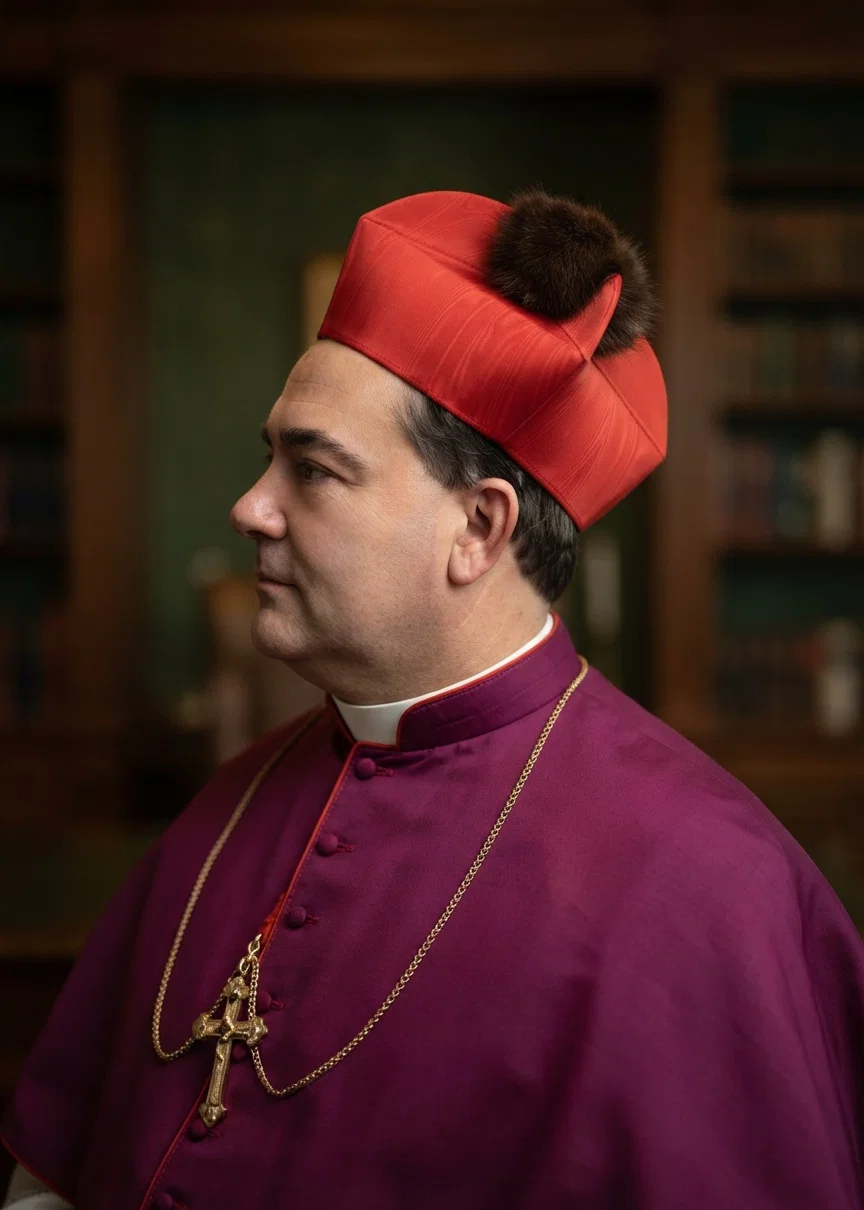
BISHOP JAMES McFAUL, OF TRENTON, N. J.
Catholics are not apologists for their presence in America. They are the true leaven of the body politic. Truth loves the sun, and who would dare impeach the excellence of those ends narrated by the Cardinal Secretary of His Holiness. Hear them: 'To extend a helping hand to the clergy in safeguarding Catholic interests; to strive for the Christian education of youth, which is the hope of the Church; to further peace and morality in families; to expound Catholic truth in books and periodicals; to combat errors; to foster established works of charity and found new ones; finally to endeavor to renovate public and private life in conformity with the teachings of Jesus Christ.'"
"History repeats itself" is an old and well-worn adage that must not be forgotten. Federation is not, after all, a new thing, nor an untried experiment. Far in the past federation had its day. We would review its history for a brief moment, and compare it in consideration and justice with the federation movement of the present. It was Patrick Henry who said, "We have no sufficient means of judging the future but by the past." And the following utterance by Macaulay is pertinent in this connection: "No past event has any intrinsic importance. The knowledge of it is valuable only as it leads us to form just calculations with respect to the future."
Just such a proceeding as the federation movement of to-day took place in the third and fourth centuries.
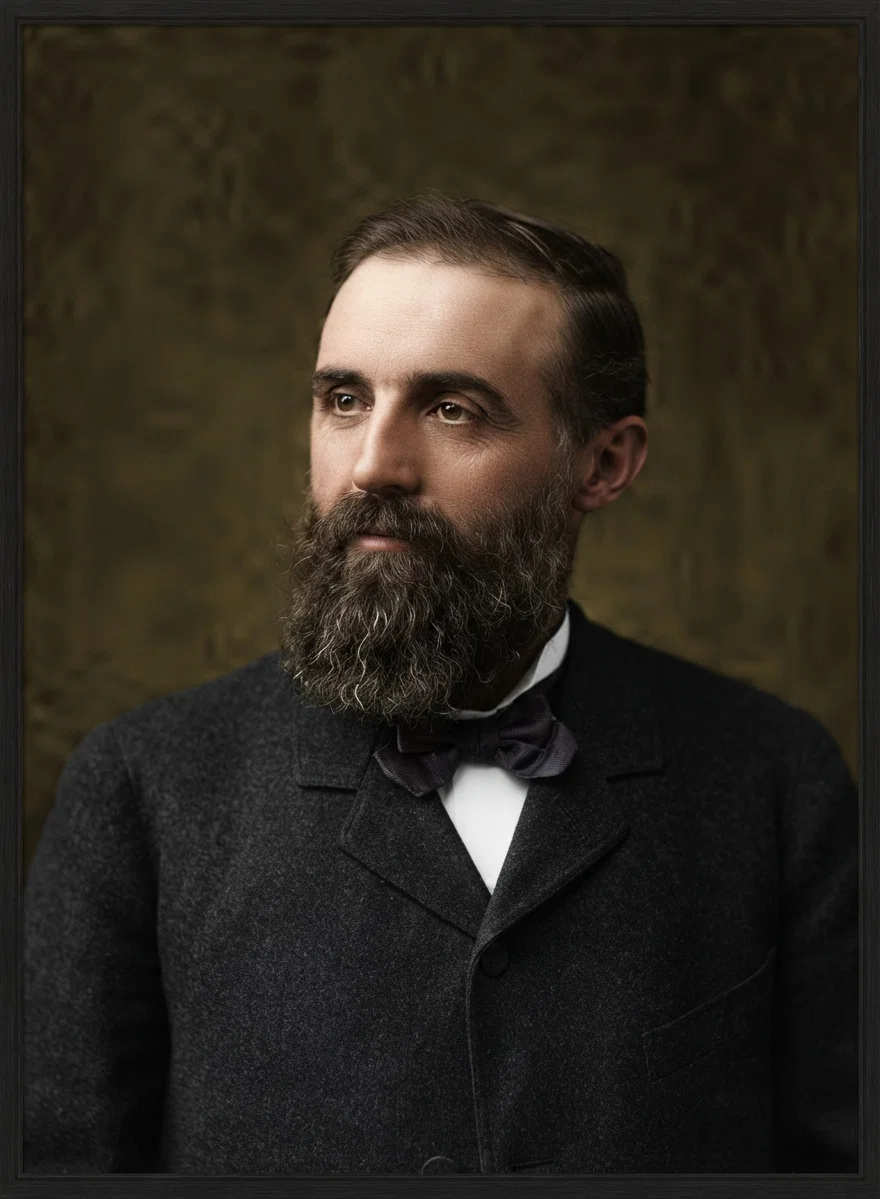
MR. J. B. OULKERS, OF NEWARK, N. J.
Various Christian bodies meeting in great ecumenical "councils," finally formed an organization, a great federal organization whose influence and territory was as far-reaching and universal as that of the government itself. Federation launched by Constantine was completed by Theodosius. The idea of that ancient federation, too, was "to renovate public and private life according to the teachings of Jesus Christ," and thus bring a visible "kingdom of God" upon the earth.
In order to facilitate its work in that apparently good, yet altogether bad, direction, the power of the civic government was invoked and secured. It was the prominent churchman, Augustine, who said:
"It is indeed better that men should be brought to serve God by instruction than by fear of punishment or by pain. But because the former means are better, the latter must not therefore be neglected. . . . Many must often be brought back to their Lord, like wicked servants, by the rod of temporal suffering before they attain the highest grade of religious development."
And in this purpose the government acquiesced. This was "civic righteousness" indeed, or "making men good by law." Collectivism, fully organized and despotic, with the mailed fist of bigotry and oppression, wrested from individualism the dearest of all earthly treasures—the right "to worship God according to the dictates of one’s own conscience." This was an egregious error, in which the state was made to actively participate and co-operate by compelling men to render obedience and do homage to that which was wholly and altogether heathenish. And all this was under anathema and temporal punishment! As Leander justly says:
"It was by Augustine, then, that a theory was proposed and founded, which . . . contained the germ of that whole system of spiritualism and despotism, of intolerance and persecution, which ended in the tribunals of the Papacy."
The world-church, formed and launched upon its fateful journey by combined influence of federation, holding firmly the reins of civil government in an iron grasp, rode triumphantly down through the ages; its pathway strewn all the way with hapless wrecks of heretical humanity, until a voice in Germany awoke the world from the sleep of "the midnight hour," and the march of ecclesiastical despotism was effectually checked. The iniquitous and13tortuous pathway of religious legislation, accompanied by a world of degradation and human wo, was the road over which the early church traveled in forming, and then fulfilling the wishes of a papal theocracy.
Who can possibly fail to see that the beginning of religious federation to-day is the same, the purposes alike, and the practical results in this twentieth century can not, and will not, differ from those of that great religious oligarchy of the past! Ostensibly for the purpose of bringing "righteousness to this nation," in fact, church federation and its legitimate offspring, theocratical government, can bring, and only bring, tyranny and oppression to its peoples. And, ultimately, it can and will bring only national disaster to the nation itself!
The seeds sown by this truly vast confederated power will surely result in a harvest of persecution to those who hold the principle of "the divine right of dissent," and who object to the plan and purposes that are alike altogether unchristian, altogether un-American, altogether unjust!
(Concluded next week.)