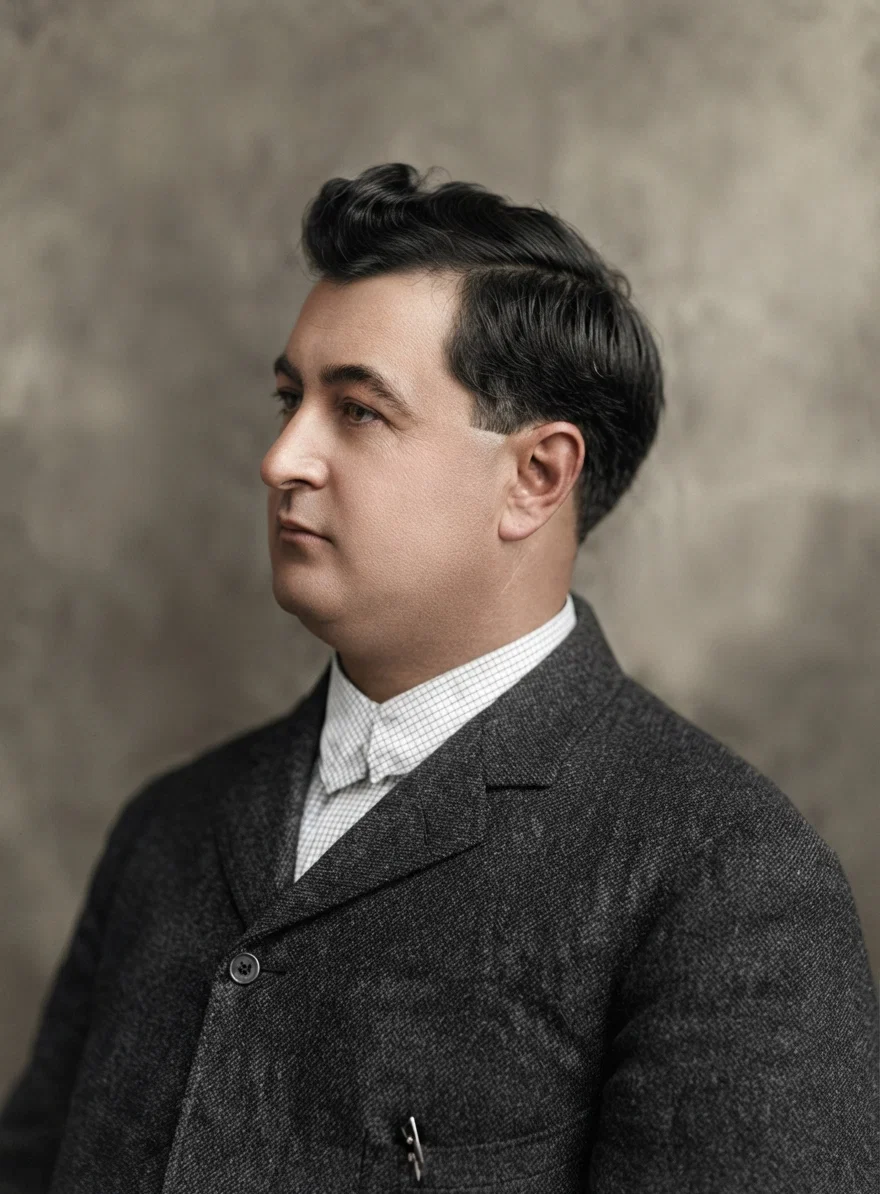
(Reported for the SIGNS OF THE TIMES by John S. Wightman.)
WILL the Catholic Church succeed in "winning America" for that religion, "the survival of the fittest;" will it succeed in securing for itself the universal assent to its much-vaunted right to conserve "the majesty of law and the stability of the state?" are pertinent questions that in view of the recent current events may well occupy the thoughtful attention of all true American citizens, of all genuine Protestant believers.
"Rome never changes." As she was a thousand years ago, so she is to-day. True, her policy may be tempered to the peculiar and fluctuating minds and times of localities and of centuries; she may exactly suit herself to the prevailing and exacting conditions of republics and empires alike; she may extend either the gloved hand of temporary concession, or the mailed fist of unreasoning independence, as circumstances and conditions may demand or permit. Her tactics and policies in the Orient may differ absolutely and strangely from those in the Occident; but in respect to doctrine, her unswerving purpose is to dominate the civil with the power of the ecclesiastical, in the radical and unchangeable fundamentals of her very being. In an insatiate and determinate desire ultimately to rule the whole world with a rod of iron, she is as firm, as inflexible, as immovable as the rock of Gibraltar! In her triumphant march through the centuries, down through the "moral midnight" of her supremacy, into the glaring and soul-searching lime-light of an age of republics and investigative thought; of unparalleled progress, enlightenment, and magna chartas of human liberty and inalienable rights everywhere; the church that has weathered a thousand storms and crossed a score of troubled seas, comes to us as fixed in her determination and in her loyalty to the standard set aloft in the council chambers of Babylon, as the pole-star is fixed above the quiet, the unknown, the undiscovered sea! Rome does not change. In his encyclical on Christian unity, given to the world in 1896, Pope Leo XIII., said:
"The fathers of the church are unanimous in considering as outside the Catholic communion any one who in the least degree deviates from even one point of the doctrine proposed by the authoritative magisterium of the church. . . . For the due preservation of unity of the faith, it is not sufficient that the head should have been charged merely with the office of superintendent, or should have been invested solely with the power of direction; but it is absolutely necessary that he should have received real and sovereign authority which the whole community is bound to obey."
A Rome correspondent of the New York Sun of July 11, 1892, said:
"In his (Pope Leo's) view, the United States has reached the period when it becomes necessary to bring about the fusion of all the heterogeneous elements in one homogenous and indissoluble nation. . . . According to him the church ought to be the chosen crucible for the moulding and absorption of races into one united family. . . . What the church has done in the past for others, she will do for the United States."
And Archbishop Quigley has said: "Within twenty years the United States will rule the world; when the United States rules the world, the Roman Catholic Church will rule the world."
Church Progress, a Catholic journal of St. Louis, says:
"While our government has been far from doing the right thing by way of recognizing American Catholics in the Philippines, we believe justice will prevail. For this, the demand of fifteen millions of Catholics is somewhat of a guarantee. It is one which no administration will dare ignore."
Nicholas Gonner.
Editor Catholic Tribune, Dubuque, Iowa; Honorary President German Roman Catholic Central Verein, Chairman Executive Board of the American Federation of Catholic Societies.
In Vol. 22, p. 986, art. 3, entitled "De Heretics," we find the following:
"We excommunicate and anathematize every heresy, that exalts itself against this holy orthodox and Catholic faith. Such as are condemned must be delivered over to the existing secular power, or to their officers to receive due punishment. But those who shall be found guilty only of suspicion must be smitten with the sword of anathema, and let such persons be shunned by everybody until they have given condign satisfaction.
"Moreover, secular powers must be warned, induced, and, if necessary, compelled, by ecclesiastical censure, to swear publicly in defense of the faith, that they will strive with all their might, bona fide, to exterminate from the land subject to their jurisdiction all heretics denounced by the church. So that henceforth whosoever shall assume to govern, whether spiritually or temporally, he must be compelled by an oath to conform to this article."
This was passed at the twelfth council in Rome, 1215 A.D., and in the time of Pope Innocent III. From this corollary of facts bearing upon the subject, we are bound to arrive at the unavoidable conclusions that church unity throughout the world is desirable; that it must be charged with an official head having real and sovereign authority; that Rome expects to rehabilitate Europe and save the waning power of the Papacy there with the rejuvenated types and growing power of an American church; that what the church has done for other nations she now proposes to do for the American republic; that when the United States rules the world the Roman Catholic Church will rule the world; that 15,000,000 Catholics banded together will be an influential and commanding power that the administration of government must hear and respect; that secular powers must punish heretics and ever and always conserve the interests of the church and the Roman Catholic faith.
From these conclusions there is no escape. They are logical. It is for all this that American Federation and its allied millions will and necessarily must stand! Reader, ponder these stated facts, and if you have not already done so, be persuaded to-day that with the help of God, you will turn from the federation and all its wickedness, and with new inspiration take a firm stand for American and Christian principles as against the doctrines and plans of a world-church and world federation—a power that bodes no good either for itself, for the individual, or for the government!
Federation must, from the very necessity, be crushed finally with its own weight! It is an inverted pyramid which, as it continues to grow, must reach the point of overbalance, and then it will fall with a mighty crash that will be heard around the world!
Will Federation be world-wide?—Beyond a doubt. Already the American Federation is in correspondence with federations in Germany, Italy, and France, with the view to establishing an international federation. Alaska, New Zealand, and Australia are knocking at the door for admission, and soon the consummation of the ideal—a world Catholic—will be fully realized. It was the Catholic Mirror of Baltimore that said, "The desire for the reunion of Christendom, is a striking characteristic of our times."
A reunion of Christendom! Nor can one doubt that such will be the end! And thus will the history of Rome be repeated. "All the world will wonder after the beast." "Men are closing their eyes to the real character of Romanism, and the danger to be apprehended from her supremacy. The people need to be aroused to resist the advances of this most dangerous foe to civil and religious liberty."
Pope Leo XIII. said: "May the faithful unite their efforts more efficaciously for the common good, and may their union rise like an impregnable wall against the fierce violence of the enemies of God."
This is the slogan of the Catholic hosts! It means something; it means everything! "The enemies of God," forsooth! are those noble souls of every age and every clime, those watchmen upon the walls of Zion, who stand unalterably for the principles of Christian liberty, and plead that church and state may be kept forever separate. These are called enemies.
The Catholic Convention of Federated Societies is a thing of the past; its influence is yet a matter of the future.