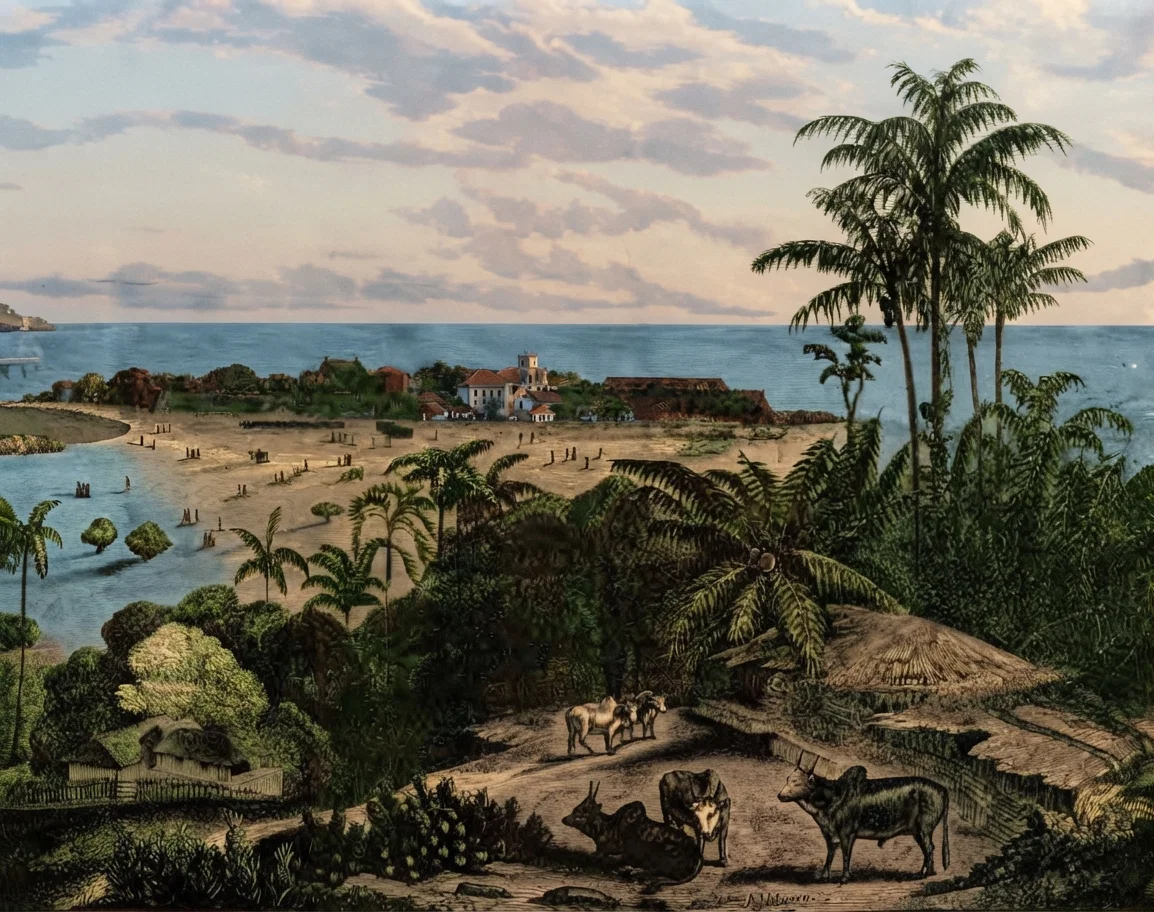
IN the beautiful island of Ceylon, many years ago, the native Christians, who had long worshiped in bungalows and old Dutch chapels, decided that they must have a house built for themselves. Enthusiastic givers were each eager to forward the new enterprise. But, to the amazement of all, Maria Peabody, a lone orphan girl, who had been a beneficiary in the girls' school at Oodooville, came forward and offered to give the land upon which to build, which was the best site in her native village.
Not only was it all she owned in this world, but, far more, it was her marriage portion, and in making the gift in the eyes of every native she renounced all hopes of being married. As this alternative in the East was regarded an awful step, many thought her beside herself, and tried to dissuade her from such an act of renunciation. "No," said Maria, "I have given it to Jesus, and as He accepted it, you must." And so to-day the first Christian house of worship in Ceylon stands upon land given by a poor orphan girl.
The deed was noised abroad, and came to the knowledge of a young theological student, who was also a beneficiary of the mission, and it touched his heart. Neither could he rest until he had sought and won the rare and noble maiden who was willing to give up so much in her Master's cause.
Some one in the United States had been for many years contributing twenty dollars annually for the support of this young native girl, but the donor was unknown. Dr. Poor, a missionary in Ceylon, visiting America about that time, longed to ascertain who was the faithful sower, and report the wonderful harvest.
Finding himself in Hanover, N. H., preaching to the students of Dartmouth College, he happened in conversation to hear some one speak of Mrs. Peabody, and repeated, "Peabody; what Peabody?"
"Mrs. Maria Peabody, who resides here, the widow of the former professor," was the answer.
"O! I must see her before I leave," said the earnest man, about to continue his journey.
The first words after an introduction at her house were: "I have come to bring you a glad report, for I can not but think it is to you we in Ceylon owe the opportunity of educating one who has proved as lovely and consistent a native convert as we have ever had. She is exceptionally interesting, devotedly pious, and bears your name."
"Alas!" said the lady, "altho the girl bears my name, I wish I could claim the honor of educating her; it belongs not to me, but to Louisa Osborne, my poor colored cook. Some years ago, in Salem, Mass., she came to me, after an evening meeting, saying: 'I have just heard that if anybody would give twenty dollars a year, they could support and educate a child in Ceylon, and I have decided to do it. They say that along with the money I can send a name, and I have come, mistress, to ask you if you would object to my sending yours.'"
A Scene on the Island of Ceylon.
At that time," continued the lady, "a servant's wages ranged from a dollar and a half a week, yet my cook had for a long time been contributing half a dollar each month at the monthly concert for foreign missions. There were those who expostulated with her for giving away so much for one in her circumstances, as the time might come when she could not earn. 'I have thought it all over,' she would reply, 'and concluded that I would rather give what I can while I am earning, and then if I lose my health, and can not work, why, there is the poorhouse, and I can go there. You see, they have no poorhouse in heathen lands; for it is only Christians who care for the poor.'"
In telling this story, Dr. Poor used to pause at this point and exclaim: "To the poorhouse! Do you believe God would ever let that good woman die in the poorhouse?" Never!
The missionary learned that the last known of Louisa Osborne, she was residing in Lowell, Mass. In due time his duties called him to that city. At the close of an evening service, before a crowded house, he related, among missionary incidents, as a crowning triumph, the story of Louisa Osborne and of Maria Peabody. The disinterested devotion, self-sacrifice, and implicit faith and zeal of the Christian giver in favored America, have been developed, matured, and well-nigh eclipsed by her faithful protégé in far-off, benighted India. His heart glowed with zeal, and, deeply stirred by the fresh retrospect of triumphs of the Gospel over heathenism, he exclaimed, "If there is any one present who knows anything of that good woman Louisa Osborne, and will lead me to her, I shall be greatly obliged." The benediction pronounced, and the crowd dispersing,
Dr. Poor passed down one of the aisles chatting with the pastor, when he espied a quiet little figure apparently waiting for him. Could it be? Yes, it was a colored woman, and it must be Louisa Osborne. With quickened steps he reached her, exclaiming, in tones of suppressed emotion, "I believe this is my sister in Christ, Louisa Osborne."
"That is my name," was the calm reply.
"Well, God bless you, Louisa; you have heard my report, and know all, but before we part, probably never to meet again in this world, I want you to answer me one question, What made you do it?"
With downcast eyes, and in a low, trembling voice, she replied:—
"Well, I do not know, but I guess it was my Lord Jesus."
The missionary returned to his adopted home, where, ere long, the loving hands of faithful native brethren bore him to his grave. The humble handmaiden of the Lord labored13meekly on a while, and ended her days, not in a poorhouse, but, through the efforts of those who knew her best, in a pleasant, comfortable old ladies' home. "Him that honoreth Me, I will honor."—Life and Light.