"Wherefore, holy brethren, partakers of the heavenly calling, consider the Apostle and High Priest of our profession, Christ Jesus." Heb. 3:1.
EVER since sin entered this world the knowledge of God had been constantly waning among men, until the time of Christ's advent. So few knew God even then, because they would not come to Christ; for "neither doth any know the Father, save the Son, and he to whomsoever the Son willeth to reveal Him." To know God is eternal life, and this life is manifest only in His Son. John 1:18; Matt. 11:27; John 17:3; 1 John 5:11, 12.
Even the disciples of Jesus did not know Him, and this because of their erroneous ideas concerning Him; and the same thing is equally true now.
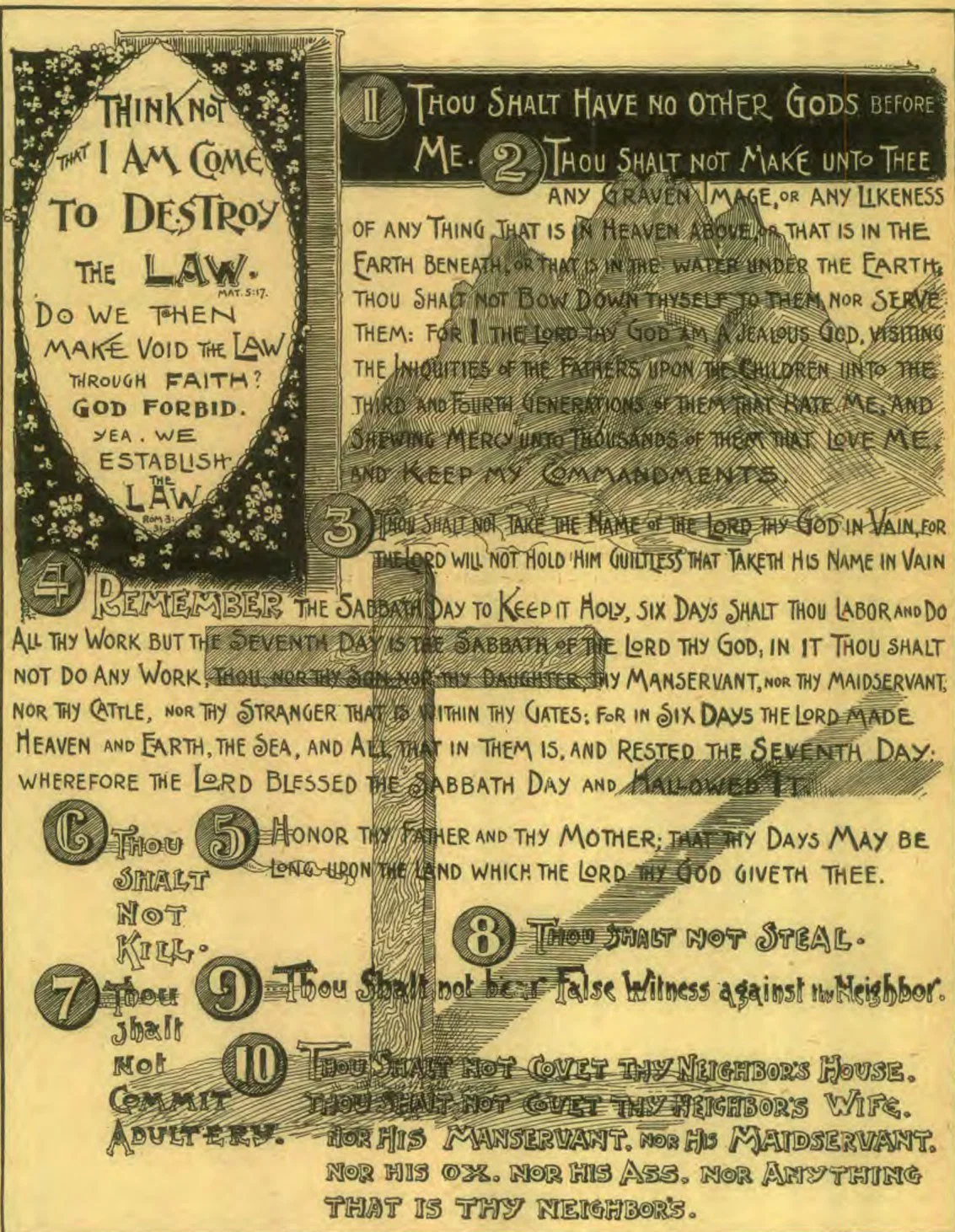
Perhaps in no way is Christ misunderstood more at the present time than in respect to His attitude toward God's law. When He appeared at His first advent the church then said, He has come to destroy the law and the prophets; to set aside what has been taught concerning the law for centuries. Nevertheless, the Saviour said repeatedly that He not only had not come to destroy the law and the prophets, but His mission on earth was to fulfil that law; for it is easier for heaven and earth to pass away than for one jot or tittle of that law to fail. Heaven and earth in their present state will eventually fail; but that law stands forever. Matt. 5:17, 18; Luke 16:17.
The church of to-day, however, declares that, despite the Saviour's teaching to the contrary, the coming of Christ annulled, set aside, abrogated, God's law, and the reign of grace entered. Therefore we are not under obligation, as Christians, to obey that law. So, practically the same conditions exist at the present time relative to the second coming of Christ and the law, as existed at His first advent in respect to Him and the law. The reason for this condition is due to the ignorance of the Bible teaching concerning Christ and the law. If this were better understood, Christ and the law would be better known and more greatly loved.
Christ, the Law-giver.
In order then to understand this subject better, let us ask ourselves, Who gave the law, and why was it given?
For a reply to these questions, let us turn to the Word of God. "There is one Law-giver, who is able to save and to destroy." James 4:12. "For the Lord is our Judge, the Lord is our Law-giver, the Lord is our King; He will save us." Isa. 33:22.
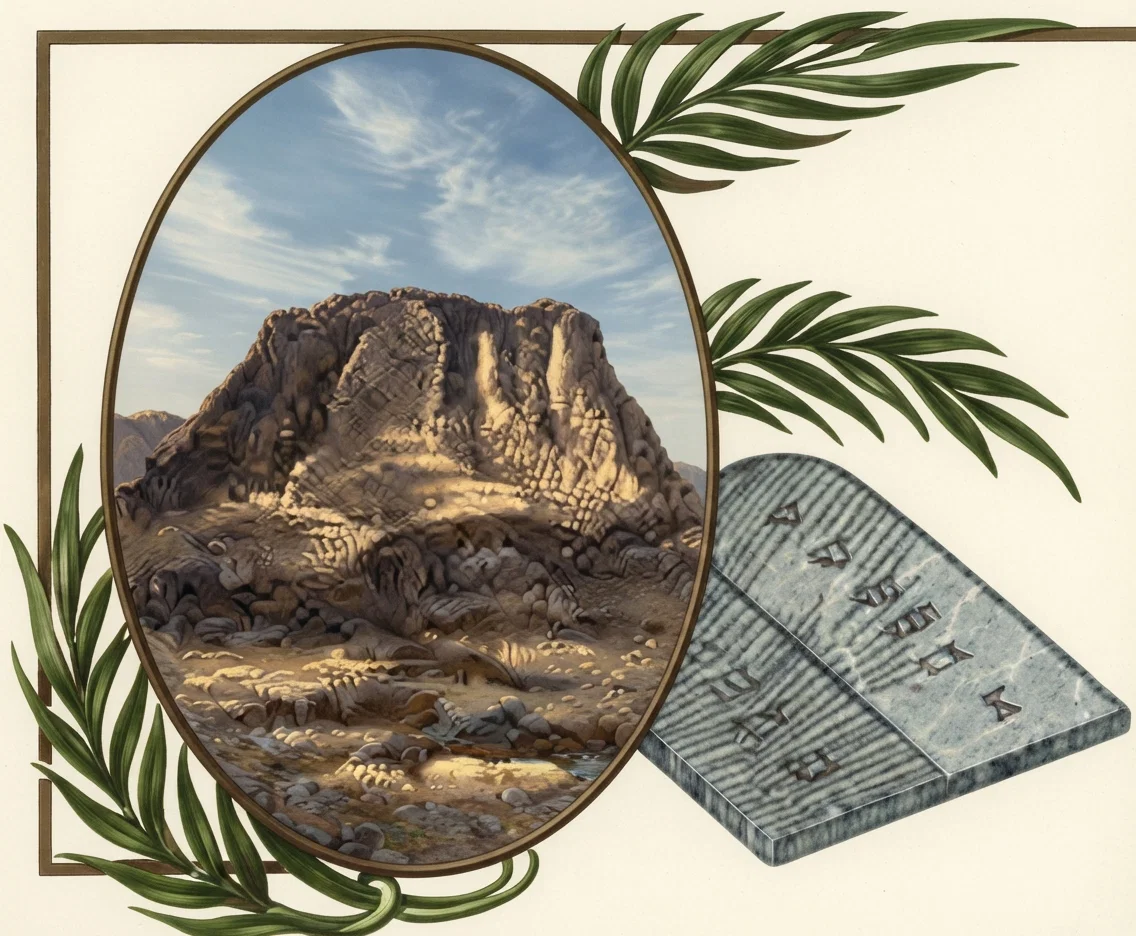
Here we are told that there is one law-giver, and this one law-giver is the Lord. And this is true, for we read that the Lord came down upon Mount Sinai, and there spoke the Ten Words of the Decalogue. Ex. 19:20; 20:1-17.
But both the scriptures above quoted declare that He who gave the law is the same also as the One who saves.
But who is He that saves? "Neither is there salvation in any other; for there is none other name under heaven given among men, whereby we must be saved." Acts 4:12. "I, even I, am the Lord; and beside Me there is no Saviour." Isa. 43:11. It is therefore evident that the One who saves us is the Lord Jesus Christ. For we read further that "He is able also to save them to the uttermost that come unto God by Him, seeing He ever liveth to make intercession for them." Heb. 7:25. And as the One who saves is the One who gave the law, for there is one Law-giver, it is clear that it was our blessed Lord Jesus Christ, who, upon the summit of quaking Sinai, uttered with His mighty, divine, majestic voice those immutable, eternal, and unchangeable precepts of the Decalogue.
Why did He give them?—Ah, because He longed to save the people at that time, even as He desires to save the people now, and as He has always desired to save them, from sin; and they could not be saved from sin until they realized that they were sinners; and they did not realize they were sinners until they knew the divine and eternal law of God. Yes, the same God who gave the people the law that would convict them of their sin, stood ready to save them from their sins, when they realized their need of a Saviour.
But the question will doubtless arise, "Did not God Himself, instead of the Son, give the law upon the summit of Sinai?" This question will easily be answered when we understand the relationship which exists between the Father and the Son. Jesus said, "I and my Father are One." John 10:30. And in Deut. 6:4 we read: "Hear, O Israel, Jehovah our Lord is One." (Translated from the Hebrew.) Yes, there is but one mind, one thought, one purpose between the Father and the Son, for all wisdom, all knowledge, all power, all understanding, the Father has given to the Son.
God's Son gave to men the law in order that they might know that the divine power to convict men of sin is the glorious power to save them from sin, and bring them back into the path of obedience, where they shall no more violate His blessed law.
But after the law was given to the very people who ought to have understood its blessedness, its preciousness, its spirituality, its perfection, its power, it had become so buried up with traditions, with the rubbish and philosophy of men, with the perverted ideas of human wisdom, that it needed to be seen in active life in order to be understood. It would have been to little purpose for God again to speak that law upon the summit of a mountain, for the people with a strong tenacity were averring that they were observing the law to the very letter, which had thus been spoken. So it needed more than words this time; it needed action, that men might see that law. Therefore God clothed His divine Son with the body of human flesh, and sent Him to earth to let Him live a man among men, and show them what He meant in those blessed and precious precepts that He gave to Adam in the beginning, the transgression of which brought wo and ruin upon a lost world. Hence, among the first teachings of Christ, we find Him explaining the meaning of that blessed law, and showing the people what it meant to observe and obey the law.
Christ, the Law-keeper.
That the divine Son of God would really be the ideal law-keeper was predicted centuries before He came to earth, for God was observing the tendency of men all through the ages, and saw the need of just such a revelation. Hence we read: "The Lord is delighted because of His righteousness; He will enlarge the law, and make it honorable." Isa. 42:21. (Translated from the Hebrew.) "Sacrifice and offering thou didst not desire; Mine ears hast Thou digged; . . . then said I, Lo, I come; in the volume of the Book it is written of Me, I delight to do Thy will, O My God; yea, Thy law is within My heart." Ps. 40:6-8. And since out of the heart are the issues of life (Prov. 4:23), the one great issue of Christ's life was not only to teach men the meaning of God's law, but in His life constantly to be an expounder of it. Hence, He asked the people who could accuse Him of sin?—no reply. He repeatedly stated that He had kept His Father's commandments; He had done the will of God; He had done always those things that pleased God. In other words, He wanted them to see that the one great thought and deed of His life was to live out in the flesh as man, what was meant by those sacred precepts of the Decalogue. To kill meant more than intentional taking of life as the rabbis taught. Unchastity meant more than the unlawful desire put into action. Theft meant much more than taking merely what belonged to some other person.3The law meant all that was contained in the letter, no deviation from the letter under any circumstance; it took hold even of the thought, the motive. But the deeds of His life magnified the letter of the law of God in human flesh. By His divine life and example its meaning was manifest.
If, then, the church of to-day could but see what was involved in the law of God, there would be a strong and earnest desire on the part of all to exalt, extol, and lift up the unchangeable precepts of the Decalogue. For to lift up the law is to exalt Christ; to depreciate the law is to exalt, and glorify, and perpetuate, sin. But, thank God, the law shall never be abolished; but sin shall. Hence we read that those who finally taste of the fruit of life's fair tree shall be those who keep the commandments, who have, in Christ, obeyed the law. Dear reader, are you a law-keeper or law-breaker?
Do you say it makes no difference whether you follow closely the law? Remember that God saw it was so important that He sent His own Son to earth, all the way from glory, and gave Him a body like yours, and had Him live for you the life that was intended in harmony with God's law. Then He gave up that life, shed His own precious blood, to show our eternal obligation to the law. By thus doing He destroyed sin, the transgression of the law, and declared the perpetuity of the law that you might live and be obedient.
"He that saith he abideth in Him ought himself also so to walk, even as He walked." 1 John 2:6.