HEBER, THE FIRST-BORN

2%

Pacific Press Publishing Association · Mountain View, California

FromSigns of the Times, Vol. 30, No. 45.

Read the full edition

HEBER, THE FIRST-BORN

A Story of Israel's Deliverance

By HART HALL

CHAPTER III.

"The Lord God of the Hebrews hath sent me unto thee saying, Let My people go, that they may serve me in the wilderness, and behold hitherto thou wouldst not hear. Thus saith the Lord, In this thou shalt know that I am the Lord. Behold, I will smite with the rod that is in mine hand upon the waters which are in the river, and they shall be turned to blood. And the fish that is in the river shall die; and the river shall stink; and the Egyptians shall loathe to drink of the water of the river."
The monarch sneered contemptuously at the prophet's words, but deigned no reply. Quickly Moses turned, and, with a gesture toward the river, spoke to Aaron. The other lifted his rod, and, stepping forward to the water's edge, smote the stream, then, turning this way and that, repeated the Divine malediction.
Instantly the deep, bluish-green river turned a crimson red, and soon a sickly smell was perceptible. The white bellies of the fish began to dot the stream as they floated, dead, to the surface.
The whole company were speechless and amazed, but, mindful of the experience of the day before, Pharaoh commanded the magicians to come forward and repeat the miracle.
With much difficulty some untainted water was secured, and the sorcerers, repeating over it their incantations, caused it to turn as red as the water of the river.
"It is magic," quoth the king, "It is magic," and, with a wave of his hand, bade the retinue of courtiers to proceed on its return to the city.
For seven days blood flowed in the streams and rivers of Egypt. The cisterns and pools were stagnant with the horrid pollution. In despair the Egyptians dug wells about the rivers, and from them carried water to their homes.
The eighth day, however, the streams were flowing with the clear, sweet waters from the snows of what is now Abyssinia. The return of the water brought peace to the Egyptians, but with the return of peace came the brother prophets to the palace.
Unbidden and unannounced as before, they appeared in the king's presence, and were received in the same manner. Already they were a harbinger of evil to the superstitious Copts, for truth rejected is a bane and a dread to the rejector.
Fearlessly the warning message came from the lips of the seer: "Thus saith the Lord, Let My people go, that they may serve Me. And if thou refuse to let them go, behold, I will smite all thy borders with frogs. And the river shall bring forth frogs abundantly, which shall go up and come into thine house, and into thy bed-chamber, and upon thy bed, and into the house of thy servants, and upon thy people, and into thine ovens, and into thy kneading troughs. And the frogs shall come up both on thee, and upon thy people, and upon all thy servants."
The king received the warning with contempt and ridicule, reviling them in a manner ill-fitting a king. The prompting came again to him to slay them, but he feared.
And again the men withdrew, and the court expectantly, tho unwittingly, awaited the fulfilment of the prophet's words.
They had not long to wait. Before the sun had reached the zenith the kingdom was filled with slimy, hopping frogs, that came from the rivers and pools and everywhere that water flowed; they filled the cisterns and water vessels, they appeared in all their obtrusiveness in the houses, in the palace, in the court; and from the royal kitchen came the complaint that the pest was invading the ovens and bread troughs. Doors seemed no obstacle to them, for they appeared everywhere.
The king called for the magicians to appear before him. "Canst thou do this thing also?" he demanded. The sorcerers began their weird incantations, and soon, to all appearances, caused frogs to appear.
Upon seeing this the king was well pleased, and, with much earnestness, demanded them to remove the frogs now with their magic. To his disappointment and chargin, they declared themselves unable.
Pharaoh was impatient to have the frogs removed, but they must not be destroyed, because the frog was regarded as sacred to certain gods. They were the symbols of deities; the bodily presence of the invisible prince or power.

CHAPTER IV.

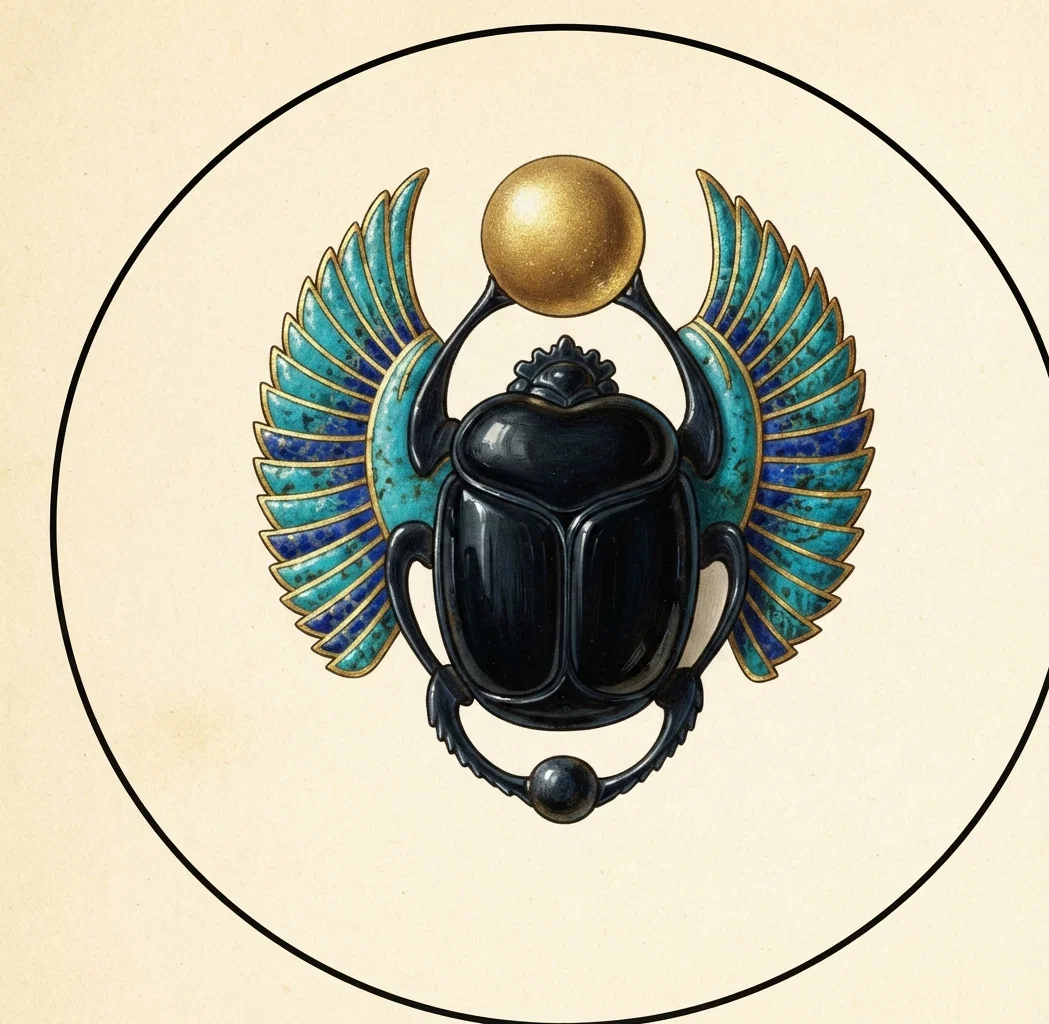
Perhaps no intelligent Egyptian worshiped the bull or goat, but the theology of the land as formulated by the priests and philosophers indicated these animals as the best living embodiment of the gods to whom they were held sacred. For instance, to the gods Amun and Chunn, the ram was sacred; to Ptah the beetle; to Osiris the heron; to Ptah and Isis the vulture; to Ra and Horus the hawk and cat; to Thoth the ibis; to Anibus the ape; to Set and his later counterpart, Sebek, the crocodile.
Any offense to the beast was an offense to the god of whom the creature was a symbol; and in the miracles of the plagues we witness the Divine displeasure against the heathen deities. In that displeasure God would teach all the nations of that time, and to all time, the folly of Pantheism. But sin is blinding, and its influence debasing, so the lesson was to the great majority, and still is, unlearned.
As much as was possible for one in his position, Pharaoh was humbled. Calling an officer of the court he asks, "Canst thou name me the fleetest messenger?"
The man bowed low in deep reverence. "Yea, my lord, the king; it is the lad Heber." "Heber?" repeated the ruler. "That is a name of the Hebrews."
"Yea, my lord, chosen only because he is the swiftest of foot in the land."
"It is meet," quoth the king, "at this time; he will know where these Hebrew dogs abide. Send for them."
The officer bowed low and retired, and soon speeding away from the palace and the city, toward the land of Goshen, was the messenger, Heber, robed with the king's colors as passport, fleeing as on the wing of the wind. Moses and Aaron promptly started on their return in answer to the king's summons, and when they stood before him at last, he greeted them anxiously. "Entreat the Lord, that He may take away the frogs from me, and from my people; and I will let the people go, that they may do sacrifice unto the Lord."
In quiet deference Moses requested the king to name a time for the frogs to be removed.
"To-morrow," said the ruler, secretly hoping that the frogs would disappear of themselves in the meantime, and save him the humiliation of submitting to a Hebrew and a bondman.
"Be it according to thy word," was the reply, and the men withdrew.
The coming dawn revealed the frogs still in the land, but they were dead, and the disagreeable task remained to gather them together in heaps for removal from the houses. And with the stench from their putrid remains polluting the air, there was no opportunity for the ruler Rameses to attribute magic to this miracle.
But with the horror of the plague removed, the promise he had made seemed better broken than kept. Their bondmen should not be liberated whether or no, this was his decision in counsel with the wise men. He would have no more of the impostors, with their presumptuous claims, and strict orders were given that they should be kept from the king's ground. Thus was he secure.
The full corps of musicians were summoned to the court; the tables of the banquet hall were set for feasting; but while the preparations were in progress, the third plague made its appearance in a most revolting and unexpected form. It was unsparing and impartial in its attack, from the king on his throne, to the cattle in the fields. The very dust of the earth seemed alive with the horrible scourge of lice.
In despair the monarch ordered the preparations discontinued and sent for the magicians. But their wailing incantations and frantic efforts produced nothing more than exhaustion in themselves and disgust in the spectators. They could not imitate the plague and finally declared to the king, "This is the finger of God."
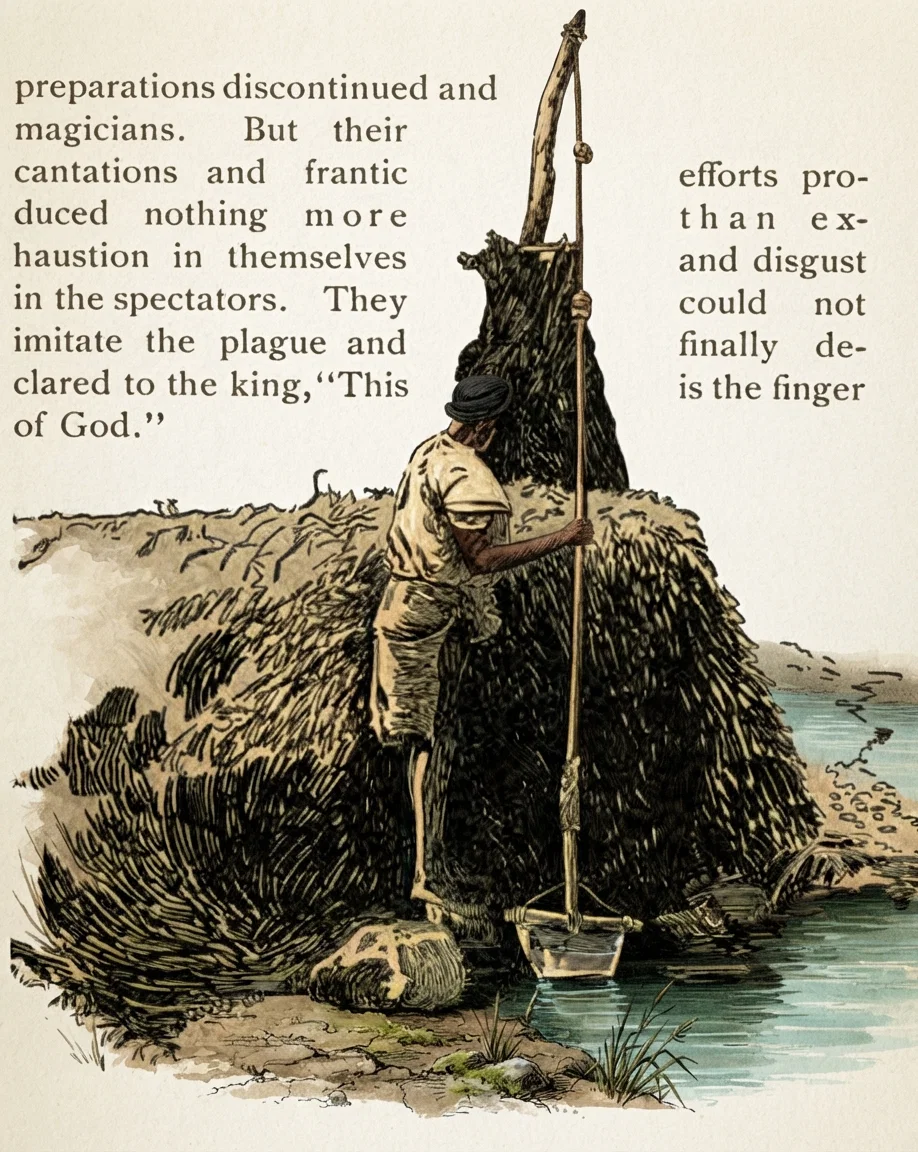
Drawing Water in Egypt
But even with this testimony the king remained obdurate, and betaking himself to the privacy of his chamber, where he could fight the plague and his convictions with greater liberty, he left the people of the court and kingdom to suffer as they might.
(To be Continued.)