The pen which records the directions, peculiarities, violence, and duration of the earthquake is called a "seismograph," from two Greek words, seismos, earthquake, and grapho, to write. And a curious handwriting it is.
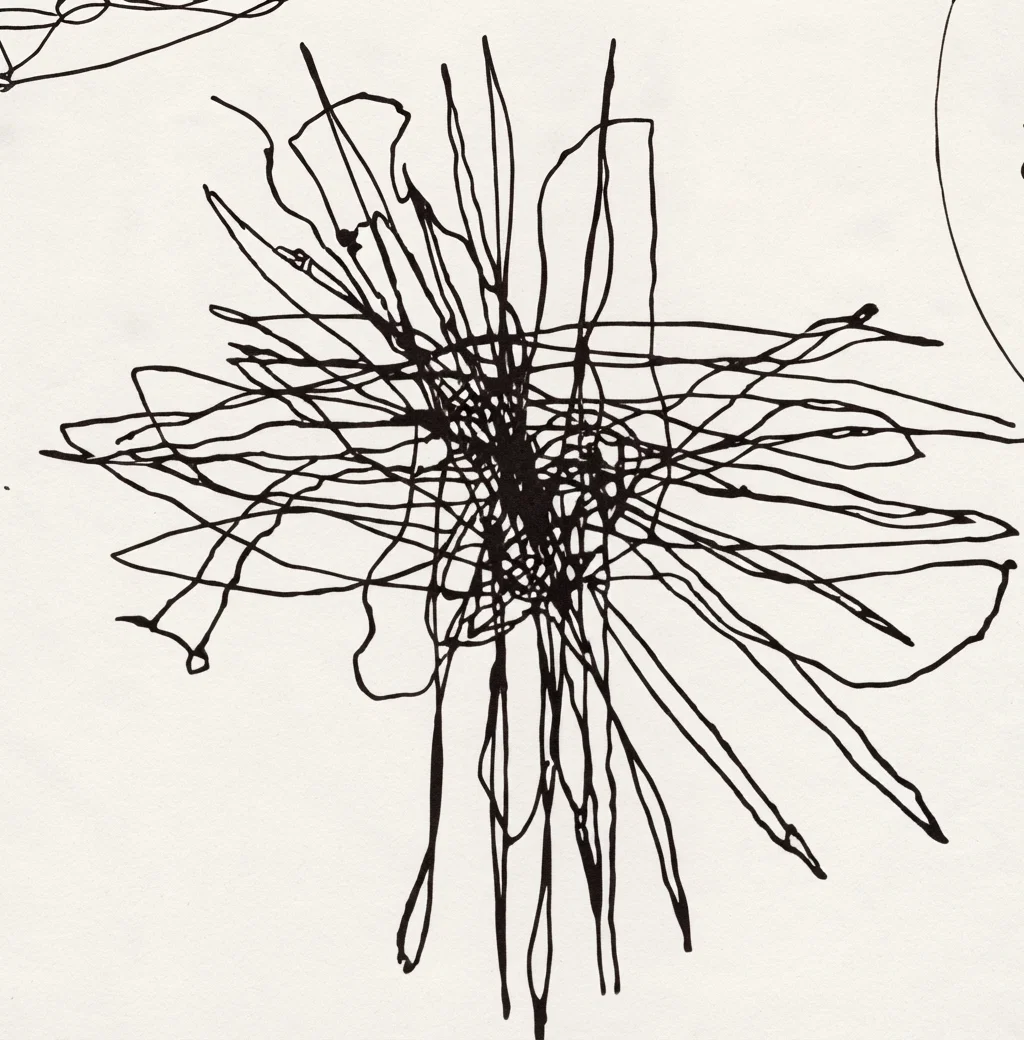
1. The first one on the left is a record taken in Oakland of the earthquake of April 19, 1892, at 2:49:2 A.M. Its duration was 38 seconds. This is a very long vibration.
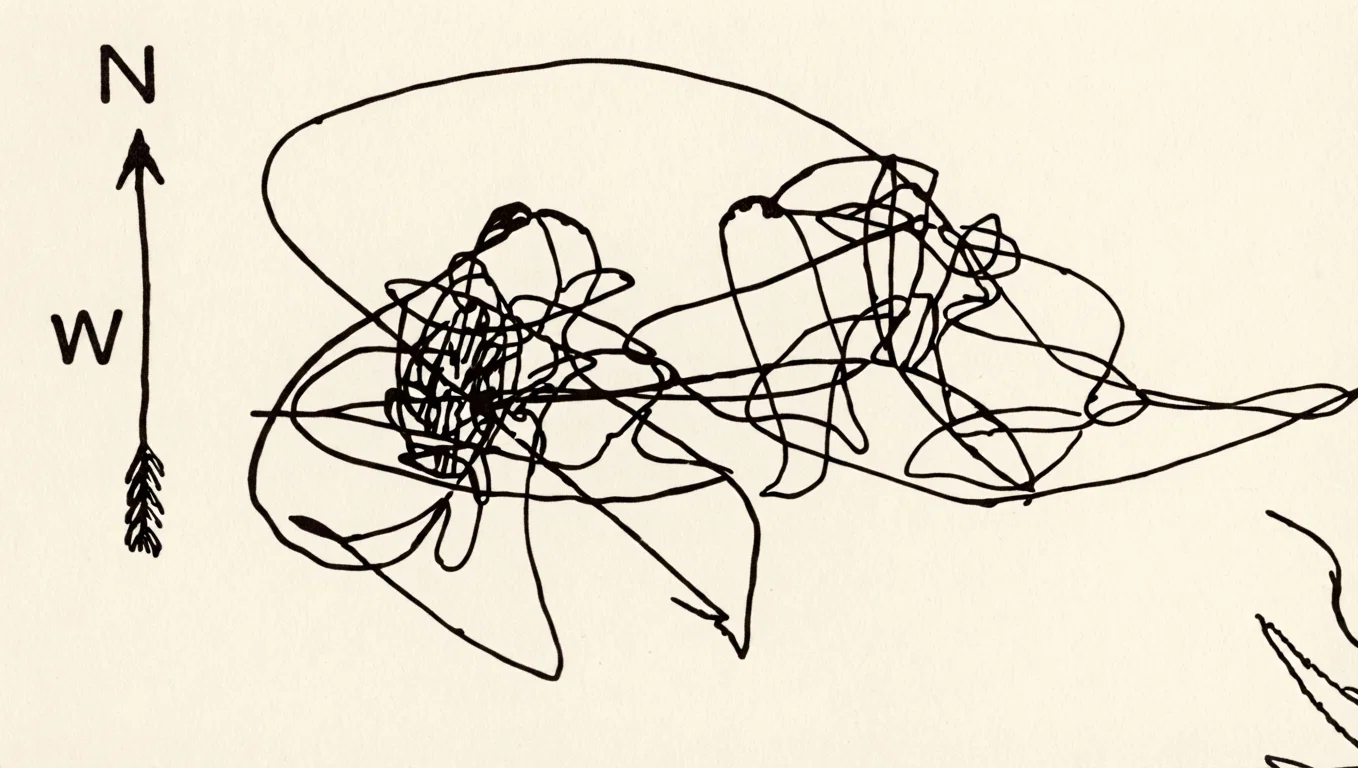
2. The second seismograph at the right, is the record of the earthquake of March 30, 1898, 11:45 P.M. The duration was 45 seconds. This was the most violent earthquake since 1868, until the recent one.
SEISMOGRAPHIC RECORD CHABOT OBSERVATORY
This is by the same instrument. The scale is one to seven, That is, the pen of the seismograph passes over seven times more space than the vibrations of the earth. No lives were lost. Damage to buildings, $3420,00.
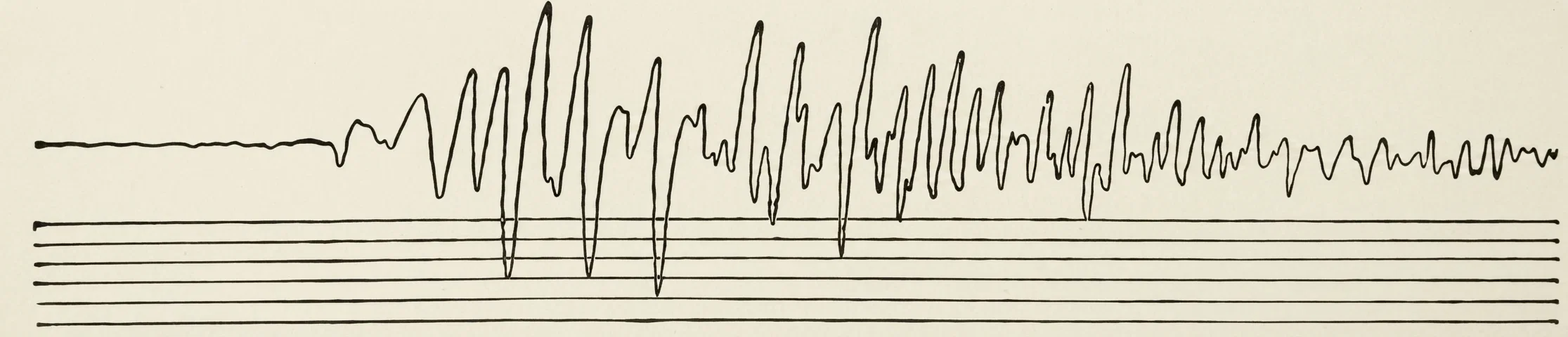
3. The lower one of the three is the record of the earthquake of April 18, 1906, at Yountville, Cal.
4. An Eastern autograph of the great temblor from Current Literature, taken in New York at the office of the State Geologist, 3,000 miles from San Francisco. Presumably the plate or ribbon moved under the pencil.
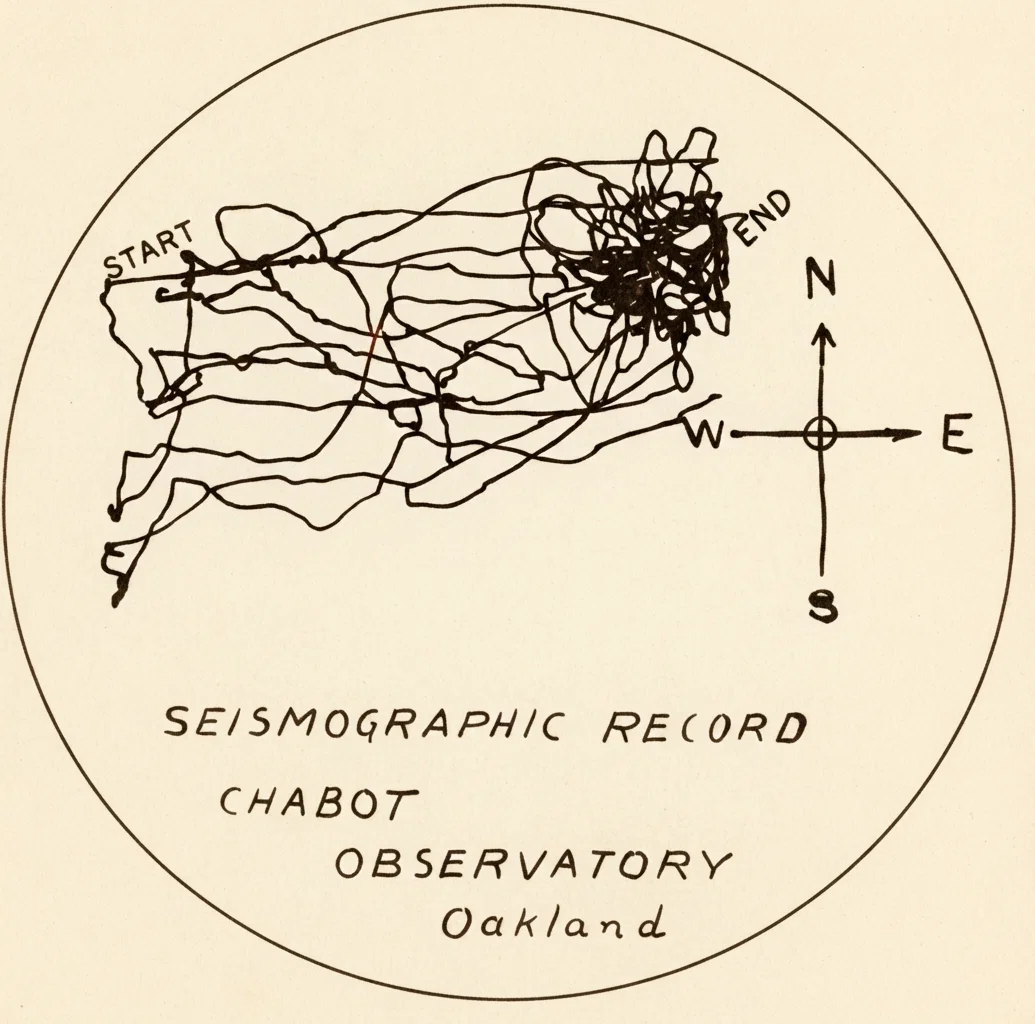
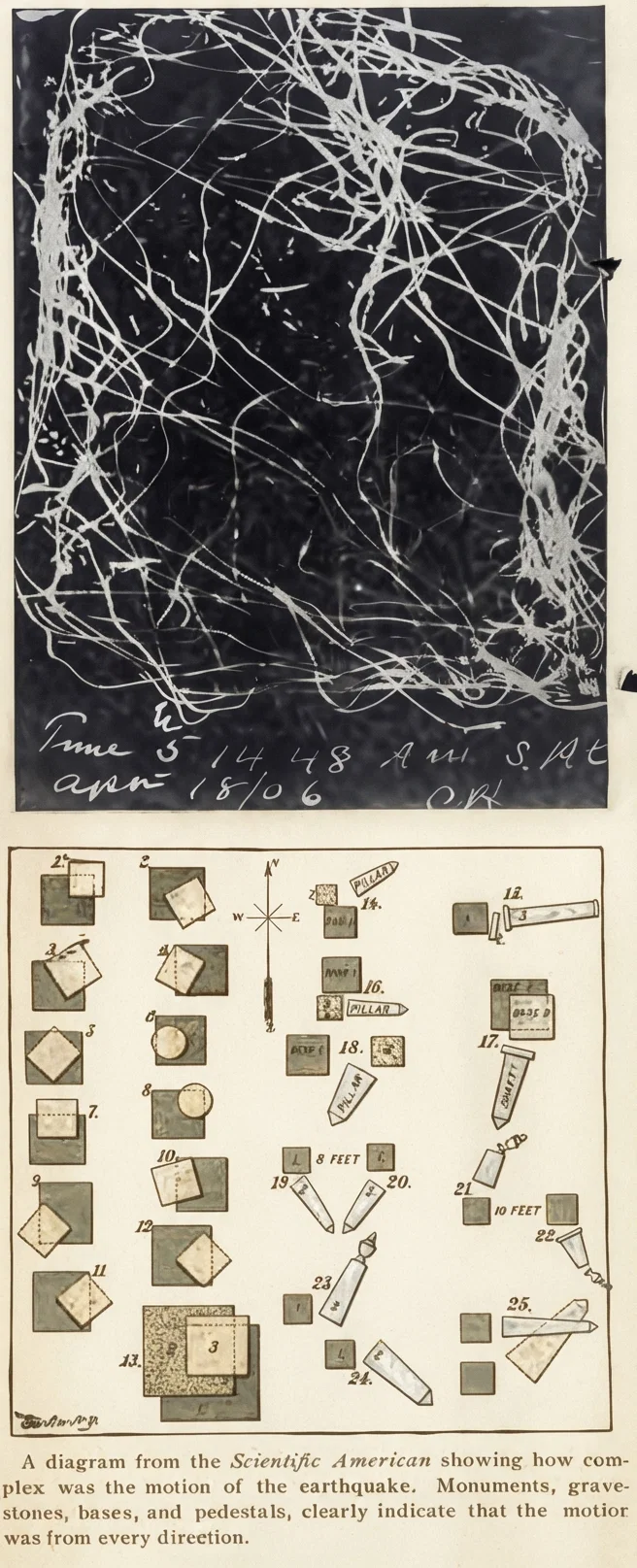
5. The signature of the earthquake of April 18, 1906. The following is its description from the pen of Professor Burckhalter of Chabot Observatory:
"This print is a copy direct from the original from the seismograph of the Chabot Observatory, Oakland, Cal. It shows that the main motion was gyratory, but the wave-like, and the up and down motions were present also. The dashes and dots represent the up and down motion. The instrument enlarges the diagram, the real movement of the earth's surface being a little over half an inch, but not as much as six-tenths of an inch. The time was 5:14:48 A.M., April 18, and the duration 28 seconds. The shock was so violent that the pen ran off the plate several times; that is, the instrument was not capable of recording so severe a shock."
"C. B."
A diagram from the Scientific American showing how complex was the motion of the earthquake. Monuments, gravestones, bases, and pedestals, clearly indicate that the motion was from every direction.