THE most priceless thing in all this world is character in humanity—righteous, noble, free character. In order that such character may be developed, there must be free choice. No enforced righteousness is true righteousness. No enforced semblance of gentility, no inherited nor conferred titles of honor, can make a man truly noble. Only as the soul is untrammeled in its rights and free in its choice, and so chooses the best, can the highest character be developed.
This choice and development demand equal rights. This thought is well expressed in that noble utterance of the Declaration of Independence: "We hold these truths to be self-evident: That all men are created equal, that they are endowed by their Creator with certain unalienable rights, that among these are life, liberty, and the pursuit of happiness; and that to secure these rights, governments are instituted among men." The "equality" does not consist in physical, mental, or moral qualities or capacities, but in the absolute freedom of choice, in the equal exercise of the same rights.9The right to life, the right to liberty, the right to seek happiness, so as not to interfere with the equal rights of his fellows, belong to every man; he may not voluntarily surrender them and become a slave. No government can of right deprive him of them. They belong to him as a man, a person, an individual.
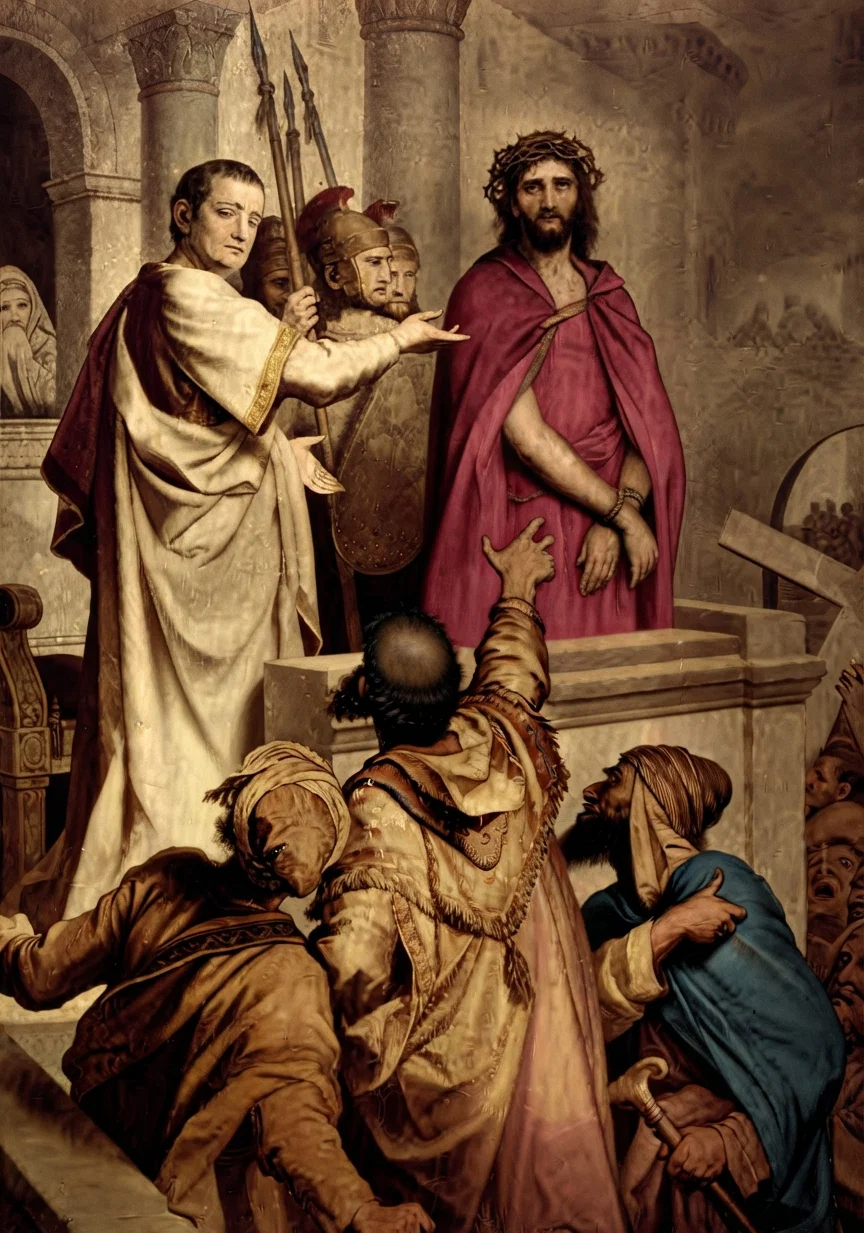
Hofmann.
For the advocacy of these rights the SIGNS OF THE TIMES stands. And for these rights as pertaining not to the German individual, the French, the Italian, the Russian, or the Anglo-Saxon individual, but the individual of every nation and people and tongue and tribe. And for this equality Christianity stands, stands preeminent, unique, alone, among all the religions of earth. Listen to the words of its Chief: “Be ye not called Rabbi; for One is your Teacher, and all ye are brethren. . . . Neither be ye called masters; for One is your Master, even the Christ.” Matt. 23:8-10. And listen to this from the chiefest of the apostles: “The God that made the world . . . hath made of one blood all nations of men to dwell on all the face of the earth.” Acts 17:24-26. Before God all have equal rights.
Among the things which many men find essential to their happiness is religion. But as regards this, the preferences of mankind are many. Yet each one has the unalienable right to choose his own religion or reject all. And this is the teaching of the Master: “If any man hear My words, and believe not, I judge him not, for I came not to judge the world, but to save the world.” John 12:47. There is where Jesus Christ stood; there is where His followers ought to stand. By no compulsion or coercion can a man be a true follower of a worthy religion. If there is not that in the religion itself which by its merits, its beauties, its qualities, its inherent worth, compel his choice, he has the right to reject it. And every follower of Christ ought to stand for the same thing; the right of the individual, whoever he be, to choose his own religion.
Therefore the SIGNS OF THE TIMES as a Christian journal stands not for the rights of the Protestant man, the Roman Catholic man, the Jew or the Gentile man, the Christian or infidel man, but for the rights, the equal rights of the man, whatsoever religion he espouses, or whether he holds to none. The right of the infidel to choose is as sacred as that of the Christian, and none should be so free, so anxious to concede those rights as the Christian. The government, therefore, which regards the rights of its subjects will not exalt the institution, religious or social, above the man, but the man above the institution. The institution may be honored if men will, but its observance will never be compulsory.
All the Catholics in a community may with bared and bowed heads “adore the Host,” as it is carried by in solemn procession; but no Protestant is to be forced to bow his head or even to remove his hat. All the Protestants of the community may with reverent air remove the hat and bow the head when the solemn rite of baptism is performed at some beautiful lakeside; but no Catholic should be compelled to show reverence. No one may encroach upon the equal rights of any, but as none can compel him to be religious, none are to compel him to act religiously.
A true government will not subject the individual to the arbitrary demands of the multitude. Man surrenders no inalienable right to society or government. If the government be a true government, it conserves the right to guard the rights of each one and each one in his rights. When, therefore, each one is protected in his rights, all are protected in their rights. And as long as each individual is protected in his rights, so long can no class suffer from the infringement of their rights. The thing to be exalted, therefore, in a just and permanent government, by true citizens, by Christians, is the inalienable rights—common to all men—of the individual man, whether he be pagan or Jew, infidel or believer, Catholic or Protestant; for in this only are the rights of all conserved. This is equity, justice, and Christianity.