European Letter

3%

Pacific Press Publishing Company · Mountain View, Cal. · Feb 13, 1907

FromSigns of the Times, Vol. 33, No. 7.

Read the full edition

European Letter

SWISS LIBERTY THREATENED.
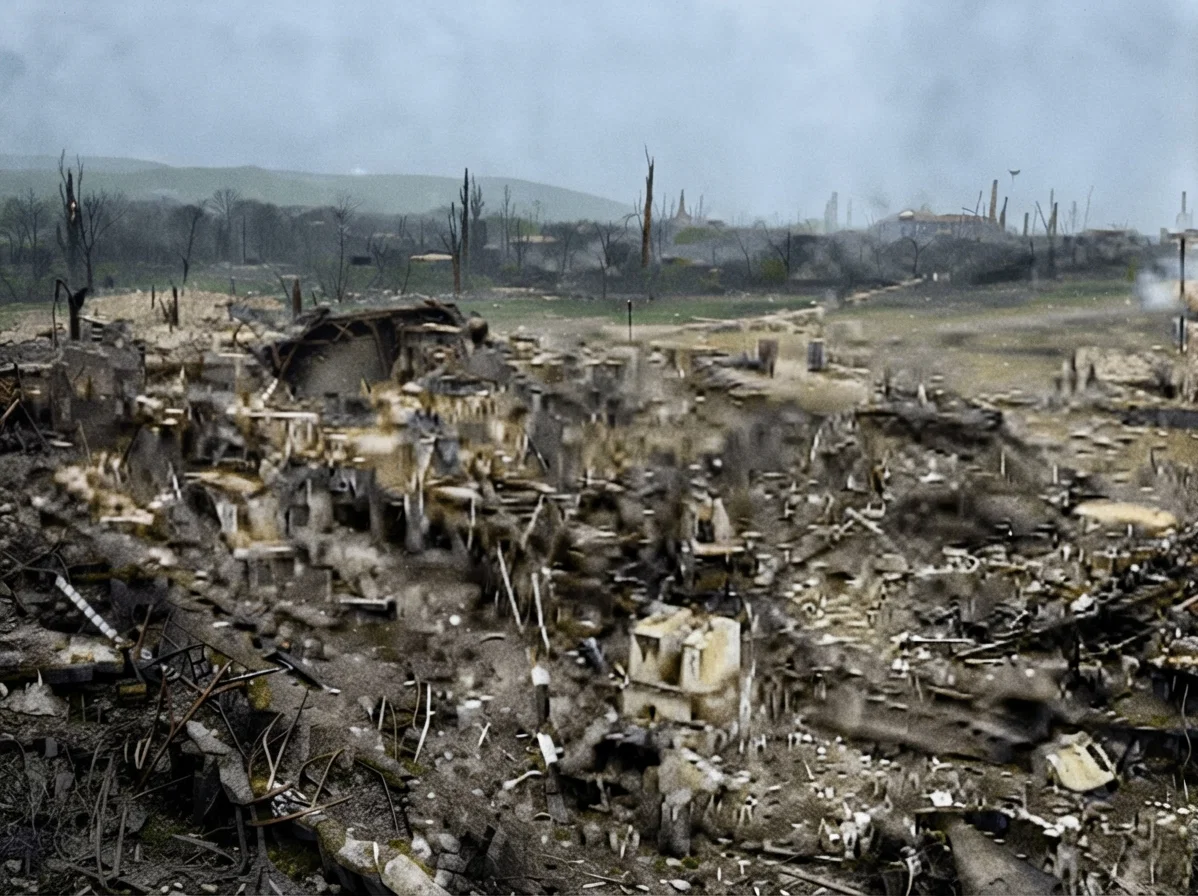
WHILE I am still talking about this little country, I might mention an economical and political danger threatening it, as a result of that world-evil of our days, that is, the excess of industrial production over and above the actual demands, which forces so-called civilized nations to tariff wars among themselves and to colonial wars with the rest of the world. Due to her small area and political weakness, Switzerland is obliged to submit to conditions offered her by her mighty neighbors. Mr. Forrer, who was president of the Confederation last year, said in a discourse delivered in Berne a few months ago:
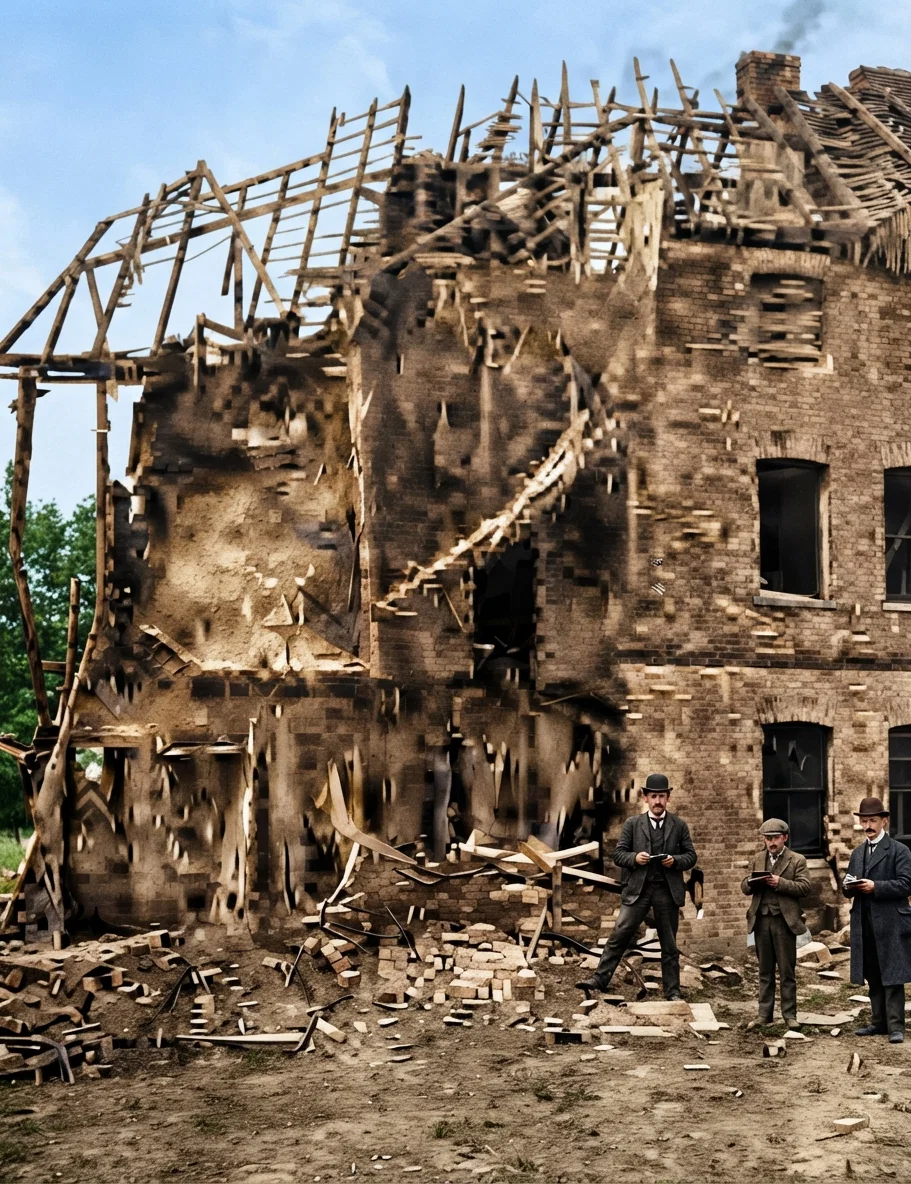
Portion of the Wrecked Town.
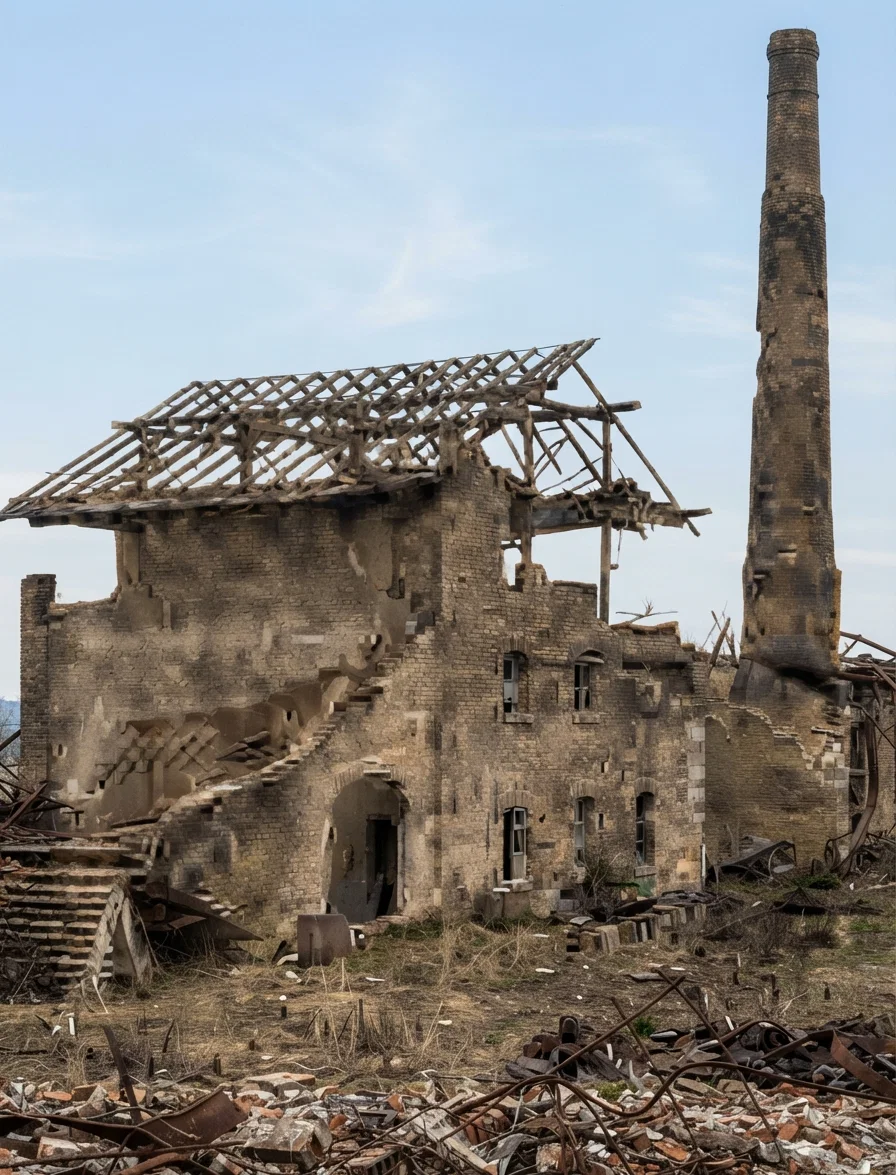
The Roburite Factory Itself in Ruins.
Effect of the Explosion on a House over 300 Feet from the Factory.
"There is not another country in Europe, whose economic existence is as threatened to-day as our own. Custom barriers have become higher and higher around our frontiers. Our economical independence may be ruined as a consequence, and what will become then of our political independence?"
A few days later, M. Comtesse, a member of the Federal Council, said in a speech delivered at Neuchatel:
"In this economic struggle, which is becoming more and more intense, defects may be more dangerous than those which take place on the battlefield. A small country like ours, whose produce could not be sold on the foreign markets, would soon be led to ruin and economic death, and left to the only resource of seeking refuge in the arms of a mighty neighbor. This would soon put an end to our political independence."
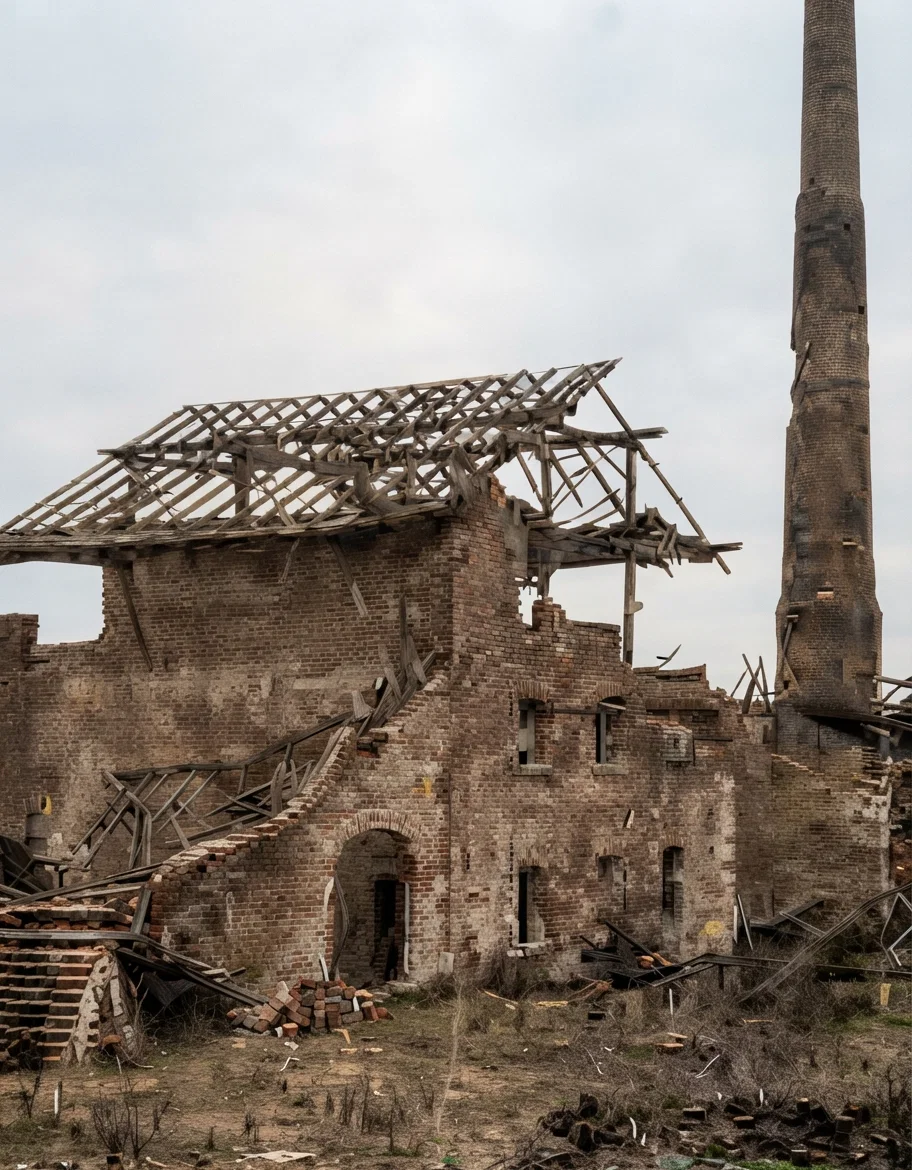
Brick Factory Blown Down by Air Concussion.
This situation has given rise to the idea of a large international tariff union (Zollverein), to include Switzerland, Austria-Hungary, Belgium, and Holland, and of which Germany would be the center. Swiss economists are seriously weighing the advantages of this plan. They see in it important economical advantages, but they are united in foreseeing in it a great danger to Swiss political liberties. And yet, how else can Switzerland avoid economical failure? This question shows that this country's future is ominous indeed.

GERMANY AND FRANCE VERSUS THE GENERAL STRIKE.

But the greater nations which threaten the smaller ones have equally if not more distressing problems to face. Think of Germany, overstocked with the products of her manufactories. Her intelligent and earnest Kaiser is giving a good share of his attention to the problem of selling these products, and thus keeping famine and revolution from his country. In spite of all that can be done, the elements of discontent, as organized by Socialism, are growing from year to year.
One year ago, the socialist congress at Iena, presided over by Mr. Bebel, voted a resolution recommending a general strike as the most efficient means of action. Last October again, at Mannheim, the socialist forces passed a resolution in the same sense. Mr. Bebel, indeed, was in favor of the more moderate element in the party, the laborer's unions who are opposed to the general strike. But the extreme element carried the day, and Herr Bebel himself saw fit to propose the following resolution:
"The Congress endorses the resolutions of the Iena Congress respecting the general political strike (politisches Massenstreik). . . . As soon as the managers of the party shall deem the general political strike necessary, they will connect with the laborer's union's general board, and take all the measures necessary to carry the action to success."
The same thing happened last fall at the French Socialist Congress at Limoges. M. Jaures, the leader, tho inclined toward moderation, had to endorse a resolution in favor of the general strike and the armed revolution in the fight with capital.
Useless to say that when such measures are openly advocated and resolved by strong political parties, as is being done in Germany and France, there is the peculiar smell of powder in the air. Kings and governments, who are directly aimed at, must feel as if living in strange times. Especially is this the case when, every morning, the papers come to them filled with the horrors of the Russian Revolution.

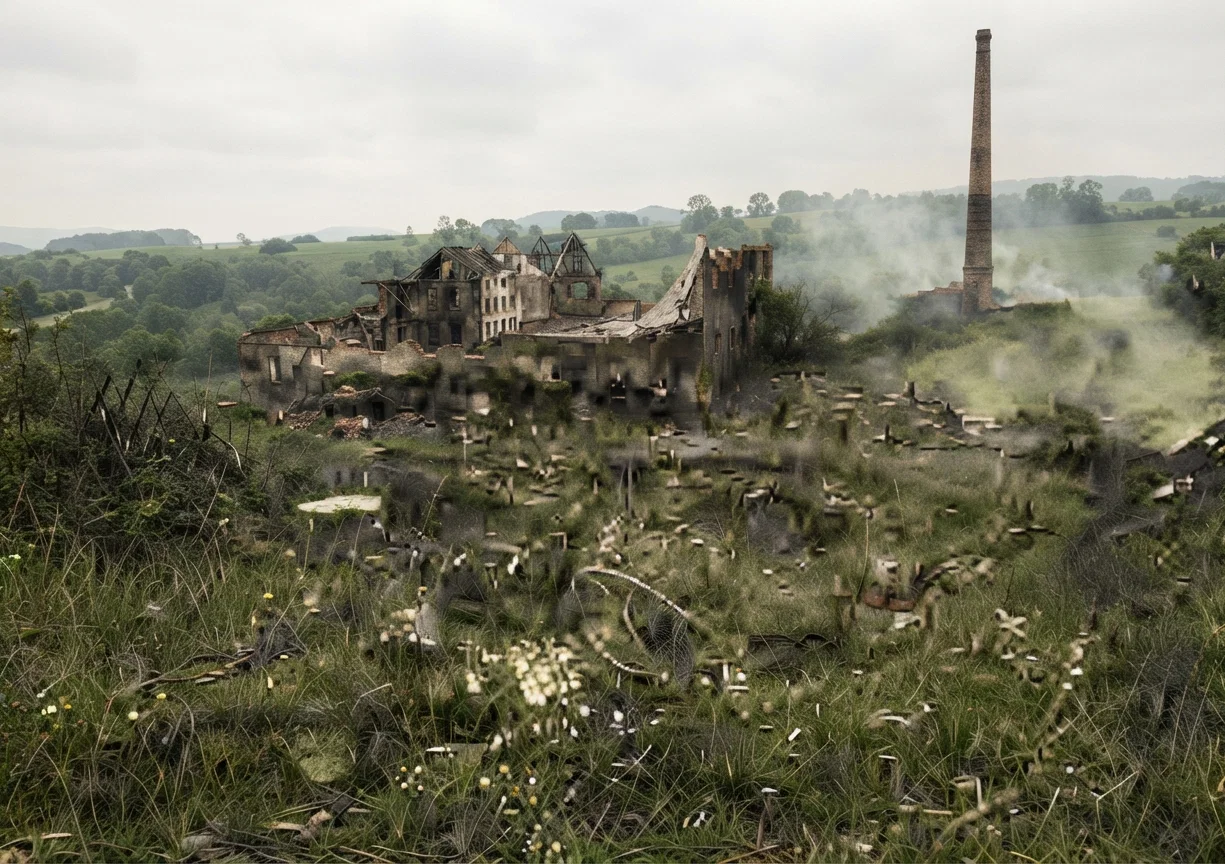
A ROBURITE FACTORY BLOWN UP IN GERMANY—TWO CITIES SHATTERED.
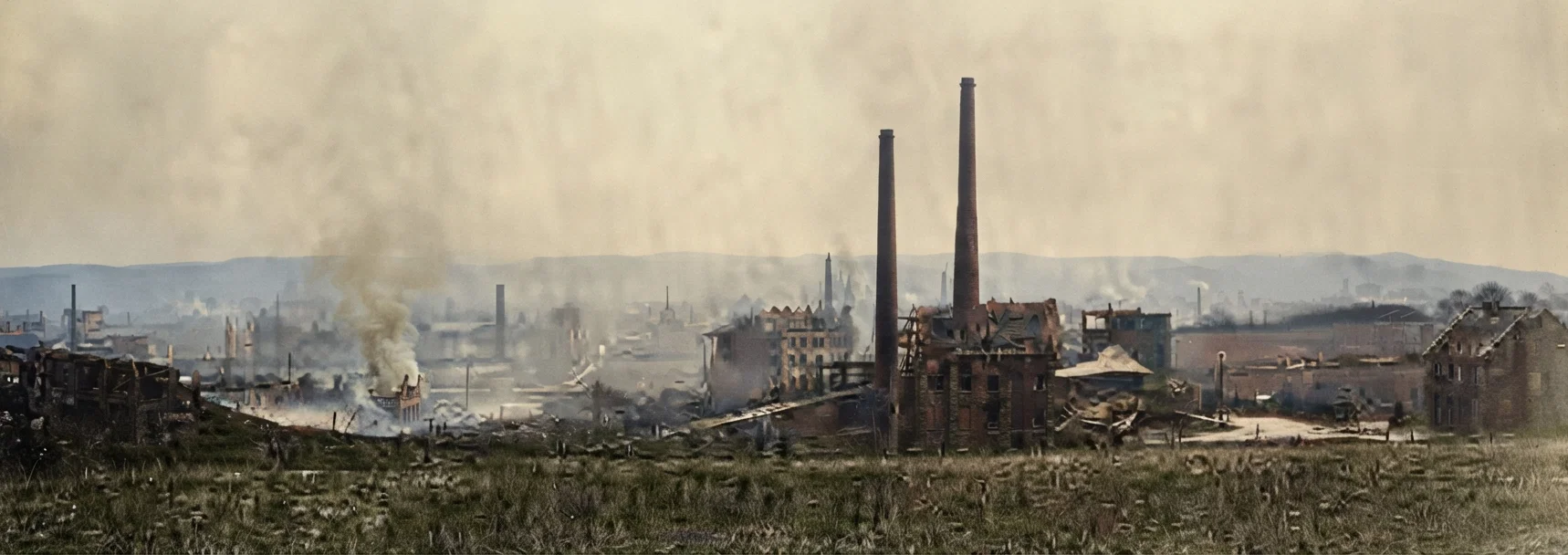
A sad visitation to Germany was the recent disaster at Witten, not far from Essen, the Krupp cannon-city. In this most thickly settled district in all Germany, a large factory was blown up by a roburite explosion. Two cities, Annen and Witten and their suburbs, were completely wrecked, 2,000 persons remain without shelter; eighty lives are lost, and many more are wounded and mangled. "An extraordinary number of people," so saysa German paper published in that section, "have had their hearing permanently injured by the awful detonation. On every hand, people are being met whose ear-drums have been shattered.
Two explosions took place. The first one caused hundreds of people to rush to the scene of the disaster. Alas for them! The second explosion claimed them for its victims. A witness thus describes the scene which presented itself to him as he came into the city the next morning:
"On the way, we met hundreds of people laden with the last fragments saved from their houses. Mothers were leading by the hand their starving or weeping children. In Annen not a house is fit to live in. On every hand I met with scenes of devastation. I know a man who was thrown ninety feet (30 meters) away by the force of the concussion of air. Two persons lost their mind by finding that their relatives were missing. In one hospital alone, 76 persons were dressed for small wounds, while 38 are considered as hopeless cases."
"The scenes at the hospitals," says a reporter, "are terrible to witness. I saw a crowd of trembling women and weeping children waiting to see if they could learn anything about their missing relatives. They walked back and forth with expressions of despair, watching the doors thru which the wounded pass in and out. How eagerly they looked, but looked in vain. An aged woman, leaning on her 16-year-old son, was seen going to each door, asking with heart-rending voice: 'My husband, where is my husband?'"

SPANISH LIBERTIES POSTPONED.—A LOOK AT THE SITUATION.

My last letter closed with some extraordinary news which indicated clearly that religious liberty was dawning on the benighted peninsula across the Pyrenees. Alas! we were not allowed to enjoy this expectation long. Inside of a week, two cabinets were overthrown, and the third one, tho made up of liberal men, presided over by Senor Vega de Armijo, an octogenarian, has left religious freedom out of its program. It is hard, just now, to say how this all happened and by what secret springs. But it is the general opinion that the pope had most to do about it. To those who are the least bit acquainted with Spanish affairs, this is the most probable explanation. It will be by no means an easy thing for Spain to shake off the shackles placed over her by the hierarchy. Many signs show that the time of her deliverance is drawing near. But if we may judge by what is taking place in France, the effort may cost the very life-blood of liberal-minded Spaniards. That such is the case may be gathered from a paragraph of a recent book written by a Spaniard, Dr. Madrazo:
"Large and deep are the wounds which the church has inflicted to us. They are old and remain blood-stained. With what intense joy will we close them when the time comes! The burden has been crushing, and when we shall shake it off, we shall find our arms so light that we shall need some compensation for our sufferings."
An Argentine writer, D. Manuel Ugarte, thus sadly and vividly echoes in his "Visions of Spain" the complaints of Spaniards against the Church of Rome:
"Our race is not tired; it is smothered by those who are averse to anything that is alive. What hinders our progress is the selfishness of those who persecute the new men until they are obliged to flee or to hush. It seems as tho there were at every step a conspiracy against thinking. The state of things must be accepted just as it is and every bit of it. Thinking is a vice and the worst of vices. Crimes are tolerated, but to think, O, no! That is forbidden. Wo to the man whose voice is discordant! He must emigrate toward the large cities, or abandon the truth. The order is to sleep; close your eyes, please; and if you have ideas, shut them up. Your situation, your future, are at the cost of your silence."
When in Spain a few years ago, I remember speaking with a soldier of the Cuban war. He had received a couple of bullets from the guns of the revolutionists. As we were talking over the situation in Spain, he arose, a strange fire in his eyes, and exclaimed: "You see these wounds, sir; I got them fighting for my country. But I would much rather have received them by North American bullets, if only my country could have fallen under Yankee rule and be properly administered." A few days later, I heard the same wish from the lips of an educated Spaniard.
And yet how little these men know that what makes America any better than Spain is due to the influence of that very Bible and that very Gospel which the natural heart rejects and despises! May God greatly bless the earnest evangelists who are now endeavoring, in Catalonia and around Valencia, to bring the water of life to thirsty souls! JEAN VUILLEUMIER.