OUR LONDON LETTER

6%

Pacific Press Publishing Company · Mountain View, California · Feb 27, 1907

FromSigns of the Times, Vol. 33, No. 9.

Read the full edition

OUR LONDON LETTER

AN EVENTFUL YEAR.

THE year 1906 has been an eventful one in British politics. Not only did the people send three hundred new men to Parliament, but they have followed its doings thruout the legislative year with unwonted interest. On the whole, this interest has been justified. The House of Commons has been the scene of active, earnest work, and some legislation of importance has been entered on the statute books. Most notable, perhaps, has been the prominence given to labor interests. The Trade Disputes Bill is in many ways the most remarkable and important of the measures that passed into law. Its essential feature is the provision that no action shall be brought against a trade-union to recover damages inflicted by a member of the union. It further abolishes the law of conspiracy as regards trades-unions, leaving these organizations free to do as unions all that an individual may do, without being held responsible as unions. The bill not only permits, but directly sanctions "peaceful" picketing and persuasion.
It may seem strange that the House of Lords, which is by no means noted for its popular sympathies, should pass such a radical measure as this and yet refuse its sanction to an attenuated Education Bill. The reason is not altogether obvious; but most likely the lords were largely influenced by the Conservative Party in the House of Commons, under the leadership of Balfour, which decided to admit the one bill (in order to win the favor of the Labor Party) and reject the other. Labor unions are bound to grow more powerful as a result of the immunities conferred by this bill, which is so radical as to be distasteful even to prominent members of the Government.

RESULTS OF REJECTION OF THE EDUCATION BILL.
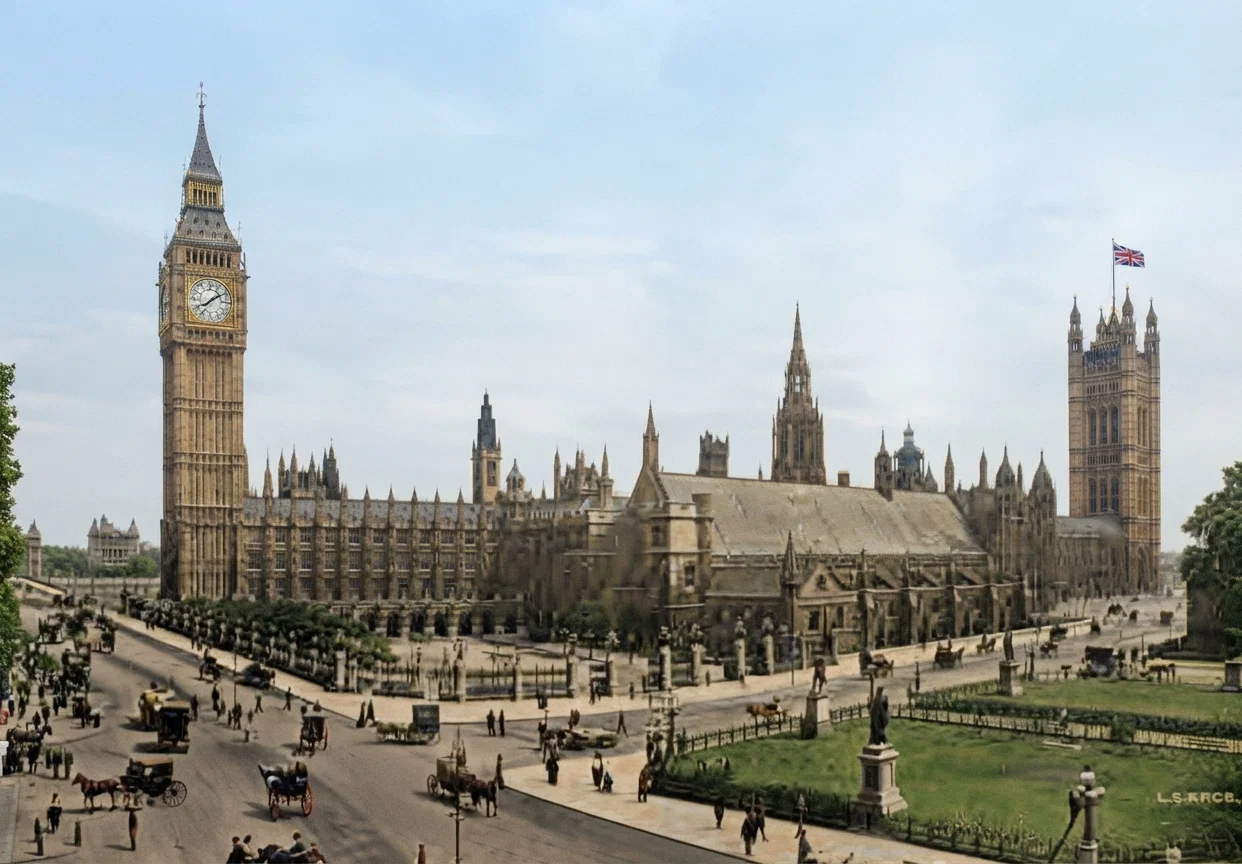
In order to understand the situation created by the rejection of the Education Bill, it will be necessary to recapitulate a little. Readers of the SIGNS will remember that leading clergymen of the various Nonconformist bodies were prominent in the late election. The education situation was then very critical, arrests continually being made of men who preferred imprisonment to paying the rate. Nonconformists felt at the time that they were suffering persecution for conscience' sake, and a new government afforded about the only means of getting relief. They accordingly entered into the fight with great earnestness and enthusiasm, and the ensuing enormous Liberal majority was owing not a little to these strenuous efforts based on religious convictions. Naturally the Government which came into power under such circumstances would feel some obligation to the people to which it owed so much. An Education Bill was accordingly put forward as the chief Government measure for its first legislative year. It was a complicated affair, but by no means lacking in moderation; had it been less insistent on popular control and the abolishing of religious tests for the teachers, it would not have met the minds of the Nonconformists. As it was, the Church party, which is influential in the House of Lords, took a strong stand against the bill, and the opposition in the House of Commons did likewise. Religious feeling ran high; it was felt to be a case of Church against Chapel. The bill of 1902 had favored the Church; now a bill was to be passed penalizing the Church and making Nonconformist ideas to prevail in the country. An American would solve the problem by confining the public schools to secular teaching; but to this neither Liberals nor Conservatives will agree in this country.
British Parliament Building.
We must remember that in England the Church and the Government are linked by many ties, and the majority of the people still think that an educational system which did not include definite religious instruction of some kind would be unsatisfactory. The Government Bill, while it was intended to redress the grievances of the Nonconformists, also aimed to give justice to the Anglicans and the Roman Catholics; but both these indignantly rejected it.
That which gave some show of color to the attitude of the Church was the fact that it owns practically all the so-called voluntary schools, concerning the taking over of which by popularly constituted bodies the bill had much to say. It is always a delicate matter in such transfers of property to fix upon terms which shall be just and liberal; but to the disinterested on-looker the Government terms certainly seemed reasonable. The clash came in reality over the nature of the teaching to be given the children in these schools. Should they be taught that the Church of England is the only true church, and Nonconformists are schismatics, or should they be taught the Bible on a broad Protestant basis, such as would be acceptable to Wesleyans, Congregationalists, and Nonconformists in general? The Church wanted the first and would not tolerate the second.

THE HOUSE OF LORDS.

Naturally Liberal sentiment is strong against the House of Lords; but Sir Henry Campbell-Bannerman, the Prime Minister, is a cautious man who knows to the full the force of that dogged Conservative sentiment which lies at the heart of British politics. It is not at all likely, therefore, that any extreme measures will be undertaken. Possibly the education problem, which everybody, including even the Archbishop, is thoroly tired of, may be solved by skilful administration. Certainly both parties to the controversy are dissatisfied with the present situation, and would be inclined to make some concessions. The House of Lords will probably survive this and a good many more episodes of the kind before its integrity is seriously threatened. As long as the country insists on giving the children religious education in the public schools, it can not but be extremely difficult for the representatives of Church and Chapel to agree as to the nature of that instruction; and, of course, a strictly secular education is hardly in line with the idea of a State-supported church such as the present establishment.

WOMAN SUFFRAGE.

The disturbances raised by certain agitators for woman suffrage known as "suffragettes," form a painful commentary on the times. That women of intelligence and respectability could seriously hope to gain access to the polls by deliberately making a nuisance of themselves at Westminster, and acting in such a way that it becomes necessary for policemen to carry them out bodily like so many maniacs, seems almost beyond belief. A love of notoriety probably had something to do with it. Needless to say, the cause of woman suffrage has gained nothing by such ridiculous methods of propaganda.

THE SUNDAY QUESTION.

An appeal for the better observance of Sunday was issued at the beginning of 1907, signed by the Archbishop of Canterbury, the Archbishop of Westminster (Roman Catholic), and the President of the National Council of the Evangelical Free Churches. After pointing out the importance of the weekly day of rest from the point of view of man's physical needs, it proceeds to the religious phase in these words: "Under the sacred sanction which attaches to the Lord's day, it is intended that all should have opportunity, in the worship of Almighty God, to escapefrom the grip of ordinary cares and occupations into regions of higher thought and nobler aspiration." The newspapers mostly commend the document. They all want "better Sunday observance," but they seem to have rather hazy ideas of what that may mean. Thus one leading daily says that Sunday morning without doubt should be given to church going; but Sunday afternoon should be spent in harmless recreation. To this end the art galleries, museums, and libraries ought to be thrown open to the public so that people may have opportunity to go to some place besides the public house (saloon). The present Lord Mayor of London is President of the National Sunday League, organized to promote Sunday excursions, concerts, the opening of picture galleries, and similar places of public resort, and he has a good body of public opinion behind him. A large, new theater recently opened in North London, within a stone's throw of the place where these lines are being penned, has been hired for Sunday-night concerts under the supervision of this League, and is attracting large crowds. Everything considered, there is no immediate likelihood of Great Britain materially improving the status of Sunday as a day of rest and religious worship. The Puritan element, which exerts a good deal of influence in certain quarters of the United States, is here largely wanting.
The year has, on the whole, been a remarkably prosperous one for England, and the winter thus far has seen less real suffering than any that has occurred for some time. The foreign relations of the country are excellent, and the Government holds the confidence of the people both at home and abroad. The Prime Minister is acknowledged even by the party in opposition to have filled his position with ability. M. ELLSWORTH OLSEN. London, Eng., January, 1907.