CHINA

4%

Pacific Press Publishing Company · Mountain View, California · Feb 27, 1907

FromSigns of the Times, Vol. 33, No. 9.

Read the full edition

CHINA.

I. Name, Territory, and General Features.
CHINA as an empire is as distinct in its territorial isolation as it is unique in its civilization, social structure, and national life; the former fact, indeed, is to a great degree the direct cause of the latter.
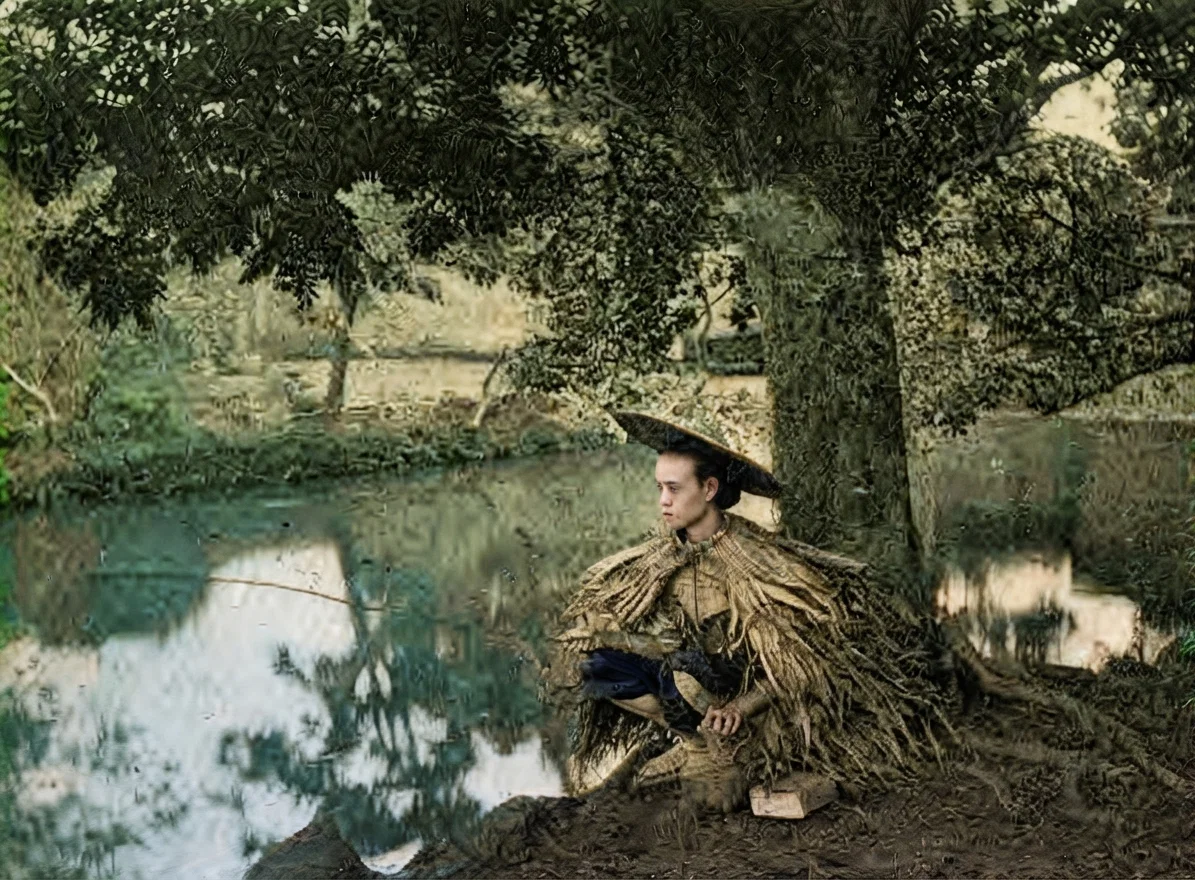
A Chinese Fisherman.
Cut off from communication with the outer world by the almost impassable Himalayan System in the route thru India, it is likewise sheltered on the western border by the high plateaus, arid steppes, and mountain ranges of the still but partly explored regions of Central Asia, while Mongolian desert and Siberian snows keep sentinel over her northern frontier.
Thus, hedged about on all sides, what wonder that in those days when navigation was confined to sailing, she learned to stay home and be content with the things she had, or could herself produce; or that as time went on she became so self-contained as to regard with superiority or indifference the visitors who in these later years have knocked at her doors.
The origin of the name China is not surely known, but certain it is, it never originated with the people themselves, since no trace of a corresponding term is found in the Chinese language. The Malays and Arabians, early traders between the Mediterranean and Canton, knew it as China, and introduced that name into Europe before 1500 A. D.
In the days of Isaiah it was known to the Hebrews as Sinim. The Persian name Cathay is unknown to the people whom it is used to designate, as is also the Roman name Seres, which is probably derived from the Chinese word sz (silk.) The term Celestial Kingdom, now so frequently heard, is probably derived from the Chinese Tien Chau, that is, the Heavenly Dynasty, and applies to the kingdom over which the dynasty appointed by heaven rules; but “Celestials,” as applied to its people, is of purely Western origin.
The Chinese designate their land by many names, as, Beneath the Sky, meaning all the earth under heaven; The Four Seas, all the territory bounded by the seas; while another, Middle Kingdom, is an outgrowth of the popular idea that China is really the great empire of the earth to which all outlying countries are inferior and tributary states. Presents from other sovereigns were accordingly styled “tributes.” While this notion has been largely dispelled by commercial and political intercourse in later years, it is still possible to obtain maps of the world with China occupying not only the middle, but monopolizing nearly the whole of the map, while other countries are represented as small islands or single cities around its borders.
Often the people have chosen to call themselves after a favorite dynasty of rulers. Hence in the north we hear the term Hanjin, that is, Men of Han, while in the south the Tong dynasty is popular and the people call themselves Tong yan, Men of Tong, and their language Tong wa or speech of Tong.
A Chinese Workman.
A Chinese Workman.
The present Manchu dynasty has styled itself the Great Pure Dynasty, but O, people have rejected the corresponding appellation—Men of Purity.
The term “Flowery Kingdom” is also in use among the Chinese as a fitting designation for the kingdom which they consider to be among the most polished and civilized of all nations; an idea not easily confuted in the light of the history of China’s contemporaries.

The Extent of the Empire.

A glance at the map of China in its relations to parallels and meridians affords convincing evidence that altho but little known to the outside world, the Chinese Empire comprises no mean territory, for the possessions of the present ruling dynasty from the Amur on the border of Asiatic Siberia, sweep south in one vast extent to the Himalaya Mountains at the border of India and ancient Burma, while from the Pacific Ocean on the east she reaches westward to embrace the table lands, high plateaus, and mountain ranges of Central Asia, thus forming one of the most extensive dominions ever swayed by a single power. It may be stated on good authority that neither Egypt, Greece, nor Rome in their widest extent ever equaled the area of even China Proper.
In 1840, the longest line ever drawn upon its possessions from north to south represented a distance of 3,350 miles, and its greatest breadth was estimated at 2,200 miles, inclosing an area of 5,300,000 square miles. Since that time the cession of Hong Kong to the English has been followed by large partitions to Russia on the north, with Korea and Formosa to Japan, and slices to other European powers, reducing her territoryby more than one-half million square miles.
The Chinese themselves designate their vast domains under three principal heads rather by the different form of government in each than by any geographical arrangement; namely, China Proper, Manchuria, and the Colonial Possessions.
China Proper is divided into eighteen provinces, each ruled by its own governor appointed by the supreme government at Peking. (These, beginning at the northeast and named in order of an outer circle, are Chili, Shausi, Sheusi, on the north; Kangsu, Szechuan, Kweichau, and Yunnan on the west; Guangxi and Quangtung on the south; Fuken, Chi Kiang, Kiangsu, and Shantung on the east; with Anwhei, Homan, Hupei, Hunan, and Kiangsi in the center. The large island of Hainan lies to the southeast, surrounded by the waters of the South China Sea.) These provinces are not to be considered mere slips of territory, like the countries of England or the principalities of Germany, since they aggregate an area of 1,500,000 square miles, which, if divided equally, would give to each province an average of territory equal in extent to that of the whole of Great Britain, while in parts the density of population borders onto that of England.

Manchuria.

Manchuria, on the north, embraces three provinces but sparsely settled, and previous to the recent war between Russia and Japan, but little traversed by Europeans. Its location beyond the Great Wall marks it at once as Tartar and foreign. It is the home of the present ruling dynasty of China, and as such, has attained to an importance in the government little less than one of the provinces.
The people are nomadic in disposition and have done but little to develop the resources of their country. In late years the sturdy Cossacks have pushed across the Russian steppes and settled in large numbers along the frontiers, "while the coast districts are now mostly occupied and cultivated by emigrants from the northern provinces of China Proper, who are pushing the Manchus back toward the Amur River, or compelling them to leave their hunting and take to farming if they wish to stay where they were born. The conquerors are being civilized and developed by their subjects, . . . and becoming more comfortable as they learn to be industrious."
In physical features, Manchuria is described as hilly rather than mountainous. The valleys are well watered, but the streams are of but small utility for commercial purposes.
The rivers and coasts abound in fish of good varieties, while the pearl fisheries are sufficiently remunerative to attract many fishermen. The abounding forests shelter many fur-bearing animals. The hills are covered with valuable forests waiting the development of facilities for transportation. Grains of the temperate zone, as maize, wheat, millet, pulse, barley, and buckwheat, are among the principal crops grown. Ginseng and rhubarb are collected, oil and whisky are largely manufactured. Of late, the cultivation of opium has been greatly extended.
The development of Manchuria's resources has attracted many Japanese merchants and traders who have become the sharp competitors of the Russians. And who shall say that the motive of Japan in becoming the champion of China in the late Russo-Japanese conflict, which brought Manchuria into such sudden prominence, was entirely disinterested and humanitarian?
Mukden, the capital of Shing King province is described as follows: "The streets are wide, clean, and the main business avenues lined with large, well-built shops, their counters, windows, and other arrangements indicating a great trade. . . . Everywhere marks of prosperity and security indicate an enterprising population." It was the seat of the old Manchu, and "the emperors have done everything in their power to enlarge and beautify it." The town of Hing King, otherwise called Yenden, some sixty miles east of Mukden is noted for being the family residence of the Manchu monarchs, and the burial-place of their ancestors. The guards about the imperial tombs comprise most of its present inhabitants.
Perhaps nowhere in China have missionary efforts been rewarded with larger results than in the regions of Manchuria.