EVENING REFLECTIONS

11%

Pacific Press Publishing Company · Mountain View, California · Mar 6, 1907

FromSigns of the Times, Vol. 33, No. 10.

Read the full edition

EVENING REFLECTIONS.

EVENING had come, and weary and sad I sat by the fire. The day had been a trying one, as many of my days had been of late, and I could not entirely exclude the discontented thought that life was, after all, a sad disappointment. “Why,” I asked deep down in my heart, “are such trials permitted?” I was tempted to say it was unjust.
Knowing that I ought not to indulge in such thoughts, I picked up the Bible which lay near, and turning to the book of Hebrews I began to read the second chapter. At first my despondent thoughts mingled with the written word, making a strange medley. Finally a sentence aroused me to full attention. It was this: “For it became Him for whom are all things, and by whom are all things, in bringing many sons unto glory, to make the captain of their salvation perfect thru sufferings.”
I started at the thought “made perfect through suffering.” Then suffering was intended to bring about perfection. Ah, I see now that God has a purpose even in our suffering. But what can this mean? Could Christ, who knew no sin, need to be made more perfect? If so, in what sense? How could He be said to be made perfect?
Then I considered the last two verses of the fourth chapter. “For we have not an high priest which can not be touched with the feelings of our infirmities; but was in all points tempted like as we are, yet without sin.”
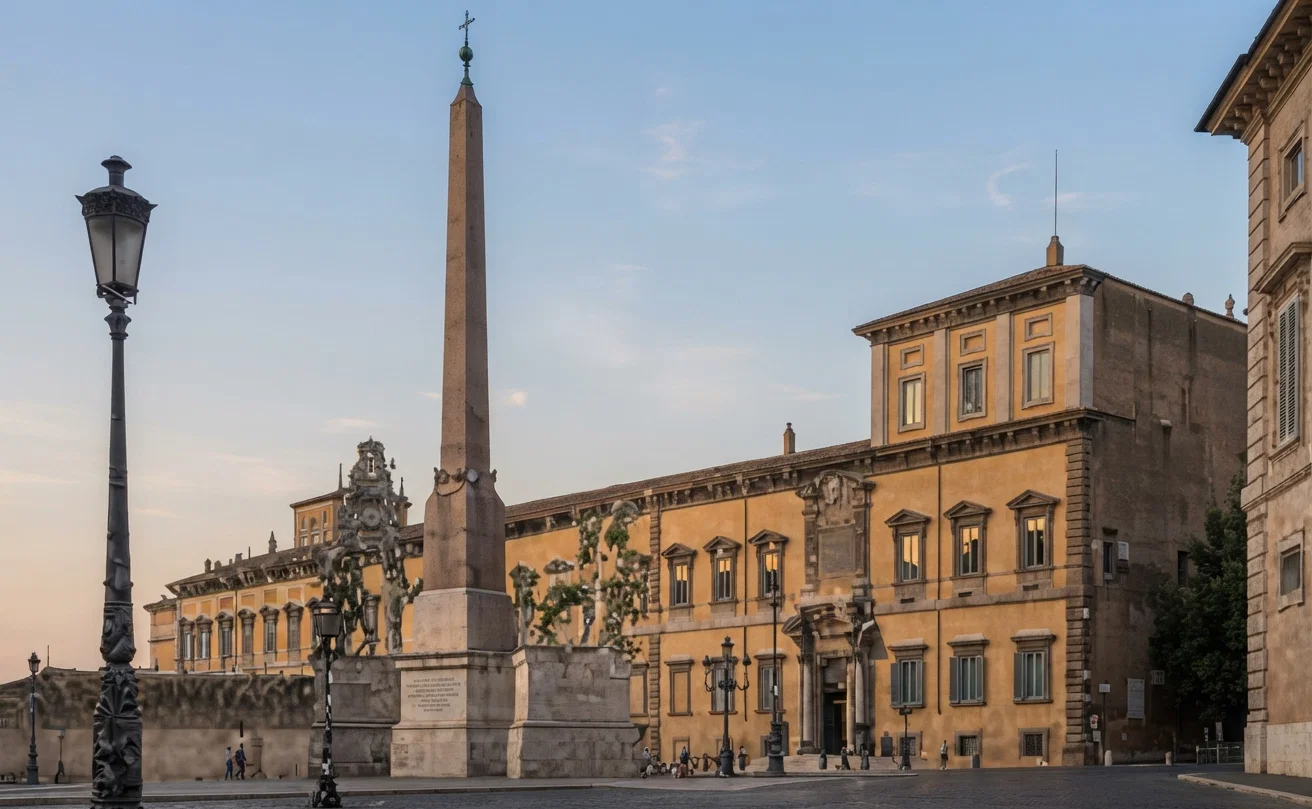
PALACE OF THE QUIRINAL, ROME, ITALY.
Then a sense of the love of Jesus filled my soul as never before. Also a sense of the sin of my repinings. If Jesus consented to pass thru suffering to become perfect in bearing and suffering for our sake, how sinful and weak in me, a poor, erring mortal, to repine. I thought of how He left the glory of His Father and came to this earth to save fallen man; that He went thru all the suffering that flesh is heir to that He might the better inspire faith in us, His fallen ones. He whose word could speak worlds into existence suffered all this that He might be made a perfect high priest for us. All this and more did He suffer that God’s purpose toward us should not be thwarted.
What is His purpose? He could not tell us all for we could not understand; for “eye hath not seen, nor ear heard, neither have entered into the heart of man, the things which God hath prepared for them that love Him.” And a prayer rose from my heart for that degree of faith which will enable me to trust in Him, and to believe that all things shall work together for good to them that love God. M. A. MORTON.
Fresno, Cal.