HE GOETH BEFORE YOU

8%

Pacific Press Publishing Company · Mountain View, California · Mar 27, 1907

FromSigns of the Times, Vol. 33, No. 13.

Read the full edition

“HE GOETH BEFORE YOU.”

THESE words were God’s message to the mourning, discouraged, yet hoping, disciples as they came to the empty grave on that now far-away resurrection morning.
They had forgotten the Master’s words that He would rise again. They had heard that He had arisen, and to the tomb they went, doubting, but found it empty. God recognized the hungry longing of their heart. He sent His messenger to meet them at the sepulcher. He tells them to “be not amazed; ye seek Jesus, the Nazarene, who hath been crucified; He is risen; He is not here: behold, the place where they laid Him! But go, tell His disciples and Peter, He goeth before you into Galilee; there shall ye see Him.” Mark 16: 6-8.
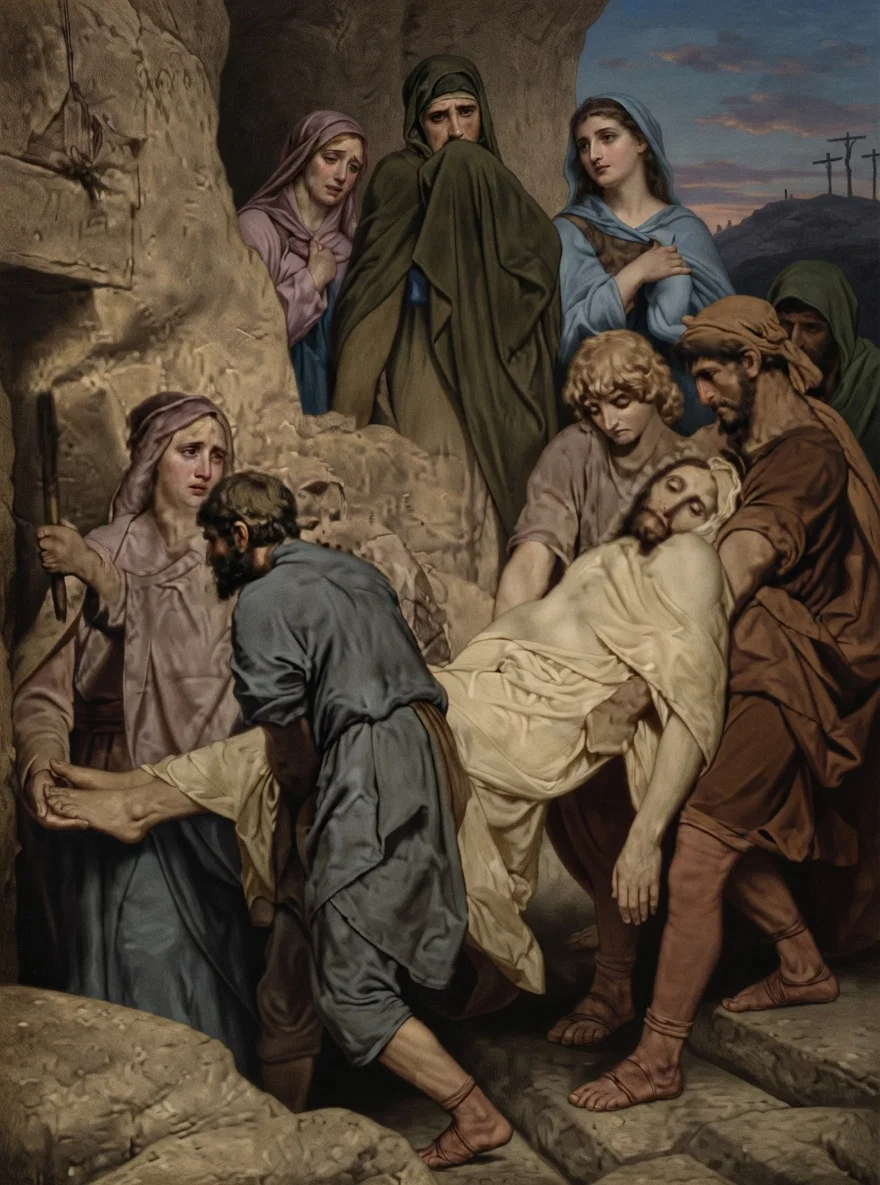
Hofmann The Entombment of Christ.
For centuries the crusaders beat their waves of fanatic zeal against hostile hordes of the hated followers of the prophet, to wrest from their hands the rock-cave hewed out by man, in which the Lord had lain.
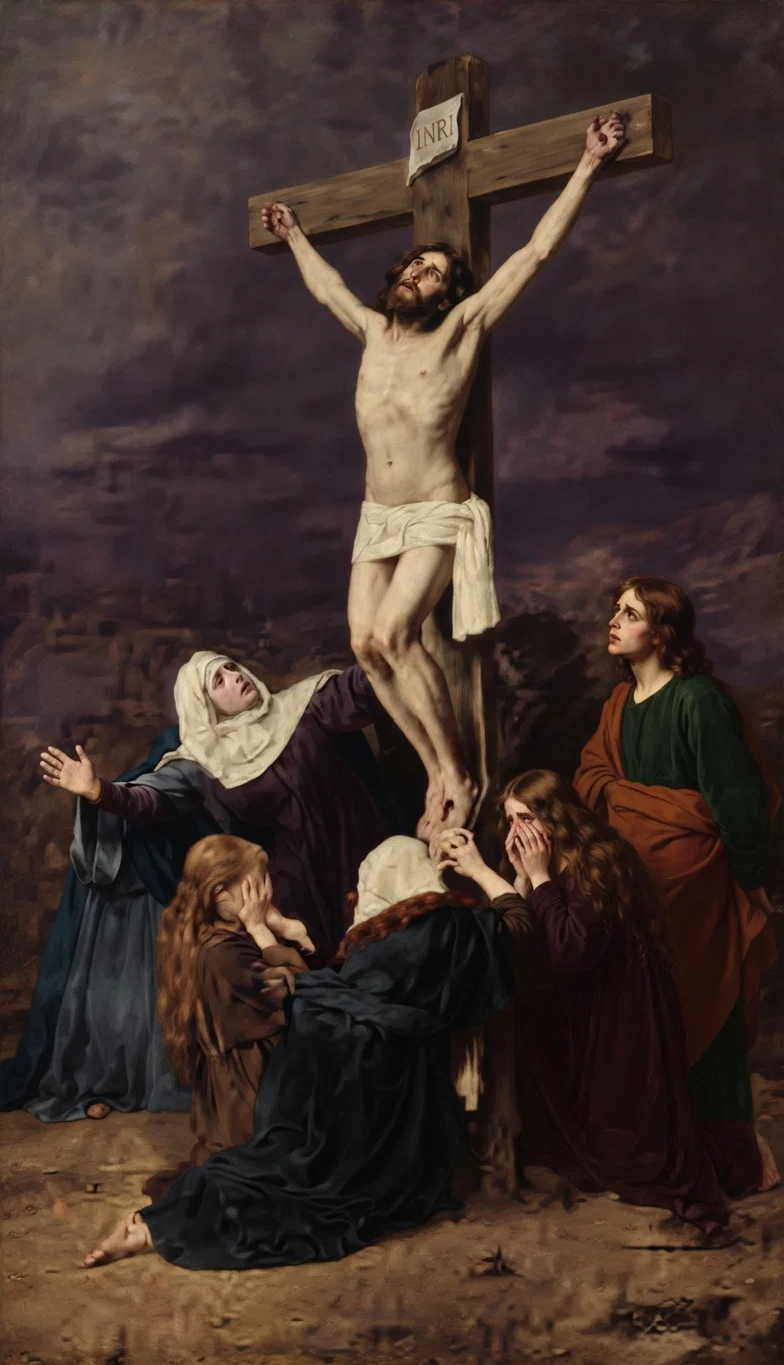
The Crucifixion. Munkascy
Trusting in the empty shell is as futile as were the efforts against the Moslem. He is not there; “He is risen.” O how many times are the disciples of Jesus seeking Him in the dead forms of the past. Those forms once enclosed the truth. Man fashioned and shaped and molded them to use for God. Sometimes they distorted the truth placed therein. Sometimes they cramped and limited that truth. Yet, despite all imperfect vision, plans, and methods, God used the men.
These men of God pass on, blessed of God and honored of their fellow men. Others lacking the power of God rise up in their places. They hope to obtain the same power by following the same creeds, forms, plans, methods, and fail. The empty tomb of soulless forms gives back no voice, clothes with no mantle of might, and discouragement and division result.
Some devoted souls hear the voice of the divine messenger: “He is not here: . . . He goeth before you,” and they follow on, find His blessed presence, and again build new forms to enclose the living truth of God, which in turn become sepulchers of dead hopes to later generations who seek Christ in them.
God blessed Martin Luther notwithstanding his errors and imperfections; and Ulric Zwingle and John Calvin and John Wesley, and many others. What a pitiful thing it is that there are so many thousands who believe that success will follow by following these men, just emerging from wildernesses of errors, the fringes of the Dark Ages.
The church of Jesus Christ must be a creedless church so far as humanity may place its molding hand upon it. Truth has its forms, simple, expansive, filled with the life of God, responding to the new wine of the ever unrolling, expanding word. God’s memorial of creative power is His holy Sabbath, guarded by a law which includes all the week, and hence all time. For that power—the unregenerate soul’s only hope—man has substituted a memorial day which has neither fitness in nature nor divine sanction in either precept or example, and which is so weak in itself that there is constant demand for human legislation to support its tottering claims.
God’s memorial of the resurrection of Jesus Christ is Bible baptism, marking to those without, the believer’s life-union with Christ, expanding constantly in the new creation of a fruit-bearing life. Man’s substitute for this is the observance of the pagan Easter festival once a year, and a sermon or so at the time, half of the truth of which is lost in the hilarity of the season. Would to God that men might take the simple truth of the word. They would find in the risen, living Christ, in the living, vitalizing truth of the Bible, a broader theology, a grander view, a more vital power, than can be obtained from all the husks of “higher criticism.” “He goeth before you,” out into the great, needy, dying world with His saving truth; there shall ye find Him.