FOR four long millenniums the coming of the World's Redeemer, the Light of Life, was foretold. By seer and priest, by sacrifice and oblation, it was predicted. Abel, by faith, saw in the slain lamb the Lamb of God. Noah saw in his sacrifices and covenant-bow, the promise of the Rest he could not give the world. Abraham saw in the ram of Moriah the Substitute-sacrifice of God's furnishing, and in his child of promise the Promised Seed. And so Moses and Joshua and Samuel and David and Isaiah, and all the others of faith looked forward for the Hope of Israel, from the tribe of Judah.
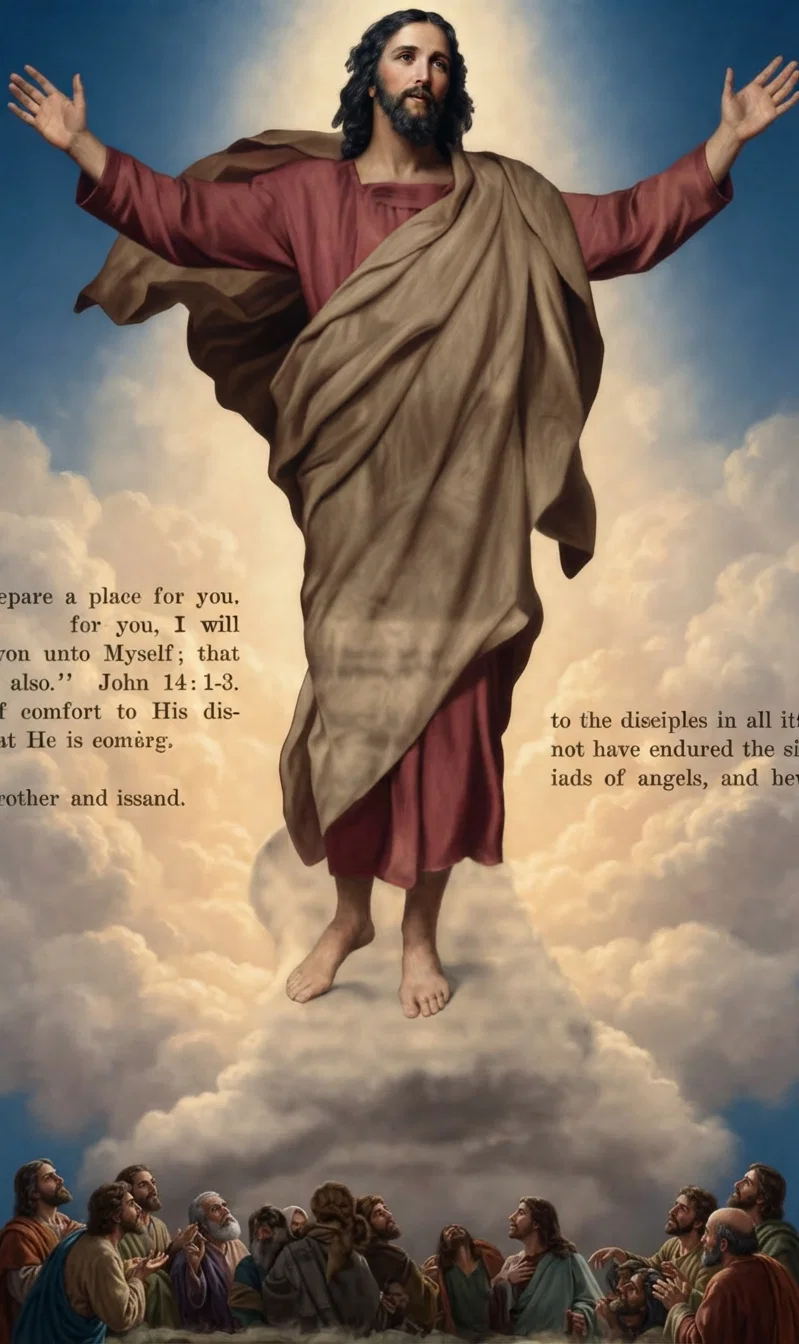
“This same Jesus, which is taken up from you into heaven, shall so come in like manner as ye have seen Him go into heaven.” Acts 1:11.
In "the fulness of the time" He came, "born of a woman, born under the law." Gal. 4:4. He was a real person. He was nursed at His mother's breast. He grew up among other children and youth. He was baptized, tempted, and He overcame. He lived and died, preached and prayed, taught and healed, loved and labored, among men.
"This same Jesus" is coming again. His apostle declares: He "will come again." Heb. 9:28. Jesus Himself said: "Let not your heart be troubled; believe in God, believe also in Me. In My Father's house are many mansions; if it were not so, I would have told you; for I go to prepare a place for you. And if I go and prepare a place for you, I will come again, and will receive you unto Myself; that where I am, there ye may be also." John 14:1-3.
These are Christ's words of comfort to His disciples. The core of them is that He is coming again. How must those disciples have understood His words? Could they have come to any other conclusion than this, that Jesus, the literal, personal Master, was coming again?—They could not have concluded otherwise. Did not Jesus know that they would so understand it?—He certainly did. Did He ever teach otherwise?—He certainly did not.
The Lord does not tantalize His people. He did not give His word for the great and learned, for the mystic or the philosopher. It was given for the great mass of mankind; for those of whom it is said, "The common people heard Him [Jesus] gladly." His word is for the common people. His promises are for the common people. For them He made the earth. For them He died. The common people He is coming to redeem.
How have the common people understood God's plan? In simplicity of faith they have believed Him. They believe He came; that He was born of a virgin; that He was the Word made flesh; that "He died for our sins;" that He pleads His blood in our behalf; that He is coming again, Friend, Redeemer, Saviour, King. From Genesis to the Revelation, in type and symbol and shadow and literal promise, His coming is foretold. And the volume of Sacred Scriptures closes with promise and prayer: the promise of Christ to the last generation, "Yea, I come quickly;" the responsive prayer of the church, "Amen, come, Lord Jesus." Reader, in this "fulness of time" can you thus respond?