Philippine Islands

3%

Pacific Press Publishing Company · Mountain View, California · Jul 17, 1907

FromSigns of the Times, Vol. 33, No. 29.

Read the full edition

Philippine Islands

MOST readers are doubtless more or less familiar with Philippine history. However as previous to the Spanish-American War many were scarcely aware of the existence of such a group of islands, it will not be amiss to briefly trace some of the events that go to make up the history of these islands.
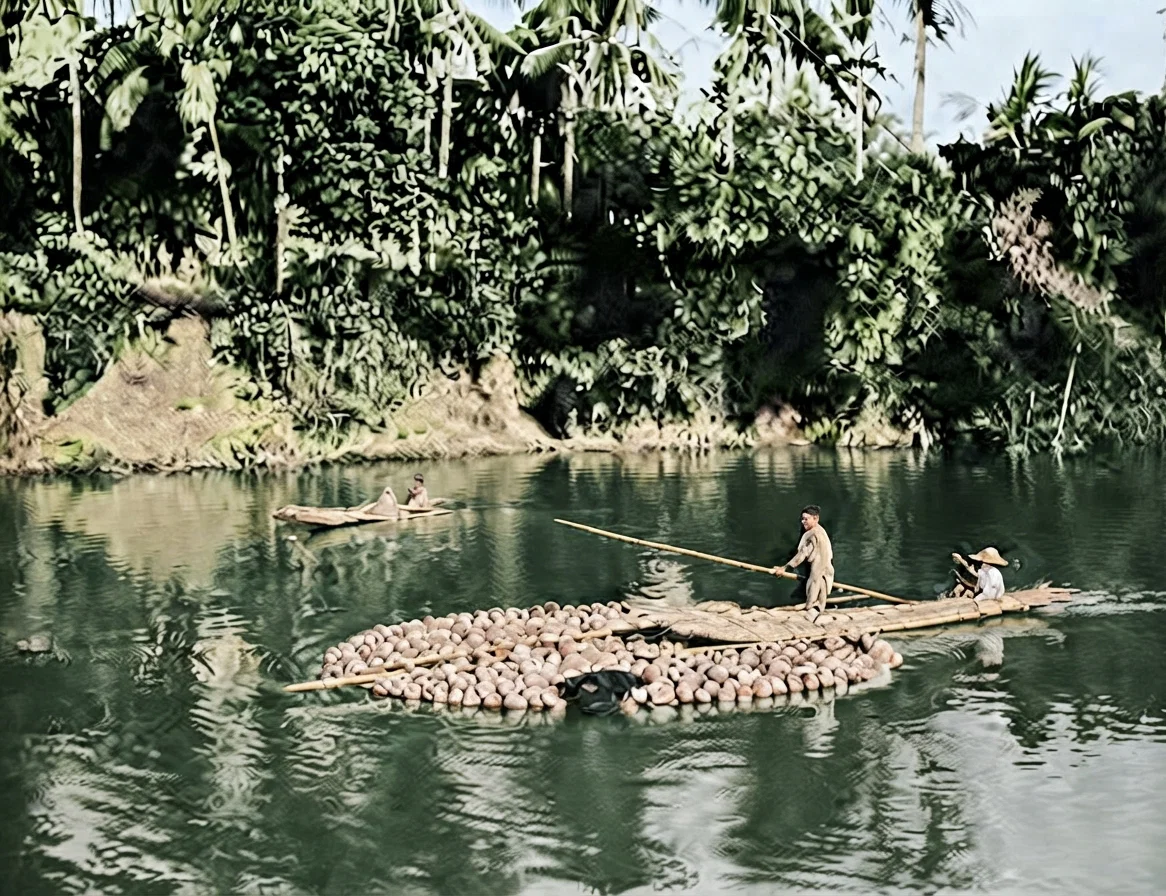
COCONUT RAFT.
COCONUT RAFT.

Magellan's Discovery.

August 10, 1519, Ferdinand Magellan, a Portuguese nobleman and naval officer, sailed from Spain in command of a fleet of five small vessels. This fleet was provided by King Charles of Spain, and the object of their voyage was to discover a western route to the spice islands. Magellan passed thru the straits in South America that have since borne his name. After a voyage lasting a year and eight months, which was marked by shipwreck, desertion, and terrible suffering, the Philippine Islands were sighted. Magellan named them Archipelago de San Lazaro.
Magellan perished soon after this, being killed while assisting the natives of Cebu in a tribal warfare. This occurrence altered the plans of the expedition, and the work of exploration and occupation ceased for a time. Of Magellan's fleet, the Victoria, commanded by Captain Cano, was the only ship that ever returned to Spain. This ship was the first to sail around the world.
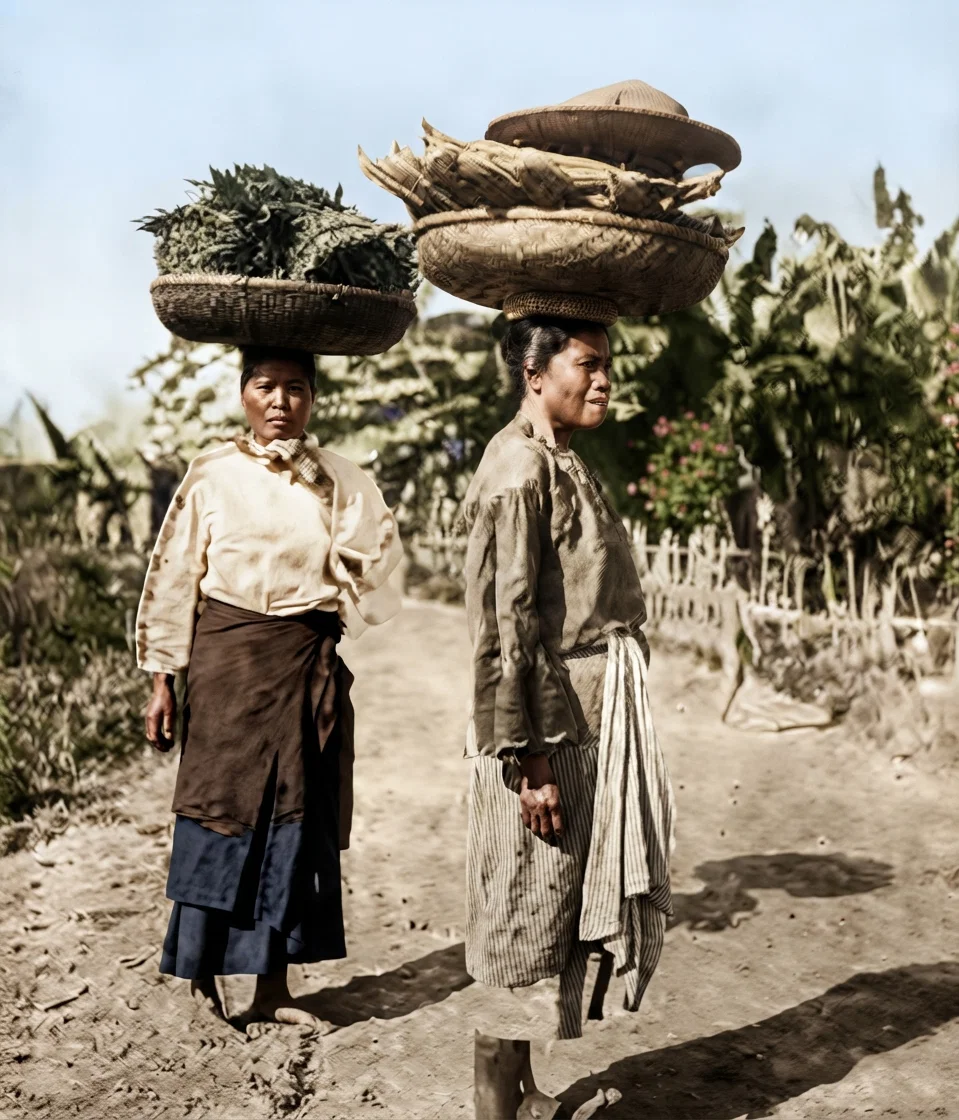
MARKET WOMEN FROM THE COUNTRY.

How the Islands Came to Be Occupied by Spain.
Nearly forty years later, in 1555, Philip II came to the throne, and he commenced to plan for the occupation of the islands that now bore his name. The expedition organized for this purpose was fitted out in Mexico. Don Miguel Lopez de Legaspi was appointed commander, and associated with him as spiritual head was Andres de Urdaneta, a friar then living in Mexico. Legaspi's fleet, consisting of five ships, sailed from Natividad, Mexico, Nov. 21, 1564, and arrived at Cebu, Feb. 13, 1565. From this time down to 1898, Spain continued to rule (it would be nearer the truth to say misrule) these islands. The whole order of things was changed by another North American expedition on the first day of May, 1898.
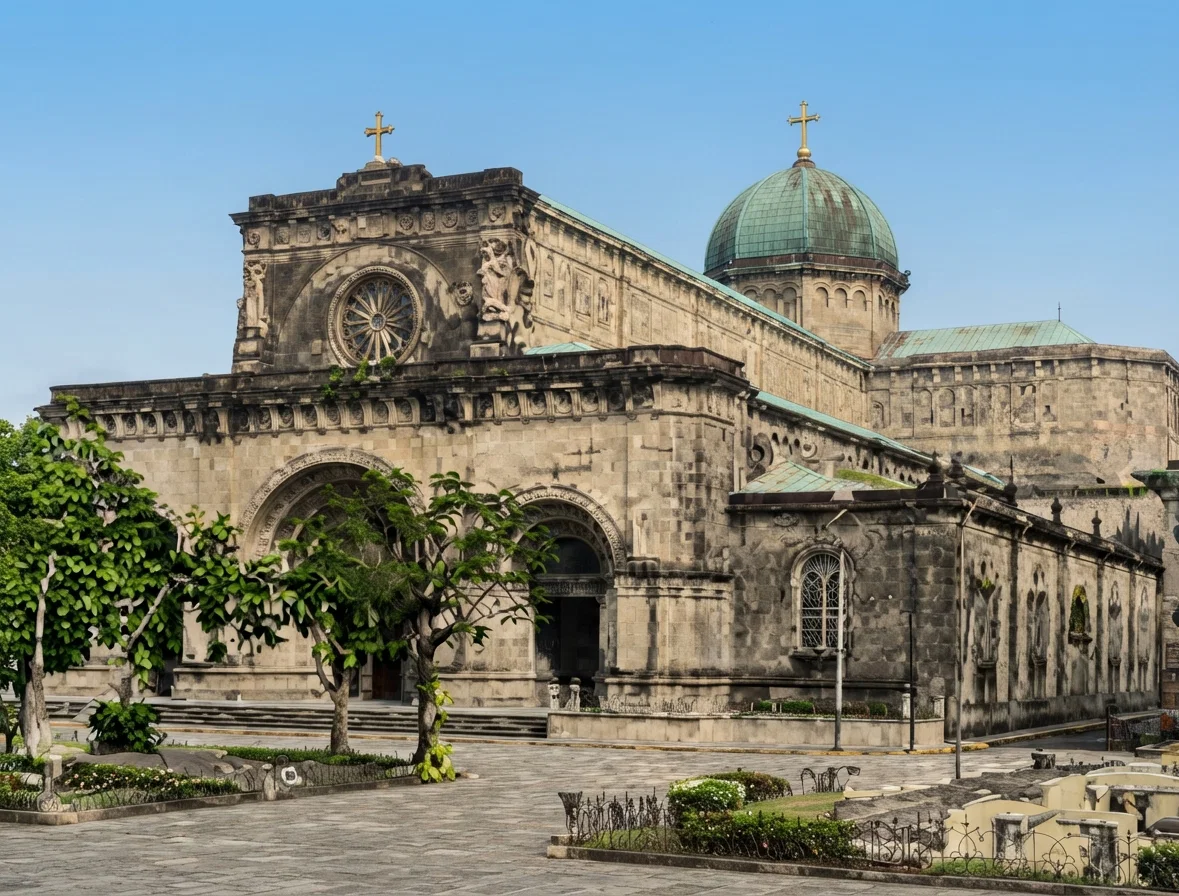
CATHEDRAL—MANILA.
CATHEDRAL—MANILA.

Rule of the Papacy in the Islands.

One of the most remarkable features of Spanish rule was the manner in which the Roman Catholic Church used the power of the State to fix her iron grasp on the people. This is illustrated by the methods used at the very commencement of Spanish rule. The church authorities planned on wholesale conversions and for baptizing whole communities. To be sure there were objections to such methods, but provision was made to meet such objections, as the following order will show. This was sent to the expedition in 1565. "(1) Priests; and (2) a goodly number of soldiers and muskets, so that if the natives will not be converted otherwise, they may be compelled to it by force of arms."
At one end of the Luneta here in Manila, stands a monument erected in honor of Legaspi and Urdaneta. Side by side the figures of these two men stand; Urdaneta, representing the Church, holding aloft the cross, and Legaspi with his sword, representing the State, holding the flag of Spain. And thus it was—a union of Church and State, with all the evils that inevitably result from such a union. One writer, in speaking of Spanish rule in the Philippines, says: "On examining the political administration of the Philippines, we must be prepared to find a kind of outer garment, under which the living body is ecclesiastical."
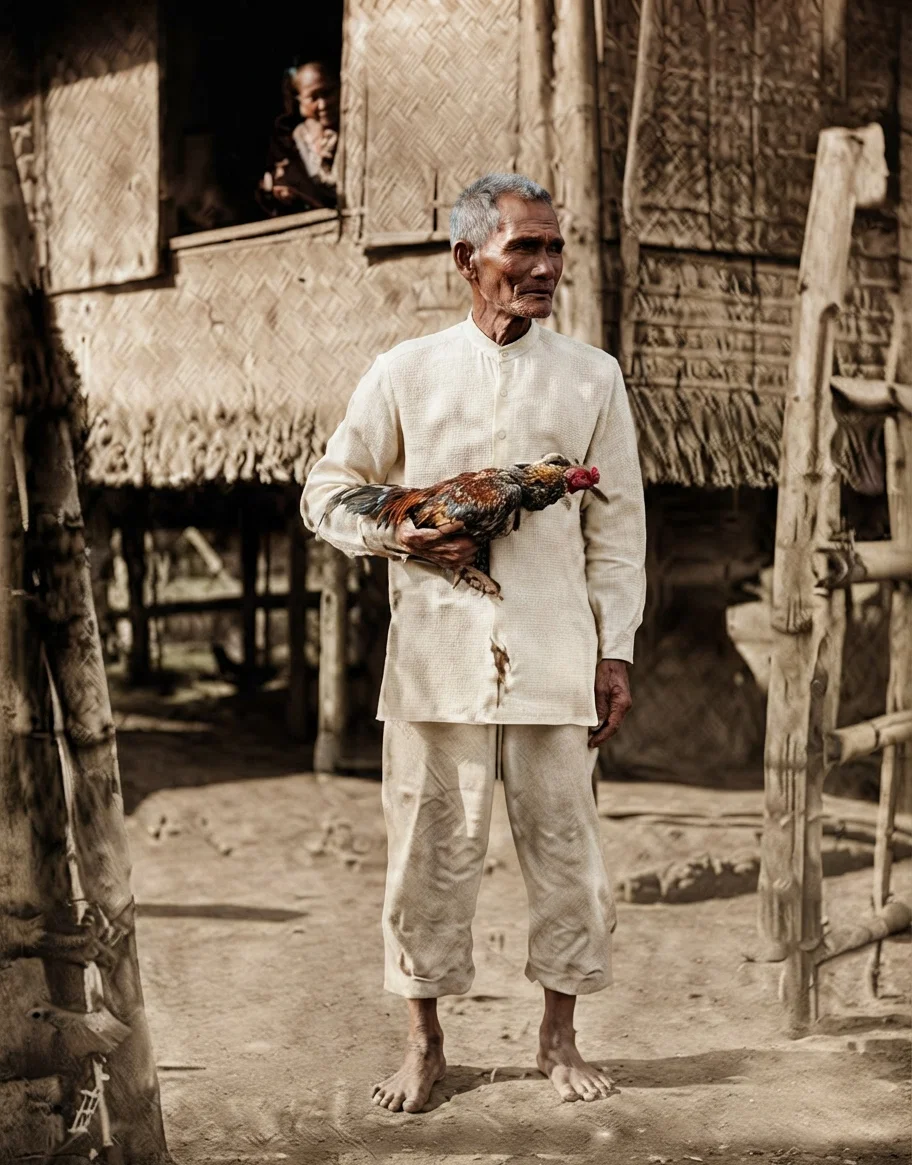
OLD MAN WITH FIGHTING COCK.
Eight different orders have been represented in the work of the Catholic Church in these islands. Out of a population of eight millions the Church of Rome claims seven millions as adherents. However, this claim must be considered in the light of a new movement that has arisen. This movement is known as the Filipino Independent Catholic Church. This movement is headed by Archbishop Aglipay, who was formerly a Roman Catholic priest. He is, of course, a Filipino, being an Ilocano by birth. He was consecrated a priest about 1890, and made rapid advancement, but he incurred the displeasure of the church authorities and was excommunicated. This action was an unjust one, but as he was a Filipino there was no help for him, so he was forced out.

A Visit to Archbishop Aglipay.

In company with Pastor E. H. Gates, I visited Archbishop Aglipay, and in the course of a long conversation with him we learned many things of interest in connection with his work. He received us in a frank and courteous manner and evidenced his hospitality by offering us cigars and beer, but being temperance men we declined both.

Celebrated Mass in the Open Air.

In October of 1902, he called together some of his adherents, both priests and laymen, and adopted a constitution for the new church. He was at this time elected "Archbishop." He celebrated mass the following Sunday in Tondo, Manila. This was done in the presence of thousands of people in the open air. This action was somewhat in the nature of a lighted match to a powder train. The movement spread with wonderful rapidity. In analyzing this movement, it is well to bear in mind that it is distinctly a Filipino movement. It serves a twofold purpose; it is a reaction against the hated friars, and it gives expression to the Filipino's intense desire for independence. Independence in all things is his dream, and the Filipino Independent Church is a step in that direction. Probably in not more than one thing is he really benefited by his change, and that is in being encouraged to read the Bible. Archbishop Aglipay told us that he had bought and circulated among his people over 200,000 Scripture portions and Bibles. We encouraged him to extend that feature of his work as much as possible.

Success of Aglipay's Movement.

The following are the figures given to us showing the present standing of his work: twenty bishops, four hundred and twenty-seven priests, and more than four million followers. He vouches for the accuracy of these figures, which, if true, alter the claim made by the Church of Rome. Recently the courts have decided against the Aglipayanos, and in favor of the Catholic Church, regarding possession of church property. In some cases whole provinces, people, priests, and churches went over to the Aglipay movement, and the fight for the possession of church buildings has been a bitter one.

Fate of Bible Society Agents.

In 1889, the British and Foreign Bible Society made an effort to circulate the Scriptures in the Philippine Islands. This attempt ended disastrously, for one of the agents, M. Alonso Lallave, died a few days after his arrival in Manila. His death took place under the most suspicious circumstances. His fellow-agent, Señor Castells, was also taken very ill, but recovered only to be imprisoned and banished. The circumstances are too well known to leave any room for doubting that this all took place thru friar influence.

Bible Society under American Rule.

Immediately after the American occupation of the islands, the agents of the British and Foreign and the American Bible Societies entered the field. The noble work they have done in circulating the word of God is worthy of the highest praise. Tagalog is the language of some two million people in Manila and surrounding provinces.
The Old and New Testaments have been translated into this language and widely circulated. Visayan is spoken by about three million people. This language is divided into several dialects, in two of which the New Testament is being circulated. Ilocano, spoken by five hundred thousand, has the New and portions of the Old Testament in circulation. Pampanga and Pangasinan, each spoken by about two hundred thousand, have Scripture portions, as have also several lesser dialects. The work of translating is being constantly extended. Many interesting experiences are related in connection with Bible distribution. In some instances the workers have used a phonograph to good effect in gathering the people together to preach to them, and in visiting from house to house have sold many copies of the word of God. The present agent of the American Bible Society has used moving pictures of the life of Christ to good effect in getting the Scriptures among the people. By renting a large building and charging a small admittance fee they were able to give a copy of a gospel or the New Testament to each person as he passed in. In this way many would secure a copy who were forbidden to have anything to do with them.
May the good work be carried on until every man, woman, and child in the Philippines shall be able to read the word of God in their own language. Thus will be made possible the preaching of the everlasting Gospel to every nation, kindred, tongue, and people. Rev. 14:6.
Manila, P. I. J. L. McELHANY.
After this, as we gave notice in our issue of June 25, all donations received for the Chinese Famine Fund will be turned over to the superintendent of the Chinese mission field. The great famine in China is over, and new crops are giving relief. But the field is always needy, and all means sent to the great field will be wisely used by the devoted workers there.

Second Advent Movement, The Great. By J. N. Loughborough. A late revision of the old book "Rise and Progress of Seventh-day Adventists." Address this office.
This book forms a most interesting and instructive narrative on the subject indicated by its title. Commencing with the early experiences of the Advent movement of 1843 and 1844, the writer, who has been actively engaged in proclaiming the doctrine since 1849, here presents a graphic account of the struggles and difficulties thru which the pioneers were safely carried by their unwavering faith in God and their unfaltering loyalty to the cause they had espoused. Due attention has been given to those agencies which, in the providence of God, have aided in building up and preserving the work represented by this people. Illustrated, 480 pages. Cloth, $1.50.
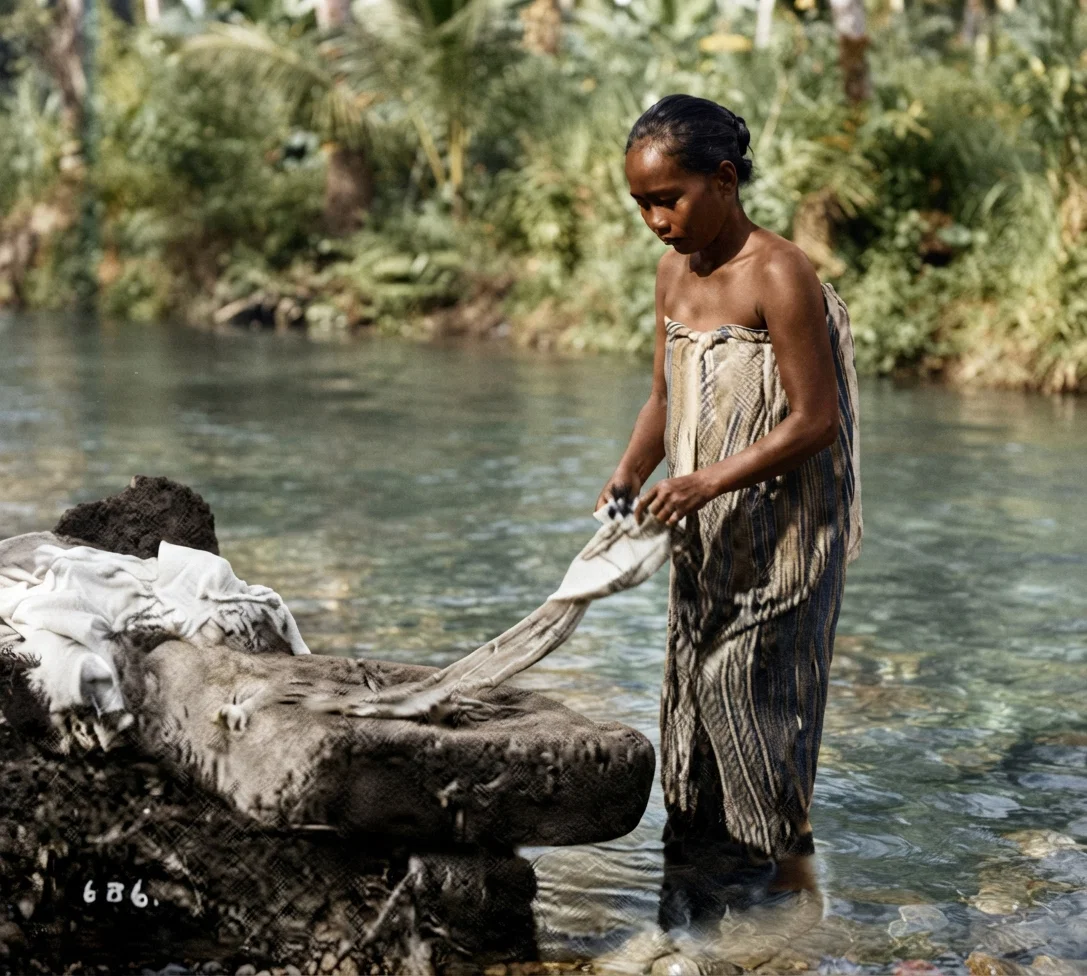
NATIVE LAUNDRY.
NATIVE LAUNDRY.