CHINA'S unyielding exclusiveness and much of her national pride and conceit are of comparatively recent times, being a part of the settled policy of the present dynasty, which is itself foreign to China and the Chinese national spirit and civilization. It is a mistake to think that the Chinese people have had no dealings with the nations of the West, for history gives abundant evidence to show that this race was known to the Jews and the Greeks, and that the Romans and Chinese had commercial relations before the Christian era.
Isaiah's wonderful prophecy of the land of Sinim, centuries before the birth of Christ, and the scattered Jewish colonies in different parts of this empire, lead us to the conviction that China was permitted to enjoy at least some of the blessings of Abraham, even before the coming of Him who "brought life and immortality to light." How much of the light of God's self-revelation was shining on this race during those early ages, it is, of course, quite impossible for us to say, but the very fact that some rays from the one true God fell upon this people is indeed in itself very significant.
The apostolic age was one of unparalleled missionary enthusiasm and activity. The Acts of the Apostles is an inspired record of how the Gospel of the crucified and risen Lord was projected into the very heart of Europe, invading the strongholds of the nations then dominating that continent. The glad message of salvation was for all the nations, and we may well believe that it was carried in all directions, and that, too, by the very men who had seen and handled the Word of Life. Mosheim, the church historian, says, "We may well believe that at an early period the Christian religion extended to the Chinese, Seres, and Tartars. There are various arguments collected by learned men to show that the Christian faith was carried to China, if not by the Apostle Thomas, by the first teachers of Christianity."
It is now known that the apostle Thomas, the doubting one, carried the Gospel to India, and there is a church legend that he penetrated into China, and possibly some day the very earth will give forth evidence corroborative of this.
Little Orphan, an Island in the Yang Tse Kiang, Showing the Monastery of Native Hermits.
In the Early Centuries—the Nestorians.
The next trace of Christian influence in China was exerted by the Nestorians who are said to have been in China as early as A.D. 505. Sing-an-fu, the place of refuge for the empress dowager when she fled from Peking upon the coming of the allied forces in 1900, is also famous in Chinese history as being the center of great missionary activity on the part of the Nestorians. Here in the year 1625 was found a remarkable monument, dating from the year 781, on which was inscribed in Syriac and Chinese an account of the missionary labors and success of these Nestorians, whose "religion spread thruout the empire, favored by the fostering care of the monarch."
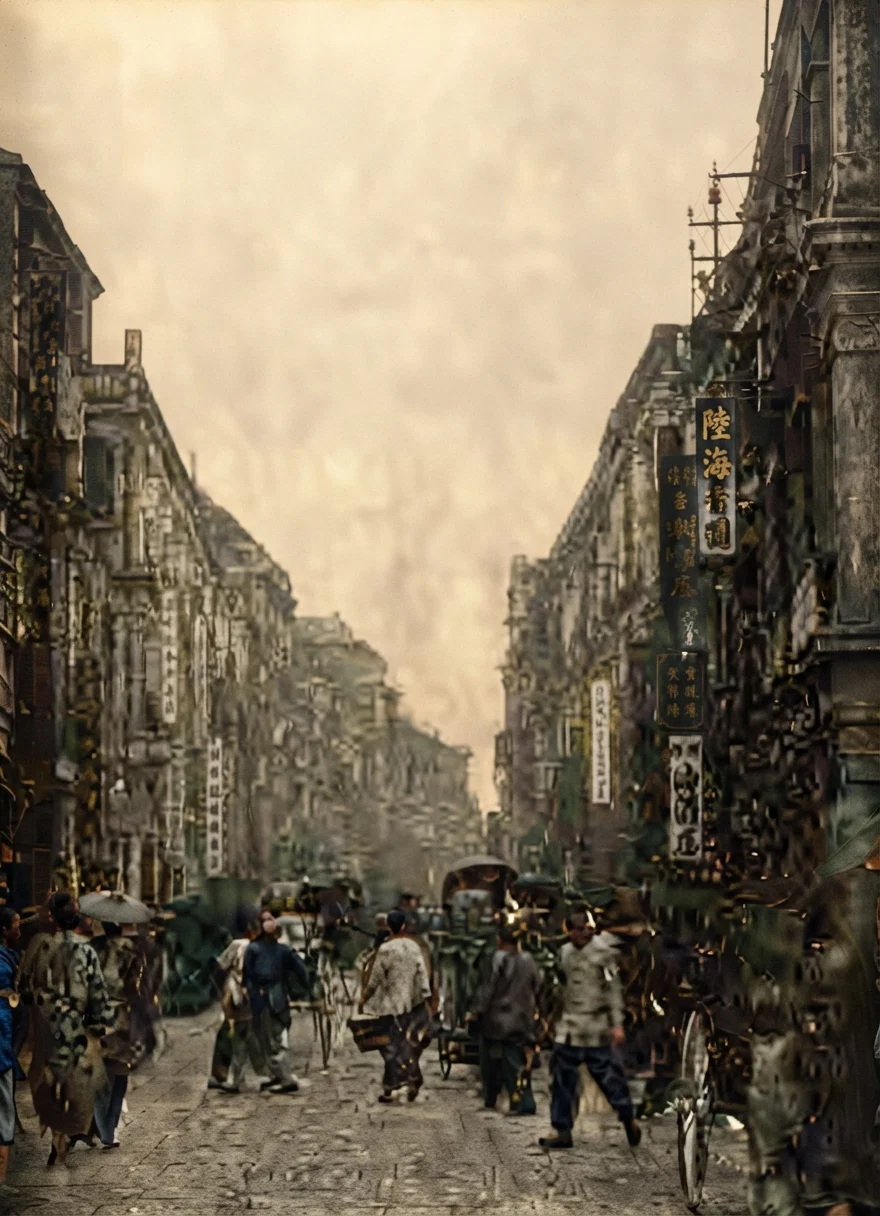
Typical Street in Hong Kong.
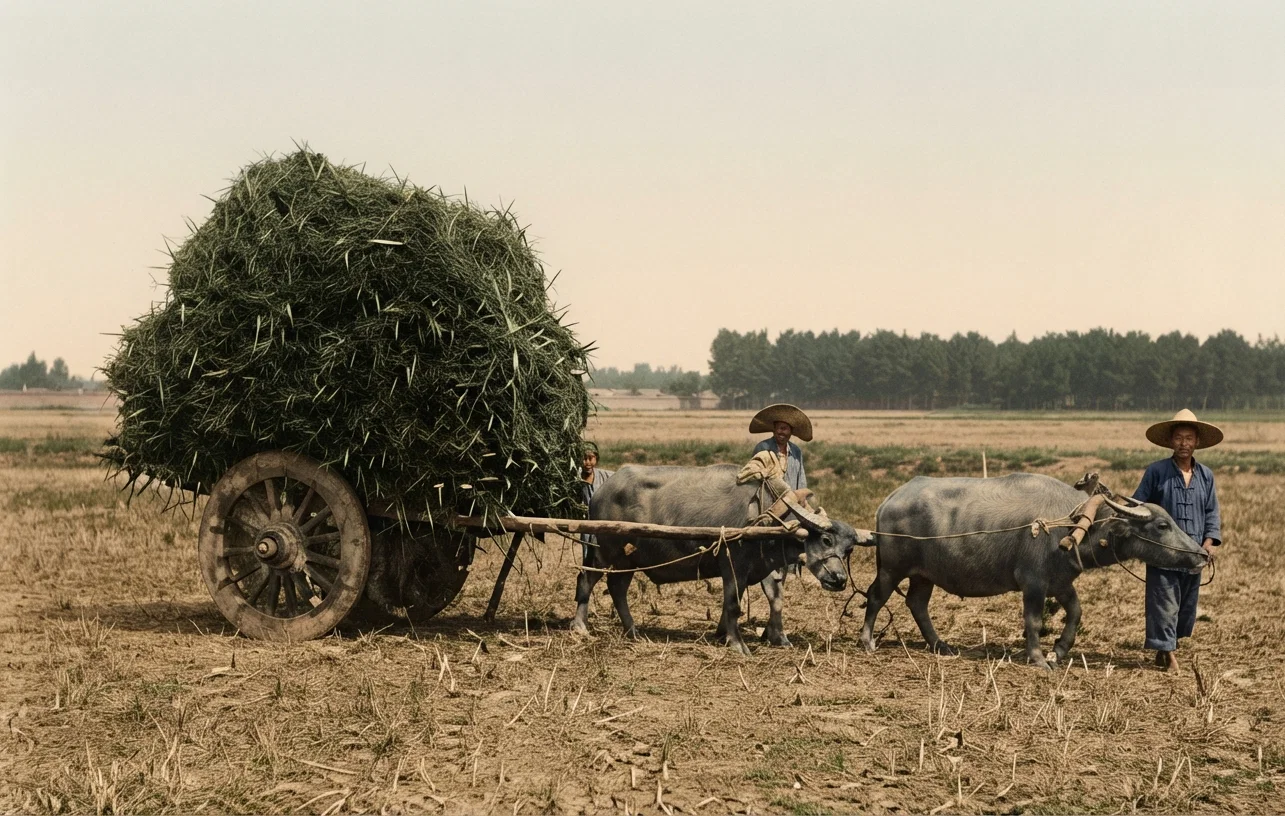
Farming with Water Buffalo,
Gibbon, speaking of Nestorian Missions to the East, says, "In their progress by sea and land, the Nestorians entered China by the port of Canton and the northern residence of Sigan."
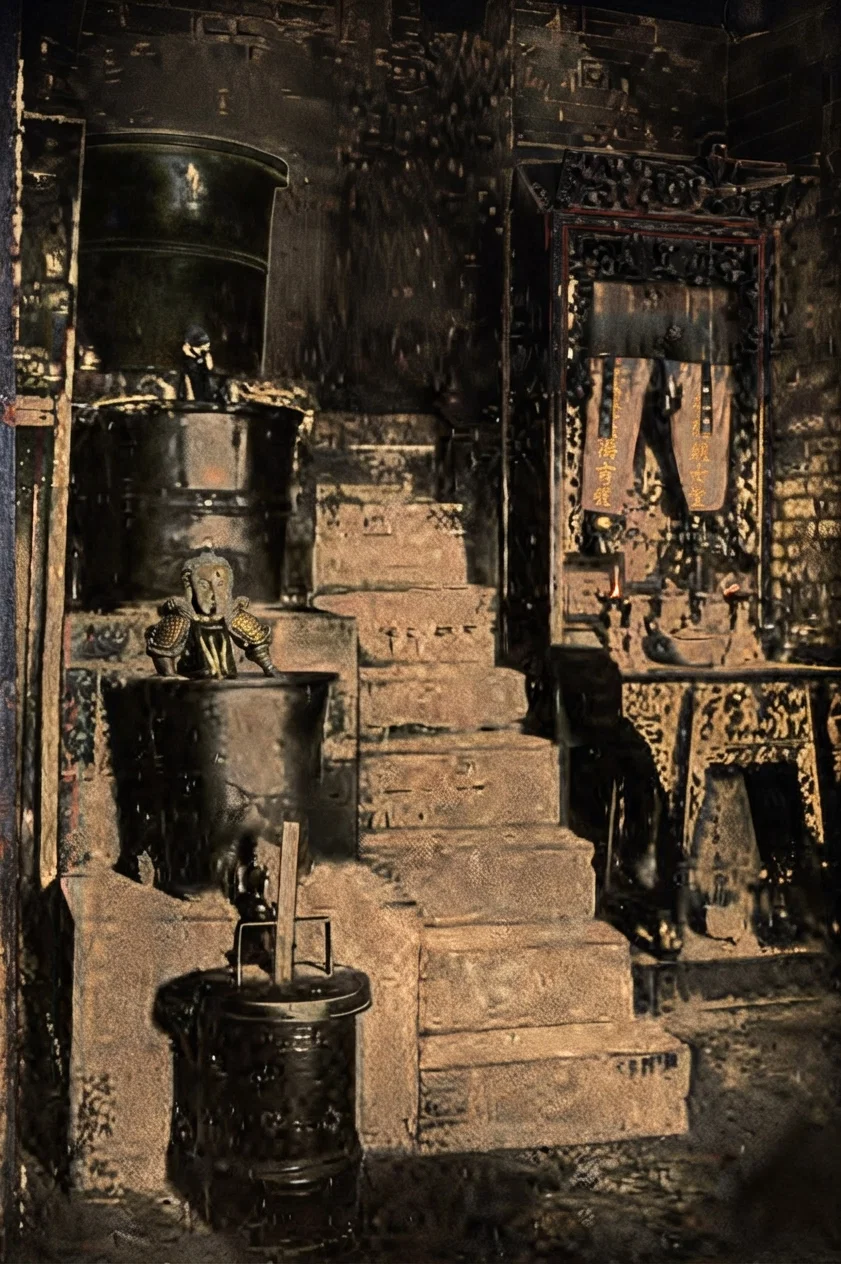
Old Water Clock, Canton, Flow of Water from Bronze Tank to next Is so Regulated that the Rise on the Graduated Rule Indicates Time of Day.
It is doubtful if they ever translated the Bible into Chinese. If they did no trace of it has as yet been found; nor is it probable that it could in those days have been made to act a leading part for the reason that printing had not yet been discovered. This scanty use of the Bible and the perpetual desire to gain the favor of the emperor no doubt account in a large measure for the downfall of Nestorianism in China.
J. N. ANDERSON.
[This interesting article will be concluded next week. What Catholics and Protestants have done will be told.]