THE ado made about the pope's last encyclical has revealed a situation between Romanism and Protestantism which it is intensely interesting to study, both for Protestants and for Catholics. The strength of Catholicism and the flaws of papal infallibility have been brought out as they are not often. So have also the strong and the weak points of Protestantism.
The Papacy never changes. It remains what it is or else it ceases to be. This is its logic and the source of its power and endurance. It may vary its methods, its policies, its language. But deep down at the bottom, it is and remains the same. Ne varietur.
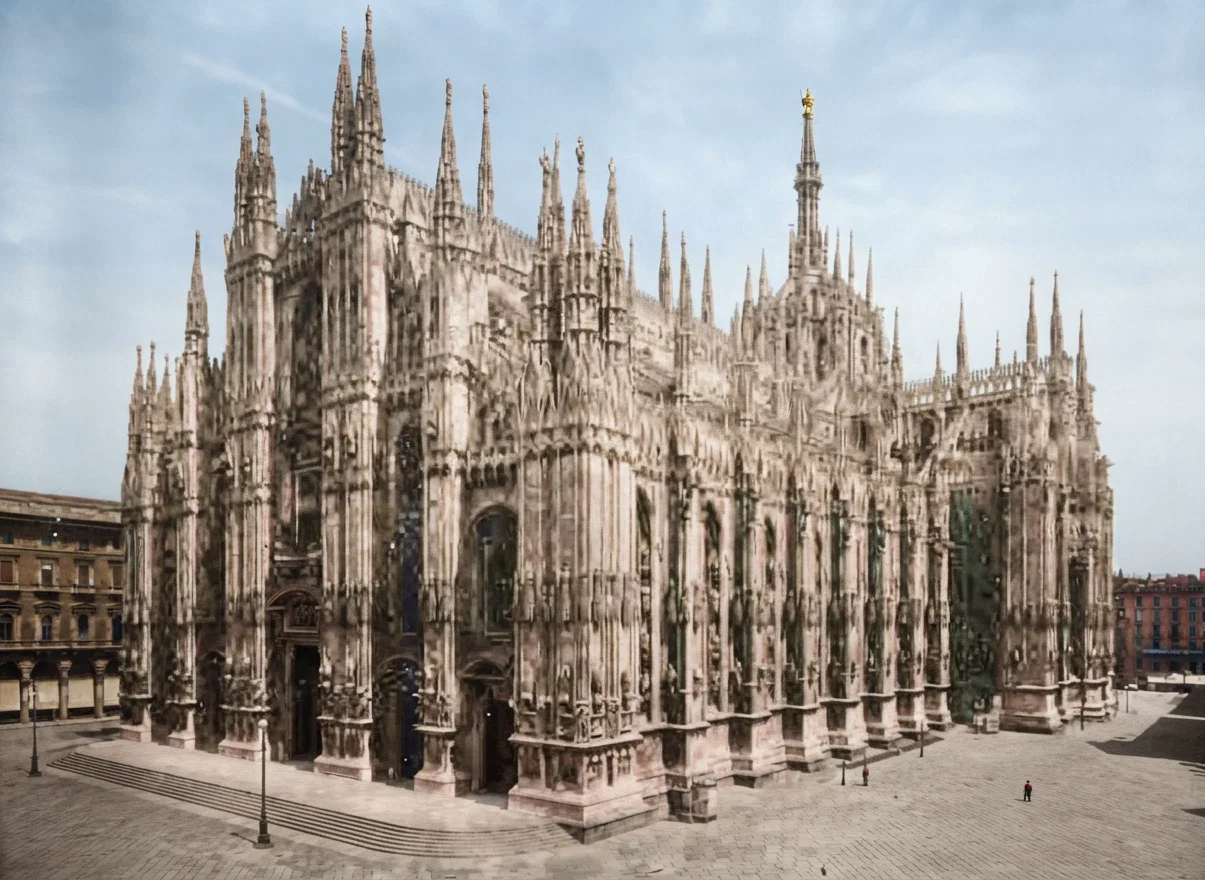
MILAN CATHEDRAL
Protestantism also has strong principles, which once made it a conqueror of no ordinary size, and gave it victories of no small magnitude. These principles are based upon a very old Book. They require faith, self-denial, humility, a change of heart. They offer no satisfaction to the lovers of honors and riches, they make no allowance for the natural cravings after pomp and grandeur.
Principles and Life
The strength of either Romanism or Protestantism is to remain what it is under pain of losing its identity and even its existence. This is well shown by the encyclical and the incidents to which its publication has given rise.
Catholicism, like Protestantism, is constantly threatened by the principles opposed to its own. It must defend itself in some way, it must keep its ground, or else it is doomed. This is well understood in Rome. Leo XIII was a great diplomatist. He secured great advantages for the Papacy on that particular ground. But for a religion, this is not sufficient. The religious element in Romanism was weakening when Leo disappeared. The Conclave felt it. The great clamor among the high clergy was for a "religious pope." And they elected Pius X. Pius X has fulfilled the hopes reposed in him and the promises made by him. He is before all and above all a "religious" pontiff. He does not seem to care how much is lost on political, financial, or diplomatic grounds. He sticks to his papal principles and goes right ahead, fearless of consequences. In this he must be admired. This attitude of his is not a common one at this age of the world. Protestants would do well to follow his example a little more. They would see things moving along differently if they did.
The Papacy and Modernism
The object, or one of the objects, of the encyclical was to put the Catholics on their guard against Modernism, which is simply Higher Criticism applied to Romanism. Modernism, as applied to Catholicism, has fifty per cent truth and fifty per cent error. It calls for freedom of thought and for the use of reason in religious matters. And this is right. But this is destructive of Romish traditionalism and papal infallibility. It also advocates that new species of scientific infidelity which does away with the supernatural and the miraculous in religion. And this is wrong, and it antagonizes that portion of truth which remains in the papal religion.
That element in Modernism which is in harmony with truth is also found in Protestantism. But Protestantism has much more which is destructive of Romanism, it has the Bible truth of justification by faith and the supreme authority of the Bible in all matters religious. For these reasons, the pope is in duty bound to antagonize, condemn, and blacken Protestantism. And so he did in his already famous encyclical.
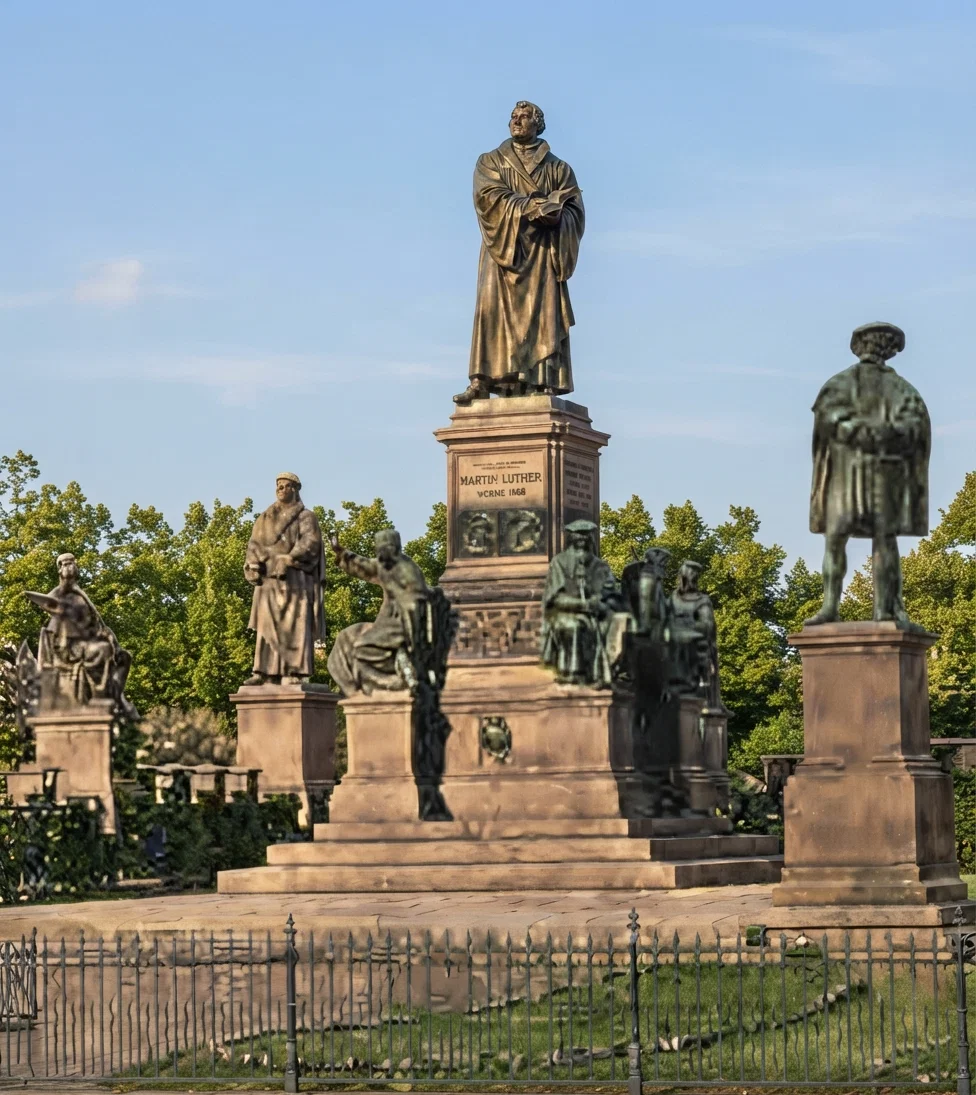
Luther monument at Worms, Germany. The best way to honor Luther and his work is not by memorials of stone, is not the exaltation of the man nor the crystallization of his creed, but the imitation of his faith in the Word of God.
Of course, in this day of telegrams and daily papers, it was to be expected that the papal document would be criticized and cause some rumor among Protestant people. Did the papal Curia expect that it would pass unnoticed by its slumbering adversary? We have no means of knowing. If it did, the facts have shown that it made a mistake, and yet not as gross a one as might be supposed; this will be noticed further on.
Meeting the Mistake
Where the mistake came in was in the way in which the pope met the storm. In order to maintain his reputation of courage and straightforwardness, he should have stiffly stood by his declarations about the Reformers, and insisted upon the publication of his letter among the Catholics of Germany.11[[FIGURE]] Undoubtedly this would have brought about a break between him and Germany. The so-called vicar of God on earth evidently thought that this would be paying too dear a price for honesty. The facts are, as all know, that he flatly denied having made any reference to the Reformers and to the German princes, and he informed the German Government that he had given orders for non-publication of the encyclical among German Catholics.
On the first point the pope was guilty of a self-evident untruth, since the words "Reformers" and "Reformation," and in the same connection the words "most corrupt princes and nations," are found in his letter. On the second point, the pope shows himself untrue to his calling, by depriving his own people of an instruction which he claims to have received from the Holy Spirit, and that for the sole reason that it would cause displeasure among his adversaries. At the same time he indirectly confesses having done the very thing he denies; for if he did not slander the Reformers, why should he suppress an innocent document? But this forced confession will not count among millions of Catholics who have read the encyclical in the public press, and who will retain the impression that the Reformers were villains.
Again, the "Osservatore Romano" declared that the pope "himself, of his own accord, and as a measure of prudence, has taken the necessary and timely steps in order that the encyclical should not be read in the churches in Germany, nor published in the diocesan papers;" but this leaves the clergy free to have it printed and distributed among the people. Nor is this all. The pope does not recall anything. So says the "Osservatore": "The encyclical is promulgated to the whole world from the simple fact of its being published in the official bulletin 'Acta Apostolica Sedis.'"
The whole attitude of Pius X in this affair would be bad enough if he were an ordinary man. But he is the religious leader of millions of souls; he claims to be the vicegerent of the Son of God, the head of the church, God on earth; in a word, an infallible teacher. Before such extraordinary assumptions and from such an exalted source, the whole world, Catholics and non-Catholics, have a solemn right to expect a conduct above ordinary level of uprightness. But what shall we say when we find ourselves facing a mixture of slander, cowardice, and crookedness? Shall we not be confirmed in our Protestantism, and authorized to say earnestly and lovingly to our Catholic friends and neighbors, "Are you absolutely sure that your 'supreme pontiff' is not what the Bible calls 'the man of sin,' the 'lawless one' (anomos), that antichrist who should sit in the temple of God, to be there worshiped as God, and claiming to be God?" 2 Thessalonians 2; 1 John 3.
What the Protestants Did
All over Germany, in Bavaria, Austria, Holland, and Switzerland, loud and indignant protests were heard. Did that prove that Protestantism is true to its principles, true to its name? It would if Protestantism was merely the negative disposition of resenting an insult, instead of the positive quality enabling one to live, maintain, and proclaim some living truths in opposition to some deadly errors. But what was done in Berlin, Stuttgart, St. Gallen, Zurich, and Geneva looked more like a violation of the principles of the Sermon on the Mount, which invites us to bear outrage for truth's sake with meekness and even with joy. Matt. 5: 44, 11, 12; 1 Peter 2: 20-23.
What Protestants Should Have Done
A Protestant way of protesting would have been to issue a calm, clear, and forcible statement of the moral and religious conditions of Christendom in the sixteenth century; of the shameful abuses committed by the clergy, culminating in the sale of indulgences; of the contents and object of Luther's theses; of the principles laid down by him as the true Bible doctrine of salvation; of the great principle which makes the Bible the only rule of faith, and justification the only way to salvation; of the leading errors which these principles pulled down.
Such a statement, scattered broadcast, would have been, it seems to me, an effective and timely way of doing Gospel work. It would not have changed the opinion of the pope, but it would have given to millions of Catholics matter for earnest thought and study.
On the contrary, most of the protestations found fault, among other things, with the encyclical on the ground of its "disturbing and endangering religious peace"! As if Protestants in general were only fearful of having in the future to vindicate and promulgate their faith! Have we come to this? Is Protestantism then dead indeed? Is it true, to-day, as Vinet, the Swiss advocate of evangelical faith, said sixty years ago, that "Protestants there are, but Protestantism is no more"? If so, then let such as are Protestants still take up their appointed work with renewed energy until the grand battle is won.
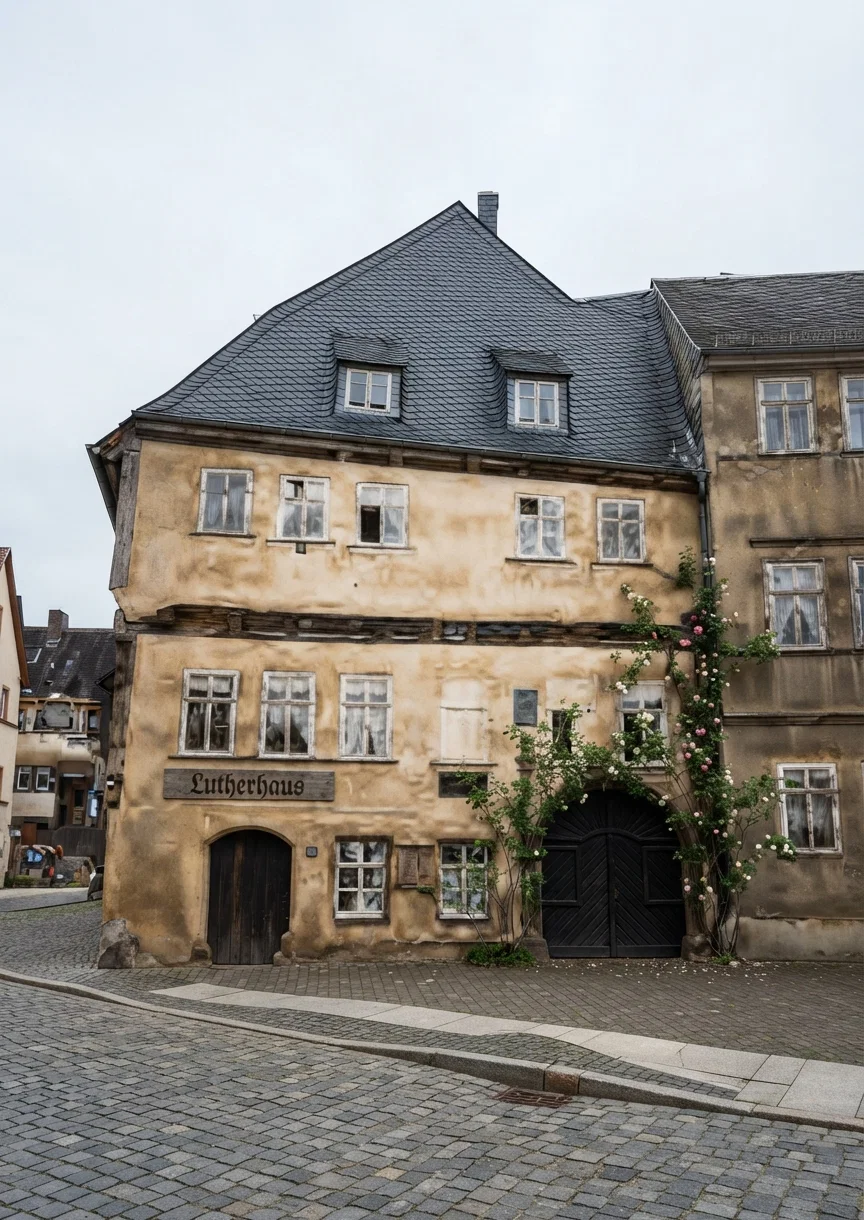
Luther House, Eisenach, Germany
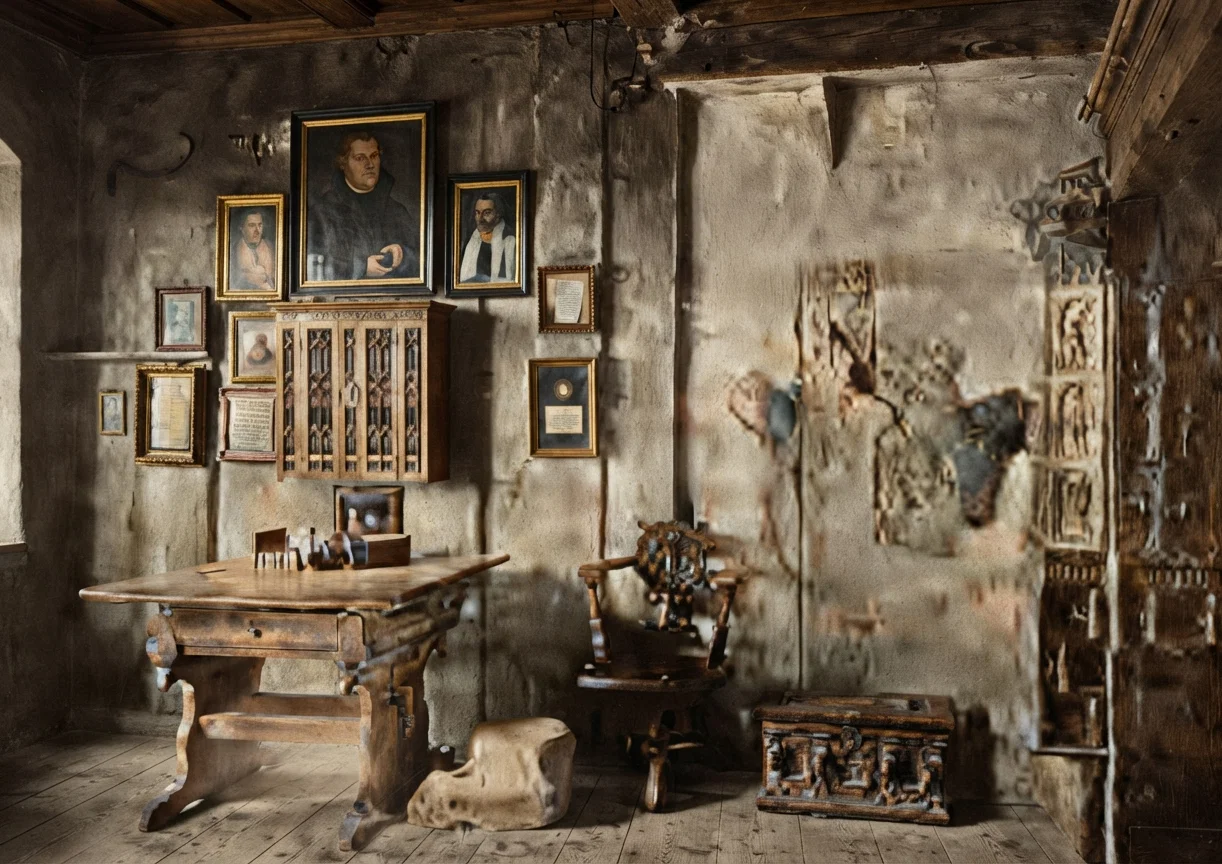
Luther's room in Wartburg Castle, Eisenach, where he did much of his writing