The British Navy

7%

Pacific Press Publishing Association · Mountain View, California · Sep 20, 1910

FromSigns of the Times, Vol. 37, No. 37.

Read the full edition

The British Navy

By Henry Percy

THERE has been a great deal of talk in the American newspapers about the great possibility of a war between Great Britain and Germany for commercial supremacy, which at the present stage of the game is held tightly in the firm, strong hand of England, who will not give up without a struggle. It was by conquest England won her proud position as the wealthiest and most powerful nation of modern times, and by fighting she will retain it.
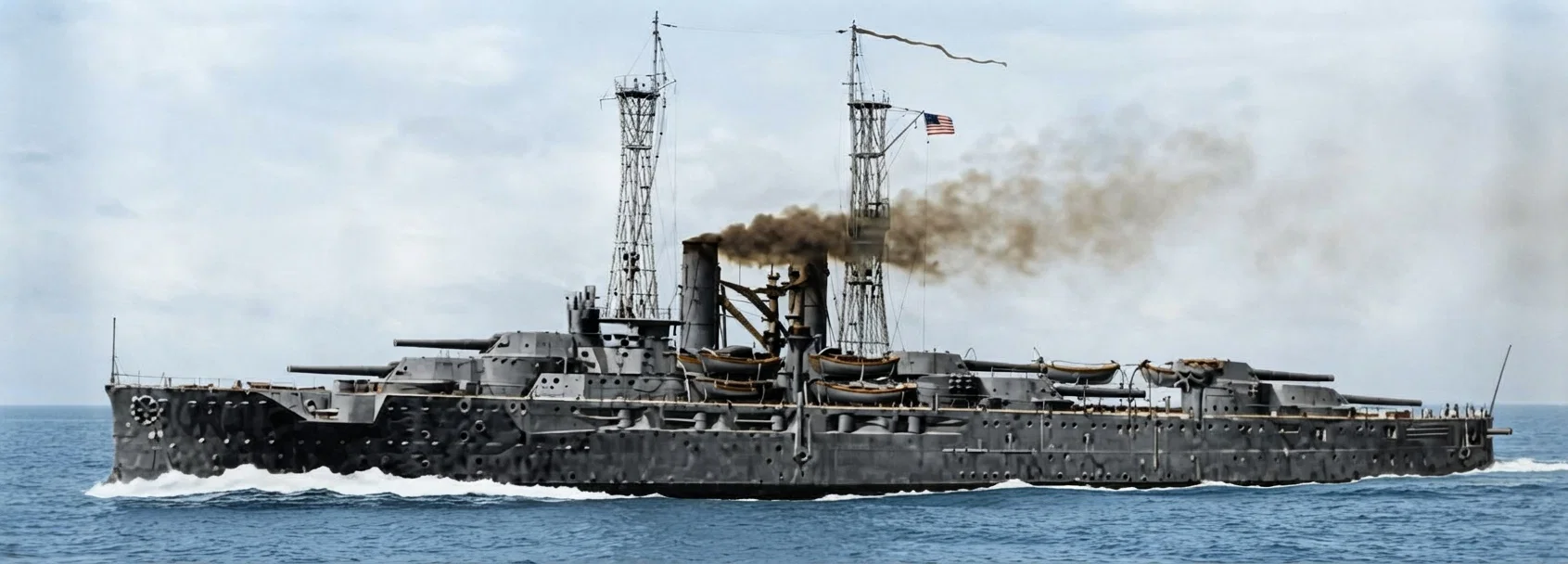
WYOMING AND ARKANSAS BUILDING FOR UNITED STATES NAVY
Great Britain is stronger now, relatively, than she has ever been before. Her commerce whitens every sea, and carries an annual valuation of nearly $7,650,000,000; and her merchant marine consists of about 35,650 ships, which are protected by a large navy of about 500 war-ships. Thus her mercantile marine forms more than one half of the entire world's shipping.
Among all modern navies, by far the largest and most powerful is that of Great Britain, whose government shows a fixed determination to keep its navy beyond the hope of rivalry. Ever since the great defense act of 1889, it has been England's policy to have a navy equal to the combined strength of an other two navies sent against her, plus a margin of ten per cent. No other powers could afford the enormous programs that she annually lays down, and at the same time keep the force that she maintains, unless they enjoyed an enormous amount of resources.

Millions of Tons of Destructive Engines

The British navy affords the most striking example of naval destructiveness the world has ever seen, composing in all 510 war-ships of a total displacement of 2,005,873 tons. In the number of first-class battle-ships she still maintains her lead over the other powers, having to her credit 62 battle-ships, with an aggregate displacement of 920,480 tons. In the number of armored cruisers we also find that she ranks first, with 94 cruisers of an aggregate displacement of 876,850 tons. Besides battle-ships and cruisers, she has a great number of submarines and torpedo-boat destroyers and scout ships.
In the year 1906, Great Britain surprised the world by launching her first Dreadnought; and since then the other great naval powers have been building Dreadnoughts for themselves. At the present time England has eight Dreadnoughts in commission, and by the close of this year she will have twelve. England's new Dreadnoughts are: the Collingwood, 19,250 tons; Neptune, 20,250 tons; St. Vincent, 19,250 tons; Vanguard, 19,250 tons; Fondroyant, 20,000 tons; Bellerophon, 18,600 tons; Temperaire, 18,600 tons; Superb, 18,600 tons; Lion, 26,000 tons; Colossus, 23,000 tons; Orion, 22,500 tons; and the Medusa, 24,500 tons. All these fighting monsters are in commission at the present time, with the sole exception of the Lion, the Medusa, the Colossus, and the Fondroyant, which will be ready for commission by the close of the present year.

Wide Extent of Fleets

The British navy is composed of eight squadrons; namely: The Home squadron of 240 ships, divided into three divisions, the Nore, the Portsmouth, and the Davenport divisions, under the command of Sir William May, K.C.B., the successor of Lord Charles Beresford; the Mediterranean squadron of 40 ships, located at Malta and Gibraltar; the India squadron of 10 ships, located at Calcutta; the China squadron of 16 ships, located at Hongkong (the India-China squadrons unite in time of war); the Australian squadron of 12 ships, located at Sydney; South Atlantic squadron of 10 ships, at Cape of Good Hope; the Caribbean Sea squadron of 5 ships, located at Jamaica; the military stations at Halifax, N. S., and at Esquimalt, B. C., will soon be reinforced by 4 ships. From the very latest report from the admiralty office in London we hear that each of these squadrons will have one Dreadnought to strengthen its fleet.
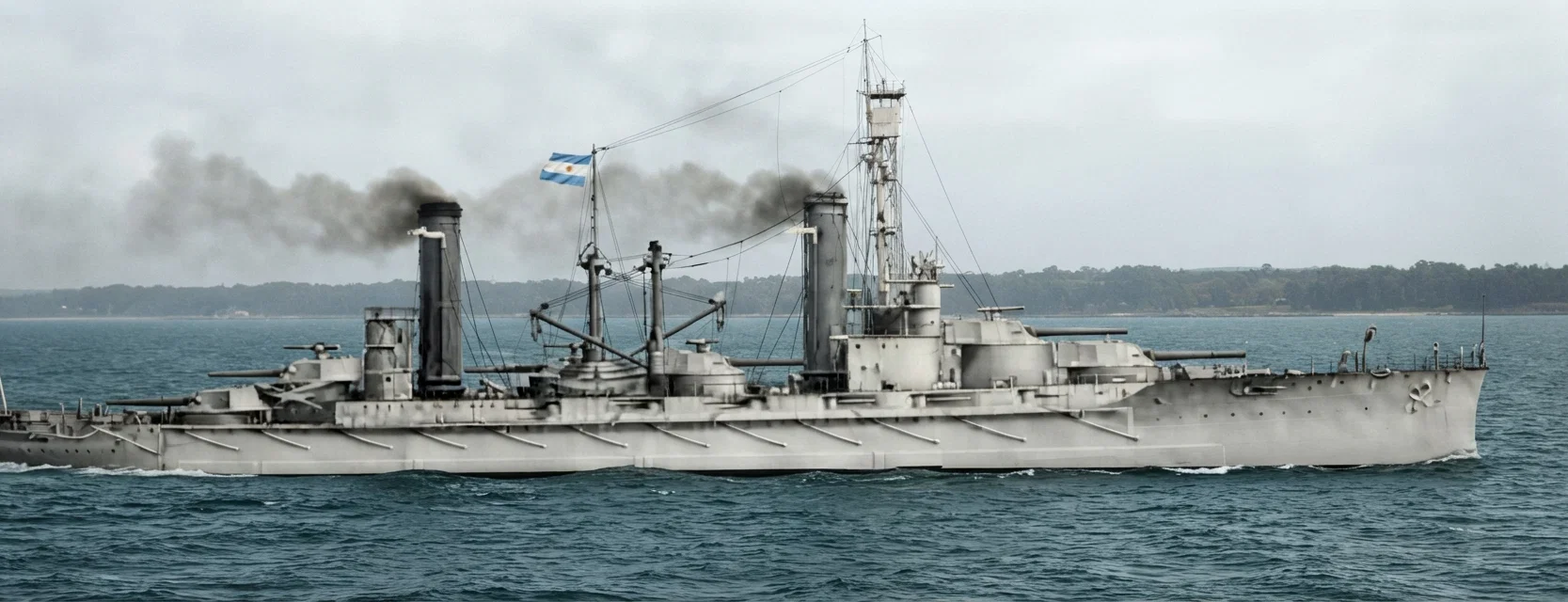
RIVADAVIA AND MORENO, ARGENTINE DREADNOUGHTS BUILDING IN AMERICAN YARDS
Thus one can readily see that in every part of the world the naval fleets of Great Britain overshadow the ocean, ever ready at the drop of the hat to begin hostilities. To man this powerful navy, over 125,000 men are required. Each sailor enlists for a term of twelve years; hence by the time he is ready to leave the navy, he has become a fine seaman, which goes to making the British sailor the best in the world. And as long as England's naval supremacy remains unbroken, any attempt at a war with her is mere lunacy.

A Vessel of 30,000 Tons

At the present time England is building four large battle-ships a year, not counting the cruisers and submarines that she builds each year; and it is also rumored that Rear Admiral Bacon, ex-director of naval ordnance, one of the cleverest officers in the British navy, has recently designed a Dreadnought of 30,000 tons which the British Government will build next year.