ONE of our missionaries in China, Brother A. H. Bach, is located at Pakhoi in Kwangtung. He is there alone holding the station amid the ravages of the plague, which has become so extended and acute that all other missions have been abandoned for the time. Here is an extract from one of his letters:
"It is now eight A. M. I arose at six, and have already seen fourteen coffins pass my door. To hear the desperate howling of the two or three followers is something awful. Two houses from my home a young woman just died. Last night she was apparently well. Three houses in the other direction a man lies in the street in a delirious fever; he will soon die. My house is full of women and children, refugees. They dare not go to their own homes on account of plague. In my courtyard I have a band of boys. If we could start a school now, we would get plenty of pupils. These children have no father, no mother, their parents having died during the epidemic of the plague."
He then tells us that when it was rumored that the plague was in the town no one paid any attention to it, nor was there any attempt at isolation or disinfection, and thus it spread rapidly. Coffins wanting, bodies were at last wrapped in straw and carried out. Rats died by the thousands in the street. Superstitions of the people led by the town clerk with other representative men claimed that the carrying of two cloth lions through the street would drive the bad spirits away, and the people carried the two ugly lions through the streets. Every ten steps they knelt down and asked for protection; but the very next morning the town clerk was dead, and the disease had spread more than ever. Then they went to the idol temples to inquire, and the idol answered, through the priests, that the procession had been too small. He must have a bigger one. The mayor of the town and the gentry started out, collected over three thousand dollars, and an idol procession was arranged which went on for a whole day, and the next day not a man of the entire committee was left alive. Then the priest declared that the idol must have one thousand persons before it would stop. The dead were eagerly counted, yet when one thousand had died, twenty more were doomed to die. Then the people called the priests to curse the gods. A tower sixty feet high was built and some Taoist priests went on it to curse the gods for seven days, but the plague continued.
Brother Bach writes: "O, the sad sights that meet the eye. The fearful cries of the people in their last state! The dead, the half-dead, and an unspeakable horror lie over the whole place."
He tells of going to a place where the sick were gathered, to preach to them; but his chair-bearer contracted the disease and died and he had to stop going. While other missions have closed their stations, he believed that God sent him to Pakhoi and is able to keep him. Our God is a living God. Brother Bach believes that he will be protected.
He tells of our Bible woman Wang Pat Sham, a true Christian who kept on visiting, but contracted the disease. One morning during prayers she collapsed, and they found that the plague had her. He tells that while praying for her a joy fell over him so that he could not stop thanking God for the help that He had already given to that woman. He read some texts of Scripture to comfort her. She said that she felt God's power in her to resist, and when she was a little better she offered a most touching prayer, commending herself to God's keeping. Two hard days and nights followed, then she was saved, but was very weak. Now she is at work again. She is the only person in the whole town who had the disease and survived. Truly God answers prayer. "We had an eight days' prayer-meeting, very well attended, and we quoted the Ninety-first Psalm, I believe, more than a thousand times. Not one of our inquirers has died or been taken. This is a wonder before our eyes, and in the eyes of the heathen as well. We glory in our Lord. Our mouth is full of praise, because His goodness endureth forever."
Surely such things as these through which our workers pass ought to appeal to the hearts of those in the home land.
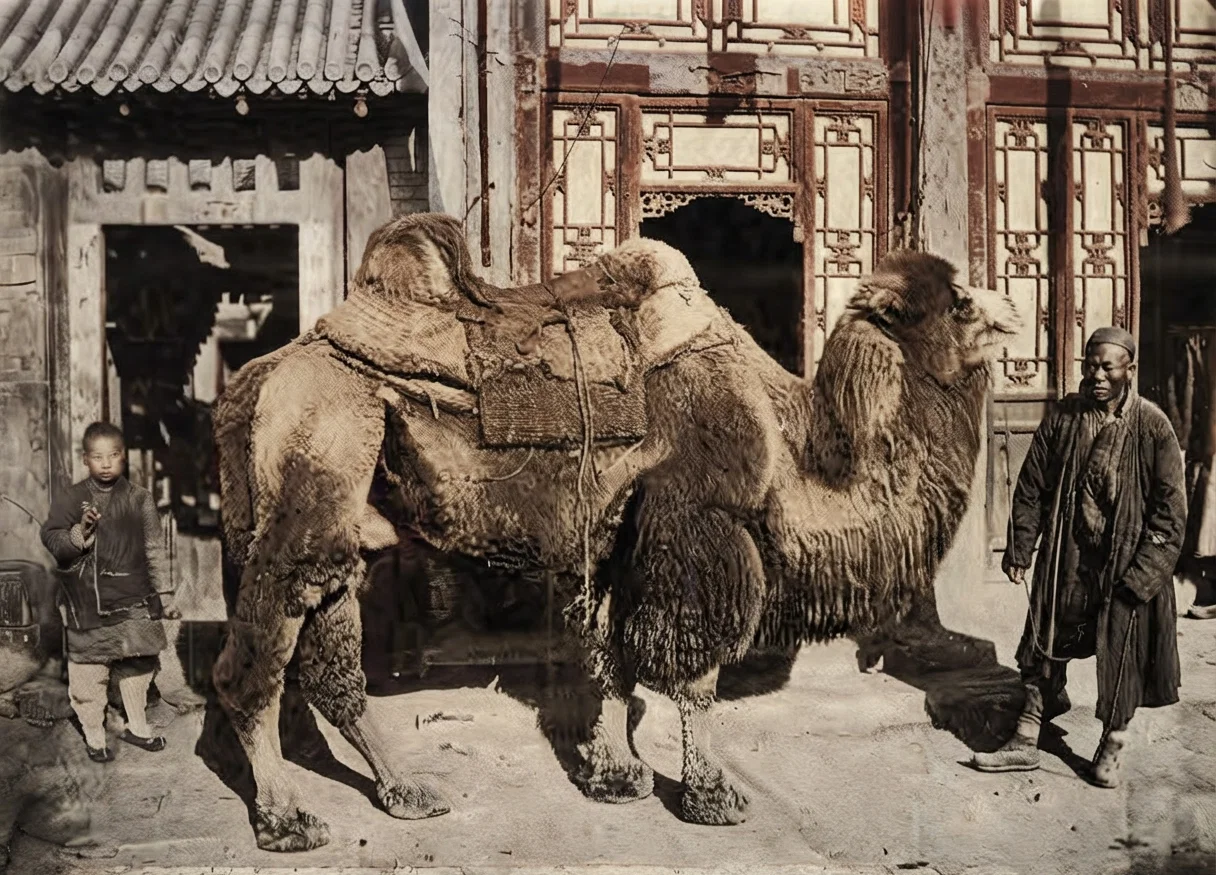
Transport camel used in traffic between Peking and the plains of Manchuria and Mongolia