Revolution in the Air

3%

Pacific Press Publishing Association · Mountain View, California · Nov 8, 1910

FromSigns of the Times, Vol. 37, No. 44.

Read the full edition

Revolution in the Air

THE world was not greatly surprised to hear that the kingdom of Portugal was no more, and that a republic had been declared. The people could endure the strain no longer. The little state possessed less than 36,000 square miles, a population under 6,000,000, yet its public debt amounted to the vast sum of $800,000,000, or more than $130 for every man, woman, and child in the kingdom. The revenue last year fell short $27,000,000. Then there was the great burden of all the unproductive religious houses and orders. No wonder that events inspired the cartoon of a ragged peasant looking upon the bier of dead King Carlos and saying, "Well, the king is dead — but the poor are still poor." No wonder that now there are ill-considered and unwise outrages in driving out the Roman Catholic orders. But there will be more freedom and some relief from financial oppression.
No wonder that Spain trembles on the verge of a revolution. The seemingly strong hand of Canalejas holds it in check, and he declares he will prevent it if need be with his life; but let a weaker man come to power, or let him falter at the wrong time, and the revolution is assured.
We are also told that the Italian throne is tottering. If the republic in Portugal is a success, if Spain should follow, it is predicted that Italy would join the procession. And then where would revolution end? Greece, Austria-Hungary, and all Europe might become involved in the Socialistic maelstrom. The death of one man, or the mistake of another, may set all Europe aflame.
It is not in monarchies alone that the revolutionary spirit breeds. It is contagious, especially in the Latin races. Mr. Keir Hardie, member of Parliament, the British labor leader, declares in the New York "World" of October 17, that revolution is imminent in France. The great labor strike in that country is an index of the unrest that exists. The hours are long — 12 to 15 a day — and the wages inadequate; and Mr. Hardie tells us that attempt to conduct trains under military law might precipitate a revolutionary outbreak, and in such a case the workers "would find a sympathetic reflex in the army." And he well says: "There is neither an Old Guard nor a Swiss Guard to come to the rescue." I repeat, France at this moment trembles on the brink of a revolution."
Better times in all countries of earth generally means revival of business that helps the poor, the under strata of society, very little. The rich, the great trusts, are benefited. The great war burden grows apace, extravagance in living increases, extravagance in government expenditures follows the same trend; what wonder that Socialism and anarchy increase!
Who is responsible? First, the great money kings, the great trust magnates, who ought to use their powers for the good of humanity instead of for self. Secondly, the teachers of religion and morality, who turn from God's book, from the old standards, the old moralities, the Decalogue and the Sermon on the Mount, may see their own teaching bearing fruit in the laws which make for oppression and inequality, in the disregard of all law on the part of the uprising masses. Will conditions be bettered? Perhaps, at times, temporarily. God is doing a work in the earth. Angels are holding the winds till that work is done. Rev. 7: 1-3. Then Christ will come and the unrighteous kingdoms of this world will be swept away forever. Beyond the desolation lies the everlasting kingdom of Christ.
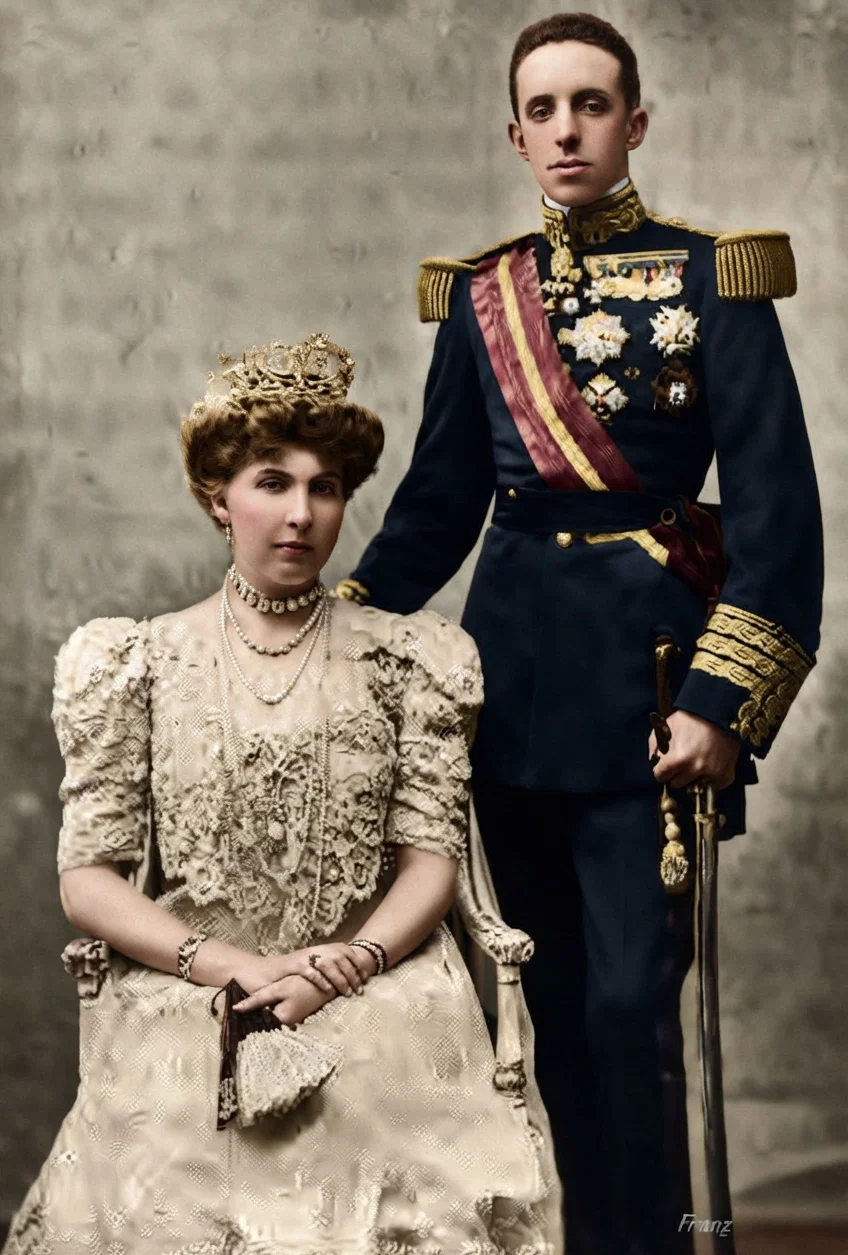
King Alfonso and Queen Victoria of Spain, whose throne is tottering
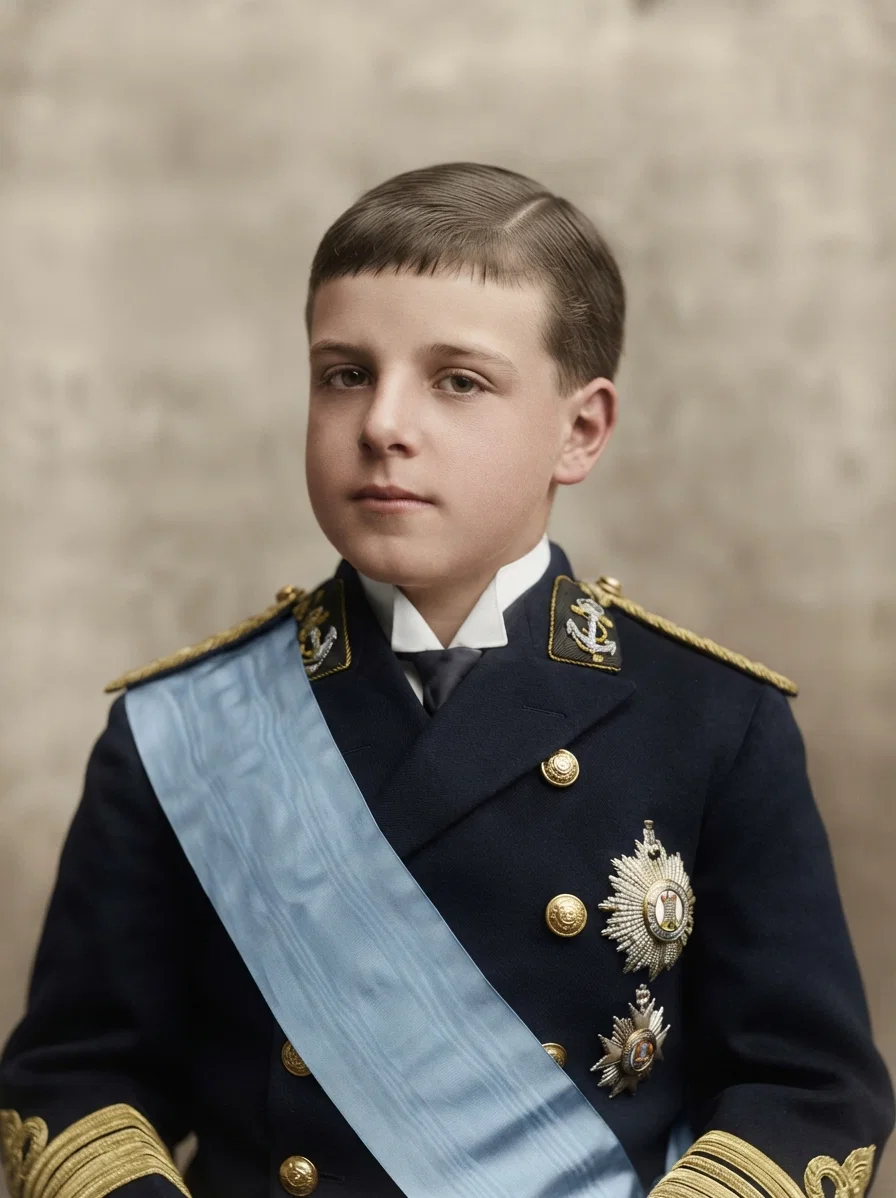
Manuel II as crowned king of Portugal after his father's death in 1908
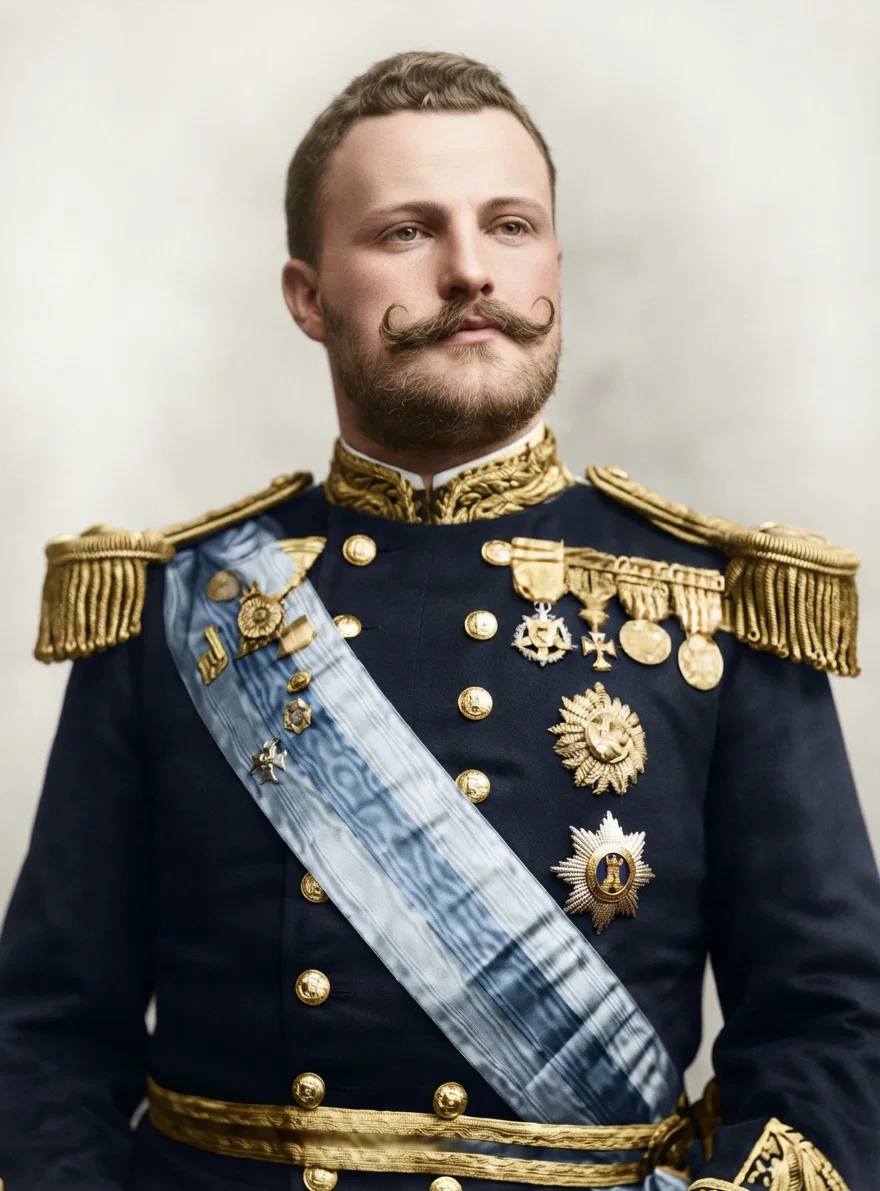
Carlos I, the assassinated king of Portugal, father of Manuel II
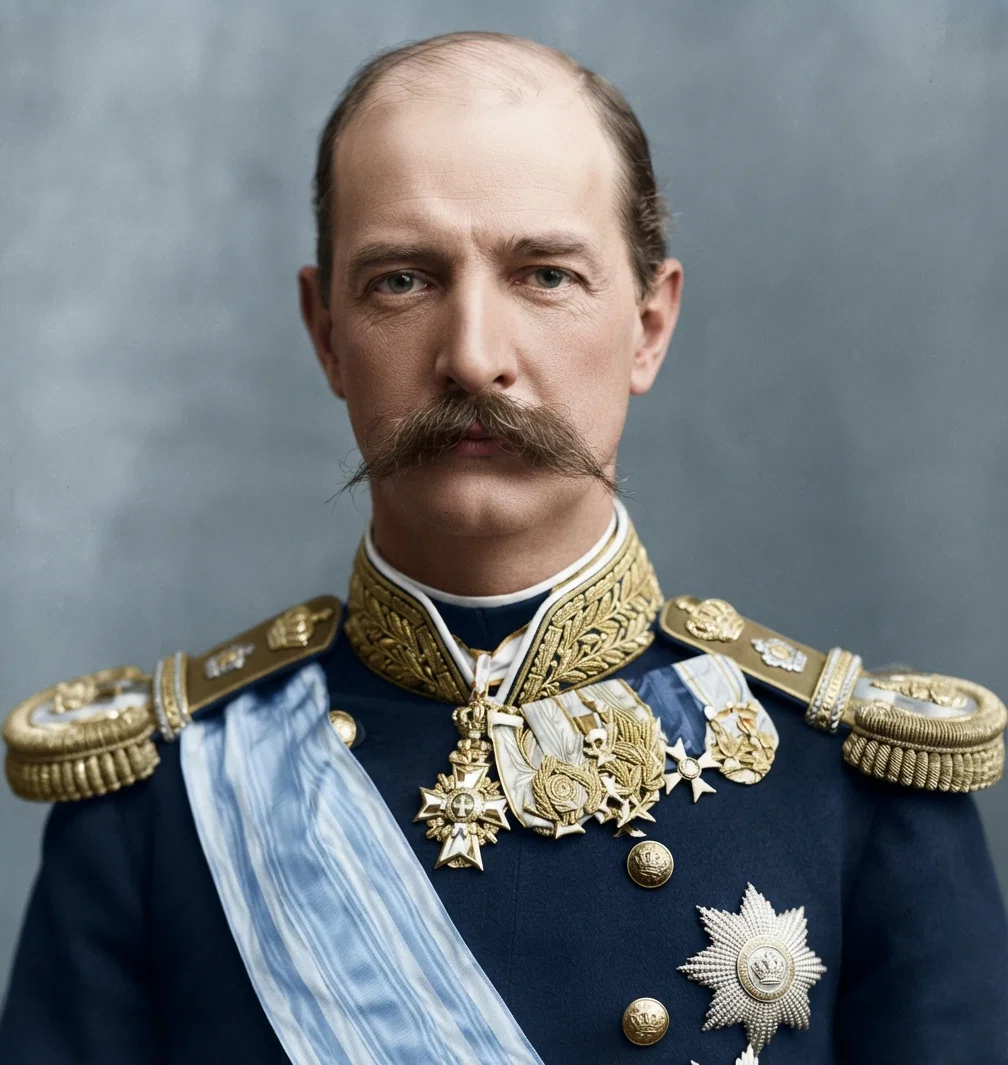
George I, king of Greece, son of Christian IX of Denmark, brother of King Haakon of Norway, and uncle to Czar Nicholas. Greece is but a faint shadow of her former greatness. The king is said to be preparing to leave.
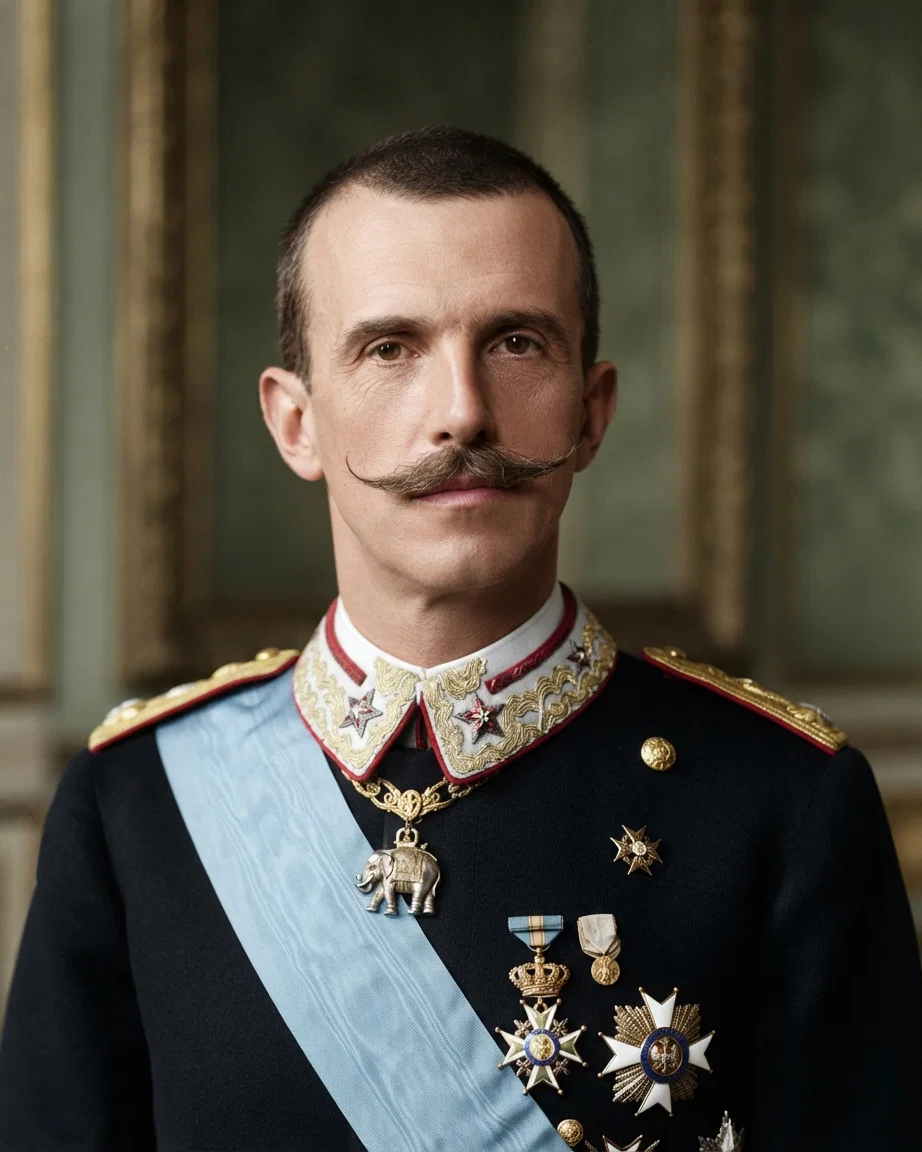
King Victor Emmanuel III of Italy, in whose dominion revolution is breeding

Our Constitution and Government

THE following editorial from the New York "World" sets forth in brief and admirable way the worth and importance of the American system in the safeguarding of the rights of the people,—a system which some are endeavoring to change:

"No Bonapartism Here

"Those who fret because every issue in this country is not settled by majority vote are at war with the American system. If the system is obnoxious to the people, it can be changed by due process. It should not be changed by clamor and usurpation.
"We have three great departments of government, coordinate and independent — the executive, the legislative, and the judicial. In its own sphere each is supreme, but each is a check upon the others.
"The thing that troubles some of our agitators now is the fact that the Supreme Court may, as they say, nullify an act of Congress. This is an exaggeration. The Supreme Court merely declares congressional usurpation. It is the Constitution that nullifies the act. Acts of Congress in violation of the Constitution are blank paper.
"The Constitution is the national balance-wheel. It sustains the Government at Washington, but just as powerfully it protects the states and the personal rights of the individual.
"Those who are accustomed to monarchy or despotism do not readily understand why the will of a national Congress may be set aside by a court. Let them consider also some other curiosities of American democracy:
"Presidents may be elected altho they do not receive a majority of the popular vote.
"States of small population, like Delaware and Nevada, have the same power in the Senate as New York or Pennsylvania.
"Exercising the treaty-making power, the President and Senate may, without consulting the people, enter into engagements which become the supreme law of the land.
"In time of war the powers of the President as commander-in-chief are almost dictatorial.
"The Senate can not originate a bill for the taxation of the people.
"The House of Representatives has nothing to say about appointments to office.
"The Supreme Court has no power in itself to enforce its judgments.
"The House may impeach, and, on conviction by the Senate, President, Cabinet officer, or judge may be removed from office as summarily as a disturber of the peace is ejected from a hotel or a theater.
"Strange as some of these things may appear to newcomers — and we have many of them — there is a reason in every case, and that reason is rootedin order, security, and freedom. We have liberty. We do not have license. We are free to change our system — to establish kings, emperors, or dictators if we will; but unless in weakness and treachery we so elect, nobody else can impose those monsters upon us.
"In view of the millions new to our citizenship, how much better it would be if our agitators gave their attention to Americanism instead of to Bonapartism! Hope and growth lie in one direction; failure, despotism, and decay in the other."