Nothing but Wine

2%

Pacific Press Publishing Company · Mountain View, California · Feb 12, 1908

FromSigns of the Times, Vol. 34, No. 7.

Read the full edition

“Nothing but Wine”

NEW YEAR’S EVE in New York City witnessed one of the “wildest orgies” that ever took place anywhere. The New York “World” in reporting it has these prefatory statements.
“The custom of celebrating New Year’s Eve in public began not more than ten years ago. A group of people accustomed to dine regularly at Shanley’s got together on New Year’s Eve and ‘saw the new year in.’ Next year there were more. Then they spread to other restaurants. Then the city took it up.
“Last week’s celebration [Jan. 1, 1908] saw seventy-five thousand diners at the various big hotels and restaurants along Broadway. Dinners averaged in price five dollars each. At least two quarts of champagne were consumed, on an average, by each diner. Some took less, some more. At four dollars a quart, this wine cost $600,000. The dinners cost $375,000 more. Carriages cost another hundred thousand. Considerably more than $1,000,000, therefore, was spent on this gigantic orgy.
“What will it be next year?”
These paragraphs from the “World” give an idea of the feast in dollars, but it would be hard to describe it so as to give a correct idea of what the revelers did. While the “viands” that were eaten were costly, the wine was more costly still. The feasting did not begin in earnest till about midnight, and the watchword soon came to be “nothing but wine.” Other drinks were sometimes called for, but the waiters promptly replied, “We serve nothing but wine to-night.”
Well-dressed men and women filled the fashionable hotels and restaurants till morning, and gorged, and drank “nothing but wine.” It is easy to see that in carrying out such a program the participants would soon be led into the most hilarious carousals. The women were as immoderate (if not more so) as the men. And perhaps their condition and conduct seemed fully as bad as it really was for the reason that we do not expect such things from those we have been wont to look upon as our “wives, our mothers, and our sisters.” A few paragraphs selected from the trenchant pen of the “World” reporter will give a general idea of what was done:
“Midnight. Just a few women were drunk here and there. But it was genteel intoxication. Nothing but wine. True, its degrading effects were the same as if the cause were the slops dispensed in a mixed ale dive, but here were women in costly gowns, bejeweled with gems of price, who drank nothing but wine.
“One o’clock. More drunken women on nothing but wine. Two o’clock, and more. Sentimentally maudlin women singing songs, bitter women in whom nothing but wine aroused old hates, jealousies and animosities.
“Some were led off, some staggered off to the retiring rooms deathly sick on nothing but wine.
“As the new year grew older all shame or concealment died down in the dressing-rooms. The doors stood open, maids and attendants, who also had had nothing but wine, worked perfunctorily with ice-bags and restoratives over the retching and comatose.
“This was not alone in one place, but in all the women’s retiring rooms in every great hotel and restaurant on Broadway. . . .
“Women got as far as the door and fell over in stupor from nothing but wine. There they lay. ‘Down and out and all in’ said the maids, helping only those who could still speak or stagger.
“Jewels fell from burnished locks or from gowns torn open for more air or easement from qualms. Paris dresses, bedraggled and polluted, were torn and disheveled as their owners were dragged out of the gangway.
“Drunken men clamored at the doors, ‘Wher’sh my wife? She lef’ me an hour ago!’
“ ‘Aw, come in and pick her out!’ snapped the maids, if the man gave no indication of coming, like the Greeks, with gifts. Did he wave a bill, assistance was forthcoming to carry his lady to a cab.
“But as the hours crept on to the dawn and the number and helplessness of the drunken women increased, and when all semblance of dressing-room decorum and segregation was thrown to the winds, drunken escorts came to the doors to ‘pick ’em out.’ Sometimes they picked out the right ones, but in several cases they picked out one better of looks or of less bulk to carry. Who cared on the morning following New Year’s Eve, the night of nothing but wine?
“Think this no fanciful picture. Hold up your hands in horror no more when told of wretched women lifted from the gutters and carried on hand-barrows to the station-houses of a Saturday night in London, Liverpool, Belfast, and other towns of Britain where such things be.
“These were not the gin-swilling wives of mechanics. They were New York women ‘of the gay set,’ many that say of themselves, ‘We are decent.’ They did not stagger out from the public bar to fall in the kennel, stupefied with the cheapest and vilest of liquors. They were ‘ladies,’ they were carried out to cabs. They had drunk nothing but wine.
“They numbered not two or ten or even twenty. Their name was legion. And every retiring room was the shameful scene of nothing but wine.
“This counts not the thousand and one that were not wholly overcome, but who, blear of eye, blurred of speech, disheveled of hair, could yet stagger out on the arms of escorts, and ride home with the window of cab or motor car thrown open to give them the benefit of the blessed morning air.
“They laughed about this when, still trembling, they braced themselves for headache and nausea, and with sickly pride boasted that they had not gone down and out in the dressing rooms.
“Nothing but wine! Everybody is ‘having a good time.’ Detached gentlemen are making friends with women whose escorts are somnolent with excess champagne. Nothing but wine has aroused the dormant affectionate dispositions of the hitherto morose. Portly men are visiting around and pressing chaste salutes upon the lips of the best-looking women and wishing them ‘A Happy New Year!’ Some of the gayer feminine spirits are not to be outdone, and they too visit around and bestow kisses as New Year souvenirs.”
A lady reporter was also sent out by the “World” to “write up” the revels of that night, and while she was separated from the gentleman reporter whose paragraphs appear above, her report is in full agreement with his, and she presents some scenes as even worse than what we have quoted.
Much more might be quoted from the report of this bacchanal carousal. But the foregoing is sufficient to give a general idea of the view that the reporters took of the occurrence. It is usually considered necessary to make liberal allowance for the coloring that newspapers give to things of this kind, but after all this allowance is made there is still enough fact left to make a serious picture for the people of this nation. It is a well-known fact that this country in particular and the world in general is witnessing the spectacle of the concentrating of wealth in the hands of the minority of the people. In a great many cases these large fortunes take care of themselves, and the owners of them are left to what are called the “luxuries of idleness,” but what are in reality the dissipations of ease.
The thing that naturally follows such dissipations is licentiousness, drunkenness, and gluttony. The moral backbone is broken and crumbles to decay. This process of dissolution may go on under the glitter of a delicately painted gentility. It may be labeled “good society,” and the “upper class,” but still the degeneration is there, even tho it may be concealed so delicately and so artistically that it really looks like a thing to be desired.
History is of no use if it does not teach us that when nations give themselves to the vices, feastings, and drinkings that so generally attend luxurious and excessive wealth, they soon degenerate into absolute ruin. The moral fiber is broken up and both society and the state must go to pieces. The poorer classes see the luxurious and extravagant doings of the wealthy, and imagine that they are the only real pleasures that earth affords. They become jealous because they can not have the same things, and revolutions and riots follow that break up all the foundations of the social structure.
While the luxurious debaucheries of wealth are breaking to pieces the moral structure of society, it must not be considered for a moment that all of the vices of the time are confined to the wealthy class. The wealthy people have the preponderance of influence. This must be admitted even by those who would decry them, and thus seek to bring contempt upon them. The very, very wealthy are followed by those who are a little less wealthy, and then these in turn are followed by those who are still a little less wealthy, and so the disintegrating and destructive work goes on thru all the grades of the social organism.
All the outward semblance of “correct form” may be kept up. All the veneer elegance of “polished society” and “advanced civilization” may dazzle the eyes as the hilarious functions succeed each other in the passing pageantry of the time. A superficial view might lead one to think that the “high ideals” that the people talk about, and the elegant and refined sentiments that they express are indicative of the highest civilization and the deepest and purest morality. But a closer view will disclose the indisputable fact that these high pretensions are only paraded for effect. This talk that would indicate a deep moral character and a true refinement is merely a part of the program in following the style in what is said as well as in what is worn. It is merely a part of the etiquette of the day. But the true moral worth is not there.
Ancient Babylon went to her downfall and her doom amid the merry music of feasting and drinking and dancing. Her social functions were of the most elaborate and elegant character. She shined out with dazzling splendor in all that went to make up the gaiety of her luxurious rounds of pleasures, her periods of feastings, and her days spent in the revelries of “nothing but wine.”
Persian wealth and Persian luxury became famous the world over. But it proved her undoing and her overthrow. When Greece thru her great Alexander had conquered the world and stood on the very broadest foundations of her strength and power, it was then that she became broken thru her world-conquering king dying in a fit of drunkenness during a prolonged period of bibulous and hilarious banqueting[s]. Rome stood as the iron monarchy of the world for centuries. But her iron strength was dissolved and swept away by the insidious and seductive charms of the halls of feasting and the tables of wine.
Read the story of Sodom and the philosophy of her overthrow in the words of the Book: “Behold this was the iniquity of thy sister Sodom: pride, fulness of bread, and prosperous ease was in her and her daughters; neither did she strengthen the hand of the poor and needy. And they were haughty, and committed abomination before Me: therefore I took them away as I saw good.” Eze. 16:49, 50. These words of the prophet are a very terse and strong presentation of the real reason that is at the bottom of the overthrow of great cities as well as great nations. The selfishness that is produced by “prosperous ease” breeds a species of weakened character that can not stand up; it must go to pieces and go down. All the history of all the past utters a continued and completely accordant voice of warning upon this subject.
The downfall of Tyre, of Venice, and of the rest might be adduced. But why prolong the illustration? The evidence is overwhelming and it clearly points the way in which the nation is going. If this occurrence in New York was all there was to be seen, the condition would not be so alarming. But New York is only the center and the example of what is apparent in the great cities of the country at large. And what is true of the cities of this country is quite generally true of the cities of all the world.
There are no longer any outlying nations that are preserving the strength of temperance and of righteousness. And so the only thing that can correct the evil and the ruin that is right before us is the second coming of Christ. The prophecies all show that the time for His second advent is right at hand, and surely it is apparent that the conditions in the world loudly demand it.
T.
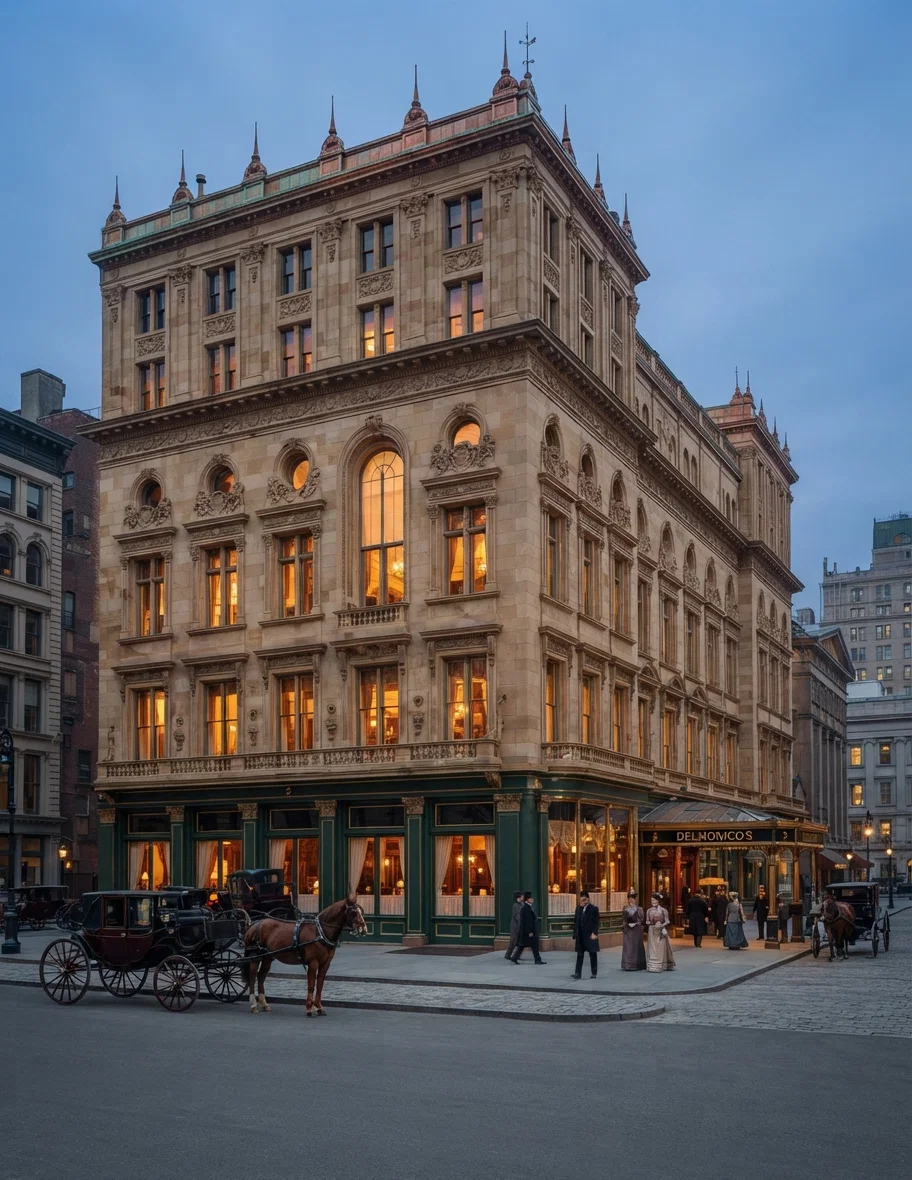
Delmonico's, One of the Oldest and Most Noted Restaurants of New York City.
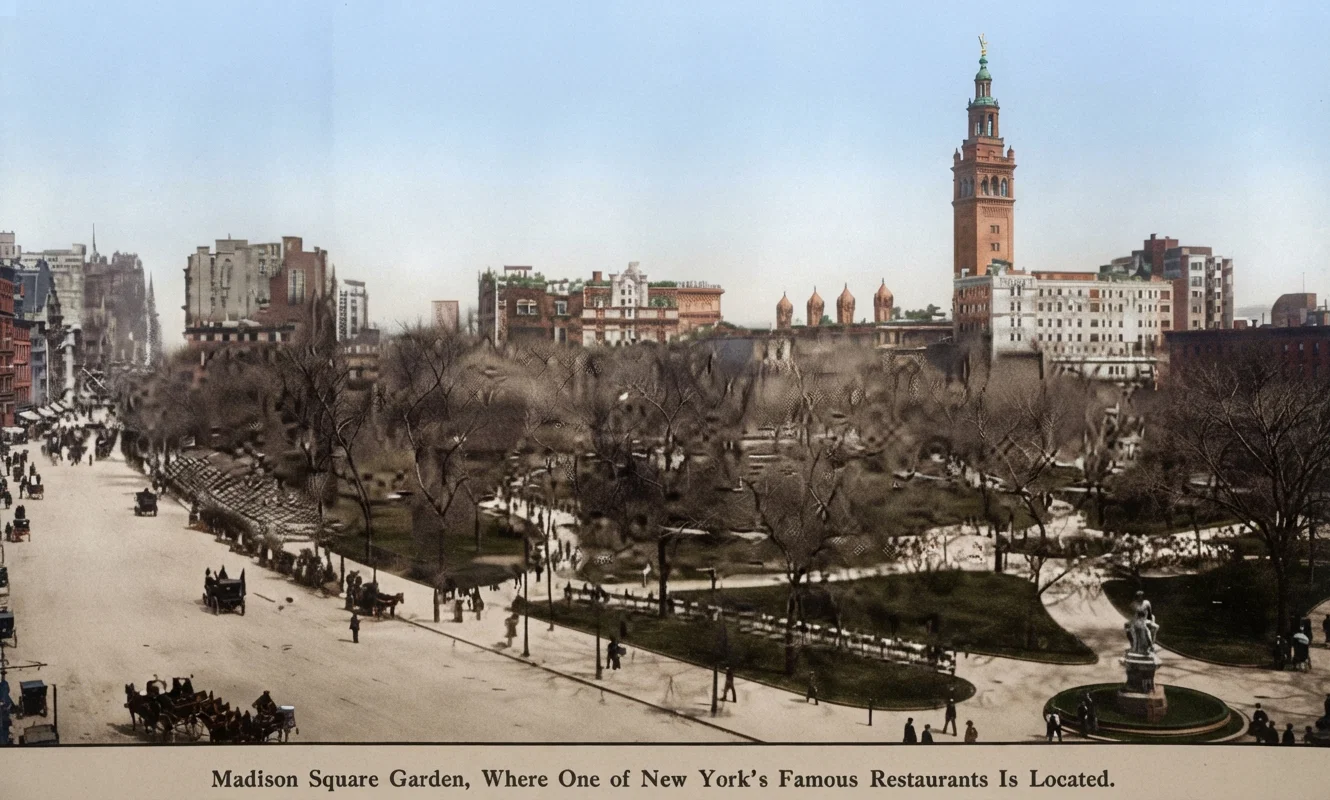
Madison Square Garden, Where One of New York's Famous Restaurants Is Located.
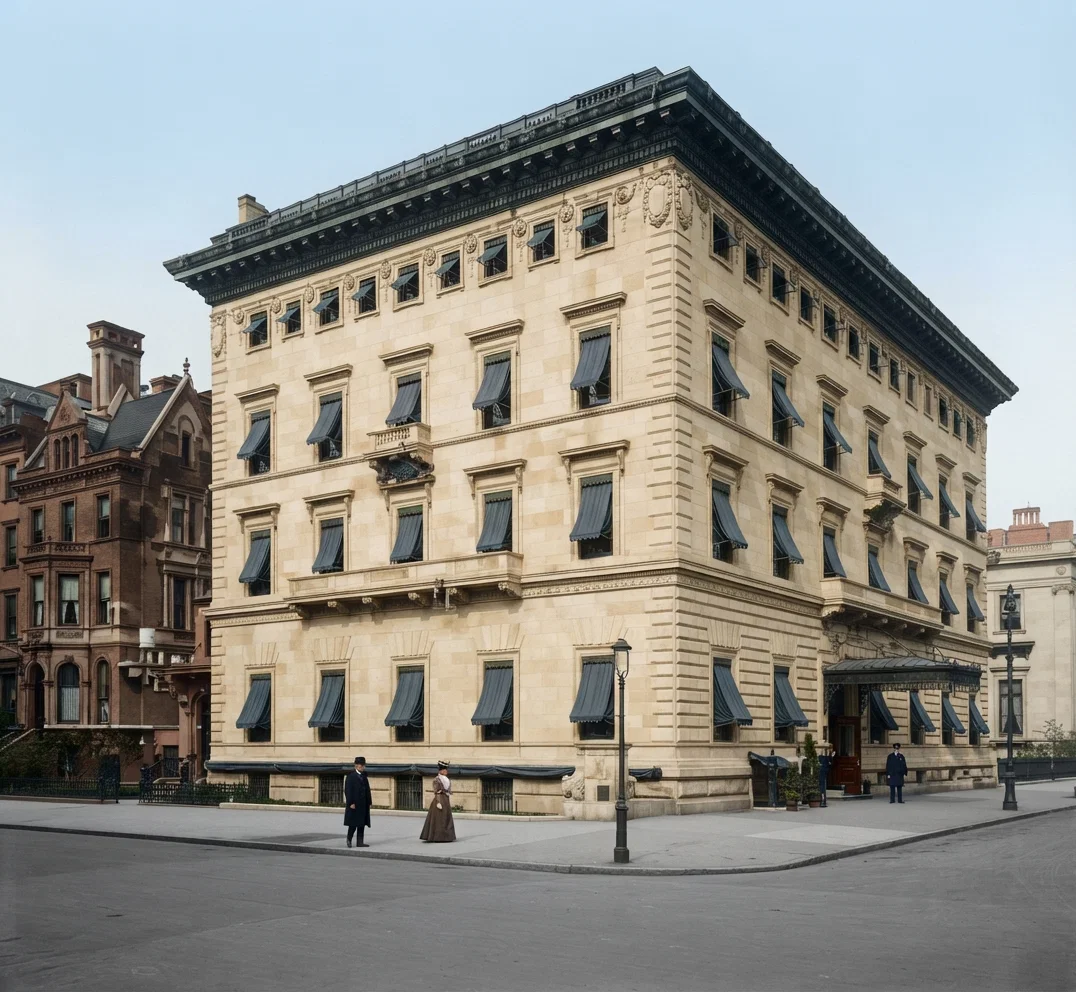
The Metropolitan Club, New York City.
The Plaza, New York City, in the Aristocratic Restaurant District.
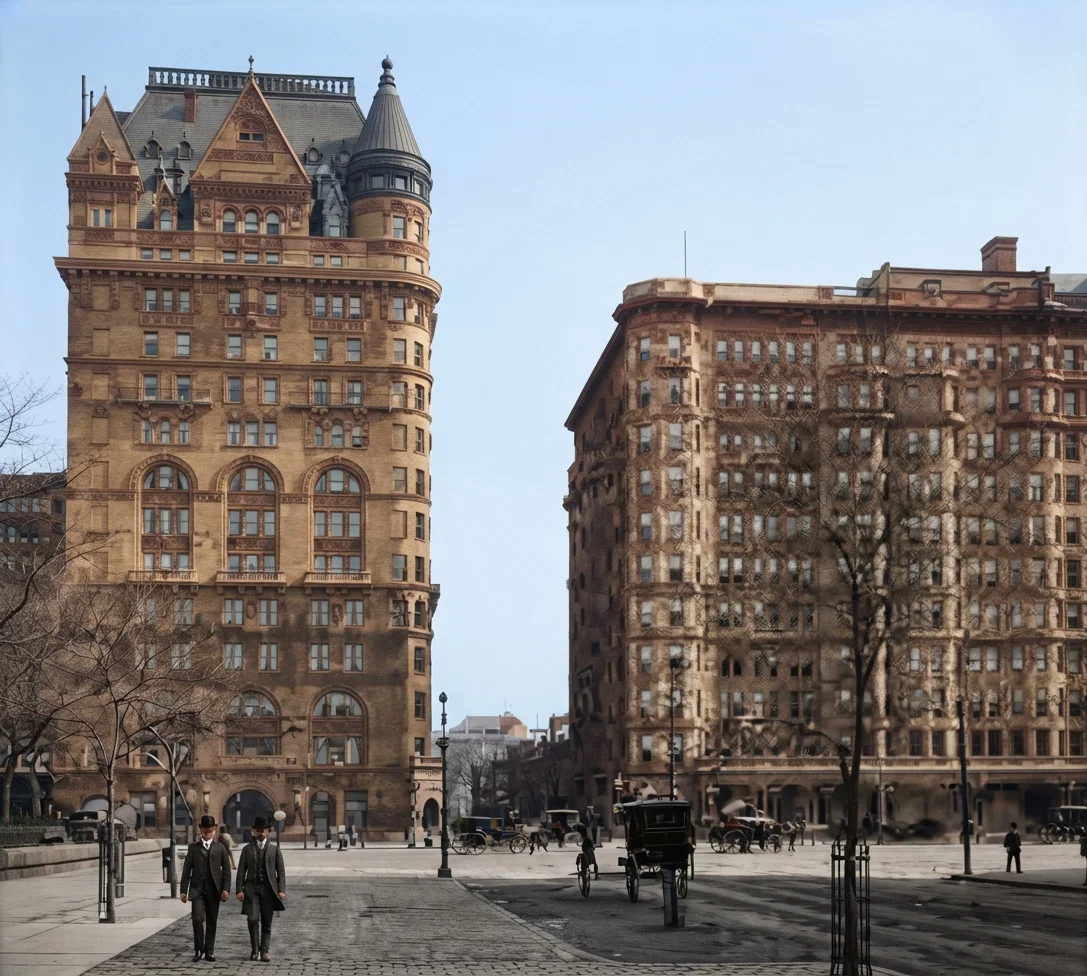
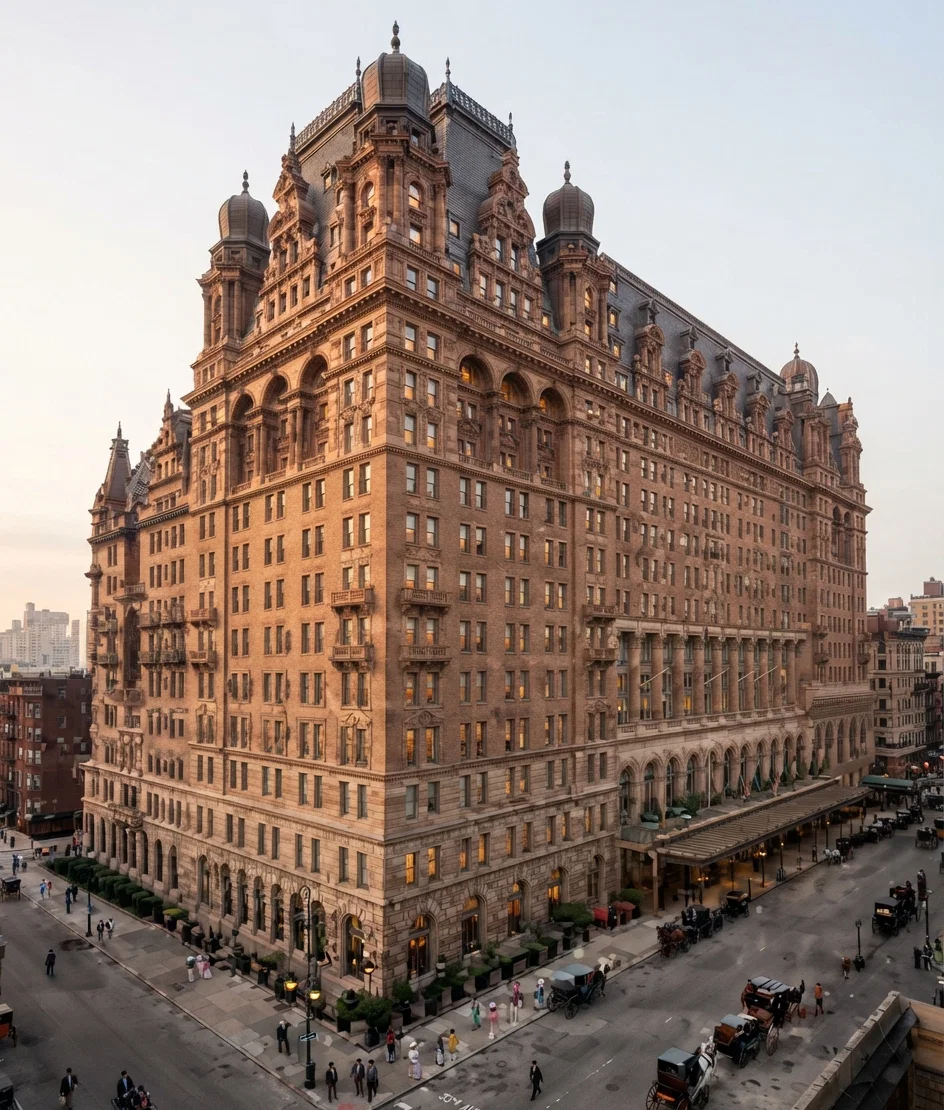
The Waldorf-Astoria, New York's Most Fashionable and World-Famous Hotel.