Rome the Center

8%

Pacific Press Publishing Association · Mountain View, California · Jan 10, 1911

FromSigns of the Times, Vol. 38, No. 2.

Read the full edition

Rome the Center

The British Ambassador in Rome is quoted with warm approval in an editorial in the London "Times," which thus speaks for a British school —
at Rome as potentially "a great national and imperial center of culture, where the students of the five nations"—the United Kingdom, that is, and Canada, Australia, New Zealand, and South Africa—"should meet and exchange ideas, whence they should carry back to their respective homes and universities a touch of inspiration and enthusiasm acquired at the authentic spring and source from which all modern civilizations are derived."

The "Times" further says:

As all roads lead to Rome, so all the various streams of investigation into the culture, thought, and works of the past ultimately meet in Rome, and thence radiate again with renewed and transmuted fertility of inspiration to all the civilizations of the modern world. "I am," said Sir Rennell Rodd [the British ambassador], "far from depreciating the magnificent work which has of recent years been accomplished in other fields, the unveiling of the lost secrets of early cults and dynasties, and the revelation of the sources of inspiration which contributed to make the grandeur that was Rome. I would not advocate in the student any exclusive loyalty; but I would insist on the fact that no student of archeology, no student of architecture or sculpture, can afford to neglect the lessons that Rome has to teach, and that the last stage in his course of study should be the co-ordination of his experiences in the inspiring atmosphere of the Capital of the Nations."
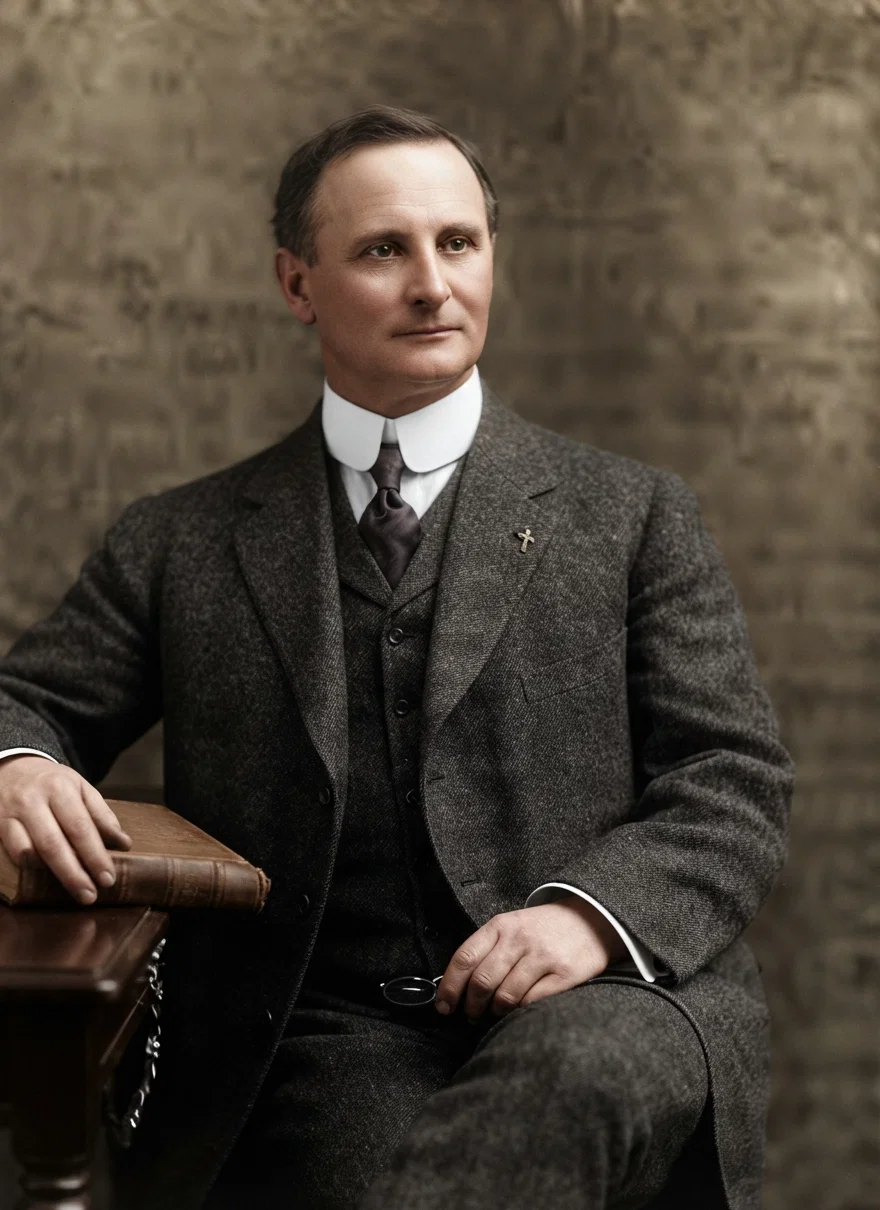
John Duff Gill, nominee of the Prohibition party for governor of Pennsylvania in 1890, for judge of the courts and district attorney at various times, delegate to the World's Christian Citizenship Conference, Philadelphia, November, 1910

The "Times" says again:

That is why we should welcome the lofty and inspiring conception that he sets before us of a British school at Rome which should be worthy of a great empire, all parts of which aspire to unity of civilization in the future, and must also recognize their community of origin in those great civilizations of the past which found their center and consummation in Rome.
(The bold-face is ours.) How the old traditions hold! The "Times" speaks truly; the civilizations of Assyria, Babylonia, and Egypt were consummated in Rome. But not so with the civilization which sprang from the Bible, and which made Great Britain all that is of worth. There are art and architecture in Rome, it is true. But neither the one nor the other has lifted the world a barleycorn toward God. The lifting, elevating, invigorating power of England and her colonies, her over-seas empires, in all that makes for God and good and human betterment, sprang not from Rome, but from a Book, the Bible, an influence which Rome under two civilizations endeavored to suppress.
Rev. A. Pohlman, M.D., a prominent delegate to the Christian Citizenship Conference, chairman of Pulpit Supply Committee, pastor of Temple Lutheran Church, West Philadelphia
England is receiving altogether too much of Roman education religiously now. She would do infinitely better to seek inspiration from another source.
— ★★ —