R. EDWARD H. HAMILTON, one of the veteran Democratic newspaper men of the Coast, in a breezy report from Sacramento in the "Examiner" of January 6, says:
There is to be a Sunday rest law. Some of us of the Democratic faith remember that way back in 1882 we had a famous fight on this Sunday law, the Republicans espousing the law and the Democrats fighting it. When the smoke had lifted it was found that the Democrats had cleaned up every State and district office but one; and Lew Morehouse of Alameda County, having managed to get elected as a Republican to the Board of Equalization, was known as "Lonely" Morehouse by reason of this distinction.
But many more Sabbatarians have settled in the State since then, and so there are at least some legislators who think it is safe to monkey once more with a puritanical Sunday.
We hope Mr. Hamilton's prediction will prove false. It would probably please him and many others if it did. We can not conceive that the great majority of the people of California deep down in their hearts believe in a Sunday law. We can not conceive that the majority of the legislators in Sacramento believe in it. The true liberty-loving statesmen among them can not believe it, because such legislation is in its very nature unequitous and iniquitous. If a Sunday law is secured in California it will be because (1) There are a very active and determined few who are working every scheme religious and political and religio-political to obtain it; (2) There is a class of politicians who fear the disfavor of the churches — largely a bugaboo — and who will vote for such a law because they love place more than principle; (3) There is another class, ignorant of the principles of true liberty, who will vote for it simply because some prominent preacher-politicians ask them so to do. These classes may pass a Sunday bill.
Opposed to such legislation are some legislators who, like Mr. Hamilton the newspaper man, count it a sort of joke, a harmless affair, which is wrong in principle, but which will prove a dead letter if passed, but who will vote against it if pressure is not too strong. But they will not work against it. There are a few stalwarts who will stand for liberty and equality, on true constitutional and American ground.
There are more Sabbatarians in the State now, Mr. Hamilton tells us, by which he means Sunday-law people. That may be, but that is no reason why a Sunday law should be placed upon the statute-books of the State. Religious legislation is not a matter of numbers or majorities; it is not a matter of which day, the seventh or the first; it is wholly a matter that lies outside of the province of the American legislator, municipal, State, or national.
The Sabbath is a matter that lies between the soul and God. How a man should employ it, if he do nothing that is counted criminal on all days, lies between him and God. He may rest in working at manual labor, or weary by church-going; he must give an account at the bar of God.
If Sunday is of God, He will care for His own and those who observe the day for His sake. If the seventh-day Sabbath is His, He is abundantly able to preserve it without human aid.
A passenger flying-machine, built in Paris to carry eight persons. It has not yet been used, consequently has no record of deaths; tho doubtless when ready it will easily find eight foolhardy ones who will play with death in it. The best experts tell us that the problem is not yet solved. All yet made are so light that the least accident causes wreck, and motors often fail. Some of those who have lost their life flying considered them safe.
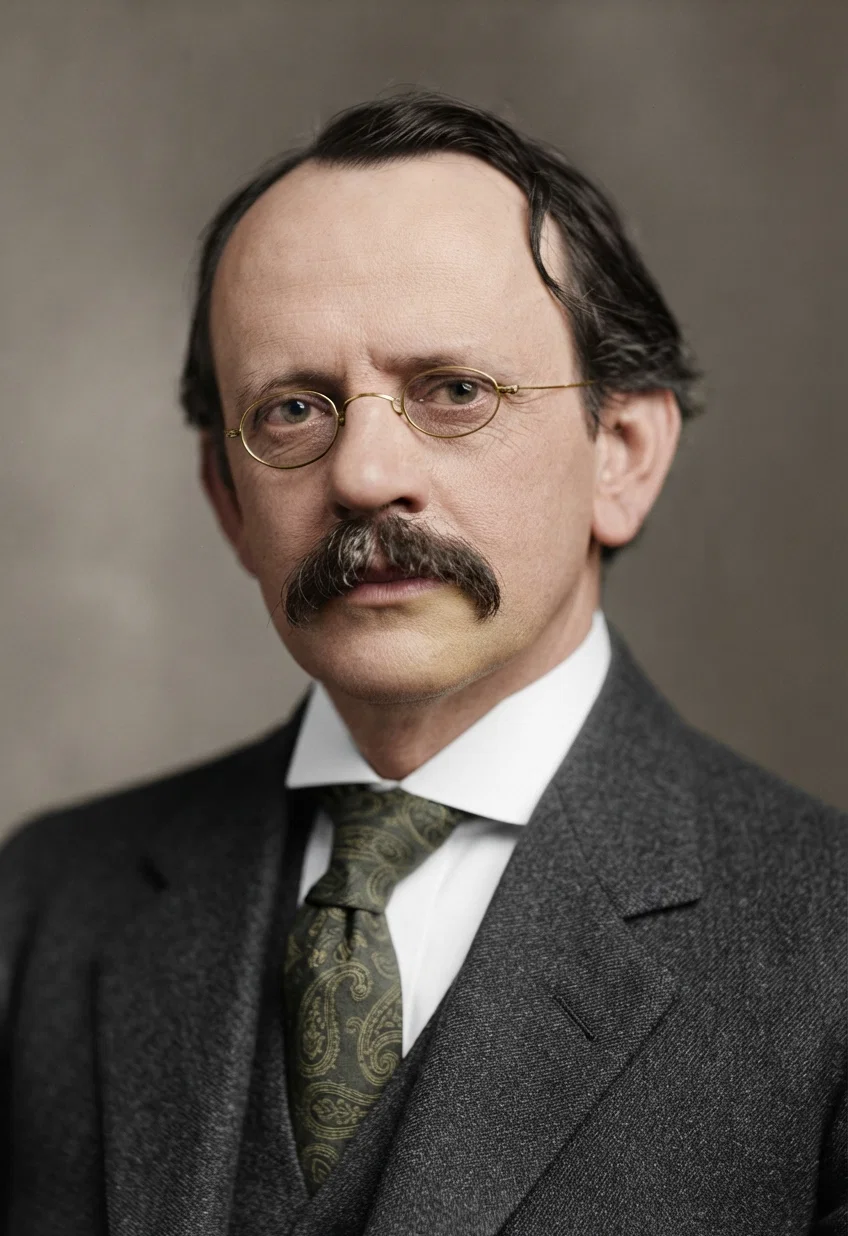
Professor Joseph John Thompson, whose research into the conductivity of electricity through gases made wireless telephony possible. "Current Literature" calls him "one of the most illustrious physicists since Newton." It is believed that wireless telephony, which can be conducted without a specially trained operator, will soon exceed in practical importance wireless telegraphy. Men admit the results of these sciences, yet for centuries and millenniums both have been in operation between God and His children.
If the Sunday people believe in religious liberty truly, they believe in it for the other fellow, their opponent. That is the true test. They will demand, if they are fair and equitable, the same liberty, the same equal opportunity, for the seventh-day man or the no-day man, which they ask for themselves. In other words their legislation will not be in behalf of institutions, but of men.