The Comet A 1910

7%

Pacific Press Publishing Association · Mountain View, California · Mar 22, 1910

FromSigns of the Times, Vol. 37, No. 12.

Read the full edition

The Comet A 1910

"A 1910" is the name given to the recent wonderful comet, which appeared unexpectedly, to indicate that it was the first important comet seen in the year. Prof. Garrett P. Serviss gives us the following characteristics of this wonderful visitor as science looks upon it.
First, it is a brand new comet.
Secondly, it is composed of sodium, or practically common table salt, and radium, the rarest known element.
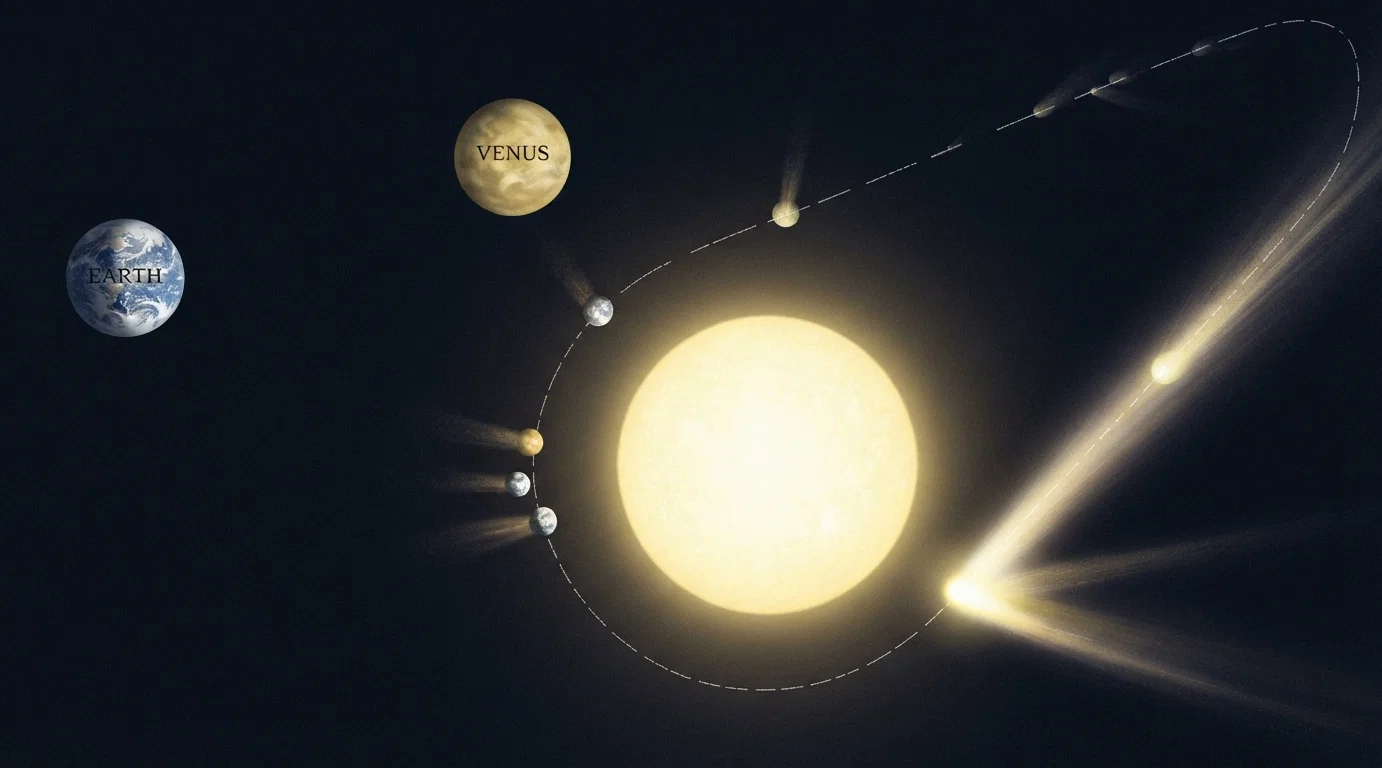
Thirdly, its orbit is like a hairpin, which is why it could creep up behind the sun unperceived.
Fourthly, it ran only 3,000,000 miles from the sun—closer than any other comet known.
Fifthly, it was heated, by this proximity, to a temperature equal to about 600 times that of the hottest summer day on earth, which is why it could be seen in the daytime.
The course of A 1910, showing how it came up behind the sun, swerved toward the earth, turned a little toward Venus, but was held by the sun. It shows also how its tail diminished.
Sixthly, it showed at one point of its orbit an unusual desire to break away toward the earth; manifested the same desire as it approached Venus.
Seventhly, it had first one tail; then two tails; and at last one tail broke near the top and fell away at an angle of 70 degrees.
Eighthly, it is the fastest comet known, having a speed of forty miles a second. The earth's circumference is about 25,000 miles, and the earth turns once in 24 hours, or, roughly speaking, a thousand miles an hour; but A 1910 moved at the rate of 144,000 miles an hour.
Ninthly, it has been estimated that its size is 500,000 times that of the earth; yet if its substance were condensed to that of the earth, it might not weigh more than 100 tons.
Tenthly, if its radium-laden tail had swept earth, it might have produced extraordinary phenomena. It might have destroyed life by injection of deadly gases, or by intense radio activity. This, however, is all supposition. The last supposition that he gives is that it isn't likely ever to return.