This people who now offer to help in the restoration of the temple, and who claim to be God's people, assert that they have been obeying and worshiping the God of Israel for many years. Who are they? Whence did they come? Years before, Sargon the Assyrian had deported many of the population of Israel, and had sent a colony of non-Israelites to live in the cities of Samaria. We read in 2 Kings 17:24 that "the king of Assyria brought men from Babylon, and from Cuthah, and from Ava, and from Hamath, and from Sepharvaim, and placed them in the cities of Samaria instead of the children of Israel: and they possessed Samaria, and dwelt in the cities thereof." At this time these people, who afterward became what are known as the Samaritans, did not serve the Lord. It is evident that calamities befell them. We read that the Lord sent lions among them, which slew some of them. This superstitious people then sent word to the king of Assyria that they did not understand the God of that land, and that they were meeting with calamities because of the anger of the God of Israel. The report itself shows that they did not regard the God of Israel very different than they would a heathen god. The idea is that there is a God that reigns over this particular part of the country, and who is angry with them, and they wish to know how to appease His anger.
So the king of Assyria ordered one of the priests to be sent to Samaria to live there and teach them "the manner of the God of the land." Accordingly one of the priests went down and lived in Bethel and taught them how they should fear the Lord; but notwithstanding his instructions, every nation made gods of their own and put them in the houses of the high places which the Samaritans had made, every nation in their cities wherein they dwelt.
"Howbeit every nation made gods of their own, and put them in the houses of the high places which the Samaritans had made, every nation in their cities wherein they dwelt." 2 Kings 17:29.
"So they feared the Lord, and made unto themselves of the lowest of them priests of the high places, which sacrificed for them in the houses of the high places. They feared the Lord, and served their own gods, after the manner of the nations whom they carried away from thence." 2 Kings 17:32, 33.
Thus we find the Samaritans an idolatrous people, yet one that feared God—feared Him much as they would a heathen god, afraid of the evil He might do them if they did not perform some outward service to pacify His wrath. It was this people that wished to assist the Jews in the rebuilding of the temple and city, but the Jews were afraid of them.
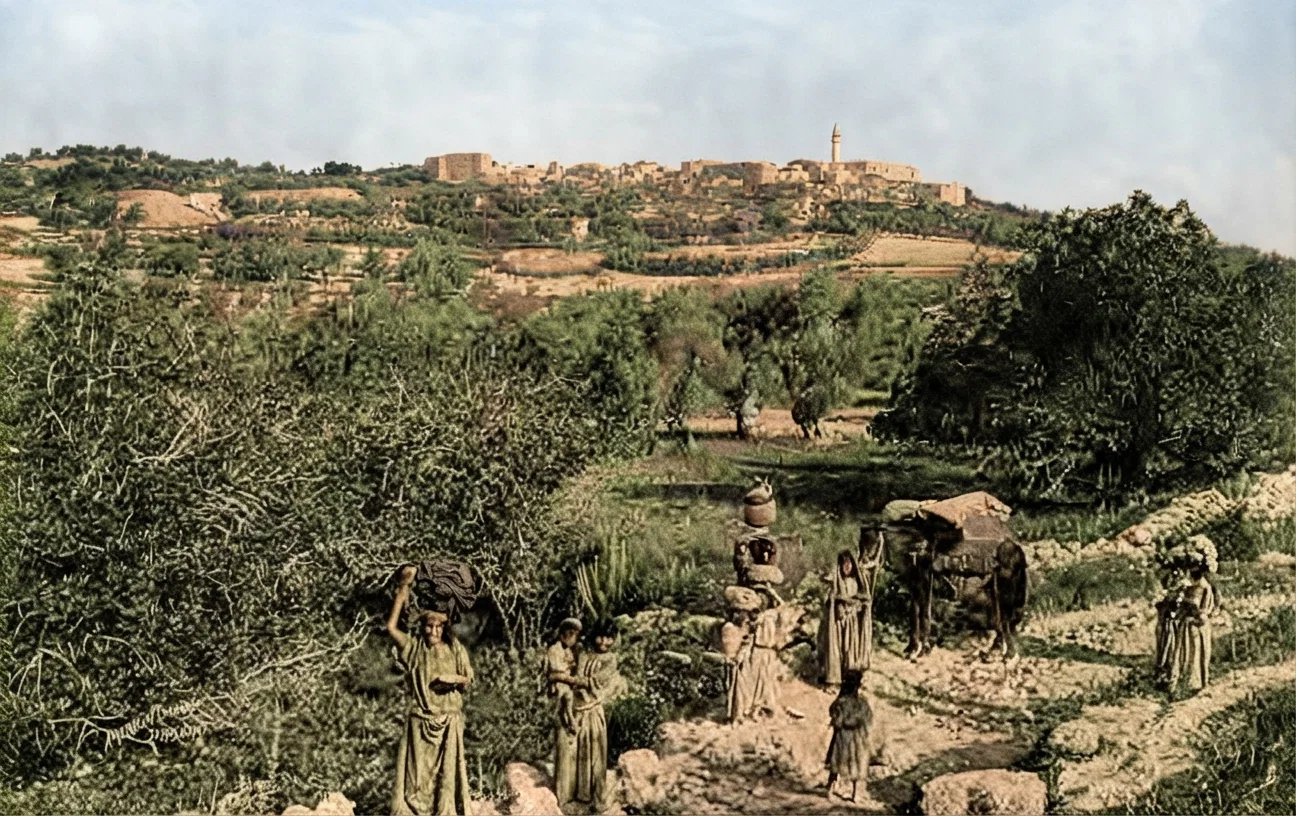
A general view of modern Samaria, now called Sebastiyeh. It is now "a squalid and fanatical Moslem village, in which are evidences of many ruins."
The Jews Refuse Partnership
True to the national spirit which from this time on is to dominate the practises of the Jews, they refused to have anything to do with this people who were anxious to help in the rebuilding and who called themselves the people of God. The answer of the Israelites to them was, "Ye have nothing to do with us to build a house unto our God; but we ourselves together will build unto the Lord God of Israel, as King Cyrus the king of Persia hath commanded us." In their great care not to offend God more by mixing up in any wise with idolatrous worship, the Jews take a stiff, firm stand. Perhaps it was the only safe thing for them to do. For ages they had been contaminated with idolatry, until God had counted the case incurable, and had scattered them to the nations. After seventy years of captivity they had learned the lesson that their only success lay in a reliance upon God. Turning away from idolatry and idolatrous practises, they were firm in their determination not to be contaminated again by the abominations of the heathen. Doubtless it was the only position which they could safely take in obliterating the last vestiges of idolatrous service from the Jewish nation. We know that when Christ came, there was no element of heathen idol worship among them anywhere.
Our Lord and the Samaritans
Altho this is true, it is very unfortunate that the great breach came between the Samaritans and the Jews. We know that this spirit between the two, this wall of tradition, was not in accordance with the mind of God. When Jesus came, we find Him working among the Samaritans, freely having intercourse with them to their uplifting and salvation. He condescended to teach the woman of Samaria at the well; and that event, so beautifully recorded in the Gospel of John, shall never be forgotten where Christ's work is loved and remembered. Thus He began the work of breaking down the partition wall between Jew and Gentile, and preached salvation to all alike. Tho He was a Jew, He mingled freely with the Samaritans, setting at naught the Pharisaic customs of His nation. The stay of Jesus in Samaria was not only a blessing to the people of that country, but a great lesson to the disciples of Christ, who were still under the influence of the Jewish bigotry. They felt that loyalty to their own nation demanded that they cherish enmity toward the Samaritans.
While the Babylonian captivity had cured the Israelites of the worship of graven images, yet to many of the people obedience was prompted by fear rather than love. Their service of God was only actuated by a fear of calamity if they refused to obey. So their motive was selfish, and they rendered outward service to God as a means of attaining to national greatness. Ceasing to become the light of the world which God intended they should be, they shut themselves away from the world in order to escape temptation to idolatry.
God had given instruction through Moses, it is true, and had placed restrictions upon the associations of the Jews with idolaters. But this teaching had been misinterpreted. While it was intended to prevent them from conforming to the practises of the heathen, they had used it in order to build up a wall of separation between Israel and the rest of the world. They came to look upon Jerusalem as their heaven, and they were actually jealous lest the Lord should show mercy to the Gentiles.6
In the time of Christ, in the temple at Jerusalem a low wall separated the outer court from all other portions of the sacred building. Upon this wall were inscriptions in different languages giving the information that none but Jews were allowed to pass the boundary. If a Gentile had presumed to enter the inner enclosure he would have desecrated the temple, and his life would have been the forfeit. How different was this from the work of Christ! He who was the originator of the temple and its service, drew the Gentiles to Him by the tie of human sympathy, while His divine grace brought to them the salvation which the Jews had sought to keep from them, and which, sad to say, the Jews themselves rejected.
Repulsed by these severe words of the Jews, bitter animosity sprung up between the two peoples. It was the beginning of trouble for the Israelites.