Our London Letter

2%

Pacific Press Publishing Association · Mountain View, California · May 24, 1910

FromSigns of the Times, Vol. 37, No. 20.

Read the full edition

Our London Letter

From Our Own Correspondent, the Editor of Present Truth
THE constitutional struggle now in progress between the Lords and the Commons remains the great center of interest. The Liberal Government has submitted to the House of Commons a set of three resolutions dealing with the legislative veto of the Lords, and these resolutions have been carried by a coalition consisting of the Liberals, the Labor party, and that portion of the Irish party, comprising some five sixths of the whole, led by Mr. John Redmond. The first of the three resolutions asserts "that it is expedient that the House of Lords be disabled by law from rejecting or amending a money bill," and leaves it with the speaker of the House of Commons to decide when a bill properly comes under this heading. The second resolution demands that the powers of the House of Lords as respects other bills than money bills be restricted by law, so that any bill carried through the House of Commons in three successive sessions, and three times in those sessions rejected by the House of Lords, shall become law without the consent of the House of Lords on the royal assent being declared. A third resolution provides for shortening the life period of a Parliament from seven years to five.
These resolutions have been vigorously contested by the Conservative party, but having been passed by the House of Commons, they are now to go to the House of Lords. And if that body should decide to reject them, Mr. Asquith, the prime minister, will advise the king that it is necessary to create sufficient new peers to swamp the obstinate Tory majority in the House of Lords. This will mean that some five hundred new Lords will have to be made, a desperate measure which all parties alike will wish to see avoided. If the House of Lords throws out the resolutions, and the king does not accept the advice of the premier, the Liberal Cabinet will resign, and a general election will again become necessary. This is an alternative which all parties alike dread. Neither the members of Parliament nor the people of the country want the expense and distraction of another general election. Both Liberals and Conservatives fear that they may find themselves after such an election in a worse condition rather than in a better. So there is a general feeling that the House of Lords may perhaps give way for the present, in the hope of reversing the action of the Liberal Government and regaining their veto at some future time.
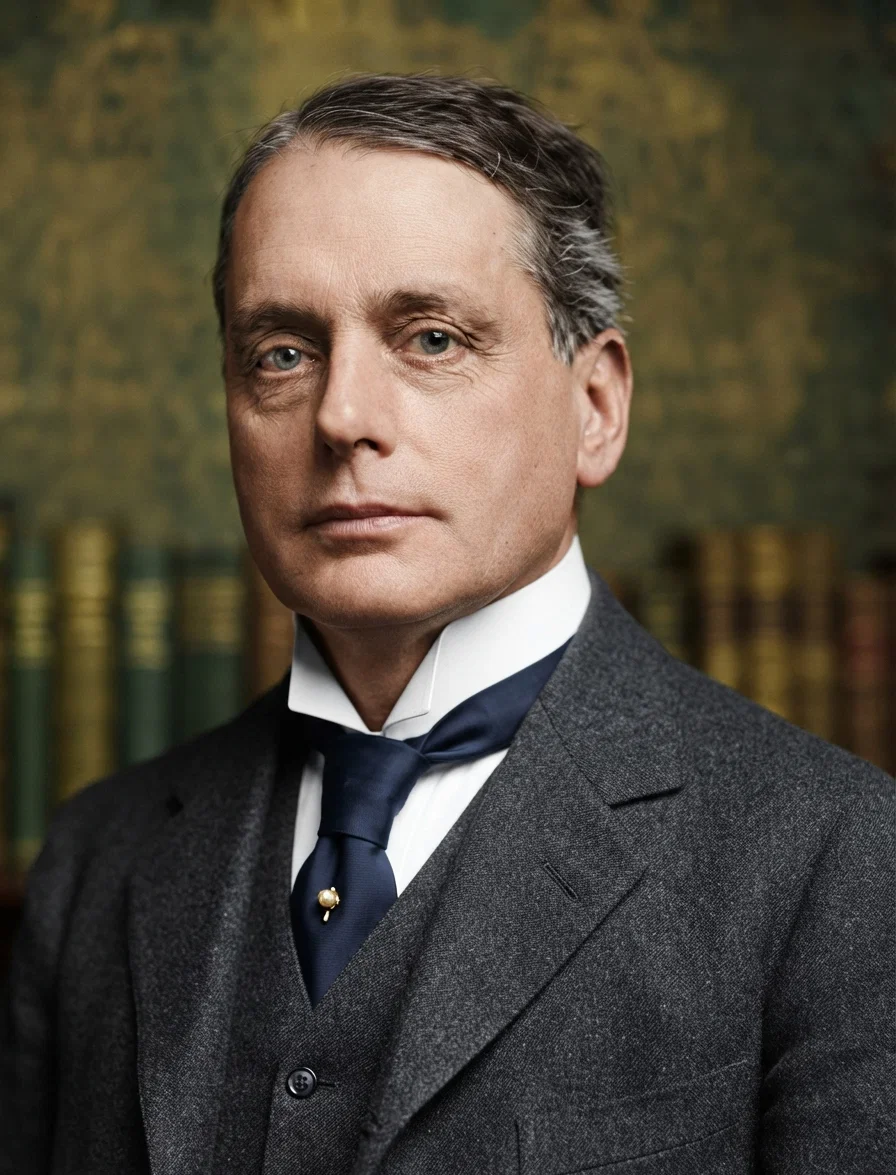
The Earl of Rosebery, the noted Scotch peer, who at 63 looks as young as a man of 40.
The session began rather badly for the Liberal Government, owing to the disappointment of the party over what appeared to be vacillating conduct on the part of Mr. Asquith. Mr. John Redmond, the leader of the principal division of the Irish party, at once made it very plain that his support, which was absolutely indispensable to the existence of the government, would only be given if a strong, decided policy were followed, and he has ever since seemed to control the situation. At any rate, all his demands have been met; and when the time comes for the Liberal party to reward his services by a bill conferring home rule on Ireland, Mr. Redmond may be relied upon to take full advantage of the obligation under which he has placed the government.
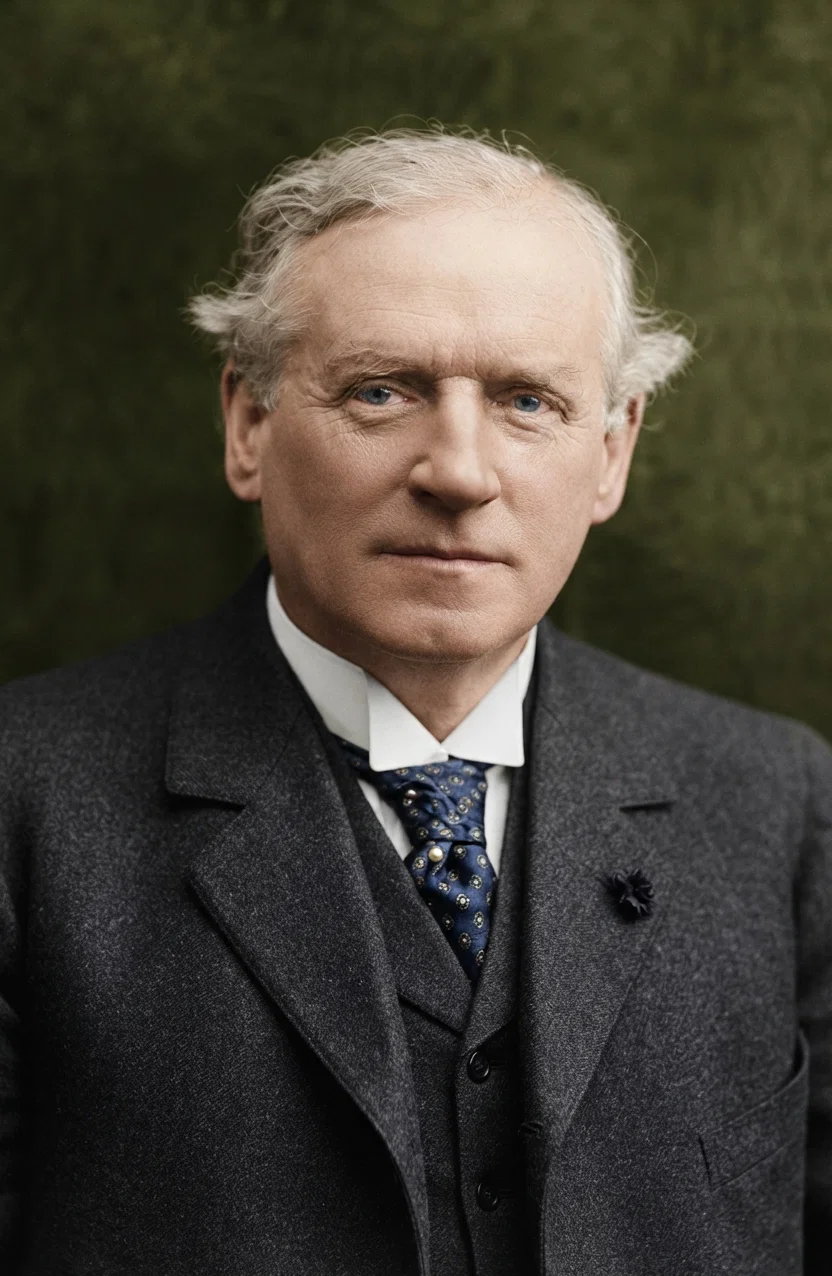
The Rt. Hon. H. H. Asquith, Prime Minister

Sympathy for Ireland

A startling revelation which has lately been made has done much to strengthen the sentiment in favor of granting Irish rule. Nearly a quarter of a century ago, when Mr. C. S. Parnell was leader of the Irish party in the House of Commons, he was fiercely attacked by a series of articles in the "Times" entitled, "Parnellism and Crime," which sought to establish a close and criminal connection between the Irish Parliamentary party and a number of outrages which had lately been committed. It now transpires, by his own statement, that the author of these articles was Sir Robert Anderson, who at the time he wrote them was in the service of the government, the Conservatives being then in power. To utilize information acquired in the discharge of official duty for the purpose of discrediting a Parliamentary party is contrary to the ethics of public life, and the discovered violation of this rule by Sir Robert Anderson has now created a wave of feeling in favor of the Irish movement. Sir Robert Anderson, who is well known in religious circles as an aggressive opponent of the Higher Criticism, insists that he was abundantly justified in writing the articles, and that by so doing he broke up a grave criminal conspiracy; which attitude on his part has so far only increased sympathy for the Irish cause.
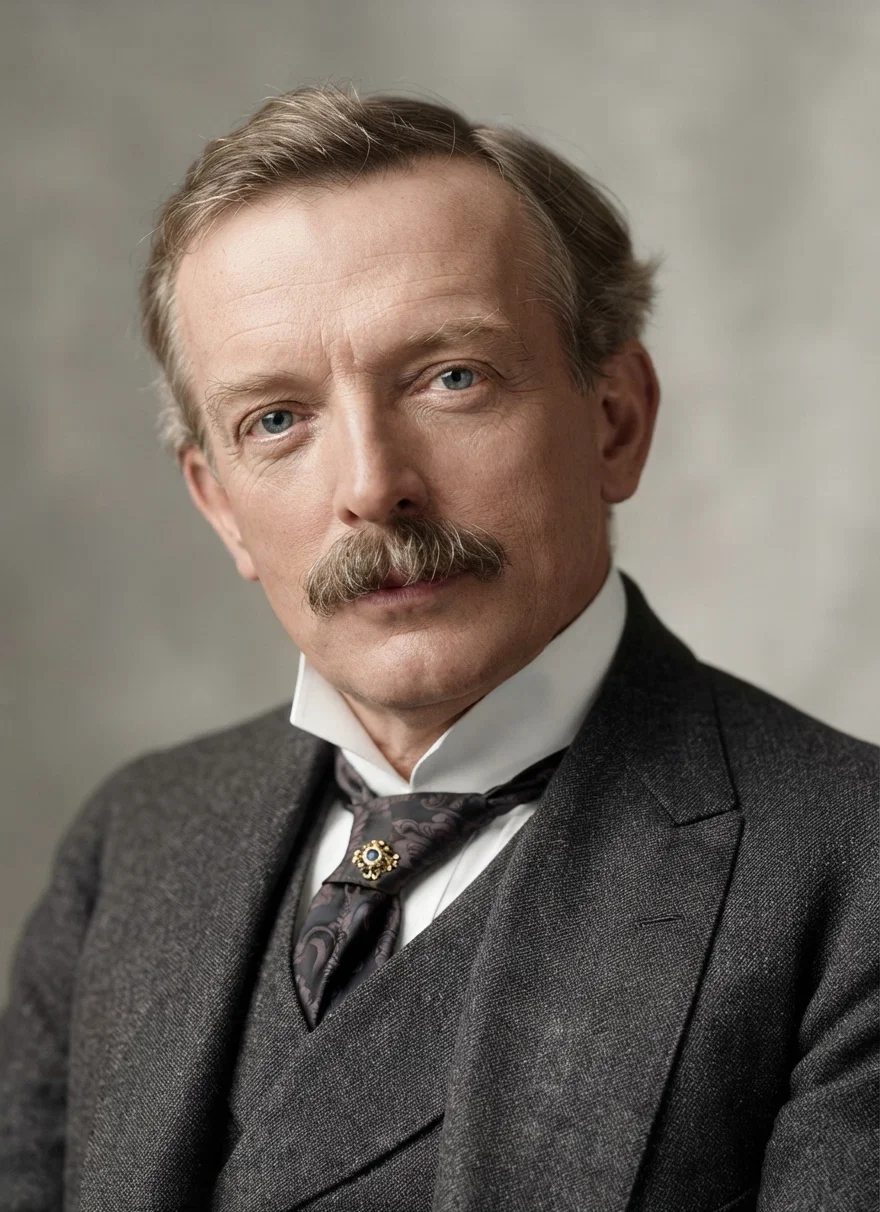
The Rt. Hon. Lloyd George, Chancellor of the Exchequer

Lord Rosebery's Effort

The case for the House of Lords has been materially injured by a long debate carried on therein upon a motion of Lord Rosebery calling for an internal reform of the Upper Chamber which should include the elimination of the hereditary principle. In the course of the debate it was made very clear that to be a peer does not by any means involve the possession of legislative capacity, and the more staunch supporters of the House of Lords consider that Lord Rosebery has done it poor service by his ill-timed motion. He, however, persists that the House is in great need of reform, and that the only hope for its continued usefulness, and even its existence, is that it shall welcome such changes as would harmonize it with the democratic spirit of the times. "The hereditary principle," he says, "is a source of weakness, and not the source of strength we require."
Now that the veto resolutions are through the House of Commons, that body is taking up the budget of last year, which the Lords threw out. It is now to be pressed quickly through the House of Commons and sent up once more to the Lords, who have now no reason for rejecting it, inasmuch as the verdict of the country at the general election was in its favor. Owing to the delay in the collection of revenue necessitated by the postponement of the budget, it is estimated that there will be a deficit of over £31,000,000 to be made good by the succeeding budget. Much of this money will be recovered in the course of the next year, but some of it will never be collected after so long a delay. The loss will be felt all the more that the naval estimates for the ensuing year represent an increase of
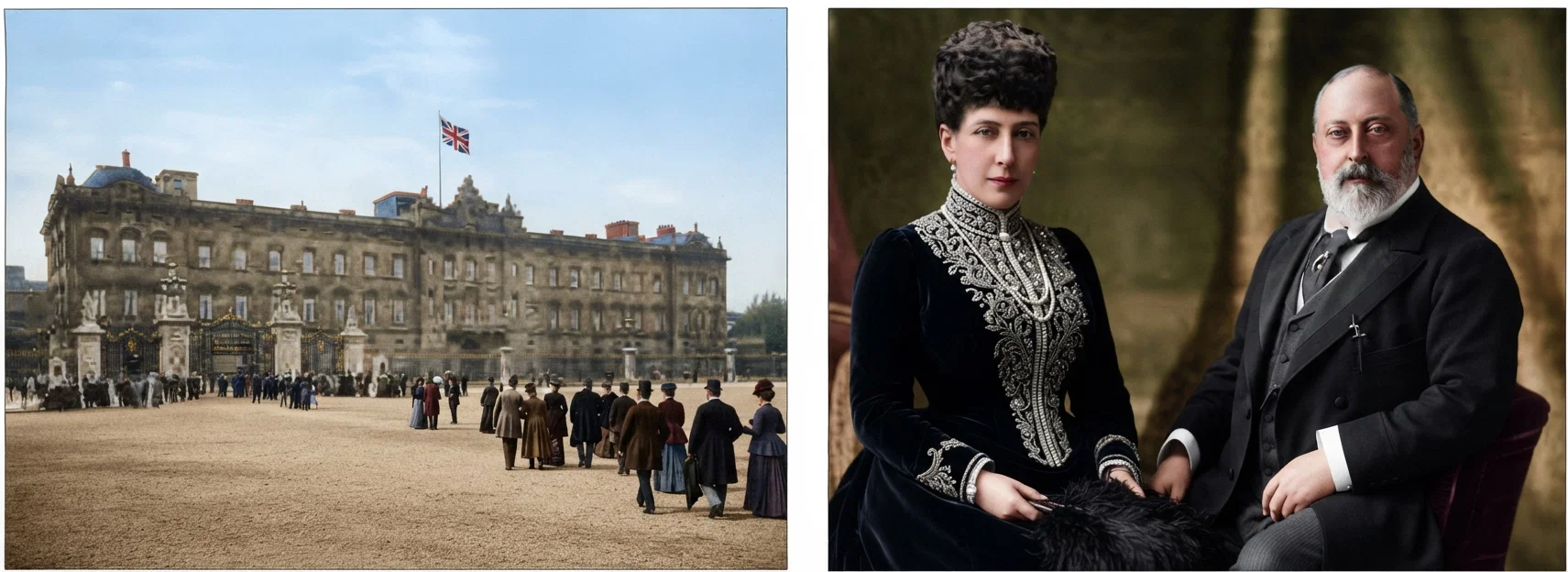
Buckingham Palace, where King Edward was born and died. It was built by the Duke of Buckingham in 1703; purchased by George III, sixty years later, remodeled and enlarged by George IV, and used by Queen Victoria and King Edward as a town residence. The late King Edward VII and the now Queen Dowager Alexandra
£5,461,000 over the past year. They now stand at the enormous figure of £40,603,000, the increase being principally due to the heavy vote for the building of Dreadnoughts. The army estimates for the same period are £27,760,000, so that the national defense is to cost us £68,363,000. Commenting on these figures, the "Times" says:
"The naval estimates have now reached an enormous amount, and the vote for new construction is higher than it has ever been before. But no one need suppose that we have reached the maximum, even with these tremendous figures. The very fact that our preponderance in pre-Dreadnought ships is so great will entail an immensely increased expenditure when these ships come in their turn to be replaced in approximately the same proportion by Dreadnoughts. But the burden must be borne, because its alternative is insecurity leading to destruction, and no one needs to be told that such an alternative would be infinitely more costly than any number of Dreadnoughts."
Another writer, in the "Westminster Gazette," puts the situation tersely in these words:
"It is an enormous burden on the taxpayer, and his anger at having to bear it is only equaled by his alarm if it is not imposed."
The first of a fleet of air-ships to be used for military purposes has just been laid down, so that we are definitely approaching the time when these aerial cruisers will figure among the agencies of slaughter.

Bankruptcy or War

A suggestion which has been vaguely hinted at many times has lately been put into plain words by Sir Edmund C. Cox in the "Nineteenth Century." He sees but one alternative to national bankruptcy as the result of our insane international rivalry in armaments:
"This is the alternative—the only possible one. It is to say to Germany: All that you have been doing constitutes a series of unfriendly acts. Your fair words go for nothing. Once for all you must put an end to your warlike preparations. If we are not satisfied that you do so, we shall forthwith sink every battle-ship and cruiser that you possess. The situation that you have created is intolerable. If you are determined to fight us, if you insist upon war, war you shall have; but the time shall be of our choosing, not of yours, and that time shall be now."
This proposal has been severely and justly criticized as far more insane than the expenditure for which it is offered as an alternative, but it is a significant fact that a journal like the "Nineteenth Century" should print such an article. It serves to indicate how serious is the situation in the eyes of public men. W. T. BARTLETT.
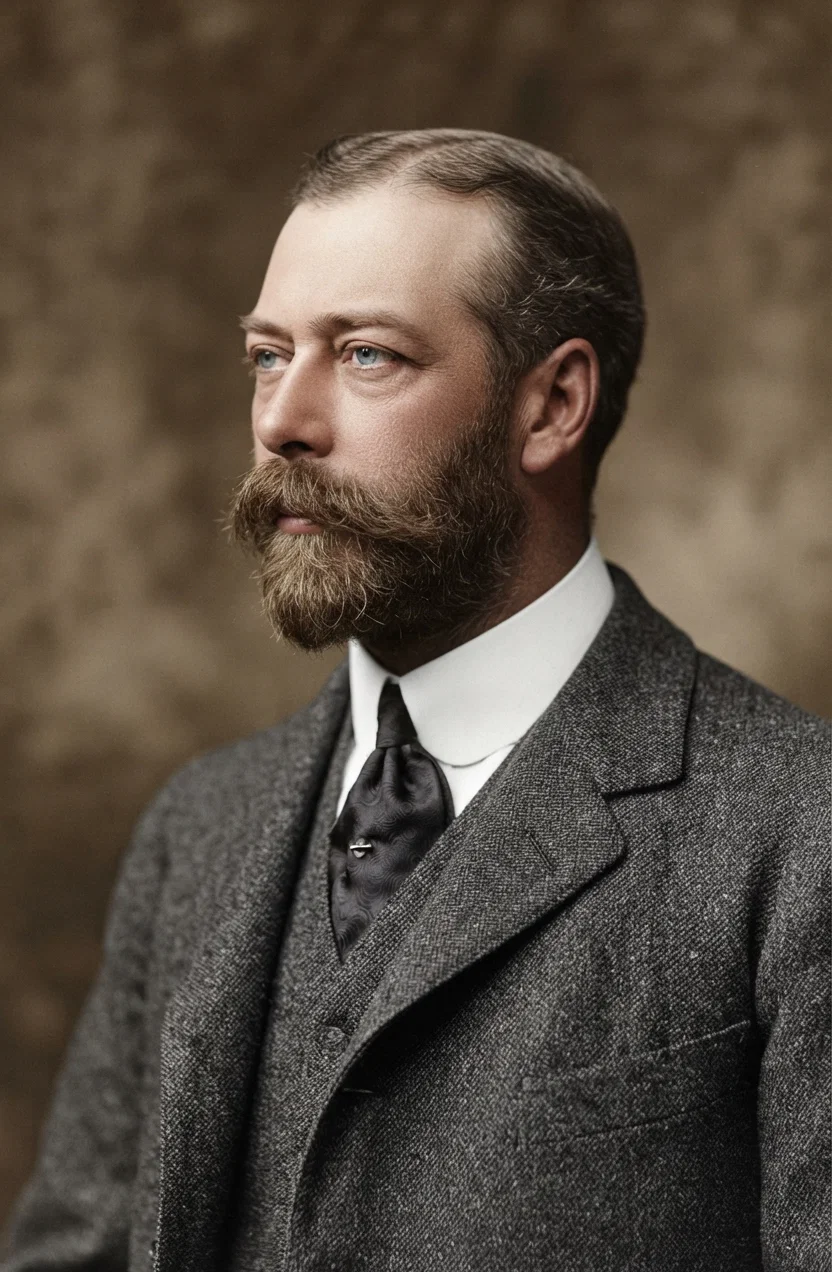
King George V
King George V
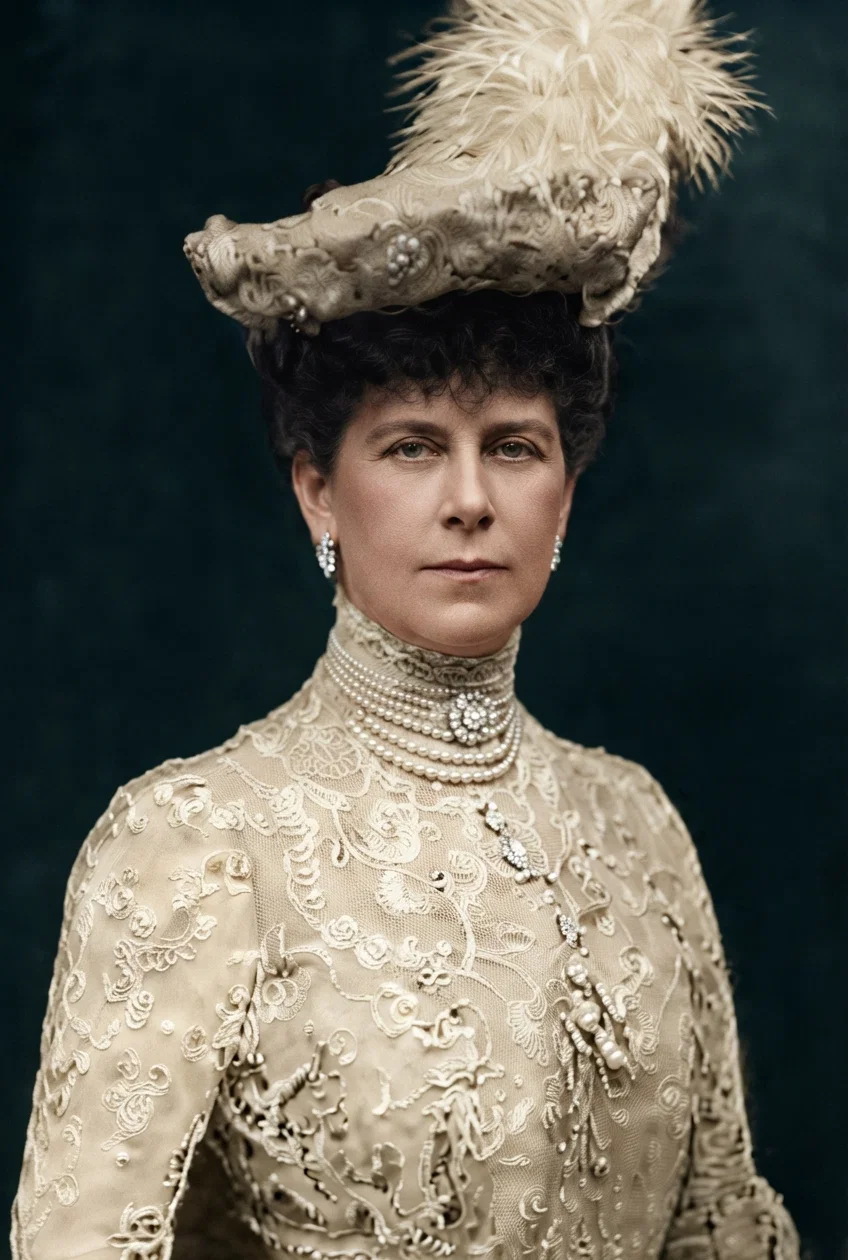
Queen Victoria Mary
Queen Victoria Mary

An Empire in Mourning

"The King Is Dead! Long Live the King!"
It might almost be said, "A World in Mourning," because with the British Empire in its sorrow there is worldwide sympathy. Not long ago a European king died, but little was said save to note his ability as a financier and his cruelty and unscrupulousness of character.
Friday night, May 6, at 11:45, another European monarch died, and a whole empire is in mourning, and expressions of sympathy are coming from every government on the earth to the mourning family in the loss of husband and father, and to the nation and people who have lost their king. The news had scarcely gone out to the world that Edward VII of England was seriously ill, before the papers gave the news that he was dead.
Edward VII was a great king. His early youth and manhood did not give the promise of the ruler that he was found to be when put to the test. Even tho he came to the throne at nearly threescore years of age, there were doubts and misgivings as to his ability and wisdom to guide the ship of state. He had served in social functions for years, and had studied men, knew how to meet them, and had acquired tact and diplomacy, but all this was not the test of kingship. When he came to the throne he happily surprised the most doleful of prophets, and more than con-firmed the expectations of the hopeful. It was John Hay, himself a no mean student of diplomacy and statecraft, who said that King Edward was the greatest diplomat in Europe; and he has been called Europe's greatest statesman. His kindness, his geniality, his love of peace and justice, endeared him to all, and men had confidence in his judgment and ability.
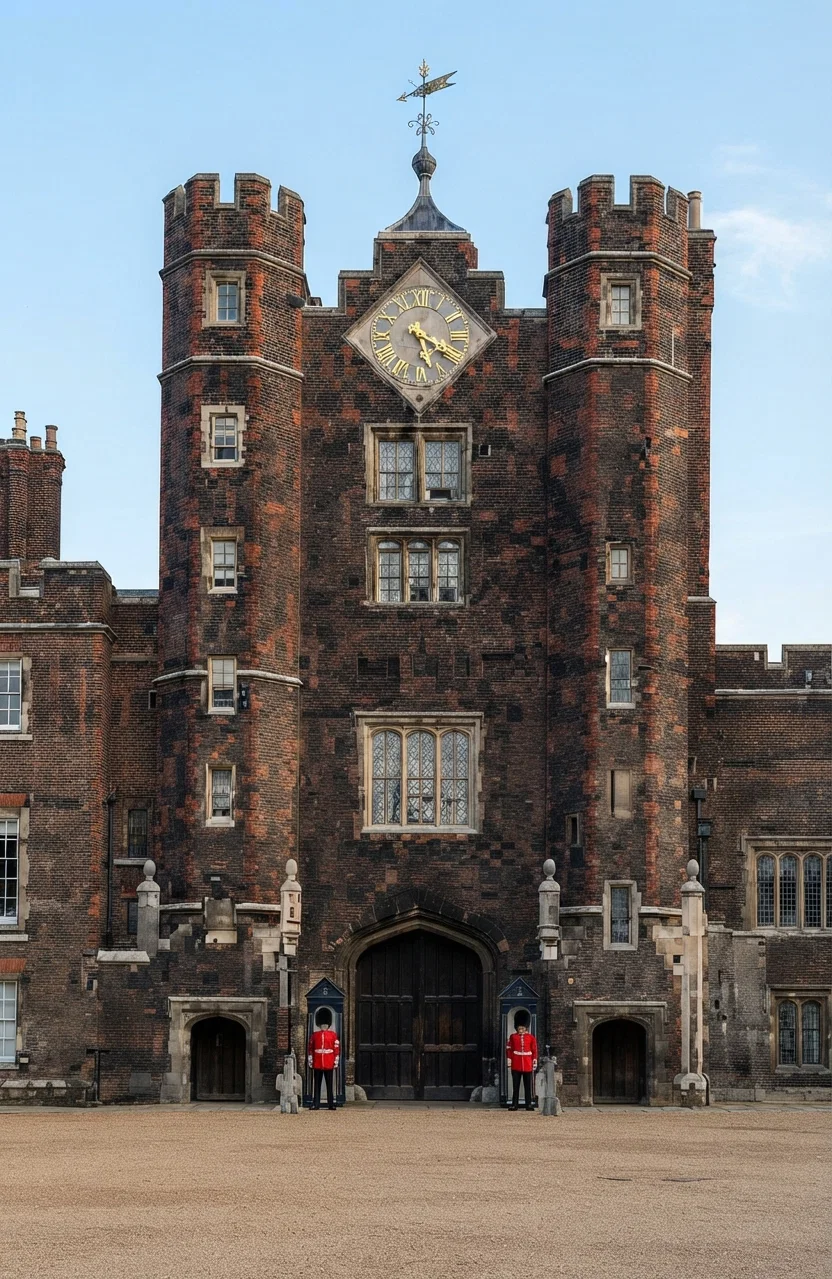
St. James Palace, where both Edward VII and George V took the oath of office. Henry VIII lived here, also Edward VI and Elizabeth. Here also Queen Mary died.

Events in His Career

He was born in Buckingham Palace, London, Nov. 9, 1841. He visited the United States and Canada in 1860; he entered Cambridge University in 1861. He was admitted to the House of Peers in 1863. In 1875 he visited India. In earlier and later years he traveled extensively, especially throughout Europe. He succeeded his mother, Victoria, to the throne of England, Jan. 22, 1901, at the age of nearly sixty. On account of serious illness, he was not crowned in Westminster Abbey till 1902. He opened his first Parliament in 1903. He died at Buckingham Palace—where he was born—May 6, 11:45 P.M., 1910, at the age of sixty-eight years, five months, and twenty-seven days.
Sincere expressions of sadness and sympathy have come to the stricken Queen Alexandra, to the royal family, and to the nation itself, from all parts of the world and from all classes of people. He passed away at a time of great political crisis in the kingdom, a settlement of which will be delayed if not affected by his death.

The New King—George V

According to the British Constitution, the heir to the throne immediately succeeds. There was no question in this case as to Edward's rightful successor. The oldest son of Edward VII, Albert Edward, Duke of Clarence, died in 1892 at the age of twenty-eight. The next son, George Frederick, thus became Prince of Wales and heir to the throne, and therefore he succeeds his father as "George V by the grace of God, of the United Kingdom of Great Britain and Ireland, and of the British dominions beyond the seas, King, Defender of the Faith, Emperor of India."
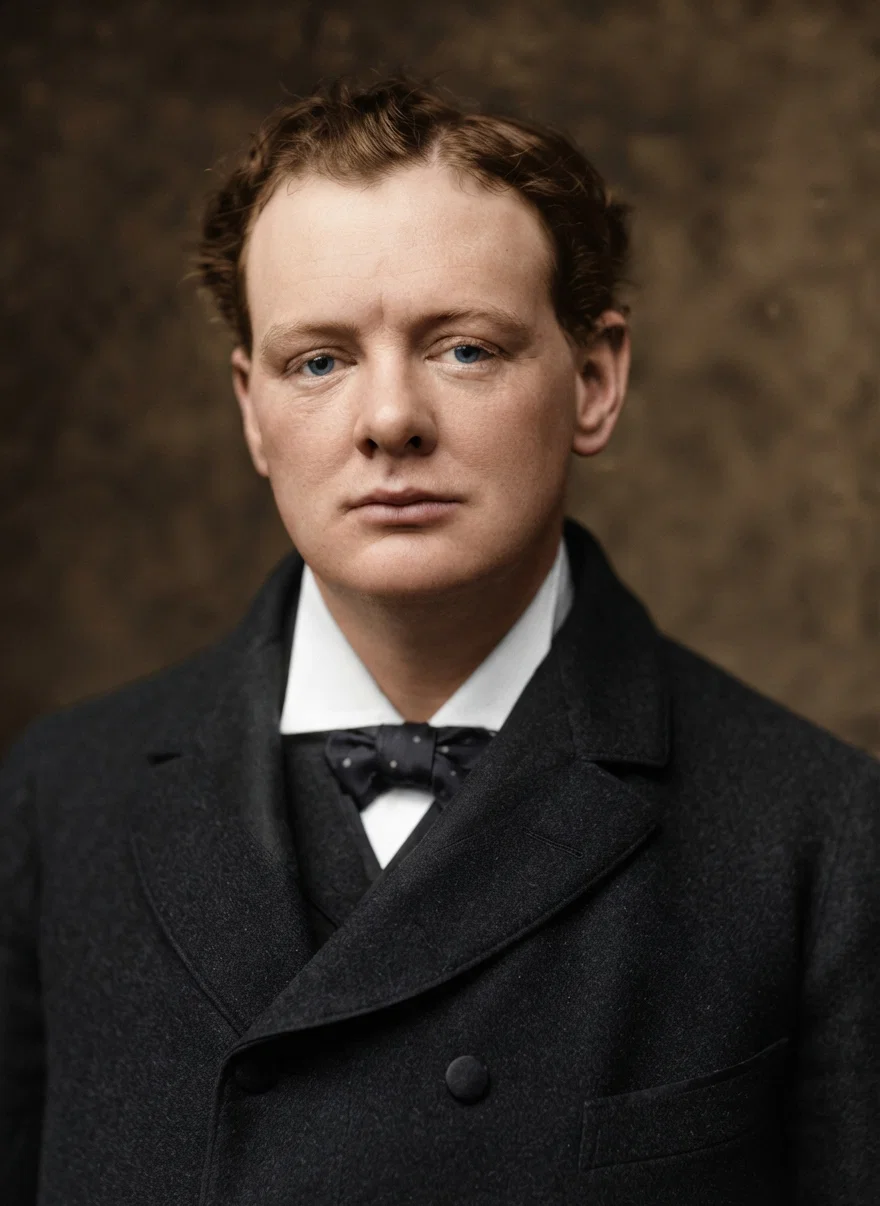
Formal announcement of the king's death was made by Lord Knollys; and the home secretary, the Right Honorable Winston Churchill, immediately acquainted the new king officially with the death of his father, and kneeling before him acknowledged him as king. At the death of King Edward the Ministry came to an end.
The oath of the new king was taken in St. James Palace, and is as follows:
"Will you solemnly promise and swear to govern the people of this United Kingdom of Great Britain and Ireland, and the dominions thereto belonging, according to the statutes in Parliament agreed upon and the respective laws and customs of the same? "Will you to the utmost of your power cause law and justice, in mercy, to be executed in all your judgments? "Will you to the utmost of your power maintain the laws of God, the true profession of the Gospel, and the Protestant religion established by law? "Will you maintain and preserve inviolably the settlement of the Church of England and the doctrine, worship, discipline, and government thereof, as by law established in England? "And will you preserve unto the bishops and clergy of England and to the church therein committed to their charge, all such rights and privileges as by law do or shall appertain to them, or any of them?"
The first official act of the new king was to inform the lord mayor of his father's death, which he did in the following words:
"I am deeply grieved to inform you that my beloved father, the king, passed peacefully away at 11:45 to-night. George."
The response of the lord mayor is as follows:
"I tender your royal highness an expression of most true sympathy and condolence from the citizens of London. May God in His loving mercy comfort you and the princess. The prayers of the nation are with you and they keenly share your sorrows."
After the administration of the oath by the lord high chancellor, the members of the Cabinet present tendered their formal resignations to the new ruler, who at once returned the resignations unacted upon. Thereupon the members of the Cabinet and the privy councilors kissed the king's hand, according to traditional custom, to signify allegiance to the new ruler. The king then addressed the Privy Council as follows:
"My lords and gentlemen, my heart is too full for me to address you in more than a few words. It is my sorrowful duty to announce to you the death of my dearly beloved father, the king. In this irreparable loss which has so suddenly fallen on me and the whole empire, I am comforted by the feeling that I have the sympathy of my future subjects, who will mourn with me for their beloved sovereign, whose own happiness was found in sharing and promoting theirs.
The Rt. Hon. Winston Churchill, Home Secretary
"I have lost not only a father's love, but the affectionate and intimate relations of a dear friend and adviser.
"No less confident am I in the universal and loving sympathy which is assured to my dearest mother in her overwhelming grief. Standing here little more than nine years ago our beloved king declared that so long as there was breath in his body he would work for the good and amelioration of his subjects. I am sure that the opinion of the whole nation will be that this declaration has been fully carried out.
"To endeavor to follow in his footsteps, and at the same time to uphold the constitutional government of these realms, will be the earnest object of my life. I am deeply sensible of the very heavy responsibilities which have fallen upon me. I know that I can rely upon the Parliament and the people of these islands and my dominions beyond the seas for their help in the discharge of these arduous duties, and their prayers that God will grant me strength and guidance.
"I am encouraged by the knowledge that my dear wife will be a constant helpmate in every endeavor for our people's good."
Under these circumstances and with these words the new king takes the throne. Members of Parliament will soon take oath of allegiance to the new sovereign. Some of the American papers have stated that Prince George had lived a somewhat colorless life; but those who are acquainted with him will testify far different. In his earlier days he chose the naval profession for his calling and is to quite an extent an expert. When his brother died, of course he became the heir to the throne. Since that time he has studied statecraft. As a successful business man he is well known, being one of the largest landowners in the kingdom. He is just and upright in all his dealings, looking carefully after all the minutia of his business, and is kind and considerate and generous to his tenants.
His wife is former Princess of Teck, Victoria Mary, and a woman of great intelligence, thoroly well informed and of rare tact and kindness. While a model mother and housekeeper, she finds time to interest herself in large works of charity, of which she takes personal supervision, and oftentimes engages with the workers in direct acts of this kind. Her family of six children are said to be a model family. They have been reared in strict economy, the greatest care given to their training and education. The king himself is a model home man, and enjoys greatly the society of his children. He is not a young man. Next June 3 he will have reached the age of forty-five. In education and training it would seem that he is as well equipped as one can be without experience to succeed his grandmother and father. Of course he comes to the throne in a time of great crisis. What that crisis is is well set forth in the letter from our own London correspondent in this department.
There is very much that we would like to say regarding the old and the new king of England, but for which we have not space in this issue. The latest news is that the funeral is set for May 20; that a greater number of monarchs will be together at his bier than have met together in many years, including the Emperor William of Germany, King George of Greece, King Frederick of Denmark, King Haakon of Norway, King Alfonso of Spain, King Manuel of Portugal, King Emmanuel of Italy, and the dowager empress of Russia, a sister of Queen Alexandra. Before the funeral the body of the late king will lie in state in the famous throne room of Buckingham Palace; the funeral services will be held in Westminster Abbey, where the body will lie in state following these services for three days, and will then be conveyed to Windsor Castle, where it will rest beside that of his oldest son.
God has used the great English nation and empire in the furtherance of His own work in the earth, in the spread of the great principles of liberty and Christianity, as He has no other power. It has had its faults, many and great; and yet we believe that the candid searcher of history will admit that in general view England has always made lands and governments where she has controlled, better than she found them; has always carried religious freedom and liberty with her rule; and our prayer is that the same stability of government and the same spirit of freedom may still continue with that government until that time shall come when He whose kingdom shall not pass to another shall take to Himself His great power and reign.