ISRAEL was nearing the end of its prosperity. Apostasies innumerable had taken place in the religious life of the nation. With apostasy, greed had entered the hearts of men; oppressive laws had been enacted; crimes had been winked at by the authorities until in a small way, as compared with what we see it now, wealthy men were controlling the nation. It was a demonstration of what Goldsmith later shaped in his famous lines,
"Ill fares the land, to hastening ills a prey,
When wealth accumulates, and men decay."
God used that time as a type of this time. He used the overweening power of wealth there as a type of the overweening power of wealth here; and He used the calamities that were to come upon that nation as a result of the course that we are pursuing, as the type, the prophecy of what would come upon this nation and the other various nations of the world who follow the same course.
In the person of the prophet Habakkuk, who became the voice of the oppressed people, the appeal goes up to God against the exactions and oppressions of wealth. He cries:
"Art not Thou from everlasting, O Jehovah my God, my Holy One? we shall not die. O Jehovah, Thou hast ordained him for judgment; and Thou, O Rock, hast established him for correction. Thou that art of purer eyes than to behold evil, and that canst not look on perverseness, wherefore lookest Thou upon them that deal treacherously, and holdest Thy peace when the wicked swalloweth up the man that is more righteous than he; and makest men as the fishes of the sea, as the creeping things, that have no ruler over them? He taketh up all of them with the angle, he catcheth them in his net, and gathereth them in his drag: therefore he rejoiceth and is glad." Hab. 1:12-15.
He tells us that instead of worshiping God, the oppressor worships the work of his own hands, the schemes and plans that he has laid for the gathering in of men; and then the prophet declares he will watch to see what God will do, and the Lord commands him to "write the vision, and make it plain upon tablets, that he may run that readeth it. For the vision is yet for the appointed time, and it hasteth toward the end, and shall not lie: tho it tarry, wait for it; because it will surely come, it will not delay." Chapter 2:1-3.
The writer of Hebrews uses this very text from Habakkuk, and applies it to the time preceding Christ's second coming. Heb. 10:37, 38. Then the righteous God points out the career of those who have no regard for their fellows, whose soul is set upon themselves and their own plans: "Behold, his soul is puffed up, it is not upright in him; but the righteous shall live by his faith. And also because his wine is treacherous, he is a haughty man, that keepeth not at home; who enlargeth his desire as Sheol, and he is as death, and can not be satisfied, but gathereth unto him all nations, and heapeth unto him all peoples." (Margin.)
Another prophet referring to the same time thus speaks: "Wo unto them that join house to house, that lay field to field, till there be no room, and ye be made to dwell alone in the midst of the land!" Isa. 5:8.
One sees the colossal antitype of Israel's condition and Israel's evils in the present time. A number of men who can almost be numbered by the fingers on two hands control the great mass of wealth in America; interests, industries, all the great colossal organizations of the country in the hands of a few.
A few years ago a mighty struggle was waged over the great life insurance companies in which had been poured the savings of thousands of individuals as a safeguard for their loved ones against death and old age. They found that men were exploiting these for their own personal interests; and the one-man power seemed to be checked, so at least it could no longer exploit these great New York companies.
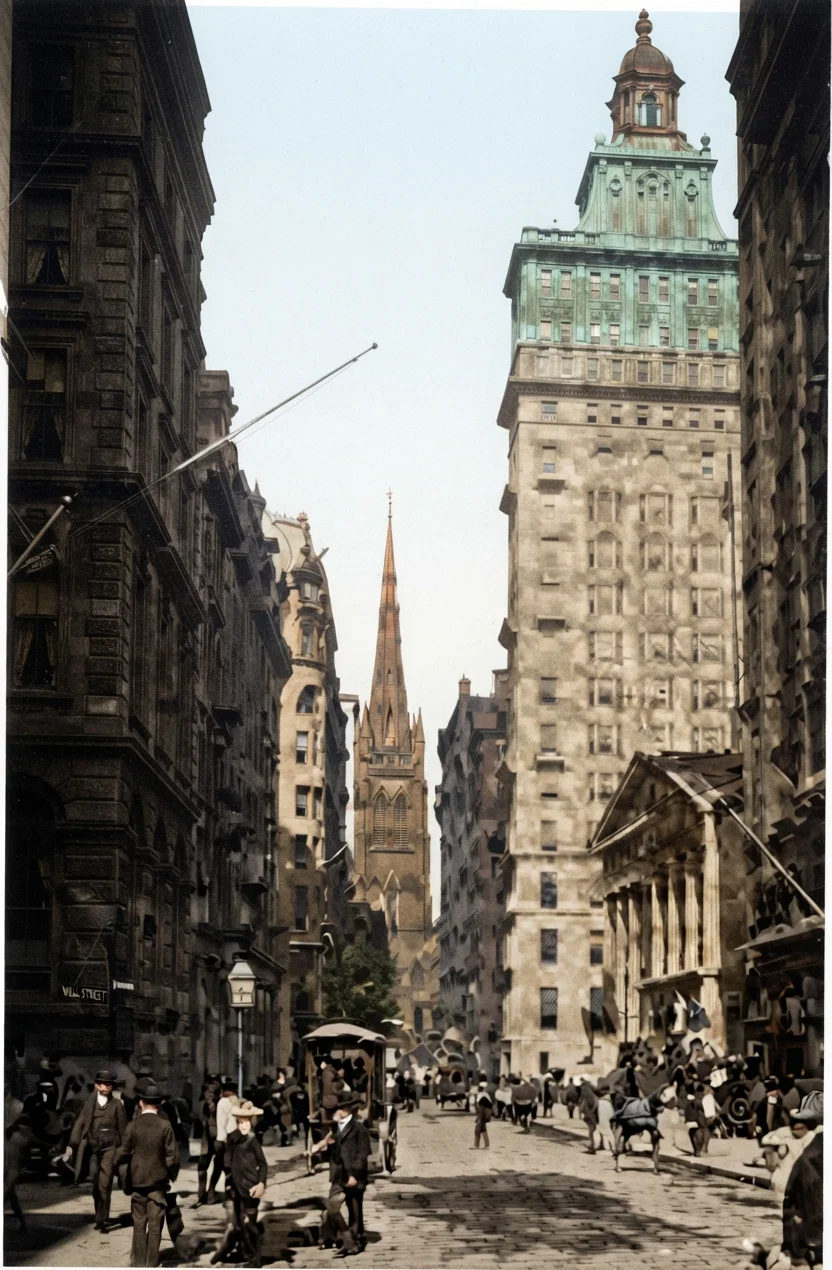
Wall Street, the great money center of America, and one of the greatest, if not the greatest, in the world. Mr. Thomas Lawson, and others in official life, as well as great papers, are demanding reform in its gambling methods. There will first have to be a reform in its kings and princes.
A short time ago it seemed that a few years bade fair that one man would control practically all the transportation interests of the nation; but Mr. E. H. Harriman died, and it was thought that there would be no one to follow him who could master and control the great railway lines of the nation; but there is one in power now who seems to possess not simply the power of Harriman and Ryan and others, but who has combined, with himself as a center, vastly more than has ever been controlled or managed by any one individual before in all the history of this world. By various purchases, by combining corporations, by community interest, there is now a power, at the head of which is J. P. Morgan, which embraces banking, trust, insurance, industrial, and transportation companies, and controls or influences capital amounting to more than $6,000,000,000. The New York "World" gives what is considered a conservative estimate of the companies controlled by this one man, and in this estimate it does not include the four Morgan banking-houses of New York, London, Paris, and Philadelphia. The companies and trusts controlled by this combination are as follows:
Life Insurance Companies
ASSETS
Equitable Life Assurance Society
$462,000,000
New York Life Insurance Company
557,000,000
$1,019,000,000
Banks and Trust Companies
RESOURCES
First National Bank
$139,600,000
National Bank of Commerce
226,500,000
Mercantile Trust Company
68,475,000
Equitable Trust Company
63,800,000
Guaranty Trust Company
88,960,000
Astor Trust Company
15,200,000
Bankers' Trust Company
53,900,000
Chase National Bank
107,280,000
Mechanics' National Bank
51,360,000
National Copper Bank
40,300,000
Liberty National Bank
24,700,000
Fifth Avenue Trust Company
19,100,000
Standard Trust Company
18,450,000
$917,625,000
Industrials
STOCKS
BONDS
U. S. Steel Corporation
$868,809,000
$593,231,000
Haggin-Morgan Peruvian Copper Mines
25,000,000
United Dry Goods Co.
51,000,000
International Harvester Co.
120,000,000
$1,064,809,000
$593,231,000
1,064,809,000
$1,658,040,000
Railroad and Transportation Companies
STOCKS
BONDS
Southern Railway
$179,900,000
$228,701,000
International Mercantile Marine
120,000,000
72,684,000
Northern Pacific
247,905,000
282,499,000
Great Northern
275,129,000
97,955,000
Reading Co.
140,000,000
106,654,000
Central R. R. of N. J.
27,436,000
52,851,000
Lehigh Valley R. R.
40,441,000
81,639,000
N. Y., N. H., and H.
100,000,000
56,849,000
Boston and Maine
31,394,000
30,373,000
Hocking Valley Ry.
26,000,000
19,912,000
Chi. G. W. R. R.
57,015,000
28,000,000
N. Y., Ont., and W. R. R.
58,113,000
27,173,000
Hudson and Manhattan R. R.
50,000,000
57,920,000
$1,353,333,000
$1,143,210,000
1,353,333,000
$2,496,543,000
Miscellaneous Companies
Anglo-American Nitrate Syndicate in Chili
$12,500,000
North American Company
29,779,000
$42,279,000
Recapitulation
Railroads, etc.
$2,496,534,000
Industrials
1,658,040,000
Banks, etc.
917,625,000
Life Insurance Companies
1,019,000,000
Miscellaneous Companies
42,279,000
Grand total
$6,133,478,000
The New York "World" points out just what the power of such a combination of capital may exercise. It can dictate interest rate and so make money cheap or dear. "Controlling huge resources, it can, if it will, interfere with the natural course of markets and of distribution, manipulate bank reserves, establish confidence or destroy it, encourage new enterprises or blast them, and by vicious assaults upon credit create panic among the people and11menace the Government itself. Good times or hard times, prosperity or ruin, inflation or contraction, for many people, all lie in the hollow of its plutocratic hand. Where shall this 'Morganizing end?'"
A striking cartoon represents Mr. Morgan as sitting in a great chair of state and holding the lines in his hands of all these various companies, controlling them as a master driver controls his multiple spans of chariot horses.
Of course the state, the nation, ought to be able to control in some way the use and abuse and distribution of wealth. It seems not to be able to do it, however. Just as long as men's minds are corrupt, such vast amount of wealth controls not only all these various industries, but controls men; buys legislators, corrupts judges, influences juries, and so almost wholly escapes punishment. In fact, where such great trusts or syndicates control so much, authorities themselves are afraid to meet the issue. They do not know what great calamities may follow. It were well for the statesmen and people to read not only the prophecy of such great power, but to read the end of it as well. Such concentration of power must arouse envy and hence enmity among the poor, especially among those who do not trust in God. The man who truly trusts in God has riches beyond all the wealth of Morgan and Rockefeller; riches which he knows if faithful will surely come to him after this brief span of life is over, and the King shall come; but in those whose hopes are set in this world, there is aroused everlasting enmity against the possessor of such power and wealth, and so the prophet declares:
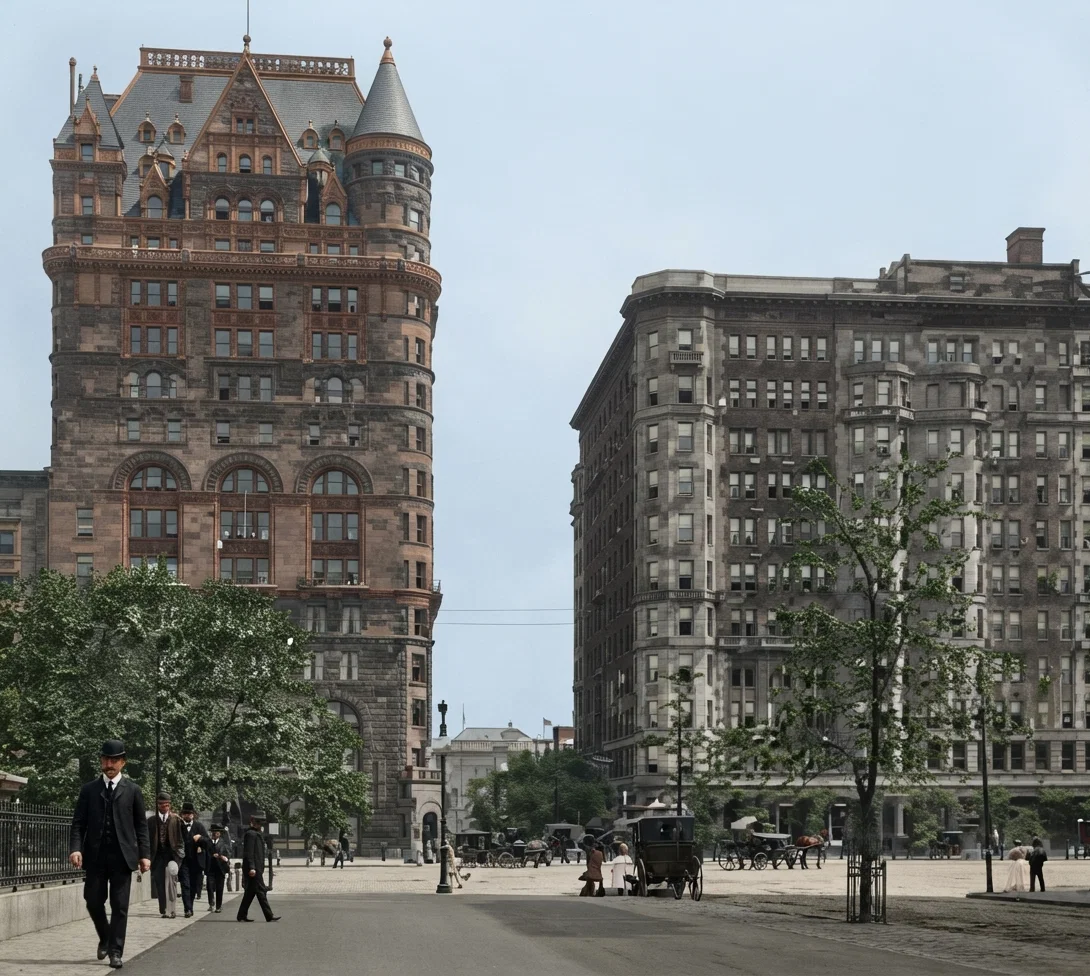
A Plaza in Central New York in one of the great wealthy districts
"Shall not all these take up a parable against him, and a taunting proverb against him, and say, Wo to him that increaseth that which is not his! how long? and that ladeth himself with pledges! Shall they not rise up suddenly that shall bite thee, and awake that shall vex thee, and thou shalt be for booty unto them? Because thou hast plundered many nations, all the remnant of the peoples shall plunder thee, because of men's blood, and for the violence done to the land, to the city and to all that dwell therein. Wo to him that getteth an evil gain for his house, that he may set his nest on high, that he may be delivered from the hand of evil!' Hab. 2:6-9.
And there is much more that might be quoted not alone from this prophet, but from Isaiah, from Amos, and from the New Testament prophecy, so frequently referred to, in James 5:1-8. We are not desiring the wo; we are not wishing or pleading for the revolution. We would do everything in our power
to stay its red hand. We believe that the worst government on the face of the earth is better than anarchy; but just as surely as such unbalanced conditions continue, just as long as worthy men who love wife and children see the unholy inequality which exists, the seeds of revolution will be sown, and anarchy and bloodshed are bound sooner or later to follow. It is not we who are saying it; it is the prophets of God in both the Old and the New Testament. It would be well if these wealthy men who profess the religion of Christ would listen to the words of His apostle, 'Go to now, ye rich men, weep and howl for your miseries that shall come upon you.' And it would be well with them if they would take the counsel of another apostle that they should with their money do good, be ready to distribute, liberal in giving, anxious and interested in ameliorating the condition of those who are poorer; so could they lay up themselves wealth for the good time to come. In God's plan what a man gives is saved, and what a man keeps and gathers to himself is lost. The gold of character is better than all the gain of greed, and the conscience that is void of offense toward God and man is better than all the palaces and bank-notes that can be piled up. God does not condemn men for having ability to make money. It is He who gives it, but He would have them use all of it as a trust committed to them and for which they will be held responsible in the great day.
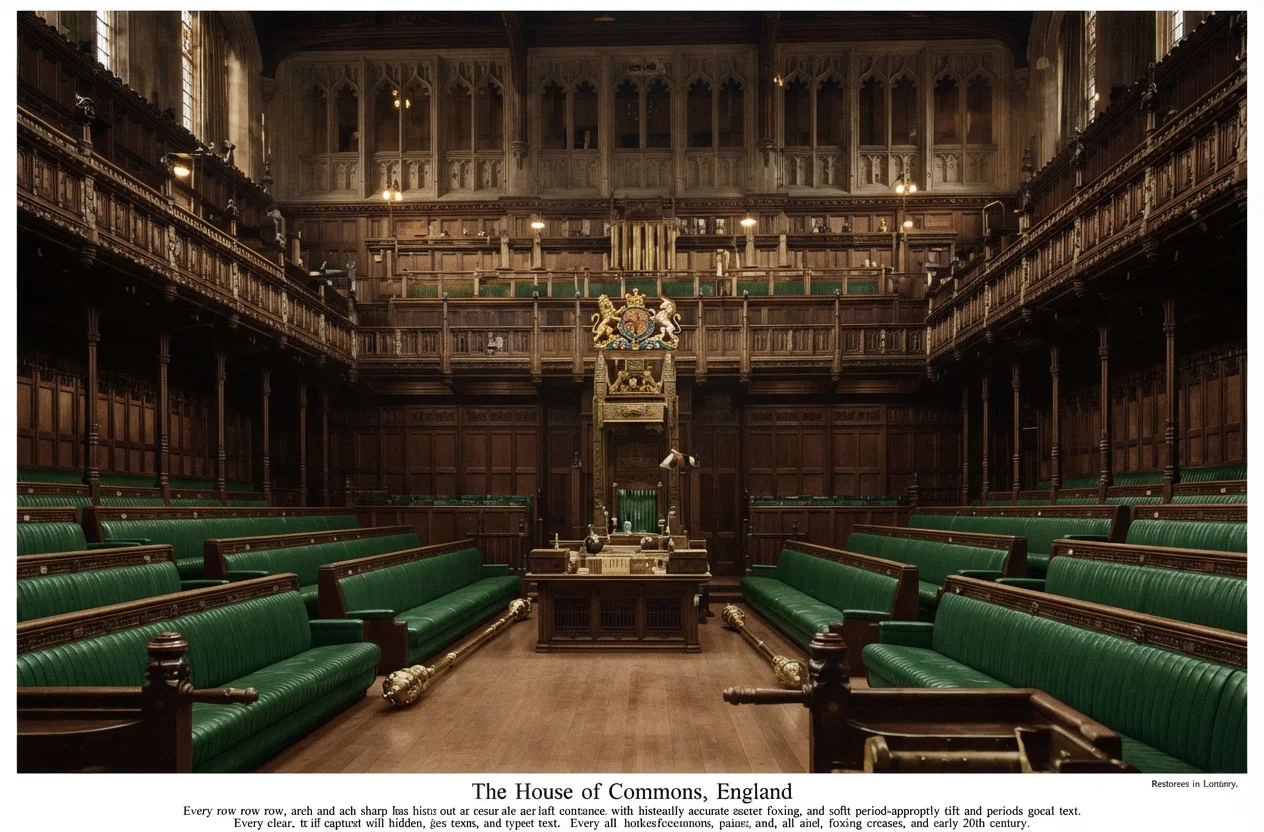
The House of Commons, England
This vast amount of wealth piled up 'in the last days' is another evidence that we are nearing the end, that Christ's coming is at hand.