How Old Is Man?

3%

Pacific Press Publishing Association · Mountain View, California · Aug 1, 1916

FromSigns of the Times, Vol. 43, No. 30.

Read the full edition

How Old Is Man?

A Protest Against the Popularizing of the "Bestial Origin"—The Gulf Between Fancy and Fact

By Prof. George McCready Price
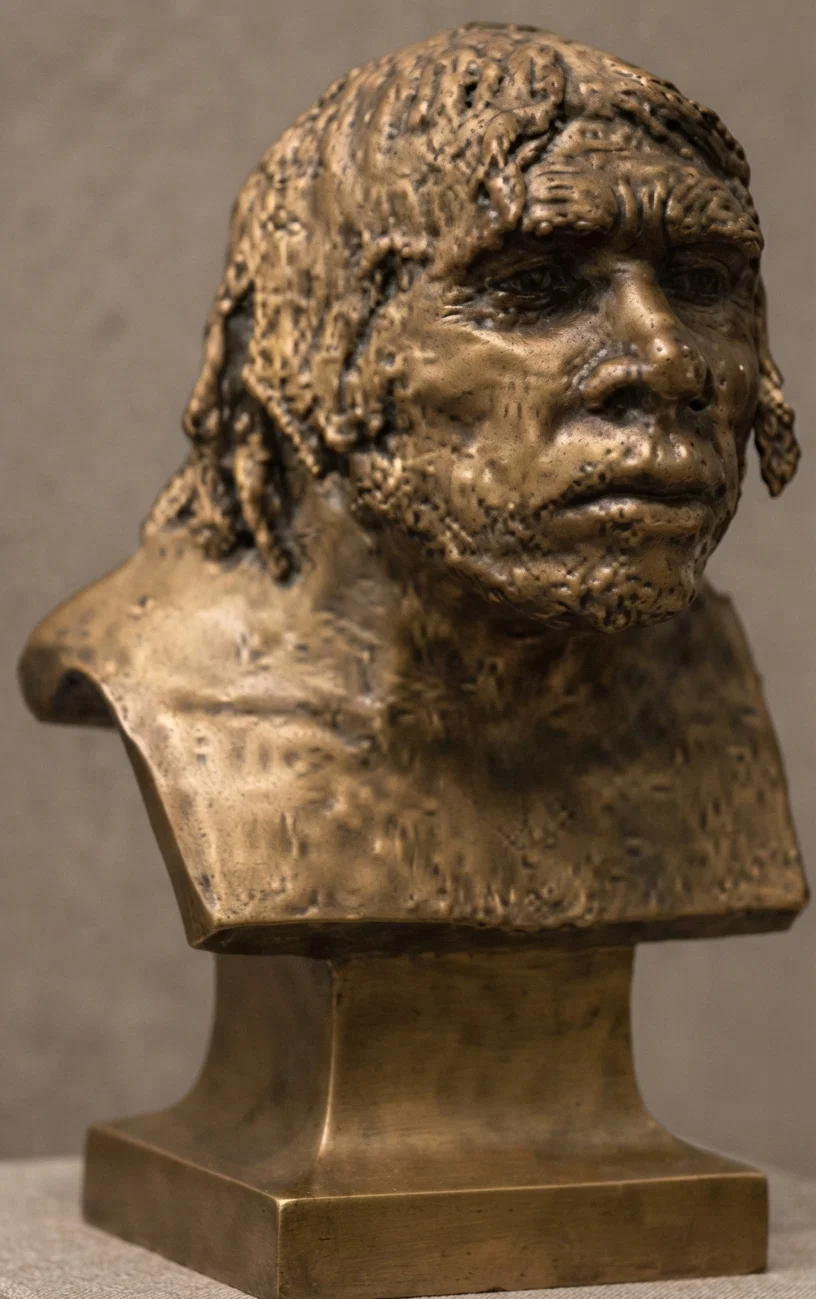
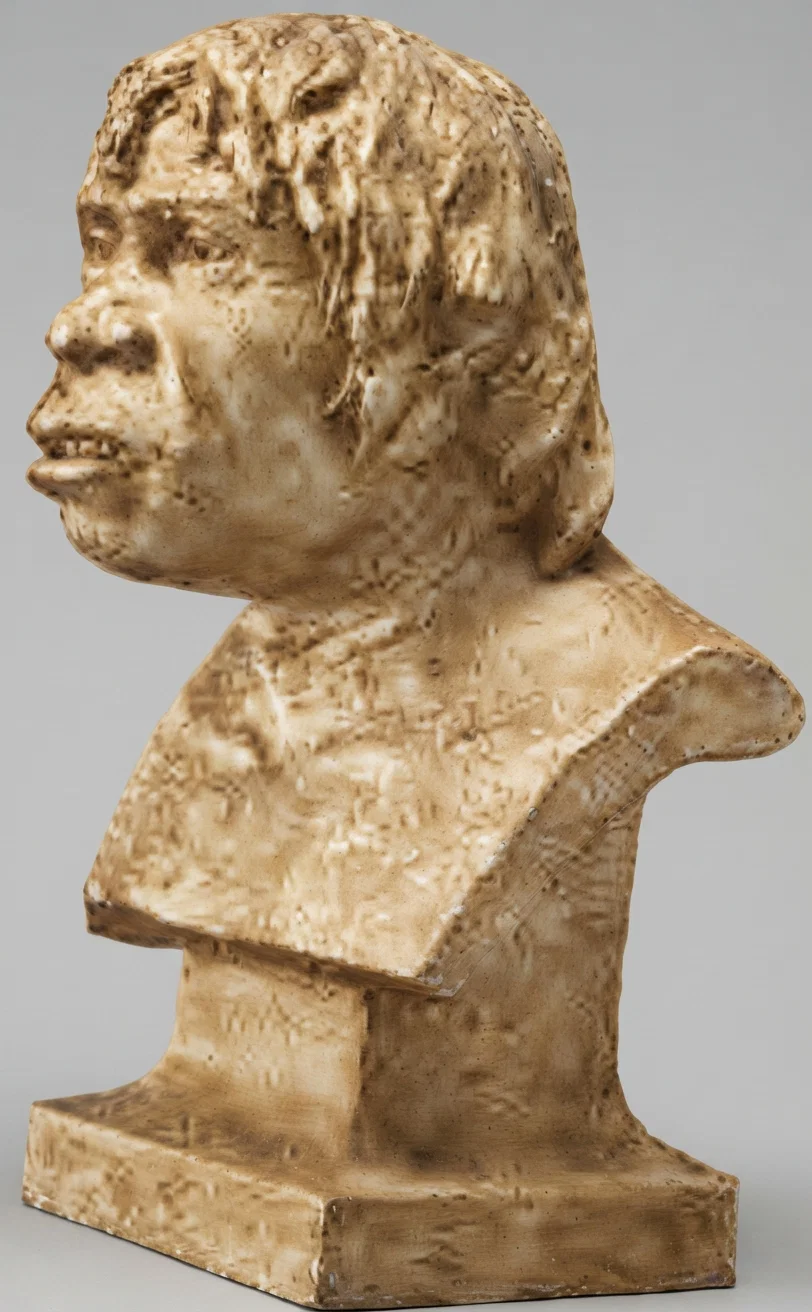
The Neanderthal man, a race that is supposed to have lived in caves of central France many thousands(?) of years ago.
A head reconstructed on the Piltdown skull, found in Sussex, England; believed to have lived there 100,000 to 300,000(?) years ago.
WHEN an ex-president of the United States has an inclination to indulge in literary work, he can at once command an audience. And when this same individual has already acquired a considerable reputation as a hunter, a naturalist, a patron of scientific work, almost as himself a scientist, we may be sure that people will listen to his pronouncements on scientific matters with great interest if not with absolute reverence. And such an effect will be increased, if possible, when the writing of such an author, on such a subject, appears in a publication of a technical or a semi-technical character.
All these specifications are combined in an article by Theodore Roosevelt, which appeared in the National Geographical Magazine for February, 1916, under the same title as stands at the head of the present one. The article mentioned is really a review of a recent book — "Men of the Old Stone Age," by Henry Fairfield Osborn — which is a professedly scientific work, written by one who stands very high among scientists in this country. And the very outspoken attitude of the colonel toward this book may be judged by his statement that "it is the most important work on the evolution of our own species that has appeared since Darwin's 'Descent of Man.'"
In this sentence, we have Professor Osborn described as the continuator of Darwin's work and theories; while the article by Colonel Roosevelt may be called an effort to popularize these teachings by boosting this latest and most authoritative book on the subject. With the book itself we shall have nothing to do at present; but the article to which reference is made contains so many astonishing characteristics that it well deserves some consideration.

Popularizing the Bestial Origin

IN the first place — as might be expected from its being printed in the Geographical Magazine — the article is elaborately illustrated. But these illustrations take the form of photographs of what profess to be "restorations" of models of ancient men and animals found as fossils, with several maps of Europe during various stages of the so-called "glacial period," when — according to the maps — the British Isles were joined to the continent of Europe, with an extension of this land mass reaching past Iceland into the arctic regions. The first cut is a half-tone with the following legend below it: "The Ape Man of Java, a Prehuman Creature Who Lived Probably 500,000 Years Ago." Another illustration shows us the features of "a head reconstructed on the Piltdown skull, found in Sussex, England: Eoanthropus dawsoni," who the author assures us is believed to have lived 100,000 to 300,000 years ago. Still another is that of the Neanderthal man, "a race which lived in caves of central France 50,000 years ago."
From these titles of a few of the illustrations accompanying the article in question, the reader can get an idea of some of the reasons why I feel justified in saying that the publication of such an article, with such illustrations, is much to be deplored; for it is an example of methods of "popularizing" the theory of the bestial origin of man, methods which partake of the character of the "science" one expects to find in the Sunday supplement of the daily paper, but which were supposed to have been discarded by reputable scientists long ago — and have been discarded by all writers on strictly scientific subjects when dealing with any other subject than this of the ape origin of man.
My reasons for such strong remarks are almost obvious. There are no facts whatever known to modern science which justify any such representations. These photographs are made from "reconstructions" supposed to represent these ancient men; but in most cases, these "reconstructions" have been made from only one or two bones, while the geological "age" in which they lived, and the character of the creatures when alive, cannot be proved to justify even partially the absurd statements made in connection with them.

Indulges Theoretical Propensities

IN other words, these pictures of ancient men, and, indeed, the whole article accompanying them, can be called "scientific" only by a greatly modified use of this much abused word. The first quality of a truly scientific mind is the ability to keep facts and theories separate and distinct from each other. Theories are all right in their place; but their place is in the warehouse or the basement, and not in the show window. No scientist can get along without theories, and plenty of them. But when a man shows a manifest incapacity for distinguishing between real facts and very highly questionable theories, and when, moreover, he indulges a propensity for exhibiting his unproved theories in his show window, along with what the public have a right to regard as objective realities, he thereby shows that he is sadly lacking in the prime essential of a scientific mind.
To drop the figure, and to speak in plain language: Colonel Roosevelt's article puts forward as absolute facts what are mere theories, and theories that are by no means universally received among modern scientists; and these theories are advanced with all the air of being the only view held by anybody to-day. The rawest and most highly questionable theories, which are received by only one extreme faction of the educated world as even possible, are put forward as incontrovertible facts, and the existence of any other views is merely ignored with lofty scorn.
Let me explain what I mean, by the help of some facts regarding the first picture given in the article; namely, that of "the ape man of Java." This specimen is usually dignified with a Latin specific name, to mark it as a distinct species of animal; and I cannot do better than to give here a portion of an article found in the last edition of "Encyclopædia Britannica":

From Two Bones and Two Teeth

"Pithecanthropus Erectus (erect ape man), the name given by Dr. Eugene Dubois, of the Dutch army medical service, to the imaginary creature which he constructed from fossilized remains found by him in Java. These fragments consisted of a thigh bone, two teeth, and the upper part of a skull, and were unearthed in 1891-1892 on the left bank of the Bengawan River near Trinil. The skull appears to have been low and depressed with strong supraciliary ridges; the teeth are very large, and the femur is quite human. The teeth and skull were found together, the femur a few yards away a year afterwards. The discoverer, however, stated it as his belief that the fragments were portions of the same skeleton and belonged to a creature half way between man and the higher apes and of the Pleistocene age. Much discussion followed the 'find,' and many authorities have given an opinion adverse to Dr. Dubois's theory. The prevailing opinion is that the bones are human."—Volume 21, page 665.
From information gathered elsewhere, we learn that these bones were found under a bed of volcanic ash; and the "age" of this rock deposit is variously given as Pleistocene, Pliocene, or even as Miocene. But the "age" of the rock in which these bones were found does not prove that the bones themselves are necessarily very old — perhaps not even antediluvian. The reputed age of these bones is one of the weakest points in the whole argument that would seek to make this "ape man" represent one of our direct ancestors. But this point cannot be considered here; it must be reserved for another time.
A further fact to be remembered regarding these bones is that the roof of the skull was very "imperfect" when found. That is, not all of it was recovered. Hence the cubic contents of the skull could be estimated only approximately. The size of this person's brain has been usually estimated at from 900 to 1000 cc., or about two thirds that of an average modern man, or to quote the words of a recognized authority, it "stands at the level of the smallest which have been occasionally found among the reputedly lowest savage peoples."

Manifestly That of an Idiot

BUT it should be distinctly remembered that many first-class authorities regard this piece of a skull as manifestly that of a degenerate or an idiot. That is, they say it is a pathologic specimen, not a normal one by any means; and why should such a pathologicrelic be paraded as representing the normal condition of the race contemporary with him? By evolutionists, this particular specimen is regarded as the very oldest relic yet found of the direct ancestors of the human species — regarded as oldest, of course, chiefly because it is so low and bestial in type. But not another specimen has yet been found that is by any one even claimed to be contemporary with him. Then how absurd to say that this one specimen represents the normal character of a whole race!
This was essentially the argument of the great Rudolf Virchow, the highest authority in Germany on such matters, when these bones were first discovered. Virchow is called the "father" of the modern science of pathology, and he doubtless knew more about the pathologic changes that take place in the human body than any other man before or since. Not only so, but he was also the foremost authority in Germany on anthropology. Indeed, he occupied somewhat the same position in scientific circles on the continent of Europe that Colonel Roosevelt himself now occupies in American politics. But Virchow unhesitatingly pronounced not only this skull from Java but also the Neanderthal skull to be manifestly pathologic; that is, the peculiarities of each were the result of disease. Hence he protested, in his vigorous way, against the scientific use of such specimens as in any way representing the normal human being, Homo sapiens, in those periods of long ago.
It was ten years after the discovery of these bones in Java, or in 1902, that the great Virchow declared before an illustrious assembly of scientists in Vienna:

Virchow's "Perverse Ingenuity"

"THE attempt to find the transition from animal to man has ended in a total failure. The missing link has not been found, and will not be found. Man is not descended from the ape. It has been proved beyond a doubt that during the past five thousand years there has been no noticeable change in mankind."
Colonel Roosevelt cannot, of course, altogether ignore the testimony of such a world famous champion of the conservative views. But he speaks of him in the following language with reference to the Neanderthal skull:
"The perverse ingenuity of the great anatomist Virchow, who, with wrong-headed insistence, declared its peculiarities to be pathologic, delayed for a generation the full understanding of its importance." — Geographical Magazine, page 125.
But it was exactly as a pathologist that Virchow made these strong statements; and we must remember that he was head and shoulders above his contemporaries in this very subject of pathology — that, in fact, he was the founder and developer of the science of pathology. Further, it should also be remembered that multitudes of other eminent scientists agreed with Virchow in these respects, and just as many still agree with him. To-day Professor Osborn and Colonel Roosevelt have no light on these matters that was not known to these masters in pathology and anatomy ten or twenty years ago. Why, then, should these men be so sure of their theories regarding these bones, that they can give us photographs of just what these degenerates looked like, can quietly assume, contrary to the highest authorities on the subject, that these bones represent the normal characteristics of their contemporaries, and can confidently teach their innocent and unwary readers who may have had few opportunities of informing themselves on these matters, that these photographs represent what our ancestors looked like half a million years or so ago?
The colonel himself has more than once been very severe on some people whom he accused of "nature faking," because he thought they were not altogether accurate in their statements regarding important facts of natural history. But in view of the facts given above, we are almost forced to ask: Who is now doing the "nature faking"? Or why should such doubtful and highly questionable assertions be allowed to pass without a protest on the part of those who demand facts instead of theories in their science?
The reputed "age" of these deposits is just as weak a point in the general theory of these evolutionists; but it is quite another matter, and must be left over for consideration in another article. But I think that when the facts along this line also are presented, the statements about the age of these bones will appear even more inaccurate and more unscientific than the assertion that these bones belonged to normal representatives of the men of the long ago.