The Houses of Fiji

6%

Pacific Press Publishing Company · Mountain View, California · Nov 11, 1908

FromSigns of the Times, Vol. 35, No. 15.

Read the full edition

The Houses of Fiji

The Fiji Islands—No. 2

By J. E. Fulton

The Houses of Fiji.

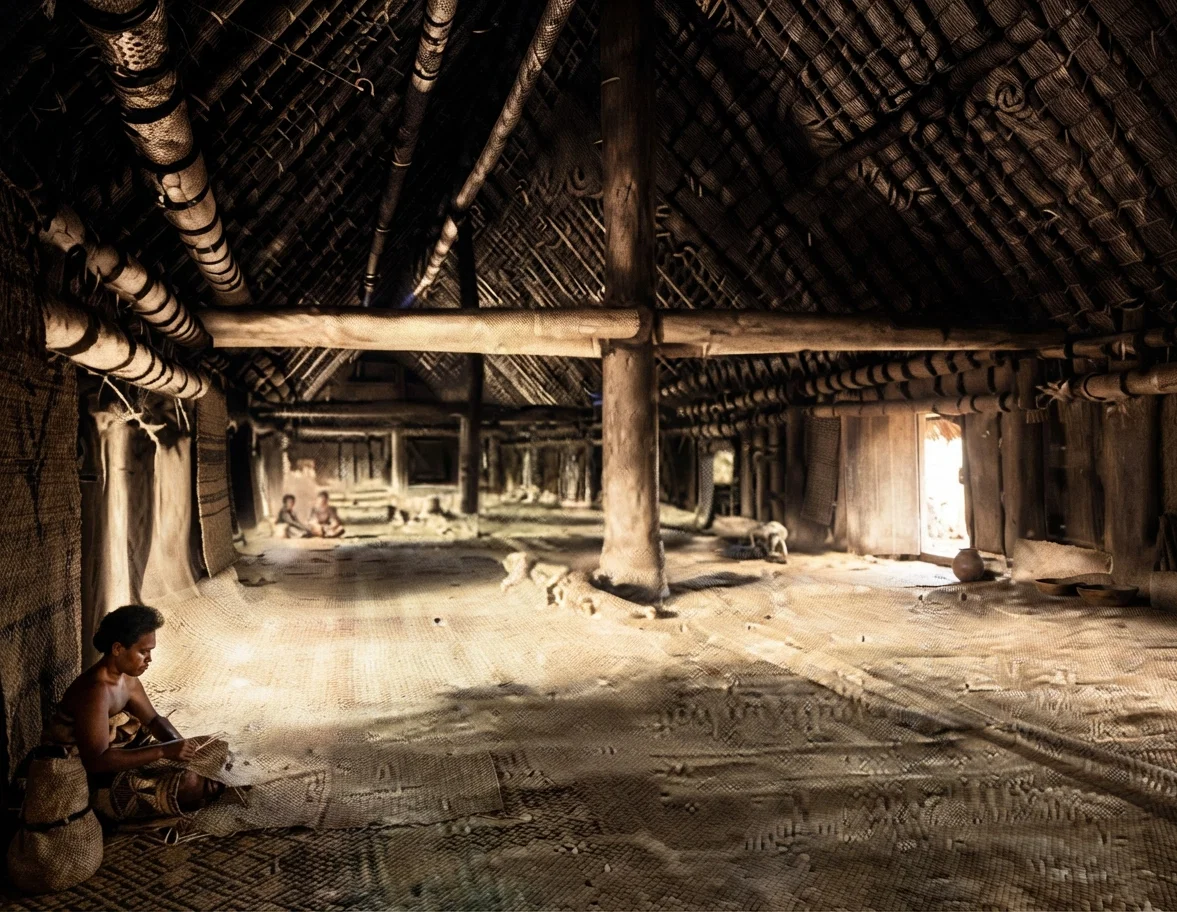
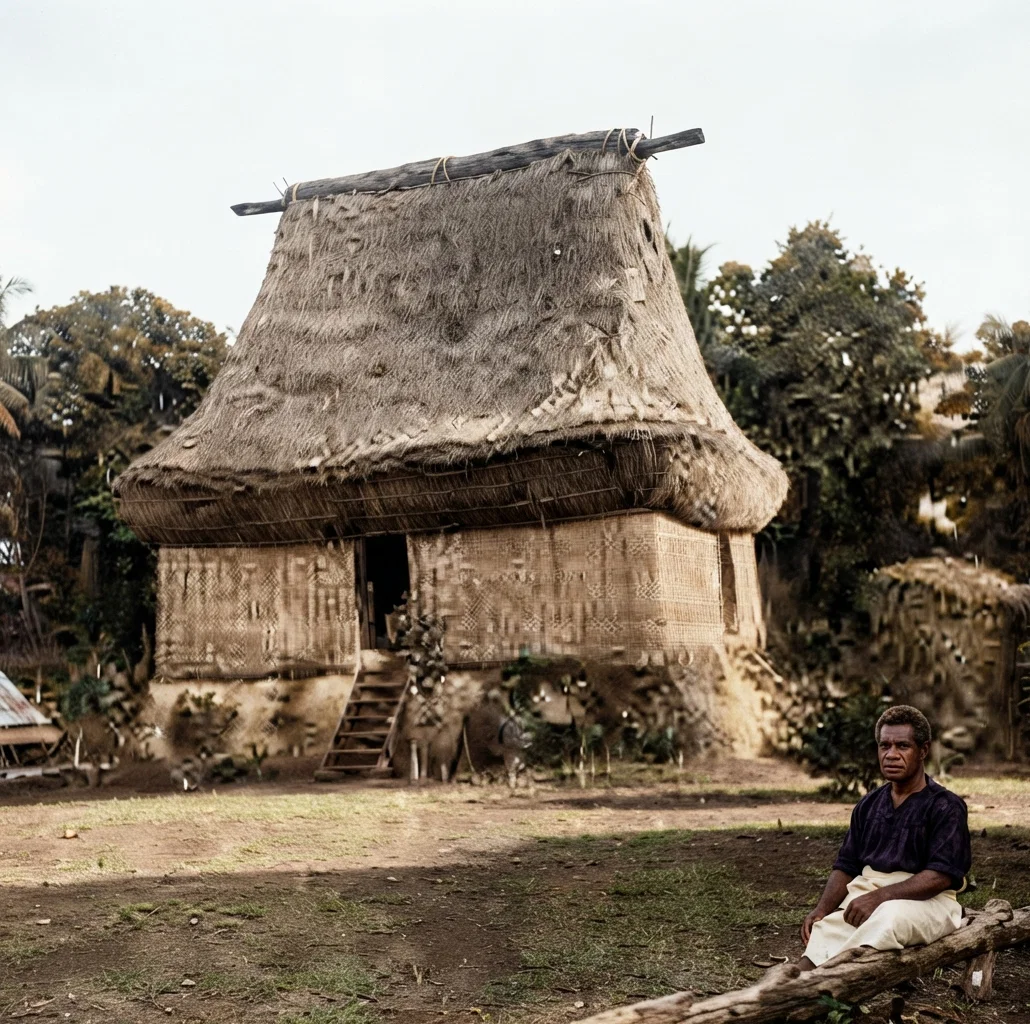
THE houses of the Fijians are of an oblong form, except in the Lau group, where they are oval. The average-sized house is about twenty-five feet long and fifteen feet wide. The houses of the chiefs, however, are usually much larger, and some of the houses built for various purposes have been two hundred feet in length. The framework consists of hard-wood posts set deep into the soil, and sills, and rafters ascending to a ridge-pole. The roofs are steep, and are thatched with reeds and cane. The sides are neatly woven with reeds. All the lashings are of sinnet, a string or rope made from the husk of the coconut. The better houses and the houses of the chiefs are built on a high foundation.
Interior View of Native Fijian House.
An interior view shows the style of Fijian architecture. Note that instead of nails, sinnet is used to lash the great posts and rafters. The houses are cool and inviting in the hot, sunshiny days.
Inside the houses there is usually a good supply of mats and tappa cloth. Tappa is made from the bark of a tree. Earthen jars and bowls, and wooden pillows are the ordinary articles to be found in their houses. There are no chairs or tables. Meals are taken while sitting tailor-fashion on the mats, and a clean mat serves as table.
The men are the carpenters, and the women make the beautiful mats and the tappa cloth. The houses are not very durable, and as the islands of the group are often visited by hurricanes, they are often thus destroyed.

Fiji Then and Now.

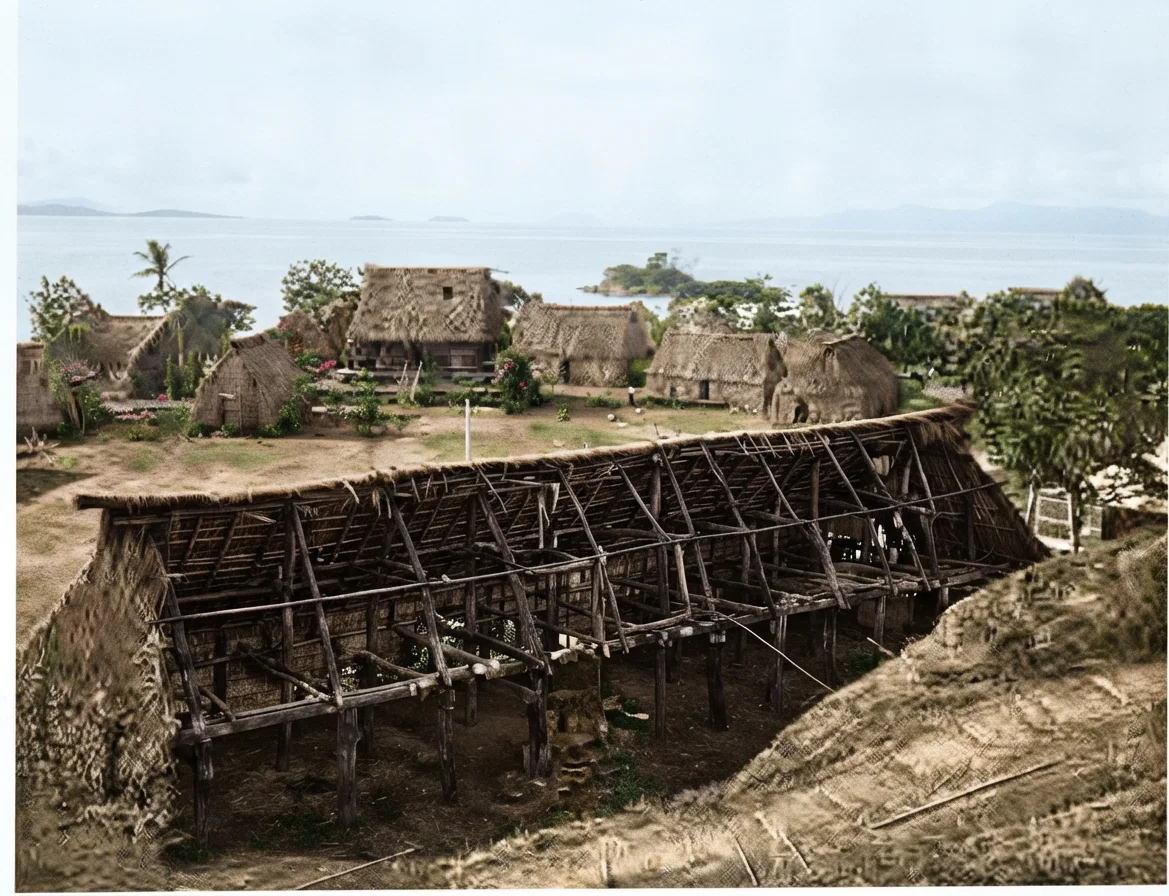
The accompanying picture shows a partial view of the town of Bau. This was the old cannibal capital, and brings to the minds of those who have read Fijian history many records of wars of the most abhorrent nature. Here was their beautiful little island, only a little removed from the mainland of Viti Levu, and in full view of lovely neighboring islets; in the midst of all that can please the taste, or charm the fancy, or gratify the imagination, where everything is fair and bright and beautiful, where the dreamy haze of a tropical clime rests lovingly on hilltop and sea, where the sun smiles in gladness upon landscapes buried in foliage and flowers—here man alone was found debased. Where nature had displayed her greatest charms, God's image was most loathsome and deformed!
All has been greatly changed. The reformation was wrought by the blessed Gospel. Many had become weary of useless wars, and longed for peace for soul and body. The old cannibal ovens are cold, or are used for other purposes; the old drum that summoned the people to the terrible feast, now sounds out the hour of worship or of school. The old heathen priest no longer holds his incantations, directing or commanding human sacrifices. In the picture is seen a house on a high foundation. This was the old foundation of an old heathen temple. Only recently would any one dare to build thereon.
Here polygamy was common, every man having as many wives as he could afford to keep. The high chief sometimes had several score, while the middle class contented themselves with ten or a dozen. The marriage ceremony was performed by the priests, who enjoined upon the parties the duty of loving, obeying, and honoring, very much as is done in civilized countries.
When a chief died, many of his wives were strangled to be buried with him. Old persons were often put to death at their own request to escape decrepitude, and sometimes they were forcibly strangled, or buried alive by their children.
Bau, Fiji, formerly the royal headquarters.
Frequently on the occasion of the erection of chiefs' houses, men were buried alive clasping the great posts which were sunk deep in the ground.
House of Fijian Chief.
Bau stood as the place where the worst of all these practises were rife. Old Cakobau was then the king of Fiji. He long resisted the influences of Christianity, but later he became favorable, tolerated the Christians; next he embraced the new lotu, and apparently lived quite a consistent life. He handed over his war-club to Great Britain in 1873 when Fiji became an English possession.