WHEN Adam and Eve were created, and placed in their Eden home, they had a knowledge of the law that was to govern them. Its precepts were imprinted on their hearts by Jehovah Himself, and they were acquainted with its claims upon them. When they transgressed that law, fell from that state of happy innocence, and became sinners in the sight of God, the dark future of the fallen race was not relieved by a single ray of hope. Because of the transgression of the divine law, Paradise was lost to man, the curse was pronounced upon the earth, and the reign of death commenced.
But Heaven pitied man, and the plan of salvation was devised. When the curse was pronounced upon the race, in connection with the curse there was given the promise of pardon through a Saviour who was to come. This promise was the star of hope that lighted up the gloom, that, like the pall of death, hung over the future of man, and of the world which was given him as his dominion. The Gospel was first preached to Adam and Eve in Eden. They sincerely repented of their guilt, believed the promise of God, and were saved from utter ruin.
Those who lived before the Flood were favored in receiving instruction from Adam, who had conversed with God and angels in Eden. He lived nearly a thousand years; and by his teachings, and his example of humble obedience, he exalted the law of God. He sought to turn his posterity from transgression to a life of obedience and faith in a promised Saviour; but he found from sad experience that it was easier to open the flood-gates of sin and wo upon the world, than to resist and press back the tide of moral wretchedness that was pressing in upon mankind in consequence of his transgression.
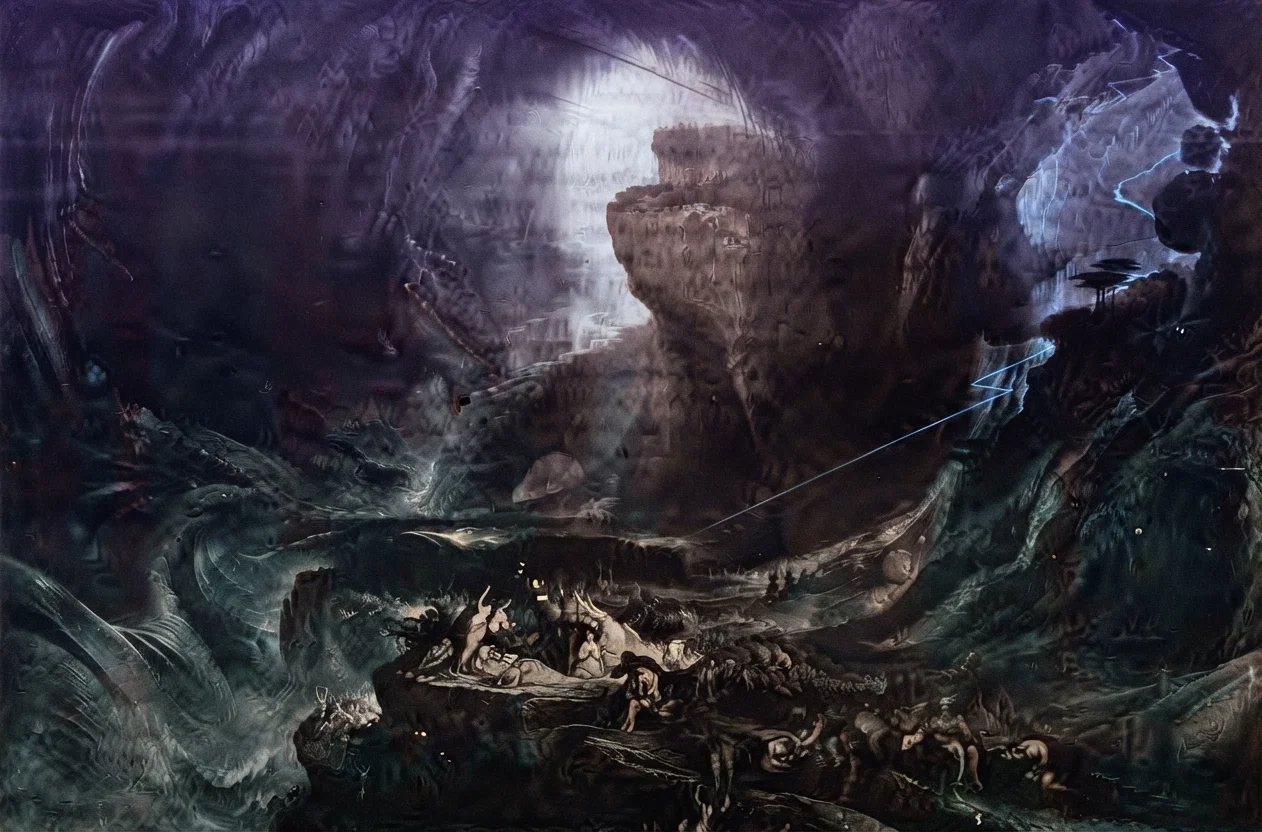
THE DELUGE John Martin
Enoch also was a preacher of righteousness, and sought to turn men from their evil ways. For three hundred years he walked with God, giving to the world the example of a pure and spotless life, one which was in marked contrast with the lives of the men of that self-willed and perverse generation, who openly disregarded God's holy law, and boasted of their freedom from its restraints.
But his testimony and his example were alike unheeded, because men loved sin better than holiness. Enoch served God with singleness of heart; and the Lord communicated to him His will, and through holy vision revealed to him the great events connected with Christ's second appearing. And then this favored servant of the Lord was borne to heaven by angels without seeing death.
At length the wickedness of man became so great that God could no longer bear with it; and He made known to Noah that because of the continual transgressions of His law, He would destroy man, whom He had created, by a flood of water which He would bring upon the earth. Noah and his family were obedient to the divine law, and for their loyalty to the God of heaven they were saved from the destruction that overwhelmed the ungodly world around them. Thus the Lord preserved to Himself a people in whose hearts was His law.
Noah warned the people. He believed that the threatened punishment would come upon the world, and he made every effort to turn that sinful generation from transgression to obedience. But he was unsuccessful. Only his own family at last received his message.4The terrible judgments of God in the destruction of the antediluvians should be a sufficient warning to all who have since lived upon the earth, that God will surely punish those who disregard His law. But the human heart is prone to evil; and as people multiplied upon the earth after the Flood, they soon became bold in their transgressions. Idolatry existed, and increased to a fearful extent, until finally the Lord left the hardened transgressors to follow their evil ways, while He chose Abraham, and made him the depositary of His law for future generations.
Abraham was called out from an idolatrous family, and was appointed of God to preserve His truth amid the prevailing and increasing corruptions of that idolatrous age. The Lord appeared to Abraham, and said: 'I am the almighty God; walk before Me, and be thou perfect. And I will make My covenant between Me and thee, and will multiply thee exceedingly.' 'And I will establish My covenant between Me and thee and thy seed after thee in their generations for an everlasting covenant, to be a God unto thee, and to thy seed after thee.'
The Lord communicated His will to Abraham, and gave him a distinct knowledge of the requirements of the moral law, and of the salvation that would be accomplished through himself. It was a high honor to which Abraham was called, that of being the father of the people who for centuries were the guardians and preservers of the truth of God for the world,—of that people through whom all the nations of the earth should be blessed in the advent of the promised Messiah. But He who called the patriarch judged him worthy. This is the testimony of God concerning His chosen servant, as it stands registered on the sacred page: 'Abraham obeyed My voice, and kept My charge, My commandments, My statutes, and My laws.' And again: 'I know him, that he will command his children and his household after him, and they shall keep the way of the Lord, to do justice and judgment.'
Thus was the knowledge of the law of God preserved through successive generations from Adam to Noah, from Noah to Abraham, and from Abraham to Moses.