Prophecy, Poetry, and Elevating Sentiment

3%

Pacific Press Publishing Association · Mountain View, California · May 26, 1914

FromSigns of the Times, Vol. 41, No. 20.

Read the full edition

Prophecy, Poetry, and Elevating Sentiment

WONDERFUL THINGS TO BE FOUND IN THE BOOK OF PSALMS—A TREASURE-HOUSE OF BLESSING AND HELP—PSALM NINETEEN

THERE is something about Bible study that is different from any other study in the world. There is nothing like it to brighten the eye, to educate and enrich the mind, to soften the heart, and to tranquilize and purify the spirit.
One may arise from an hour's study of mathematics or philosophy, with mind confused and body weary. But a prayerful study of this Book not only elevates and feeds the mind, but actually recuperates and energizes the body.
I have always loved the Psalms, and have read them from my childhood, until many of them have become fixed in my memory. But since we began reading them at family worship, each commenting upon every verse read, the book has acquired a new interest; and a thousand hidden wonders and beauties, like precious gems, have flashed upon our sight, and fairly dazzled us with their splendor.

PROPHECY IN THE PSALMS

We are so accustomed to turning to the book of Daniel or the Revelation for prophecies concerning the second advent of our Lord, that we have almost forgotten the many wonderful passages in the book of Psalms concerning it. Then, too, we nearly always turn to the records given in the Gospels whenever we desire to read concerning the earth life of our Lord, as if this were all.
I fear that many of us have been too careless and forgetful of the Psalms. They are full of meat and drink for the hungry and thirsty soul. Written at greatly varying ages of the earth's history, and by men very unlike in natural characteristics,—poet, law-giver, king, sage, prophet,—the book of Psalms presents a wonderful similarity in the richness and beauty of its expression. In it we find the most lofty utterances, and the simplest sentences; the most sublime imagery, and the sweetest praise; the most wonderful description, and the clearest and most vivid prophecies.

THE SUBLIMITY OF PSALM NINETEEN

Let us get our Bibles and turn to the nineteenth psalm. If we had never read it before, we would be struck by its wonderful sublimity.
"The heavens declare the glory of God; and the firmament showeth His handiwork."
A few evenings ago, just as we were lighting the gas, I heard a familiar voice from the back porch: "Come and see the wondrous beauty of the heavens." I stepped out. The sun, now only a few moments below the horizon, had been prodigally lavish of its coloring. The whole western heavens were still ablaze. A faint tint of crimson reached even to the zenith; and a few stars had stepped forth, as if unwilling to be left out of a picture so beautiful, and glowed from their giddy height. The silent moon, like a thin horn of silver, hung low in the west. A rich, dark mass of feathery foliage on a few trees near, was outlined against the brilliant background of the sky.

THEIR VOICE HEARD EVERYWHERE

Spellbound with the beauty of the scene, I could only reflect upon the wisdom of the great Artist, whose hand had hung out all this splendor as a tiny sample of His wondrous work.
Truly there is "no speech nor language, where their voice is not heard." Up in the frigid, inhospitable regions where the iceberg is born and the blinding blizzards rage and roar—even there has Jehovah hung out His wonderful pictures—His awe-inspiring auroras—silent witnesses of His almighty power.

EULOGISTIC OF GOD'S LAW

"But how strange," you say, "that after descanting for a time upon the vastness of God's visible creation, the inspired psalmist should suddenly break out in eulogistic utterances concerning the law of God!"
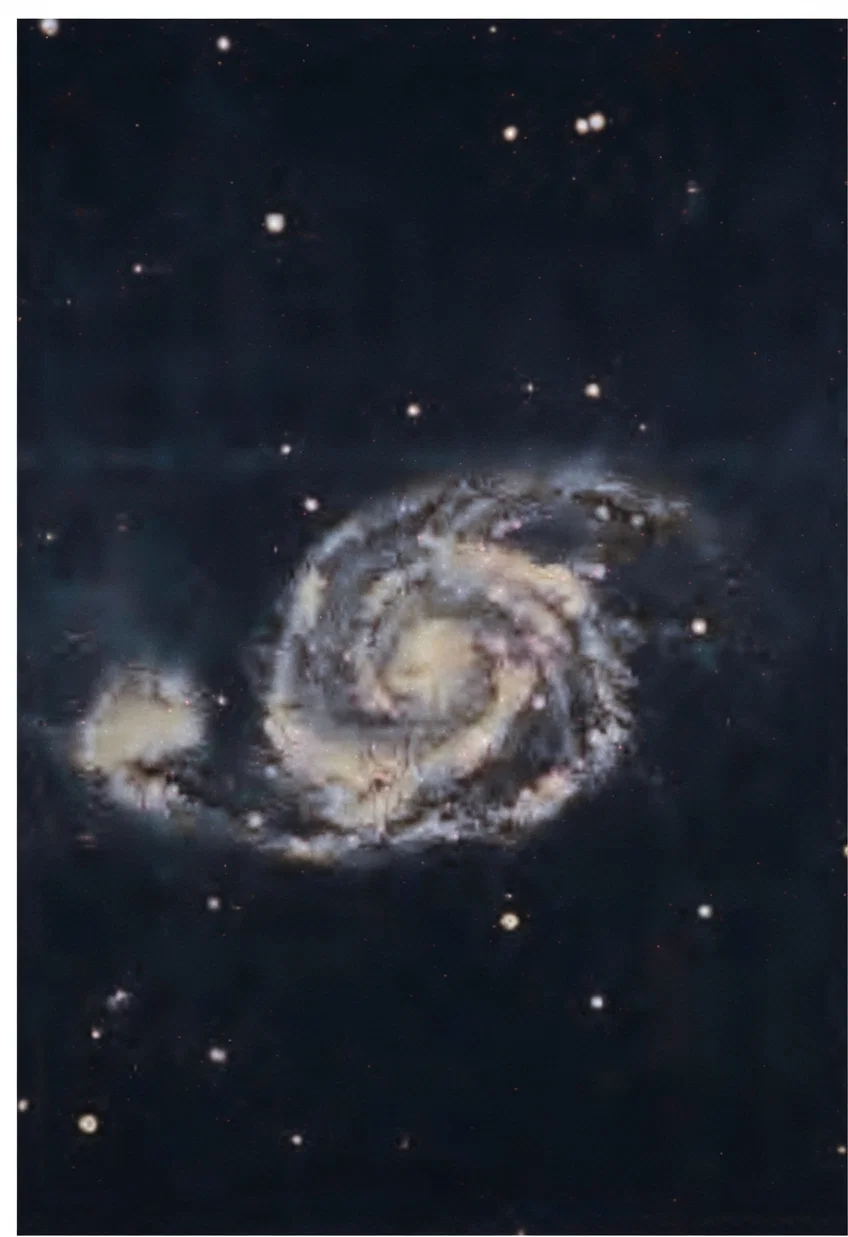
“THE HEAVENS DECLARE THE GLORY OF GOD”
Now to me, my friend, it seems beautifully appropriate—nothing strange or incongruous about it at all. Why?—Because God's great moral law is as unchangeable and as perfect as the law of nature—that law which holds the revolving worlds in their places. Neither can be changed or revised or done away. God's law is the foundation of His eternal throne.
The psalmist continues, "More to be desired are they [the commandments of the moral law] than gold, yea, than much fine gold: sweeter also than honey and the honeycomb." In this age of lawlessness and lawbreakers, of riot and clamor after gold, it is absolutely refreshing to read this loyal and beautiful sentiment from the inspired prophet-king. And he continues, "In keeping of them there is great reward."
Ah, yes, yes; the reward will be greater, vastly greater, than all the gold and the silver of all the mines of earth.
"In keeping of them."
How many of them? Shall I be rewarded for obeying nine tenths of them?
"Who can understand his errors?"—Not one of us can see his own faults except in the perfect mirror of God's law. How do I know?—Because by it "is Thy servant warned."

AN INSPIRED AND INSPIRING PRAYER

Finally, this inspiring psalm is concluded by a prayer which is remarkable in that there is no conceivable situation in which it would fail to be appropriate, and no condition or position when we might not make its sentiment our own.
It is suitable alike for prince or peasant, high or low, rich or poor, Pharisee or publican, Christian or worldling, the petted child of fashion or the beggar upon the street.
Listen while I reverently repeat it:
"Let the words of my mouth, and the meditation of my heart, be acceptable in Thy sight, O Lord, my strength, and my Redeemer."