Modern Greece

5%

Pacific Press Publishing Company · Mountain View, California · Jul 29, 1908

FromSigns of the Times, Vol. 34, No. 31.

Read the full edition

Modern Greece

By Prof. W. E. Howell
all this pageantry passes in vision before the mind of one who has just returned from viewing what he can scarcely trust his natural eyes to believe is real.
All week long the bells in every church tower and chapel have been sounding the call to service twice a day. All week long the devotees to this ceremonial system have been crowding the places of worship in the early morning and in the evening till midnight. All week long butter and cheese and milk and olive-oil and eggs and flesh have been absent from the tables of those who observe the forty-days' fast before Easter. All week long one might have heard in the streets and gathering places the remark, So many days, and the fast will be over.
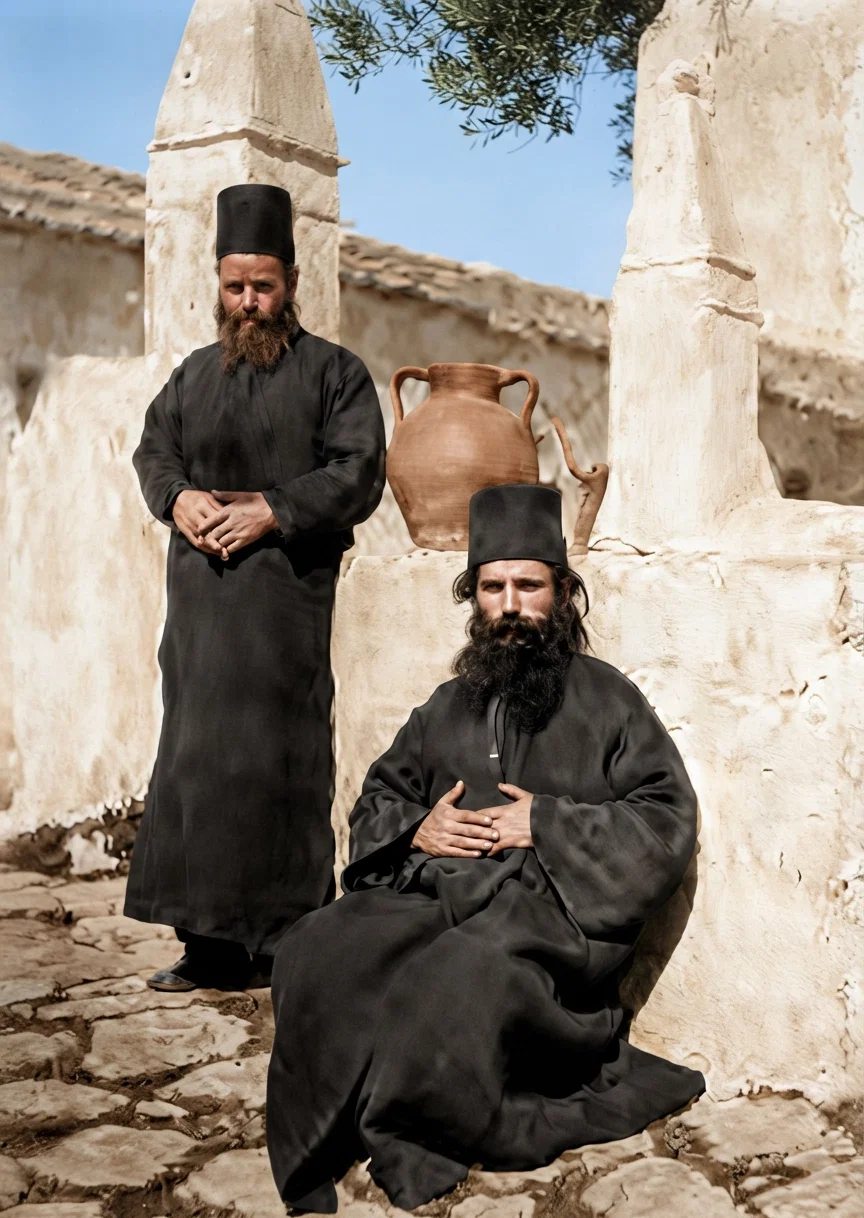
The Common Priests, who receive no pay, but live off the charities of the people, the fees they collect for petty services, and the sale of articles used by worshipers in their devotions.
And why all this unusual stir? It is Passion Week, the last week of the long fast before Easter. It is the Great Week (as the Greeks call it) the week whose services commemorate the greatest events of Christendom—the betrayal, the death, the burial and the resurrection of Christ.
On Wednesday evening the theme of the service is the betrayal by Judas. On Friday evening, in addition to the service in the church, a raised, life-size image of Christ in the tomb, upon a piece of rich tapestry, is borne from every church thru the streets at nine o'clock, at the head of a long procession of the faithful, pausing at the principal street crossings and public squares for a brief service by the priests, interspersed with frequent repetitions of "Lord, have mercy," by the psalterers and assembled people, and finally returning to the churches at eleven or twelve o'clock. In the procession lighted tapers are borne as a sign of respect to the dead, and occasionally a more devout one passes thru the throng to kiss the icon when it halts.
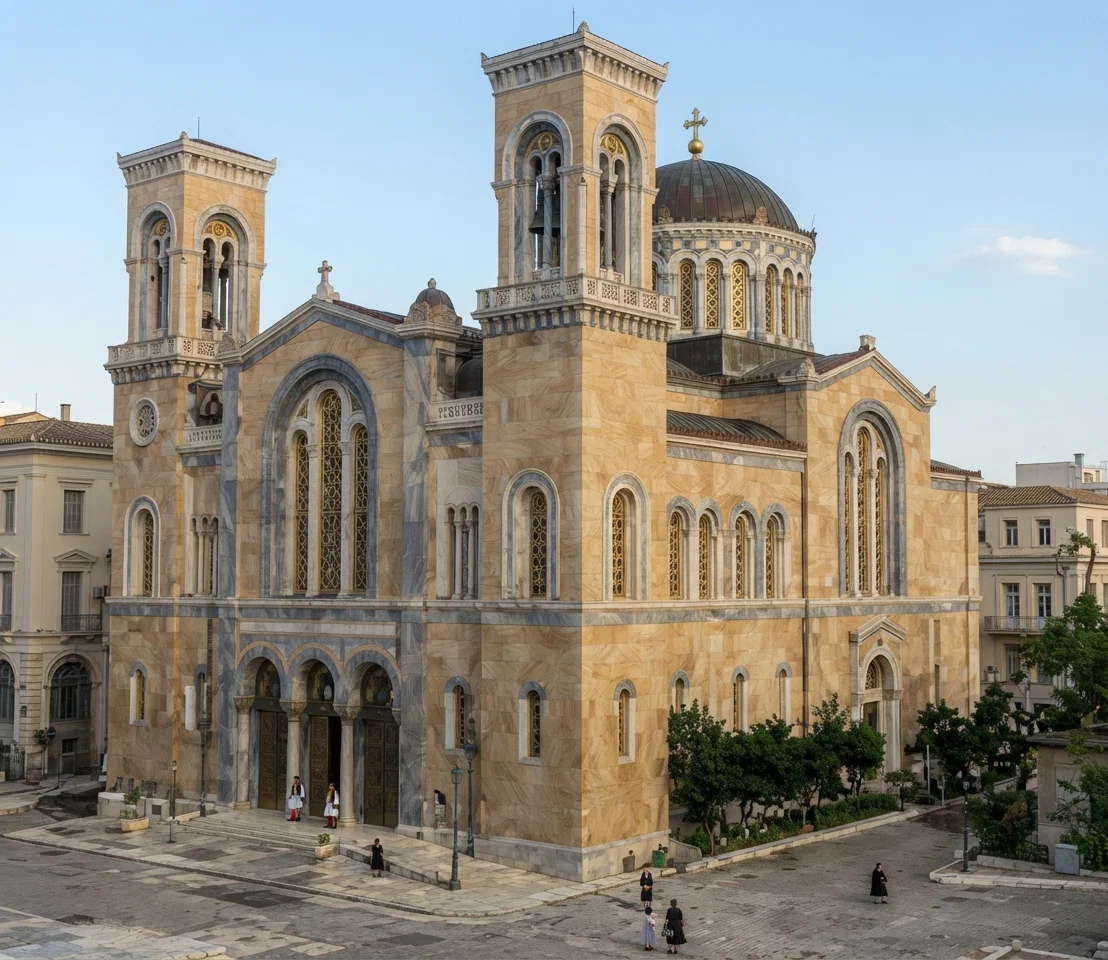
On Saturday night the people assemble at the various churches at midnight to commemorate the resurrection of Christ, which is said to have taken place at that hour. The culminating part of the service is held in the open air. At the Metropolitan Church, where all governmental functions are held, and where the chief functionary of the Orthodox Church of Greece presides, a large platform is erected in the large square before the church. On this stand civil, military, and ecclesiastical officials and prominent citizens assemble to hear the presiding bishop make the formal announcement, "Christos aneste," "Christ is risen!" This enunciation is the signal for the shooting of sky-rockets and firecrackers, the burning of phosphorus-sticks, and a general jubilee—Greece's nearest approach to a Fourth-of-July celebration in the United States. It also closes the prolonged fast, and the people return immediately to their houses at this untimely hour to eat roast lamb and whatsoever their souls lust after.
Metropolitan Church, where all state and royal functions are held.
During the two days preceding, the market places echo with the bleating of lambs (for in Athens all small animals are slaughtered in the stalls where their flesh is exposed for sale), and the gutters run with the blood of innocents. For this paschal feast in the night, and for the continual feasts of the three holidays following, the rich man provides a lamb for his servants, and every peasant manages to procure a lamb for this season, one of the few times in the year when he is able to provide meat for himself and his family.
During Sunday, Monday, and Tuesday one may see lambs roasting whole on iron spits revolving over a bed of charcoal embers, in the back yard, in vacant lots, along the sidewalks, or anywhere the feaster may see fit to set his stakes. It is a time when Greek hospitality is in full exercise. Not only does each householder have many of his friends to share his feast, but if a stranger happens along, he is served to a piece of lamb on a fork and a glass of wine. In truth, wine flows freely these days. The numerous refreshment houses are thronged with all classes, and this is one of the only two orthree occasions in the year when a Greek may be seen drunk, and then only one here and there of the lower classes, and they only drunk enough to be merry or impudent.
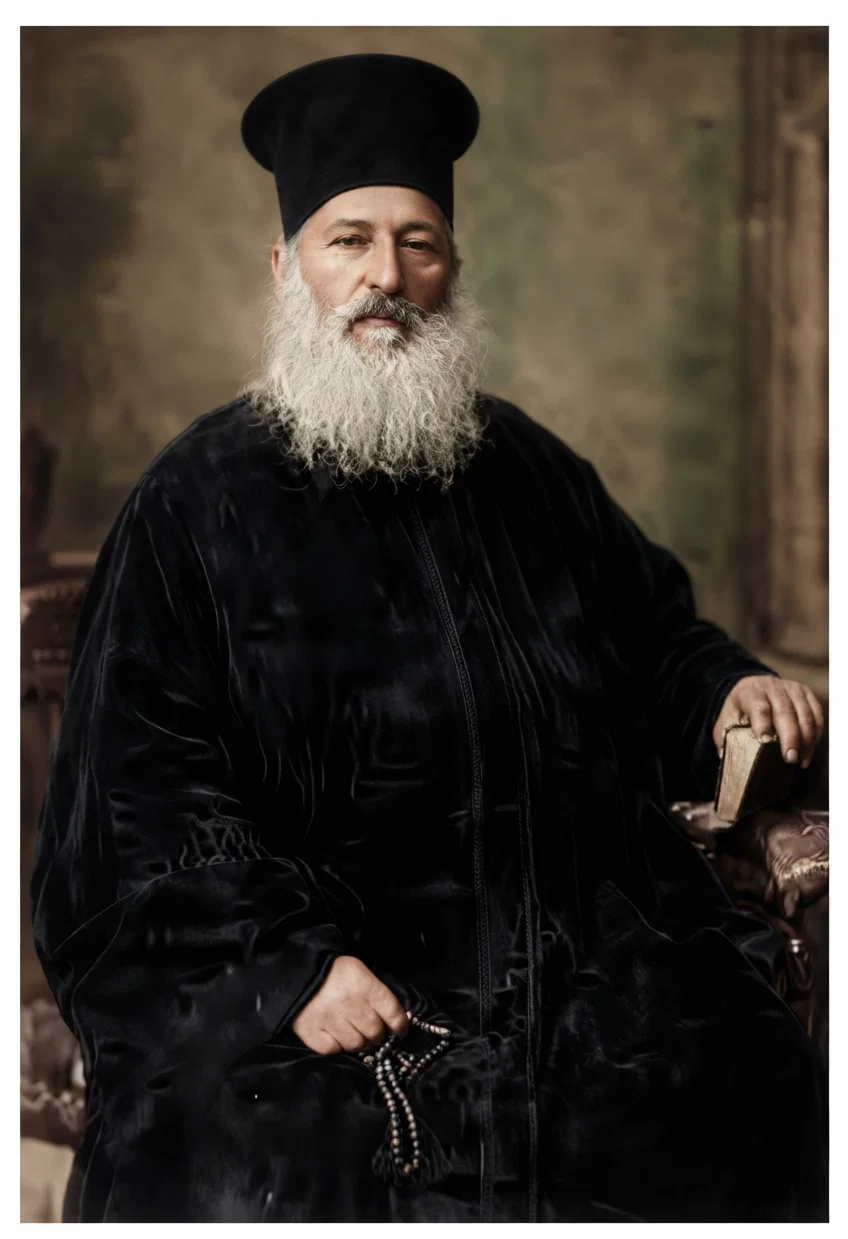
A Typical Priest of the Better Class.
During these days, too, the common form of greeting is "Christ is risen, how are you to-day?" The phrase "Christ is risen" is used in so common and careless a manner as almost to cause a shudder to one not accustomed to it. A fair sample is the following advertisement circulated as a handbill when business opened again on Wednesday:

"CHRIST IS RISEN

"Attention Gentlemen!
"Since it is a consequence of the fact that the paschal festivities derange your stomach, you ought to procure a bottle of — Avoid counterfeits. Make haste!"
During the week preceding Easter, Athens was one great egg market. The use of eggs being forbidden during the fast, the peasants had saved up eggs for Easter, and now was their harvest. Not only were all kinds of provision stores well stocked, but temporary stands filled with eggs and dyes were set up along the sidewalks, in every nook and corner, and even out into the streets, while baskets of them were hawked thru the city by numerous venders. Part of the eggs were colored, red prevailing, some having a picture of Christ on the cross drawn in gold on the red background. These colored eggs were one item on the bill-of-fare at every feast following the breaking of the fast, and a part of every hand-to-mouth lunch eaten on the street by bootblacks, porters, and other street runners.
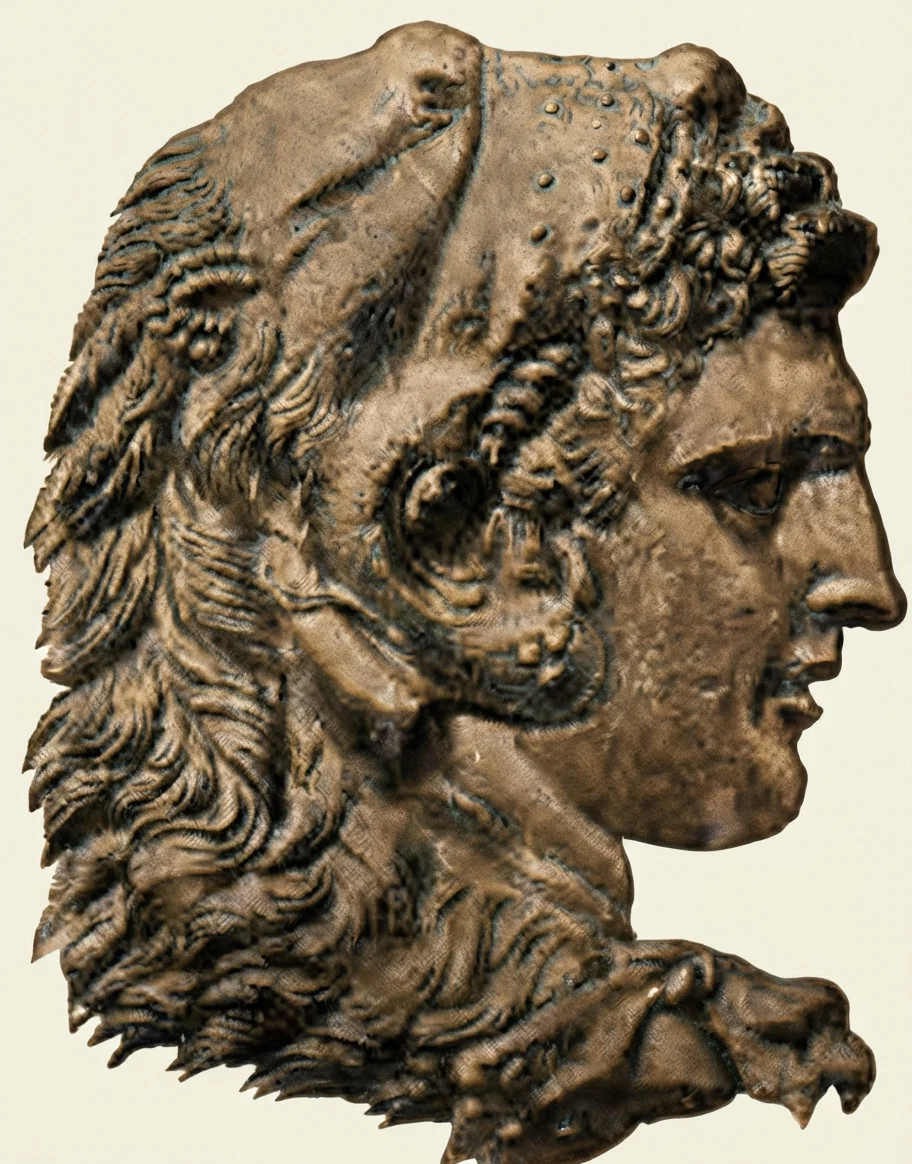
Alexander the Great, the impersonation of the Pan-Hellenic Union. "Let us rescue Macedonia," the words of Alexander, is the motto of the Macedonian party in Greece.
Another curious sight, analogous to that of the eggs, during these busy days of the Great Week, is the sale of candles. As for the eggs so for the candles, temporary stands are built everywhere. Candles of every size from three feet long and two inches thick at the base to the size and length of a very small lead pencil, of two colors, white and yellow, some plain and some highly ornamented, are suspended from a high frame for the purpose or laid in parallel rows on the table below. The vender sits or stands behind with a pair of scales or steelyards to weigh out the desired quantity. The whole structure is decked with gay-colored streamers of paper, some of the individual candles being likewise decorated. Here the high and low surge along and make their purchases, no one offering the least complaint at the blocking of thorafares by these and other ecclesiastical supplies, such as prayer-books, church rituals, sacred relics, icons of the Virgin Mary, and ghastly colored pictures of the sufferings of Christ during His trial and crucifixion.
This dealing in candles is no small business when it is remembered that every one is a member of the church, and that the oftener the worshiper goes to church and the more candles he buys when he does go, the better he has discharged his religious obligations.
Numerous stores are engaged solely in the preparation and sale of church candles only. Candles, too, constitute one of the sources of revenue to the poorly paid priests who are under the constant temptation of making their religion pay. A worshiper buys one or more candles at the door of the church, which he places lighted before the proper icon, where they burn during his devotions. On his departure, the candles, perhaps one sixth to one fourth burned, are removed, extinguished, and put away to be melted over and sold again.
The foregoing description affords just a glimpse of the observance of the greatest fast and feast of the Holy Orthodox Catholic and Apostolic Church, as it calls itself. The feast-days are legion, the fasts are numerous, and the ritual never ending and little varied. The multitudes thus fed upon husks go empty away. Some feel their leanness of soul, and long for the Father's house. When they are shown the way thither and turn to Him, will He not welcome them in the way, and quickly kill for them the fatted calf?