SOUTH AFRICA is making very strenuous efforts to keep pace with the great nations of the world on the question of Regeneration by Act of Parliament. Rhodesia has passed a law very similar to the edict of Constantine A.D. 321.
The Orange River Colony has also recently attempted to pass a very drastic Sunday bill. The discussion both in the public press and in Parliament reminds one of the discussions during the Middle Ages, when it was customary to legislate upon religious questions.
Hon. A. C. Lyell, in moving the second reading of the bill, said "that this question would inevitably raise a discussion of a more or less religious character." "The bill now before the House was framed by a select committee, which had, however, not followed their own opinion in an arbitrary manner. The Synodical Committee of the Dutch Reformed Church, the Reformed Church, and the Evangelical Church Council of Bloemfontein, together representing all the Christian churches of the Orange River Colony, had been sounded as to their opinion on the matter, so that this bill did not only represent the opinion of the Select Committee, but that of the whole Christianity in the Orange River Colony. The tendency of all Sunday legislation was to give effect to one of the oldest laws in the universe, and originated in the work of the Creator. Nobody could dispute this fact, and that it was incumbent upon all creatures to comply with old law which could be traced back to the very beginning of all things, and again to Sinai."—Bloemfontein Friend, Nov. 16, 1909.
Just how the Lord, by working on the first day of the week and resting on the seventh day at the time of the institution of the Sabbath, and His commanding all people for all time to work on the first day of the week and rest on the seventh, in giving the Sabbath law at Sinai, gave a precedent for passing Sunday laws, the honorable member of Parliament never informed his hearers. Neither did he explain why God, who from the beginning gave to men the right of choice in matters religious to the extent that He permitted them to choose to go astray when all were originally made good, now favored compulsory religious laws. The fact is that God made and commanded the seventh day as the Sabbath, and He never authorized any one to compel its observance.
In replying to the speech of the Hon. Mr. Lyell, the attorney-general said: "The proposer of the bill has shown no reason why they should legislate in an endeavor to make people good." "Did the honorable member think that he would make people good by legislation? He [the speaker] could assure the honorable member that he would become old enough to know that there was no such thing as salvation by legislation."—Bloemfontein Friend, Nov. 16, 1909.
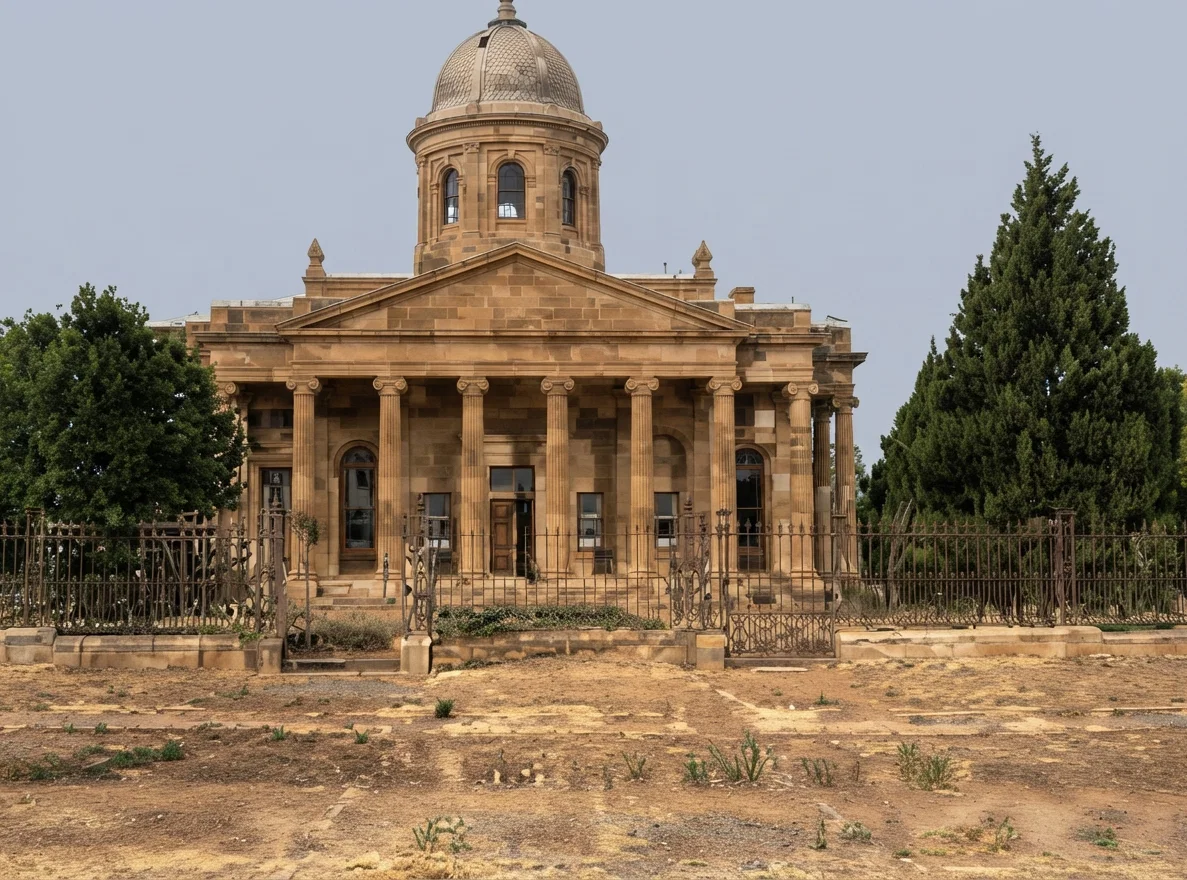
Old State House, Bloemfontein, O. R. C.
It was plain to the attorney-general that Sunday legislation was an attempt to regenerate people by law. The prime minister said, "Judge not, that ye be not judged." Then, speaking of the reason why the Huguenots came to Africa, he said: "They were one with the great majority here, in that they were Protestants, which meant that they protested against oppression and wanted freedom of conscience; let it rest between a man's conscience and his God how he looked at these things, and let not a third interfere. The Huguenots had not come to South Africa because they differed in certain dogmatical questions of creed, but because they wanted absolute freedom of conscience, and because they would not be under the authority of the pope. They had surely not done away with the great pope in order that a number of small popes might be set up afterwards over their heirs to interfere between them and their God." "The bill was only a clumsy attempt to make amendments on the eternal law of God." "Being a Protestant, he would protest against the bill now before the House."—Bloemfontein Friend, Nov. 17, 1909.
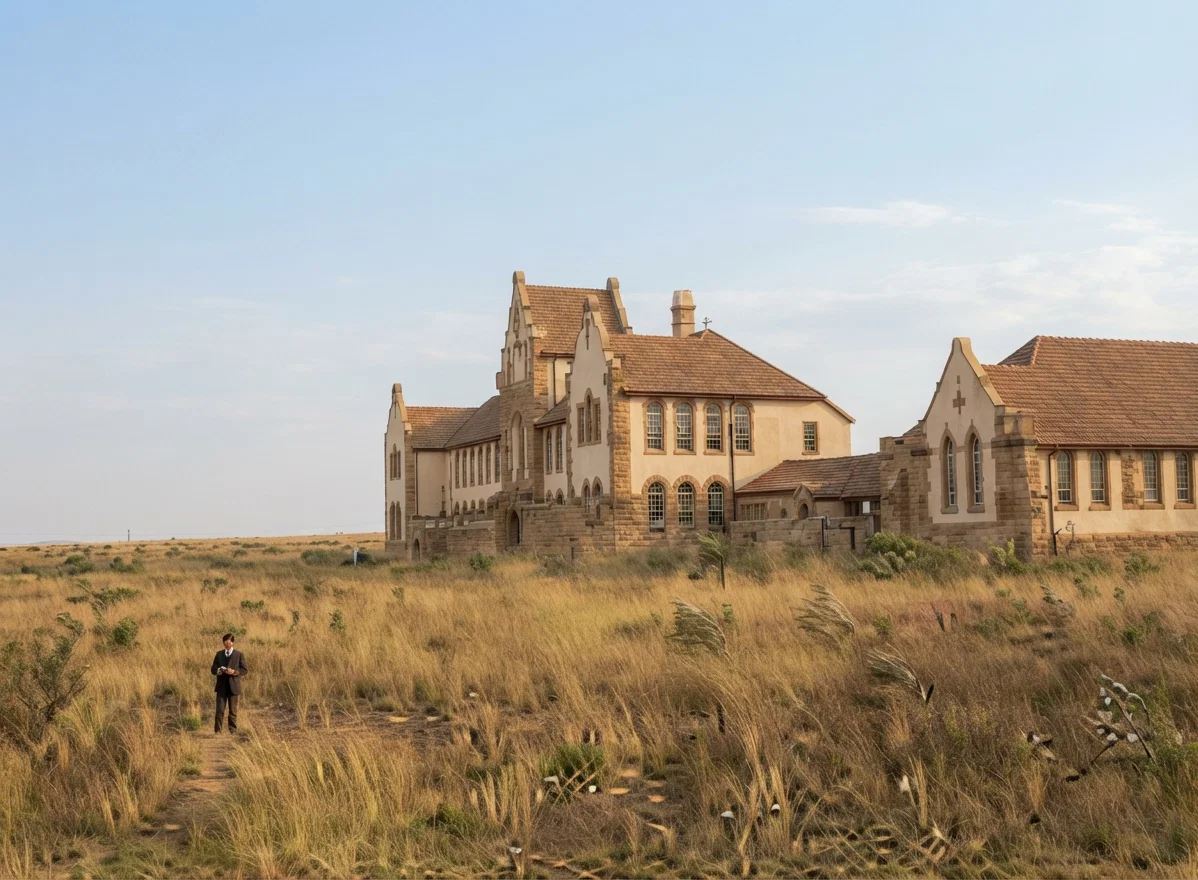
Grey's College, Bloemfontein, O. R. C.
Buildings of Grey's College
The prime minister as well as the attorney-general saw in the bill an attempt to re-establish popery. If the bill passed, it would bring a third party in between a man and his God in regeneration. It may be said, to the credit of these government officials, that they took the only legitimate stand that Protestants could take, and the bill was defeated. Regeneration is a birth from above. Any attempt to make it a matter of human force is antichristian. Let every Protestant stand true to his principles.